Artwork
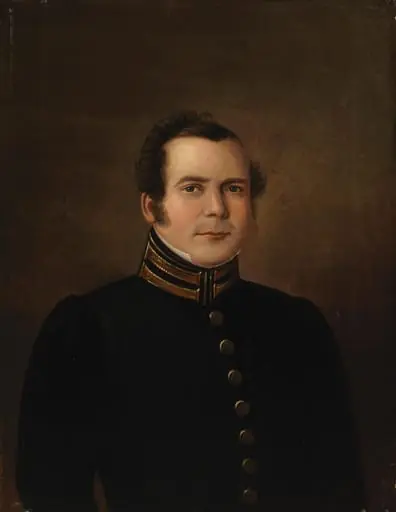
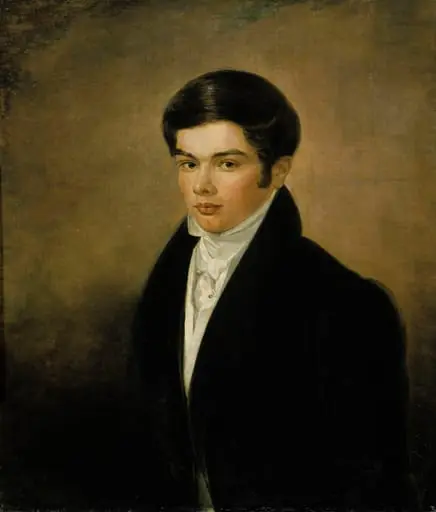
Carl Gustaf Mannerheimin muotokuva
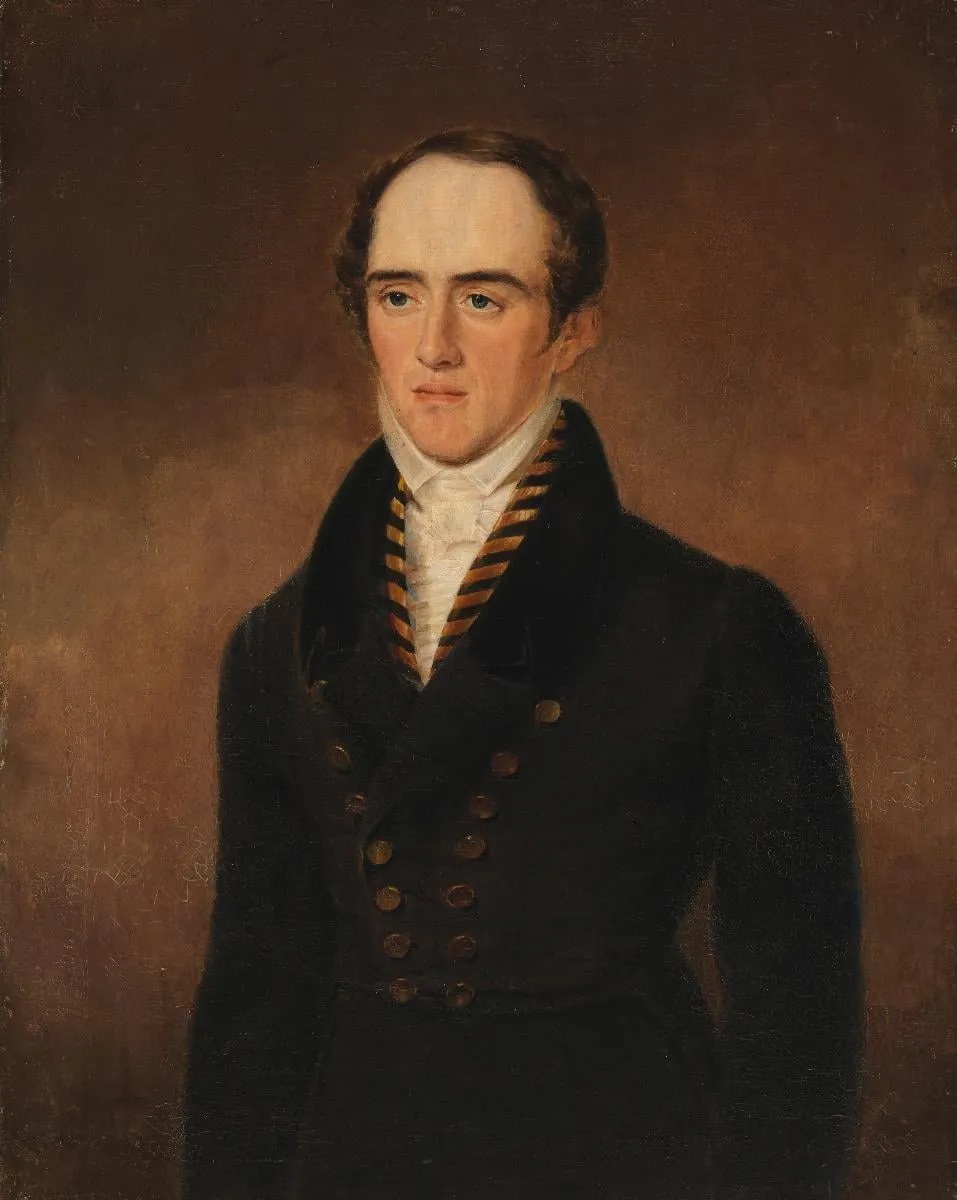
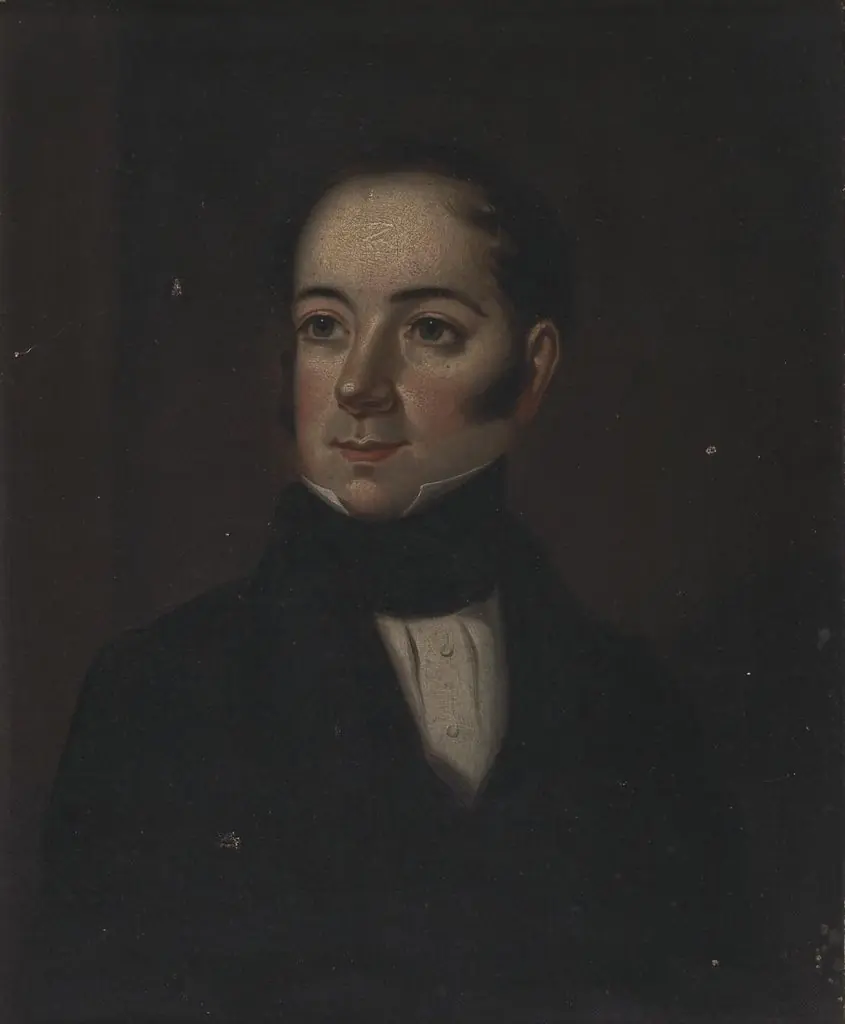
Carl Gustaf Mannerheimin muotokuva is an unspecified painting by Gustaf Wilhelm Finnberg. It dates from 1818 and is held in the collection of the Finnish National Gallery.
About this work
The artist's use of chiaroscuro, a technique that uses strong contrasts between light and dark, adds depth and dimension to the painting.
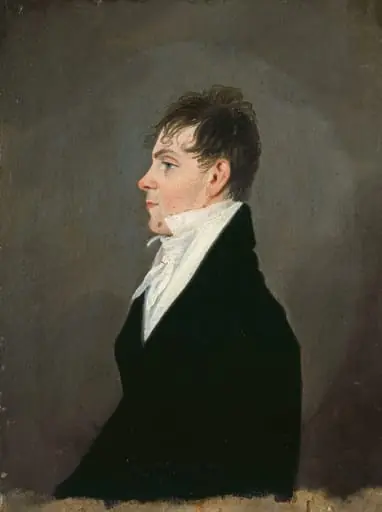
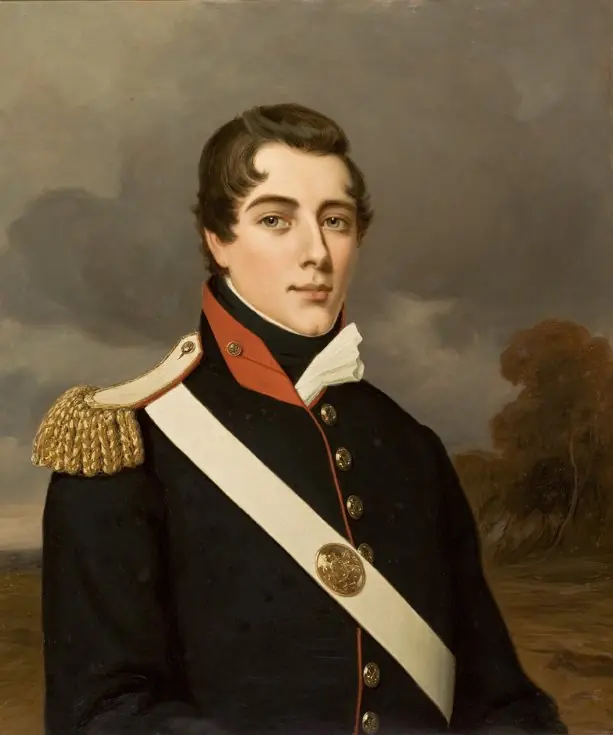
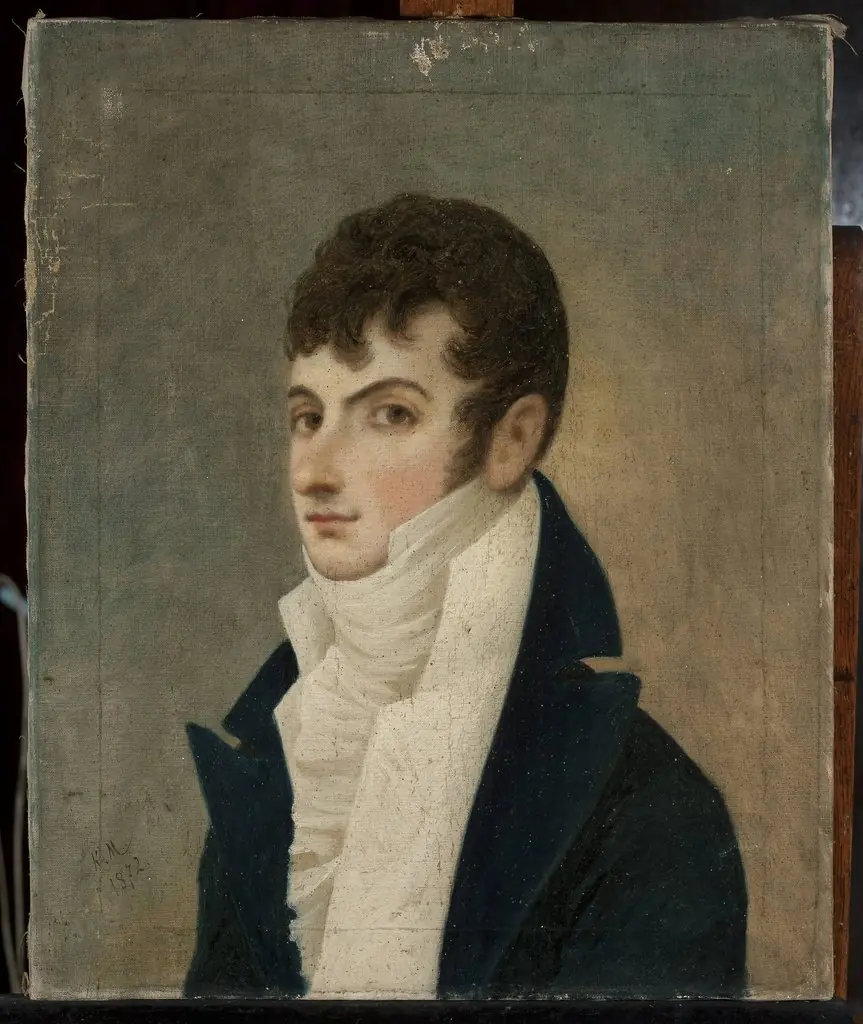
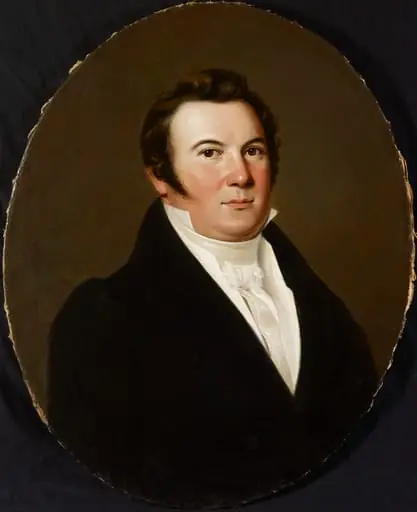
This painting is a portrait of a man in a dark jacket with gold buttons and a striped collar. He has dark hair and is looking straight ahead. The background of the painting is a solid brown color.
The man's expression is serious, and his posture is straight. The painting appears to be from the early 19th century, based on the style of the man's clothing and the artist's technique.
The artist's use of chiaroscuro, a technique that uses strong contrasts between light and dark, adds depth and dimension to the painting. To learn more about this technique, look up chiaroscuro.
Overview
This portrait, painted around 1818 by Gustaf Wilhelm Finnberg, depicts Carl Gustaf Mannerheim, a Finnish nobleman and military officer. Executed in oil on canvas, the work presents a formal, full-length representation with a muted color palette and minimal background. The composition emphasizes the subject’s presence through controlled lighting and restrained detail, typical of early 19th-century Nordic portraiture.
Subject & Meaning
Mannerheim is portrayed in military attire, wearing a dark jacket with gold buttons and a striped collar, signaling his status and service. His direct gaze and upright posture convey dignity and composure, reflecting the values of leadership and discipline expected of his class. The absence of symbolic objects or elaborate settings focuses attention on his character rather than his achievements.
Technique & Style
Finnberg employs chiaroscuro to model the figure with subtle gradations of light and shadow, lending volume to the fabric and face. The brushwork is precise but not overly refined, balancing realism with a certain austerity. The solid brown background isolates the subject, enhancing the three-dimensionality achieved through contrast and careful tonal transitions.
History & Provenance
The painting was created during Finnberg’s active period in Finland, when he produced numerous portraits of local elites. While its early ownership is undocumented, it has remained within Finnish collections since the 19th century. Its preservation reflects the enduring interest in figures of the Swedish-Finnish aristocracy during the period of Russian rule.
Context
Painted shortly after Finland became an autonomous Grand Duchy under the Russian Empire, this portrait reflects the cultural continuity of Swedish-speaking nobility. The formal style aligns with European portraiture traditions, yet its simplicity suggests a regional adaptation, prioritizing restraint over ornamentation in a time of political transition.
Legacy
Though not widely exhibited outside Finland, the portrait remains a representative example of early 19th-century Finnish portraiture. It contributes to the visual record of the country’s aristocratic class during a formative era, offering insight into how identity and authority were conveyed through dress and demeanor in a society navigating new political realities.
Artist & collection