Artwork
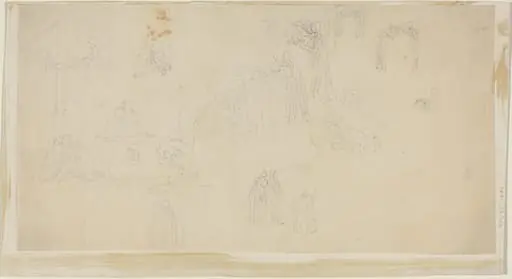
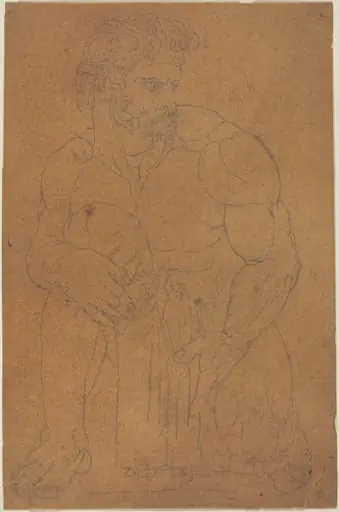
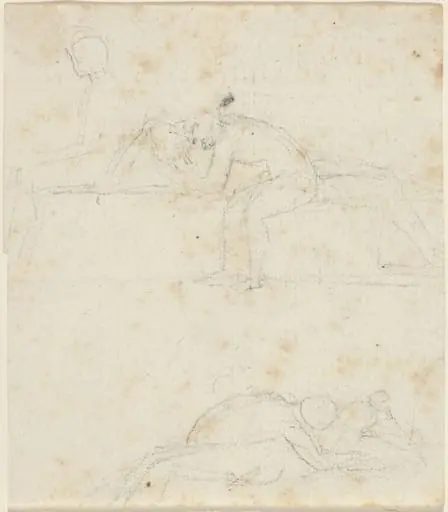
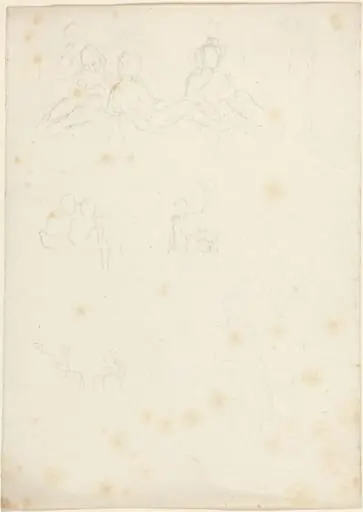
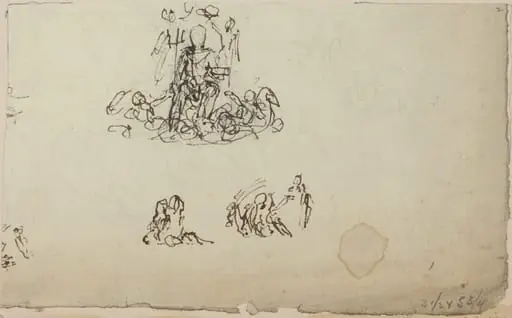
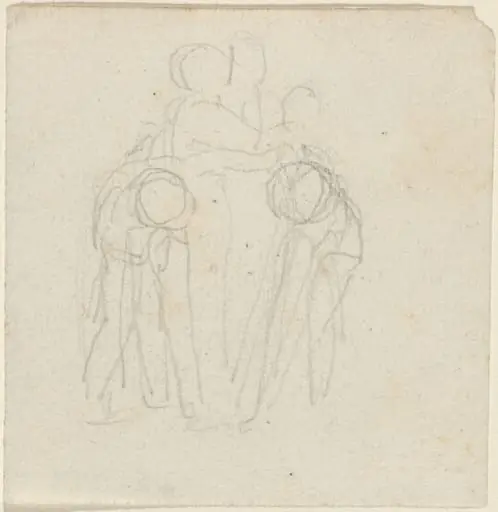
Group of Figures Surrounding Seated Figure
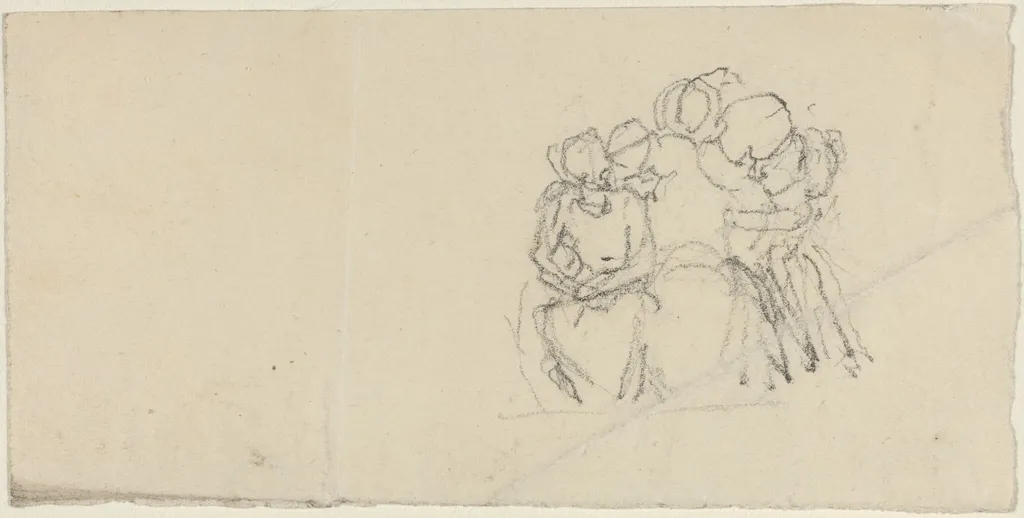
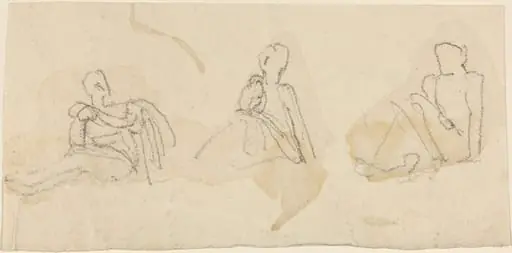
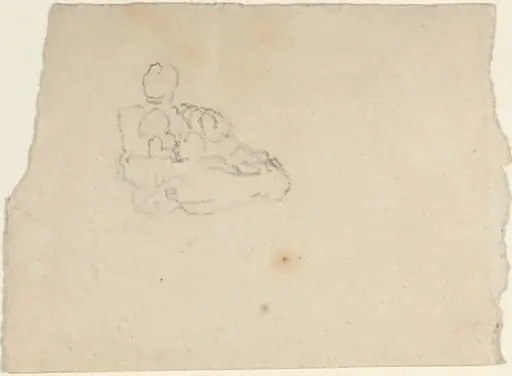
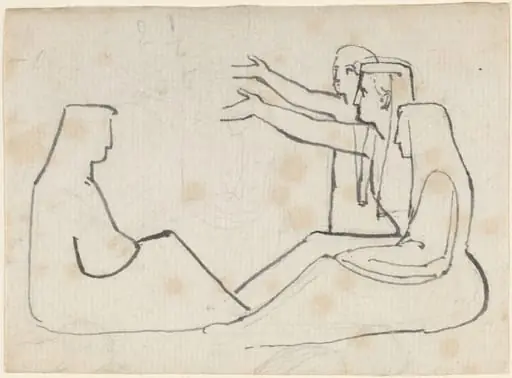
Group of Figures Surrounding Seated Figure is a graphite drawing by the Romanticist artist John Flaxman. It dates from 1790 and is held in the collection of the National Gallery of Art.
About this work
Overview
Unlike his later sculptural works or illustrated books, this piece remains a spontaneous study, executed with fluid, unrefined lines.
Created in 1790, this graphite drawing by John Flaxman presents a dynamic assembly of figures gathered around a central seated form. Unlike his later sculptural works or illustrated books, this piece remains a spontaneous study, executed with fluid, unrefined lines. Its modest medium and informal composition reflect Flaxman’s practice of sketching as a means of exploring spatial relationships and human gesture, rather than producing a finished work.
Subject & Meaning
The central seated figure, possibly a philosopher or deity, is encircled by a group of standing or leaning forms, suggesting a moment of contemplation or address. The arrangement evokes classical gatherings—such as symposia or councils—without referencing a specific myth or text. The lack of narrative detail invites interpretation, emphasizing the psychological presence of the group over storytelling, aligning with Neoclassical ideals of restraint and universal form.
Technique & Style
Flaxman employed graphite with loose, rapid strokes, using varying pressure to suggest volume and motion. Details are minimized; limbs and drapery are implied rather than defined, creating a sense of fluidity. The drawing’s energy comes from its gestural quality, with overlapping contours and shifting weights that convey movement. This approach reflects his training in modeling, translating three-dimensional form into two-dimensional line with economy and precision.
History & Provenance
Produced during Flaxman’s early career, shortly after his return from Rome, the drawing likely served as preparatory material for larger projects. Though not part of a known published series, it aligns with his habit of sketching figures in classical poses for future sculptures and illustrations. Its survival suggests it was retained by the artist or a close associate, offering insight into his private process rather than public output.
Context
In the 1790s, British artists were increasingly drawn to classical antiquity as a model for moral and aesthetic clarity. Flaxman’s work, shaped by his time in Rome and his association with Wedgwood, contributed to this trend. While contemporaries pursued grand historical scenes, Flaxman often focused on simplified, archetypal forms—this drawing exemplifies his preference for essential composition over ornate detail.
Legacy
This drawing illustrates Flaxman’s enduring influence on the transition from Neoclassicism to Romanticism in British art. Though his finished works were formal and restrained, sketches like this reveal a more expressive side, anticipating later interest in gesture and emotional immediacy. It remains a key example of how preparatory studies can illuminate an artist’s conceptual process beyond their public commissions.
Artist & collection
Artist
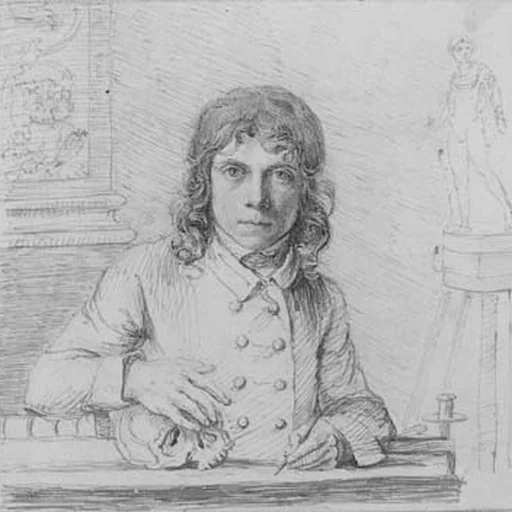
John Flaxman (6 July 1755 – 7 December 1826) was an English sculptor and draughtsman who was a leading figure in British and European Neoclassicism.