Artwork
Ceasul și treptele năzuinței
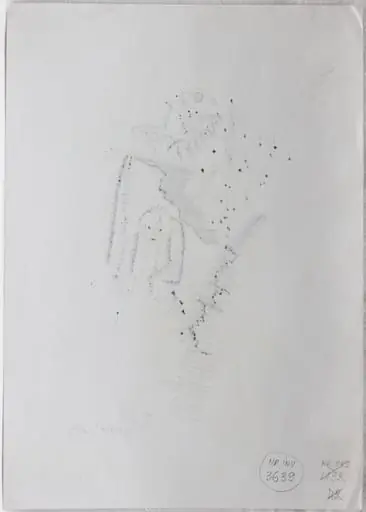
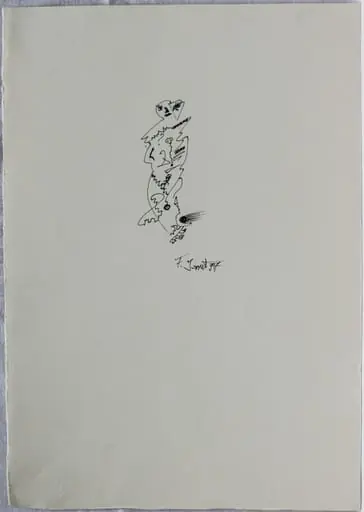
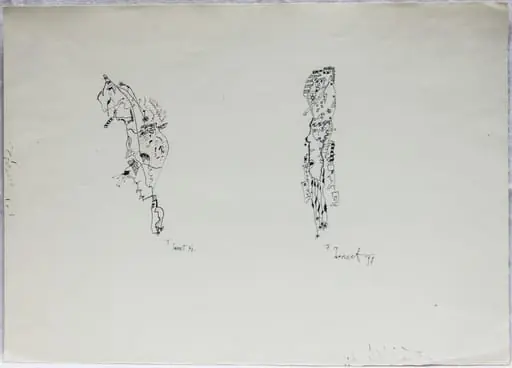
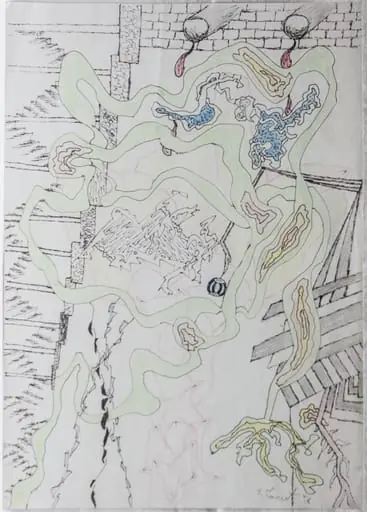
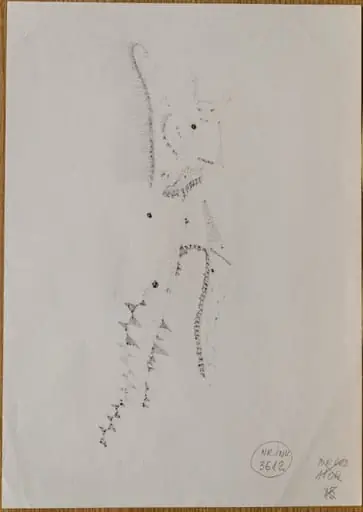
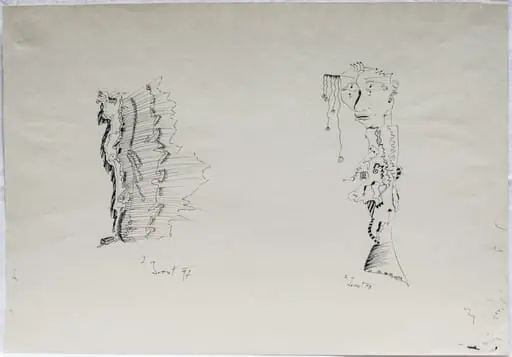
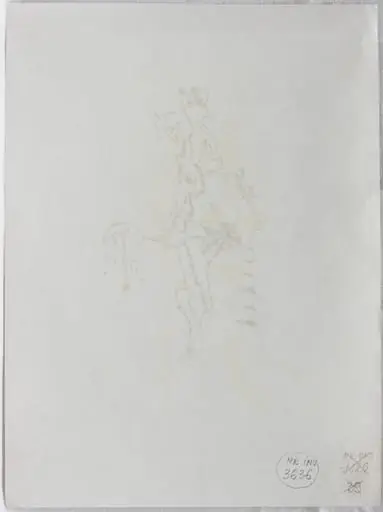
Ceasul și treptele năzuinței is a drawing by Ionuț Cătălin Florea. It dates from 1950 and is held in the collection of the Gavrila Simion Eco-Museum Research Institute Tulcea.
About this work
Overview
The work is held in the collection of the Museum of Ethnography, where its minimalism invites contemplation rather than immediate interpretation.
Ceasul și treptele năzuinței is a small, unassuming drawing attributed to Ionuț Cătălin Florea, dated around 1950. Executed in pencil on aged paper, it presents no clear imagery—only faint, irregular lines and scattered marks. The work is held in the collection of the Museum of Ethnography, where its minimalism invites contemplation rather than immediate interpretation. Its physical condition suggests handling and time, with visible creases and a faint institutional stamp in one corner.
Subject & Meaning
The title, translating to 'The Clock and the Steps of Aspiration,' suggests a metaphorical theme, possibly relating to time, effort, or inner struggle. Yet the drawing offers no literal representation—no clock, no stairs, no figures. Instead, the ambiguous marks may imply the fragility of intention or the impermanence of thought. The work resists narrative, leaving meaning open to the viewer’s reflection rather than stating it explicitly.
Technique & Style
The drawing employs a restrained pencil technique, with light, uneven strokes that avoid definition. Marks are sparse, irregular, and partially erased, creating a sense of hesitation or revision. Small smudges and dots suggest accidental gestures or moments of doubt. The absence of shading or structure aligns with a contemplative, almost meditative approach, prioritizing suggestion over depiction. The paper’s texture subtly influences the pencil’s interaction, enhancing the work’s tactile quietude.
History & Provenance
The work’s origins are undocumented beyond its attribution to Florea and its approximate date. It entered the Museum of Ethnography’s collection without a known exhibition history or prior ownership record. Its survival as a private sketch, rather than a finished piece, implies it was never intended for public display. The faint institutional stamp indicates it was cataloged early in the museum’s modern acquisitions, though its significance was likely not recognized at the time.
Context
Created in the early 1950s in Romania, the work emerges during a period of state-enforced artistic conformity. While official art promoted socialist realism, private sketches like this one often served as quiet acts of personal expression. Florea’s minimalism, though not politically charged, may reflect the withdrawal of the individual from public discourse. Its obscurity mirrors the broader suppression of non-conformist artistic practices under the regime.
Legacy
Ceasul și treptele năzuinței remains an understudied fragment within Florea’s oeuvre and Romanian mid-century art. Its value lies not in technical mastery but in its quiet resistance to representation. It stands as an example of how personal, unpolished gestures can outlast ideological systems. Today, it is occasionally referenced in discussions of marginal art practices, where silence and absence carry as much weight as form.
Artist & collection
Artist
This artist made abstract drawings and one sculpture, blending lines and shapes in ways that feel both deliberate and playful.
Museum
Gavrila Simion Eco-Museum Research Institute Tulcea
Continue through works from the same source collection.