Artwork
Impatience
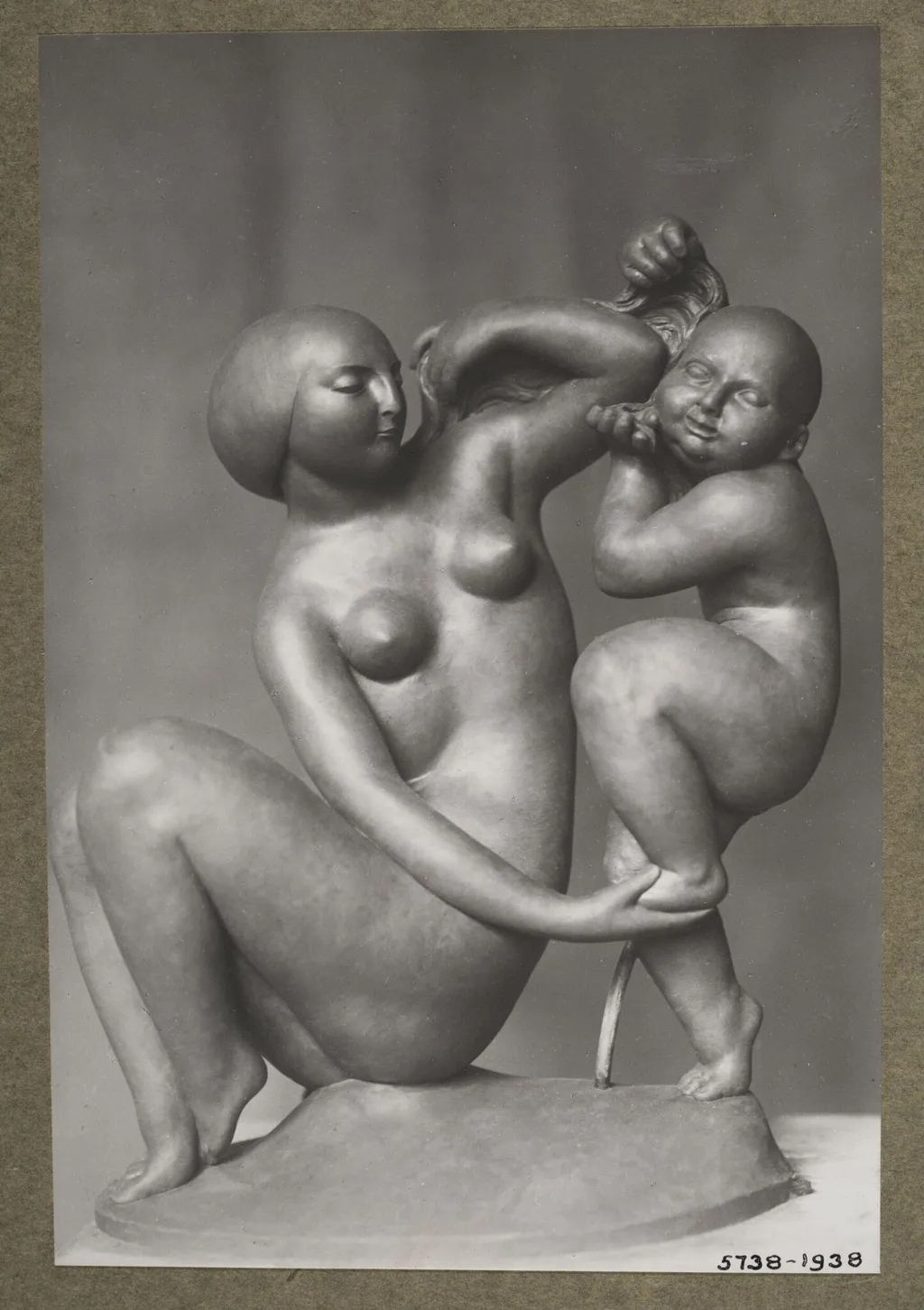
Impatience is a photographic photography by Amerigo Focacci. It is held in the collection of the Victoria and Albert Museum.
About this work
Overview
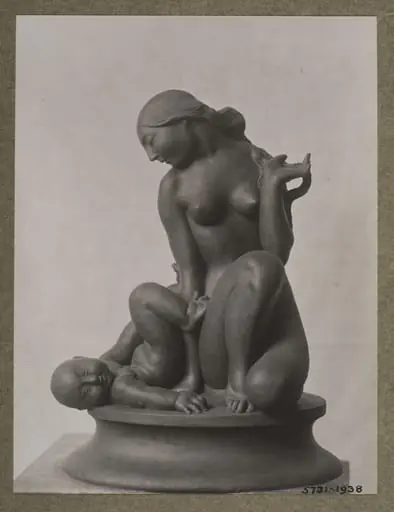
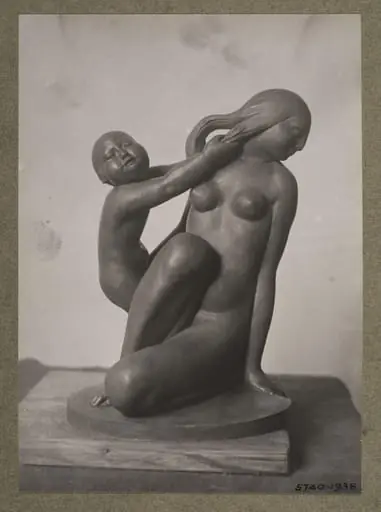
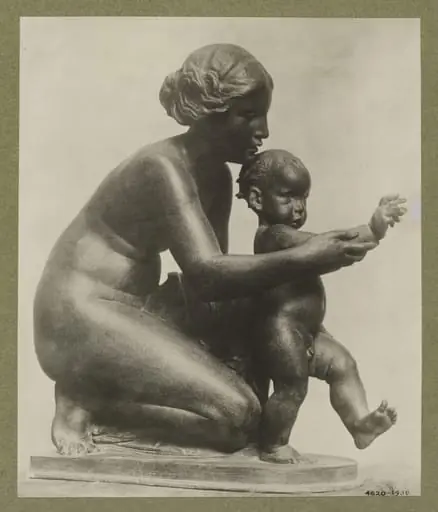
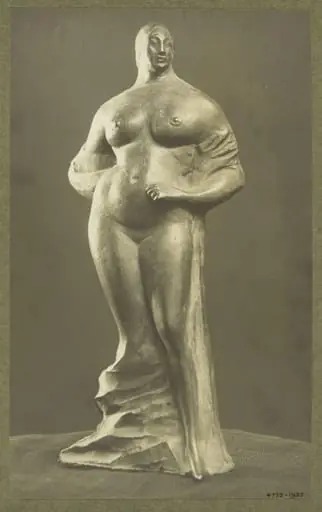
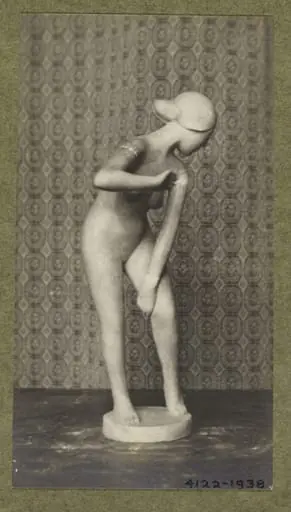
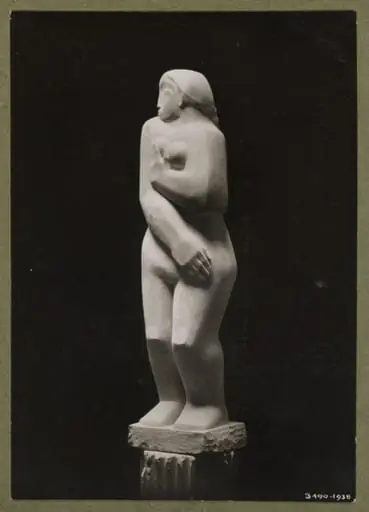
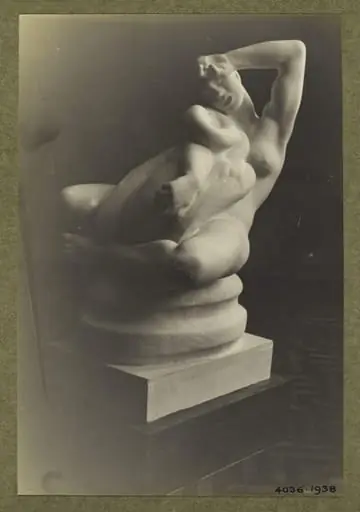
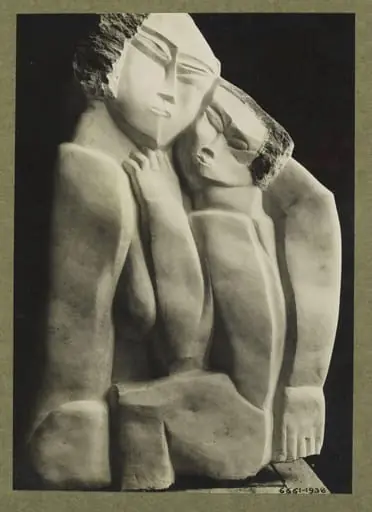
Impatience is a black‑and‑white photograph by Amerigo Focacci, presented on a green mounting card. The image captures a pair of rounded, sculptural forms engaged in an intimate embrace, their smooth contours suggesting a tactile material such as clay or stone. The composition emphasizes the softness of the bodies and the gentle contact between them, creating a quiet, contemplative mood.
Subject & Meaning
The work depicts two plump, almost childlike figures locked in a close hug: one kneels, cradling the other, while the second leans forward with a faint smile. The lack of detailed facial features and the emphasis on volume over surface detail invite viewers to focus on the emotional resonance of closeness and support, rather than narrative specifics.
Technique & Style
Focacci’s photograph translates three‑dimensional sculptural qualities into a two‑dimensional medium, highlighting the play of light across the rounded surfaces. The image relies on subtle gradations of tone to render the soft folds and curves, echoing the chiaroscuro tradition where strong contrasts model form without the need for explicit texture.
History & Provenance
The print entered the Archive of Art and Design as part of a bequest from William Kineton Parkes in 1938. Parkes, a noted writer on sculpture, had circulated questionnaires to sculptors during the 1920s; this photograph was one of the visual responses he collected, reflecting his interest in the dialogue between photography and three‑dimensional art.
Context
Created in the interwar period, Impatience aligns with a broader exploration of the human figure as a vehicle for expressing psychological states. The work’s emphasis on tactile form and intimate gesture corresponds with contemporary experiments that blurred the boundaries between sculpture, photography, and documentary practice.
Artist & collection
Artist
Amerigo Focacci moved through quiet moments like a thief—watching, waiting, snapping when no one expected.