Artwork
Mischief
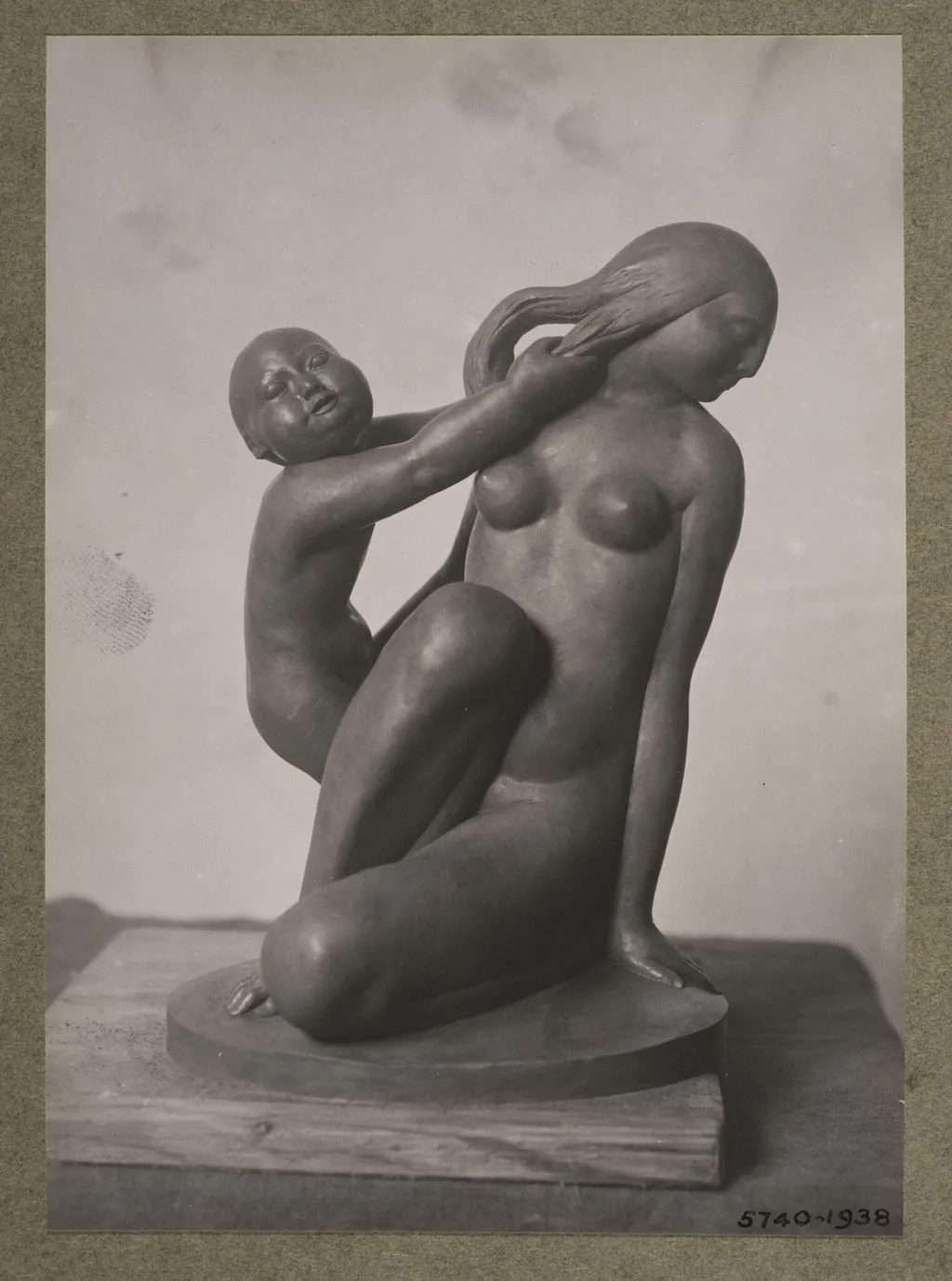
Mischief is a photographic photography by Amerigo Focacci. It is held in the collection of the Victoria and Albert Museum.
About this work
Overview
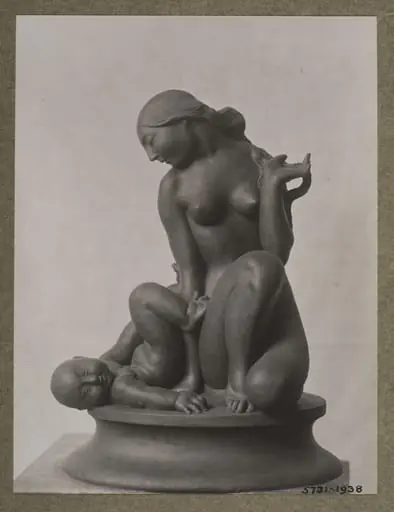
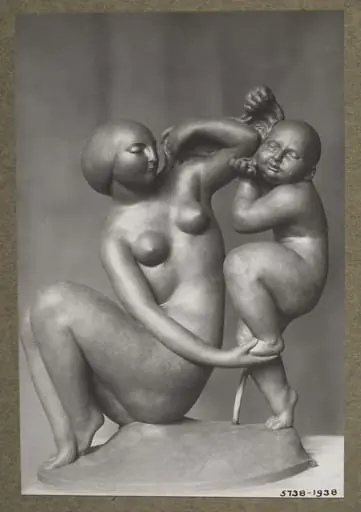
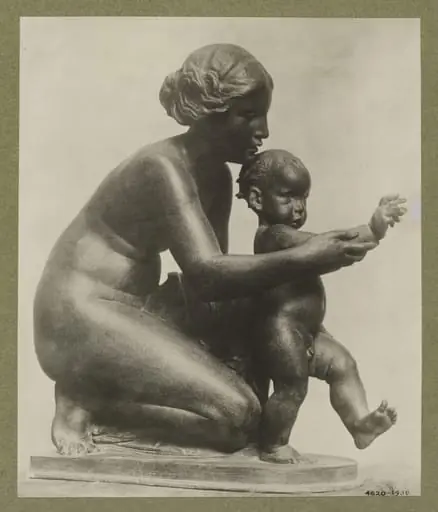
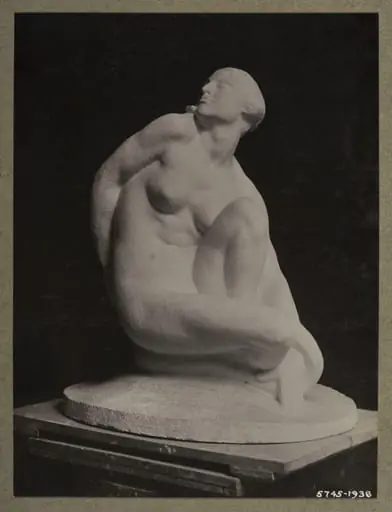
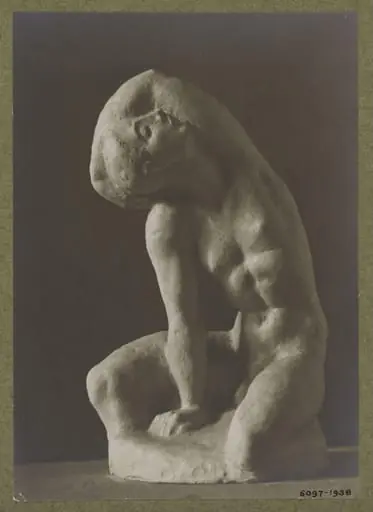
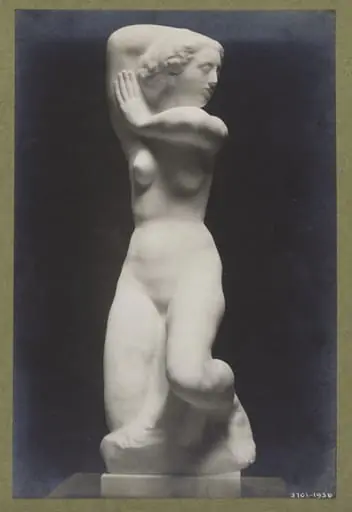
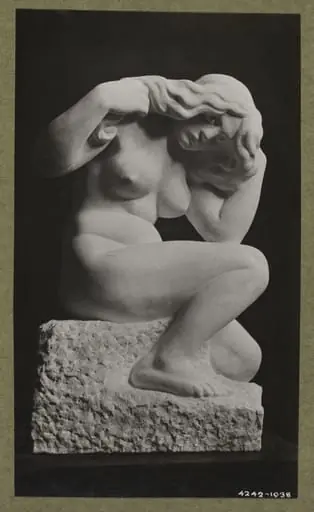
Mischief is a photographic image mounted on a green backing card. The picture documents a small sculpture that captures a kneeling woman supporting a child perched on her back. The work is presented as a black‑and‑white photograph, emphasizing the smooth, rounded forms of the figures and the subtle interaction between them.
Subject & Meaning
The sculptural scene portrays a woman in a relaxed yet sturdy pose, one arm resting on her knee, while a child with an oversized, simplified head clings to her back and toys with her hair. The composition suggests a moment of playful intimacy, balancing the solidity of the adult figure with the lively gesture of the child.
Technique & Style
The photograph records the sculpture’s dark material—likely stone or metal—rendered in a tonal range that highlights its smooth surfaces and rounded volumes. The framing isolates the figures, allowing the viewer to focus on the contrast between the adult’s calm posture and the child’s animated movement, a common approach in early‑20th‑century documentary photography of sculpture.
History & Provenance
The image entered the museum’s holdings through the 1938 bequest of William Kineton Parkes, a novelist, art historian, and librarian noted for his scholarship on sculpture. Parkes had received the photograph as part of a series of works sent by sculptors in the 1920s in response to questionnaires he circulated, a correspondence now preserved in the Archive of Art and Design.
Context
The series of photographs sent to Parkes reflects a broader practice in the 1920s of artists documenting their work for scholarly study. By providing visual records alongside written responses, sculptors contributed to a growing archive that linked artistic practice with academic inquiry, situating this image within early efforts to systematically catalogue contemporary sculpture.
Artist & collection
Artist
Amerigo Focacci moved through quiet moments like a thief—watching, waiting, snapping when no one expected.