Artwork
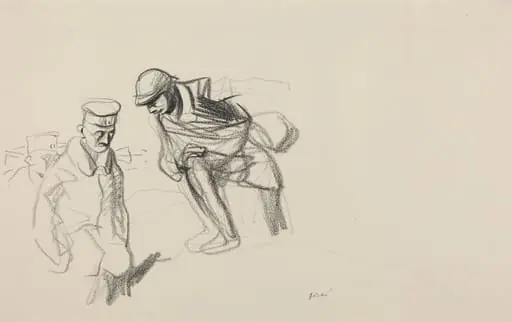
a) Along the Marne (recto); b) Study for Along the Marne (verso)
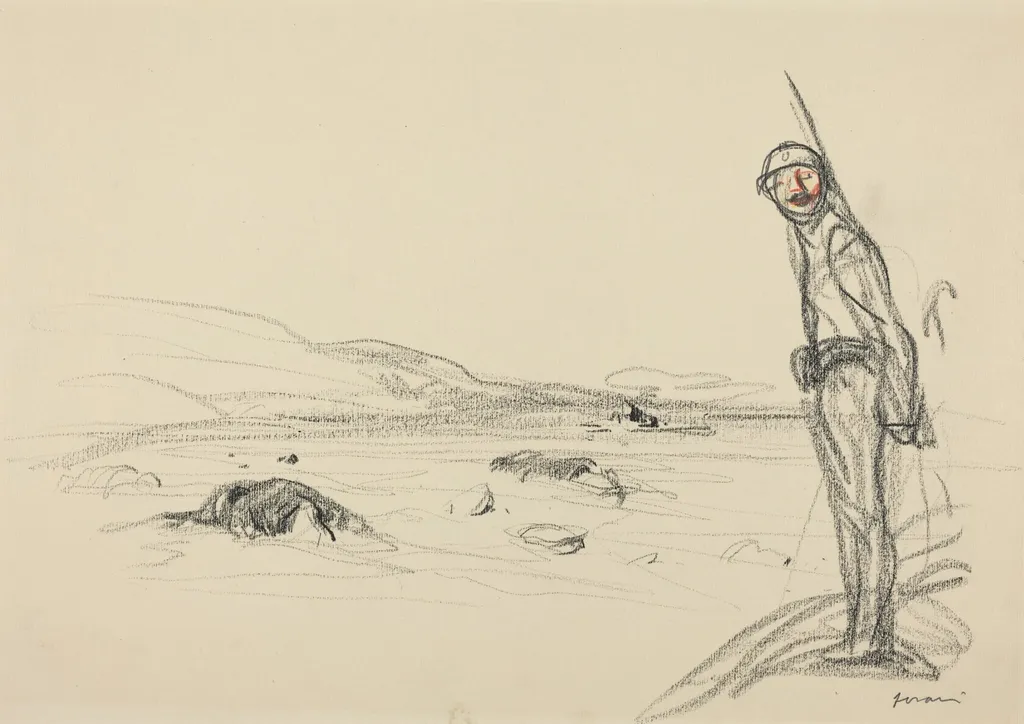
a) Along the Marne (recto); b) Study for Along the Marne (verso) is a graphite drawing by Jean-Louis Forain. It dates from 1918 and is held in the collection of the National Gallery of Art.
About this work
Overview
Both are executed in crayon on wove paper, with the front piece incorporating graphite, red, and yellow crayon to enhance tonal contrast and emotional texture.
Created around 1918, this double-sided drawing by Jean-Louis Forain presents a finished composition on the recto and a preparatory sketch on the verso. Both are executed in crayon on wove paper, with the front piece incorporating graphite, red, and yellow crayon to enhance tonal contrast and emotional texture. The work reflects Forain’s shift toward wartime subjects during the final years of the First World War, capturing a solitary soldier in a moment of quiet tension.
Subject & Meaning
The figure is a French soldier standing on a rugged riverbank, rifle held loosely, his face rendered in smudged strokes that obscure identity while emphasizing fatigue. The turbulent water behind him suggests both the physical environment and an inner unease. Subtle red marks on the face may indicate flush or strain, not literal color, reinforcing the psychological weight of the moment without narrative clarity.
Technique & Style
Forain employed rapid, fluid lines in black crayon to define form and movement, with graphite adding subtle shading and red and yellow crayon introducing localized intensity. The loose handling and minimal detail reflect an immediacy typical of on-site sketching. The verso study reveals his process: simplified contours and erased areas show revision, underscoring the drawing’s role as both observation and refinement.
History & Provenance
The drawing emerged during Forain’s active engagement with wartime imagery, a period when his output focused on soldiers and civilian life affected by conflict. Though widely exhibited in his time, the work remained in private hands after his death, with no major public institution holding a documented record of its early ownership. Its survival as a paired sheet suggests it was preserved by the artist or a close associate.
Context
Created near the war’s end, the drawing aligns with a broader trend among French artists who turned from leisurely Impressionist themes to depict the human cost of conflict. Forain, though associated with earlier avant-garde circles, adopted a direct, unsentimental approach to military subjects, distinguishing his work from both propaganda and romanticized heroism.
Legacy
While Forain’s reputation declined after his death, this drawing exemplifies his capacity to convey emotional gravity through economical means. It stands as a quiet counterpoint to more monumental war art of the era, offering a personal, unadorned glimpse into the daily presence of soldiers on the home front, preserved in the immediacy of drawn line.
Artist & collection

Artist
Jean-Louis Forain (French pronunciation: ; 23 October 1852 – 11 July 1931) was a French Impressionist painter and printmaker, working in media including oils, watercolour, pastel, etching and lithograph.

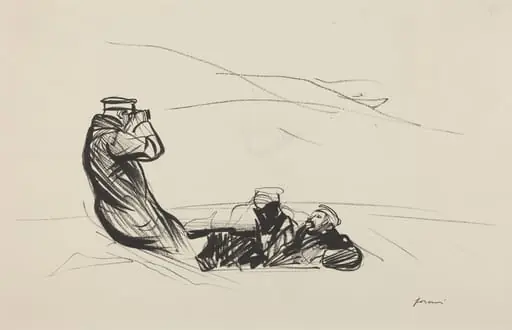 a) Looking for the Enemy (recto); b) Sketch for Looking for the Enemy (verso)
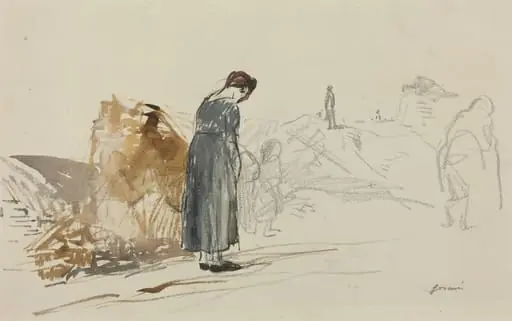 a) Les Allemandes sont partis (recto); b) Sketch of a Man (verso)
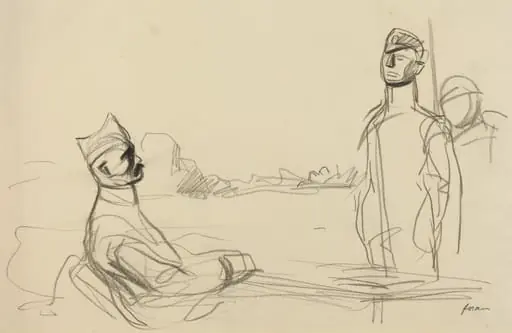 Toward Justice
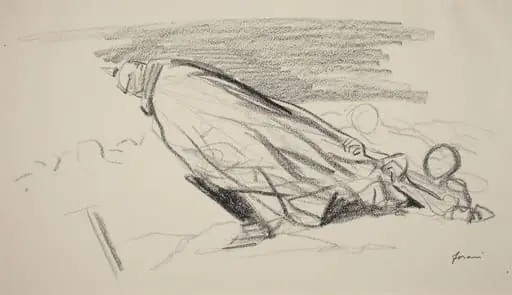 Ceux de la premiere heure. "Sire! ou en somme-nous de "la guerre fraiche et joyeuse"? ..."
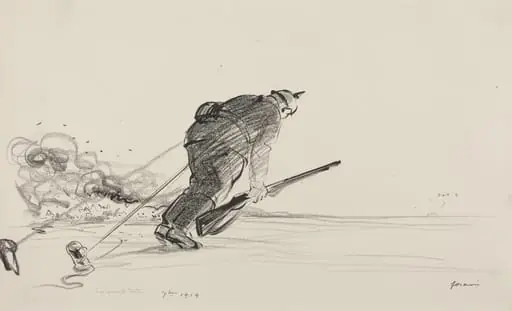 7me 1914
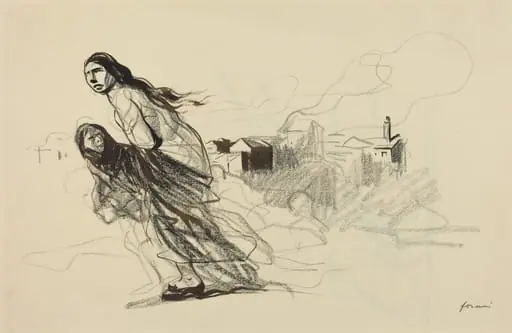 a) After Douai (recto); b) Untitled (verso)
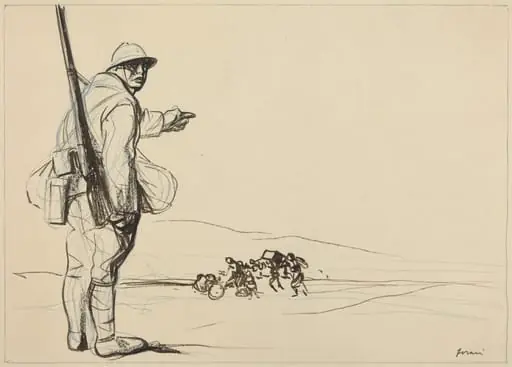 German Advance
 Lost Illusions
![Sheet of Studies [recto and verso], by John Flaxman](https://artifactworldgallery.com/img/john-flaxman--sheet-of-studies-recto-and-verso--af59e52d5279d768-w320.webp) Sheet of Studies [recto and verso]
Sheet of Studies [recto and verso]