Artwork
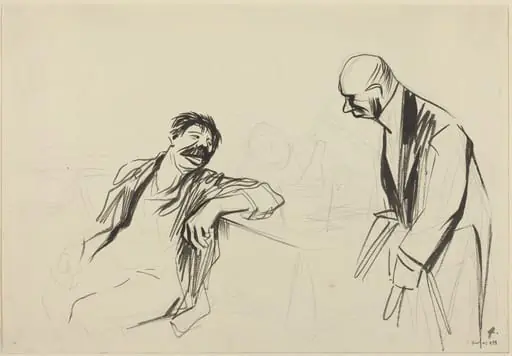
a) Looking for the Enemy (recto); b) Sketch for Looking for the Enemy (verso)
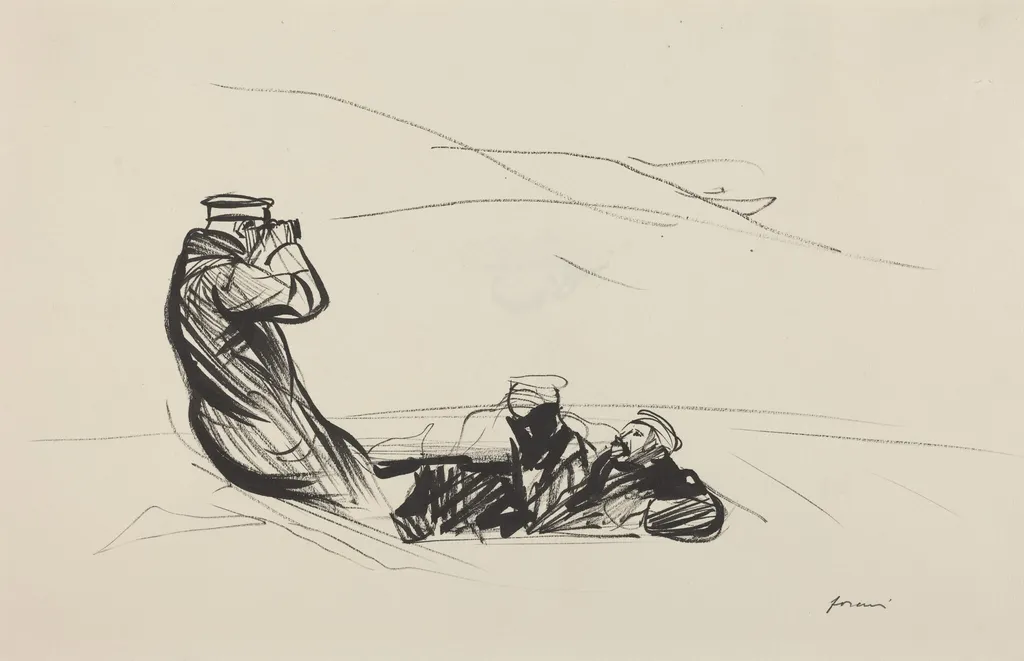
a) Looking for the Enemy (recto); b) Sketch for Looking for the Enemy (verso) is an ink drawing by Jean-Louis Forain. It dates from 1916 and is held in the collection of the National Gallery of Art.
About this work
The artist likely explored different themes in his work, and this piece might be related to his experiences or interests during that time.
The painting has two titles: "Looking for the Enemy" on one side and "Sketch for Looking for the Enemy" on the other.
It was created by Jean-Louis Forain around 1914 to 1919.
The artist likely explored different themes in his work, and this piece might be related to his experiences or interests during that time.
You can learn more about the artist's style and other works at the National Gallery of Art, Washington.
Overview
Jean‑Louis Forain’s double‑sided drawing, titled *Looking for the Enemy* on the front and *Sketch for Looking for the Enemy* on the back, was executed in brush and black ink on wove paper around 1916. The recto presents a finished composition, while the verso reveals the artist’s preliminary study, illustrating his method of developing a scene in ink before committing to the final image.
Subject & Meaning
Both sides portray a single narrative scene, though the exact content is not described in the source material. The title suggests a search or surveillance motif, possibly reflecting the heightened tension of the World War I era when Forain produced the work. The juxtaposition of finished and sketch versions invites viewers to consider the process of observation and interpretation inherent in the act of ‘looking for’ an adversary.
Technique & Style
Forain employed a brush rather than a pen, allowing for fluid, gestural strokes that convey movement and atmosphere in the monochrome medium. The use of black ink on wove paper provides a uniform surface that emphasizes line quality and contrast. This approach aligns with Forain’s broader practice in drawing and printmaking, where he often explored rapid, expressive marks within a controlled compositional framework.
History & Provenance
Created between 1914 and 1919, the drawing reflects a period when Forain enjoyed considerable contemporary acclaim, surpassing many of his Impressionist colleagues in popularity. Although his reputation has waned in later decades, the work remains documented in the collection of the National Gallery of Art, Washington, where it is referenced among his ink drawings and preparatory studies.
Context
The early twentieth‑century milieu in which Forain worked was marked by the upheavals of World War I, a time that prompted many artists to address themes of conflict, surveillance, and societal anxiety. Forain’s choice of a single‑sheet, double‑sided format underscores the immediacy of his response to contemporary events, offering both a finished visual statement and the underlying investigative process.
Artist & collection

Artist
Jean-Louis Forain (French pronunciation: ; 23 October 1852 – 11 July 1931) was a French Impressionist painter and printmaker, working in media including oils, watercolour, pastel, etching and lithograph.

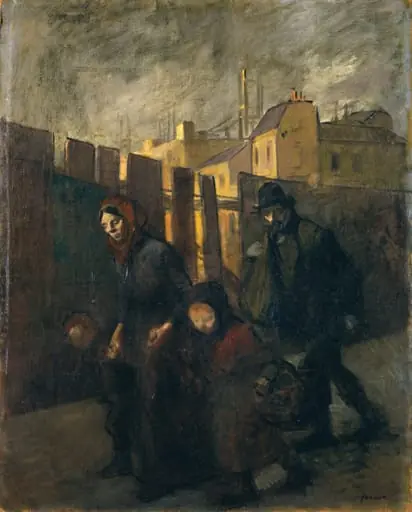
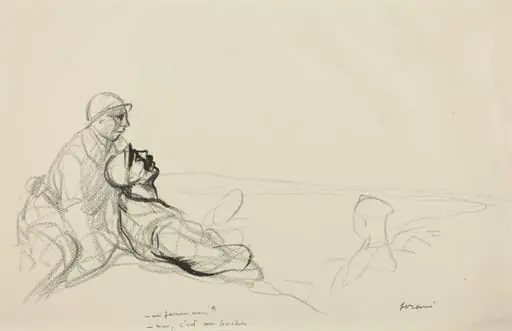 a) -Un farman? -non, c'est un boche. (recto); b) Sketch of Figure (verso)
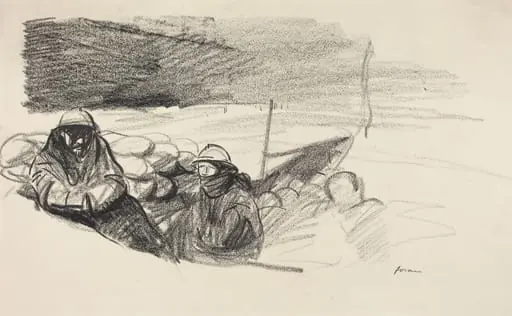 a) Two Soldiers in a Trench (recto); b) Interior with Figures Seated Behind Table (verso)
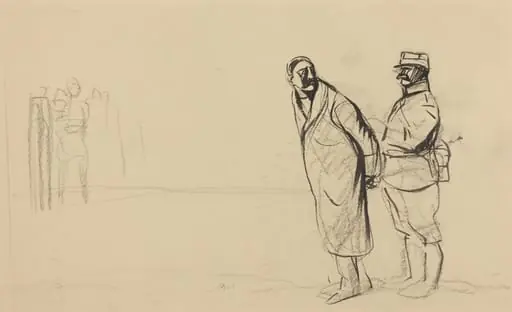 a) Au front de Vincennes, Bolo pacha (recto); b) Sketch for Au front de Vincennes, Bolo pacha (verso)
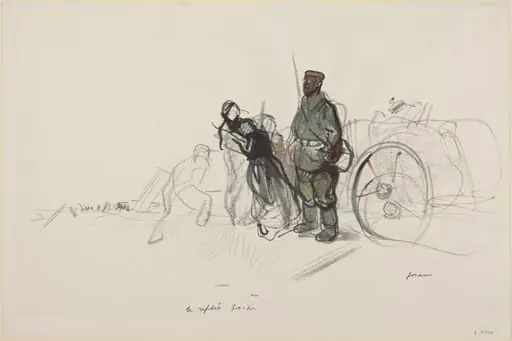 a) Le replis boche (recto); b) Sketch for the Figure of the German (verso)
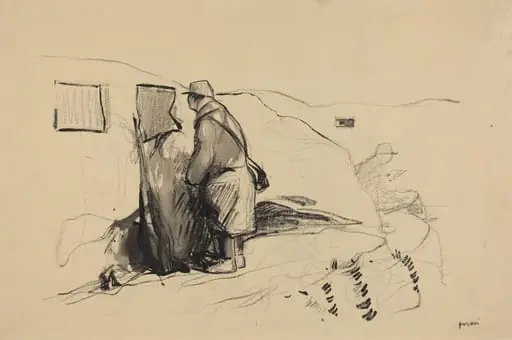 a) In the Trenches (recto); b) Study for In the Trenches (verso)
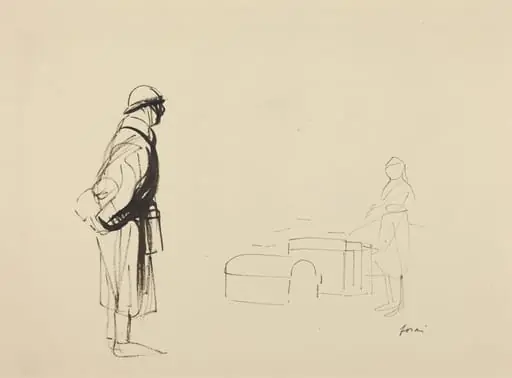 a) Poilu and Nurse (recto); b) Sketch for the Poilu (verso)
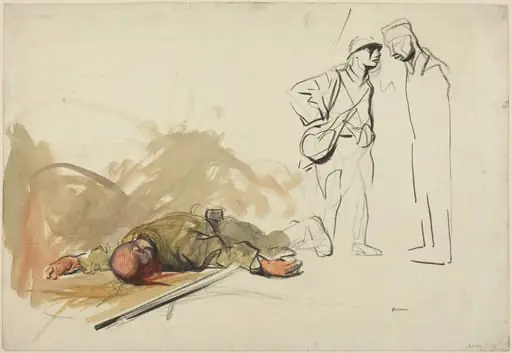 a) Dead German Soldier (recto); b) Head of a Soldier (verso)
 a) Waiter and Customer (recto); b) Sketch of a Man and Woman (verso)