Artwork
a) Fetters (recto); b) Sketch for Fetters (verso)
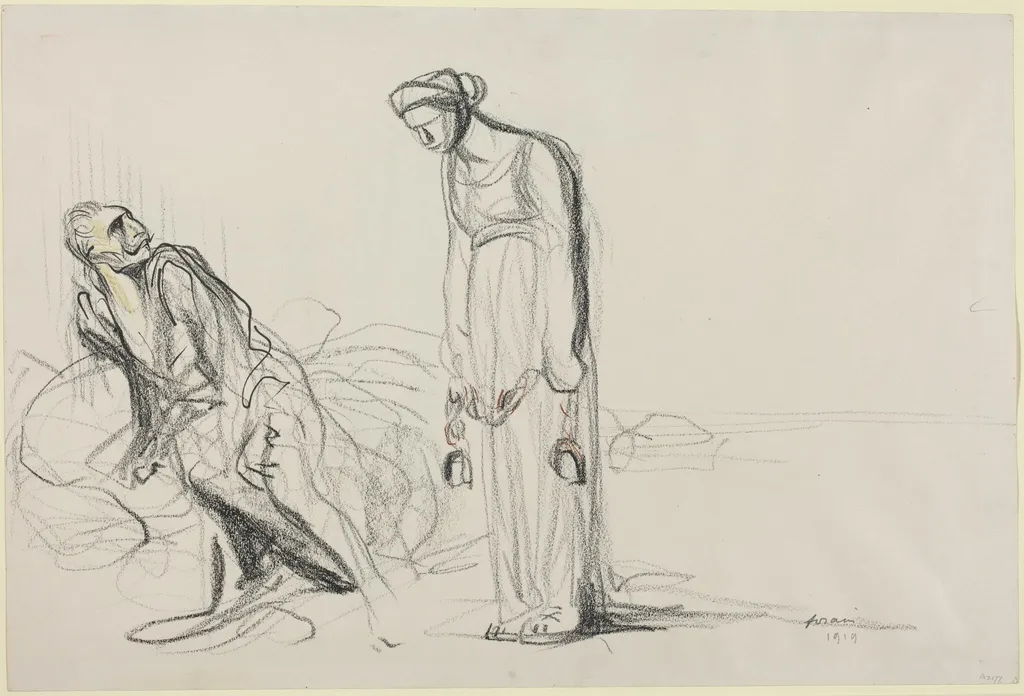
a) Fetters (recto); b) Sketch for Fetters (verso) is a crayon drawing by Jean-Louis Forain. It dates from 1919 and is held in the collection of the National Gallery of Art.
About this work
Overview
Both use black crayon and ink, emphasizing line and contrast over color.
Created in 1919, these two drawings by Jean-Louis Forain share a single sheet of wove paper, with a finished composition on the recto and a preparatory sketch on the verso. Both use black crayon and ink, emphasizing line and contrast over color. The recto presents a resolved image, while the verso reveals the artist’s process, offering insight into his method of refining form and gesture before final execution.
Subject & Meaning
The recto depicts a kneeling man with his head thrown back and hands raised to his face, clad in a dark robe, while a standing woman in a white dress and headscarf looks down at him, her hands clasped. The scene suggests a moment of emotional or spiritual tension—perhaps grief, supplication, or resignation. The absence of context invites interpretation, but the posture and attire imply ritual, mourning, or inner turmoil, rendered with restrained dignity.
Technique & Style
Forain employed black crayon and brushwork in ink to achieve sharp contrasts and fluid contours. The recto combines the solidity of crayon with the fluidity of ink washes, defining form through selective shading and leaving areas of untouched paper to suggest light. The verso, in pure crayon, is looser and more gestural, capturing movement and weight with minimal strokes. Both reflect a modernist economy of means, prioritizing expressive line over detail.
History & Provenance
The drawings were made in 1919, during a period when Forain was deeply engaged in printmaking and figurative work, though his reputation had begun to wane relative to his earlier prominence. They remained in private hands for much of the 20th century, with no public exhibition history widely documented. Their survival as a paired sheet suggests they were kept together by the artist or an early collector, preserving the relationship between study and final composition.
Context
In post-World War I France, Forain continued working in a figurative style that contrasted with emerging avant-garde movements. His focus on human emotion and social observation aligned with late Impressionist concerns, yet his drawings here show a move toward abstraction of form and emotional intensity. The simplicity of these works reflects a broader trend among artists seeking clarity and psychological depth amid societal upheaval.
Legacy
Though Forain’s name is less prominent today than among his contemporaries, these drawings exemplify his skill in capturing human presence with minimal means. Their quiet power and technical precision have influenced later generations of draftsmen interested in expressive line and emotional restraint. The pairing of study and finished work offers a rare glimpse into his creative process, reinforcing his significance as a draftsman beyond his more widely known prints and paintings.
Artist & collection

Artist
Jean-Louis Forain (French pronunciation: ; 23 October 1852 – 11 July 1931) was a French Impressionist painter and printmaker, working in media including oils, watercolour, pastel, etching and lithograph.

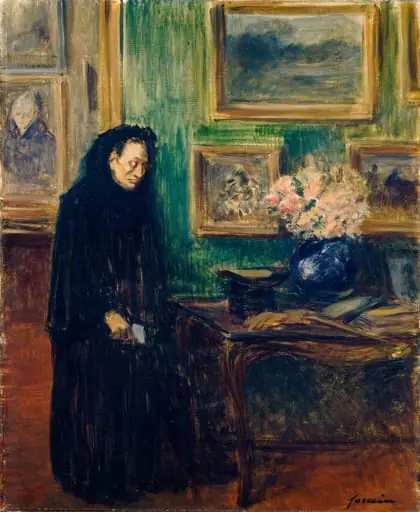
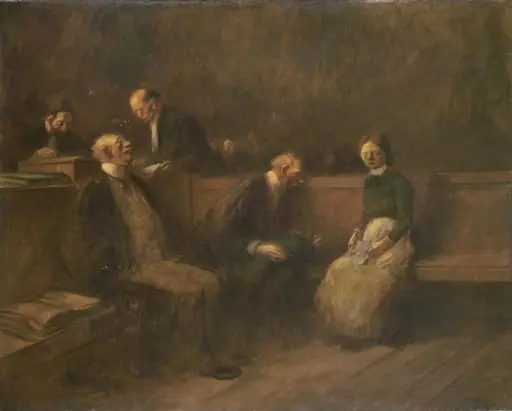
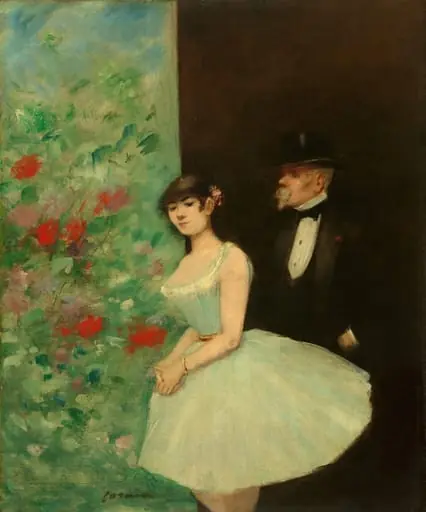
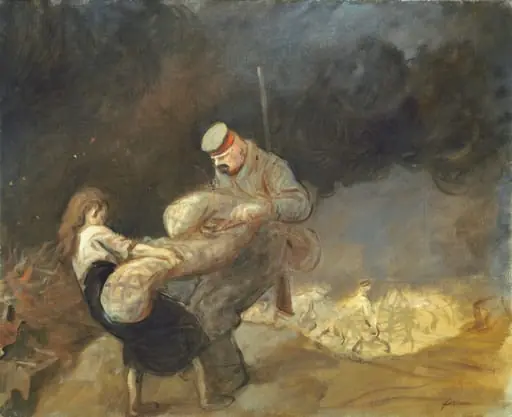
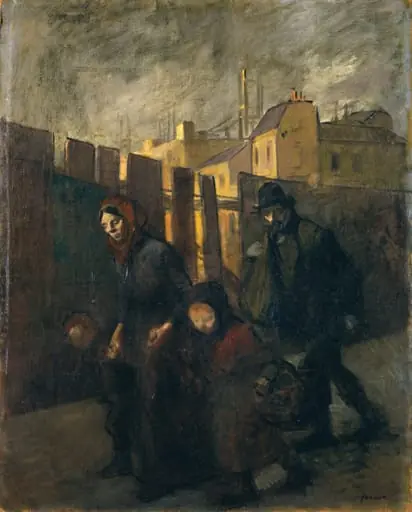
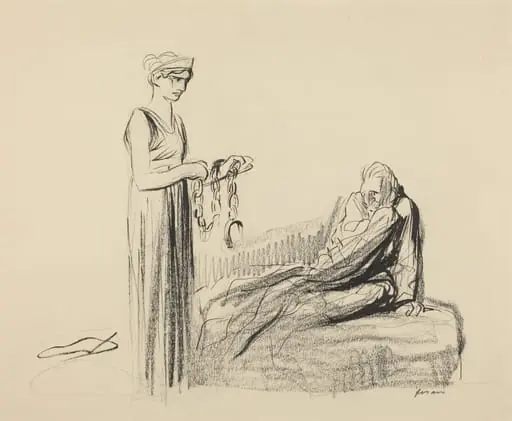 a) Fetters (recto); b) Several Figures (verso)
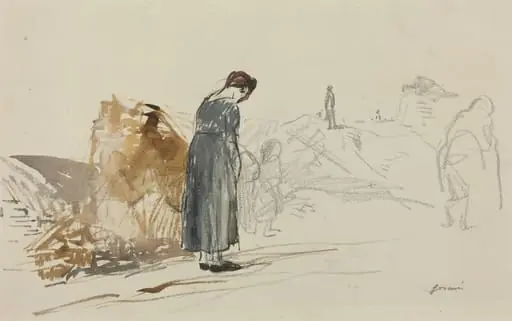 a) Les Allemandes sont partis (recto); b) Sketch of a Man (verso)
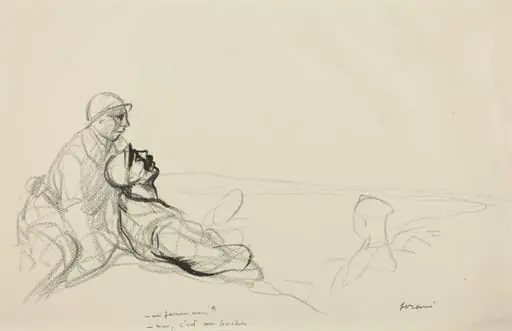 a) -Un farman? -non, c'est un boche. (recto); b) Sketch of Figure (verso)
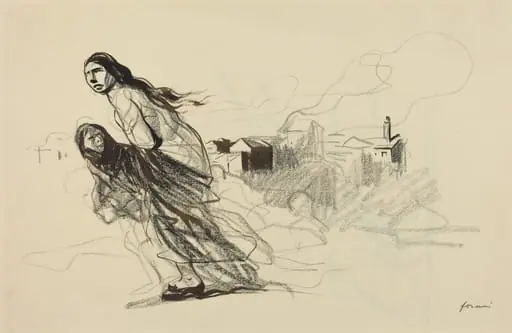 a) After Douai (recto); b) Untitled (verso)
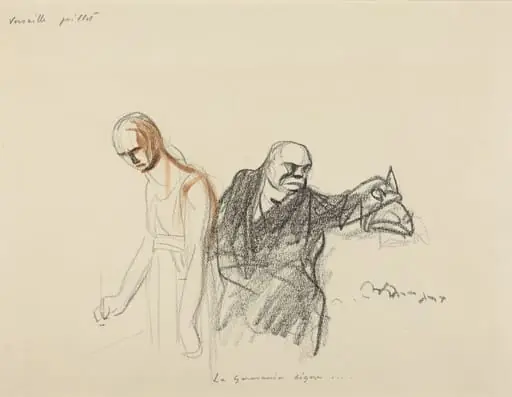 a) Versailles juillet. La Germania signe... (recto); b) Sketch for Figure of Germania (verso)
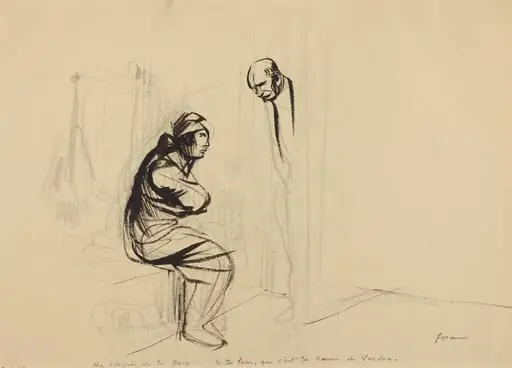 a) Au congres de la Paix (recto); b) Untitled (verso)