Artwork
a) Fetters (recto); b) Several Figures (verso)
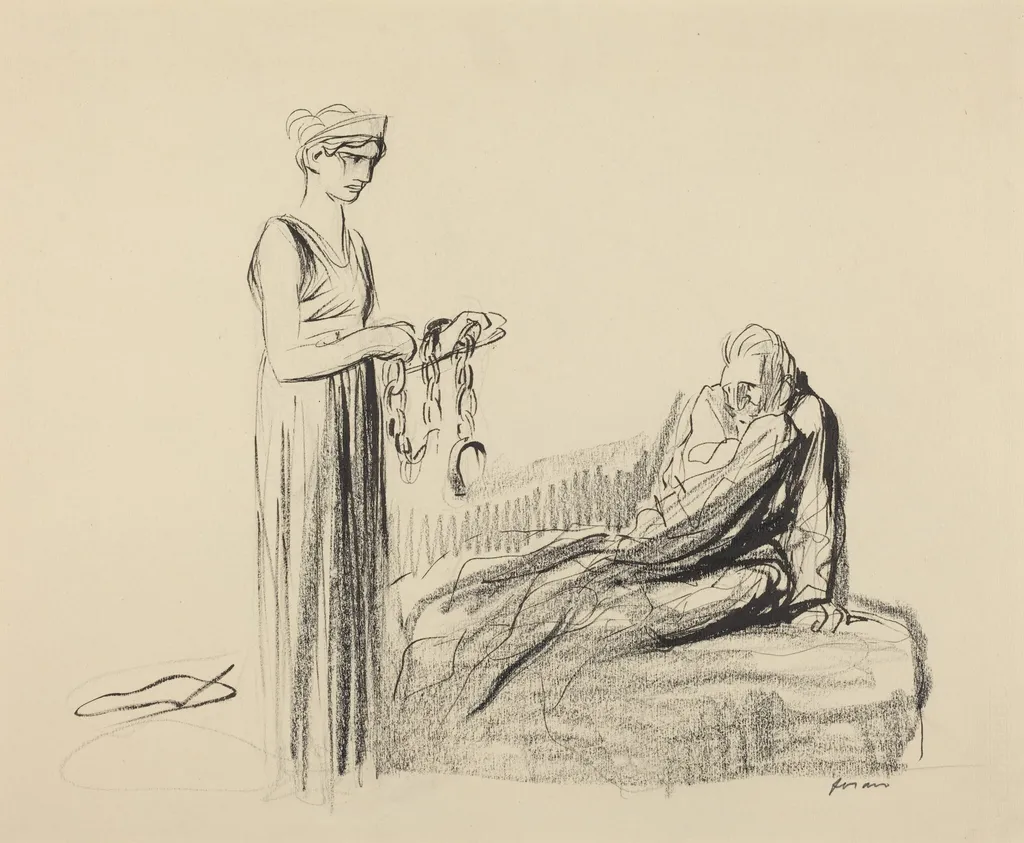
a) Fetters (recto); b) Several Figures (verso) is an ink drawing by Jean-Louis Forain. It dates from 1919 and is held in the collection of the National Gallery of Art.
About this work
Overview
Both works exemplify Forain’s skill as a draftsman and his sustained interest in human figures, though they remain lesser-known compared to his printed works.
Created around 1919, these two drawings by Jean-Louis Forain share a single sheet of wove paper, with one image on each side. The recto features brush and ink with black crayon, while the verso is rendered in graphite. Both works exemplify Forain’s skill as a draftsman and his sustained interest in human figures, though they remain lesser-known compared to his printed works. Their intimate scale and spontaneous execution suggest private study rather than public display.
Subject & Meaning
The recto depicts two figures in a confined interior: one stands holding a chain, draped in a long garment and head covering; the other sits slumped on a bed, wrapped in sheets, head bowed. The chain and posture imply a dynamic of control and exhaustion, though no explicit narrative is given. The ambiguity invites interpretation—perhaps domestic servitude, emotional burden, or symbolic restraint—without resorting to literal storytelling, leaving meaning open to the viewer’s perception.
Technique & Style
Forain employed swift, economical lines to define form, avoiding detailed rendering in favor of suggestive gesture. On the recto, ink and crayon create contrast through dense shadows and thin, fluid contours; the verso uses graphite with looser, more varied strokes to suggest volume and movement. Cross-hatching appears subtly in shaded areas, building depth without heaviness. The drawings feel immediate, as if captured in a single sitting, emphasizing observation over polish.
History & Provenance
These drawings were produced late in Forain’s career, during a period when his public prominence had waned despite earlier commercial success. They remained in private hands for decades, likely kept as personal studies rather than exhibited. Their survival as a paired sheet suggests they were preserved together intentionally, possibly by the artist or a close associate, reflecting their value as working sketches rather than finished pieces.
Context
Forain operated within the orbit of French Impressionism but maintained a distinct focus on urban life and psychological nuance. While contemporaries like Monet and Renoir pursued light and landscape, Forain turned to figures in intimate, often somber settings. These drawings align with his broader interest in social observation, echoing themes found in his etchings of theaters, streets, and domestic scenes, yet here stripped to their most essential forms.
Legacy
Though Forain’s reputation has not endured at the level of his Impressionist peers, these drawings reveal a sensitive, disciplined hand attuned to human presence and emotional weight. Their quiet power lies in restraint—no grand gestures, no dramatic lighting—just line and shadow conveying tension and stillness. They contribute to a quieter, more personal strand of late 19th- and early 20th-century French drawing, valued today for their honesty and economy.
Artist & collection

Artist
Jean-Louis Forain (French pronunciation: ; 23 October 1852 – 11 July 1931) was a French Impressionist painter and printmaker, working in media including oils, watercolour, pastel, etching and lithograph.

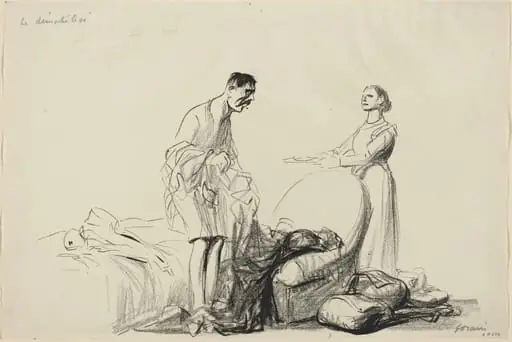 Le demobilise
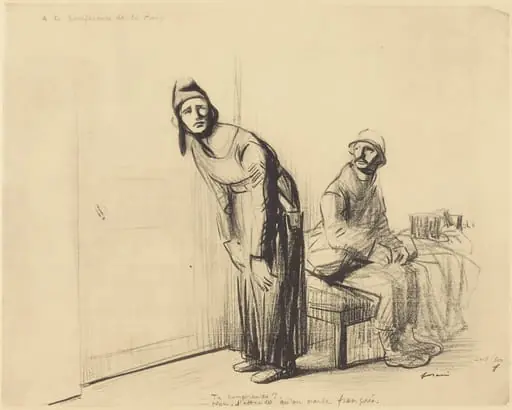 A la Conference de la Paix
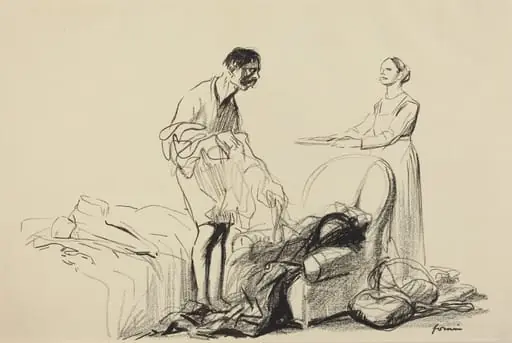 Le démobilisé
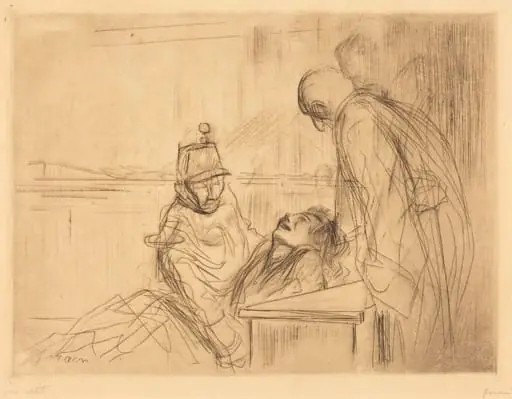 Evanouissement à l'audience (Fainting at the Hearing)
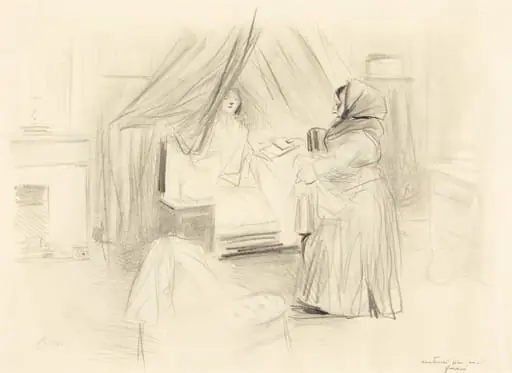 Le petit déjeuner (planche en largeur) (Breakfast) (horizontal plate)
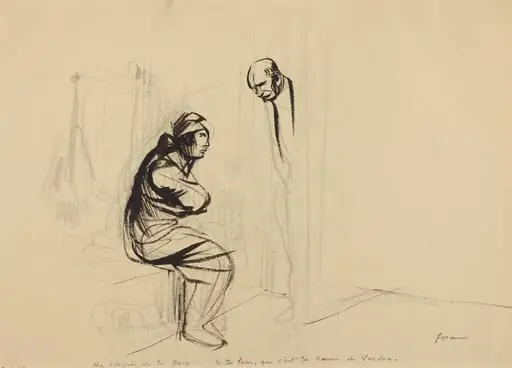 a) Au congres de la Paix (recto); b) Untitled (verso)
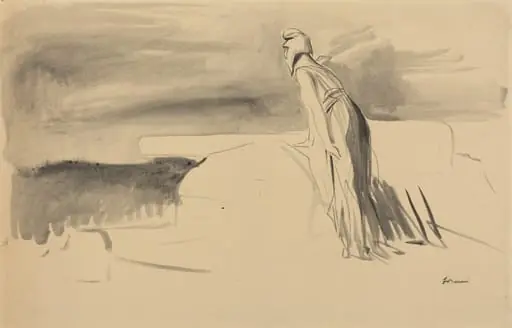 France Watching
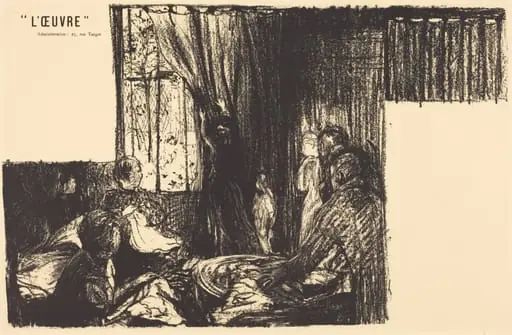 Les Soutiens de la société
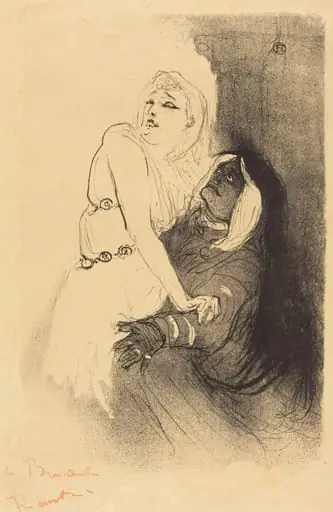 At the Renaissance: Sarah Bernhardt in "Phedre" (A la Renaissance: Sarah Bernhardt dans "Phèdre")
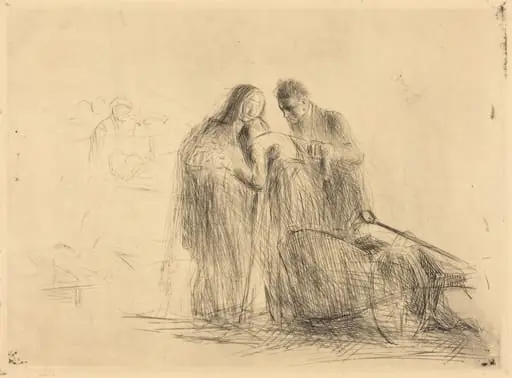 Lourdes, la paralytique (2e planche) (Lourdes, the Paralytic) (second plate)
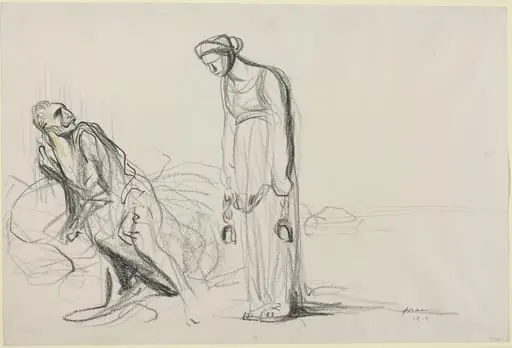 a) Fetters (recto); b) Sketch for Fetters (verso)
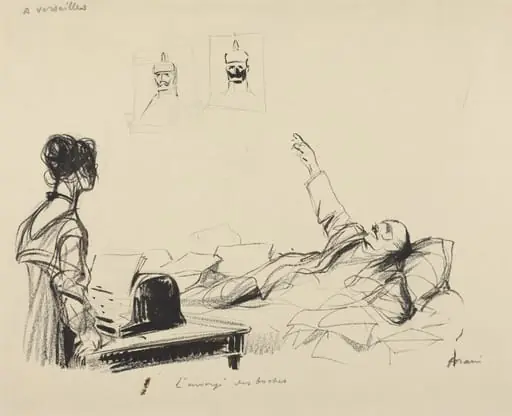 A Versailles. L'envoye des boches