Artwork
a) L'amour à Paris (Love in Paris) (recto); b) Untitled (verso)
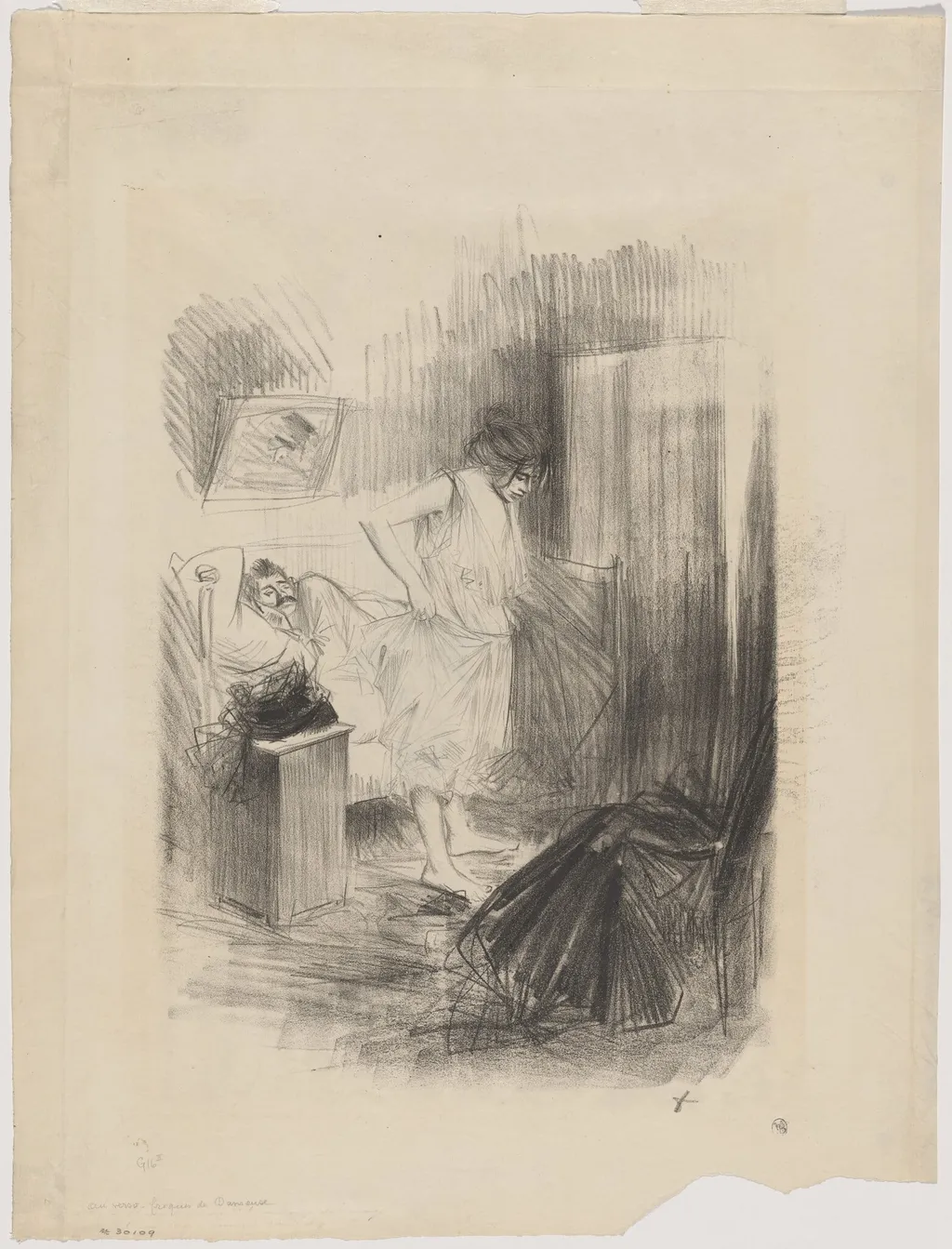
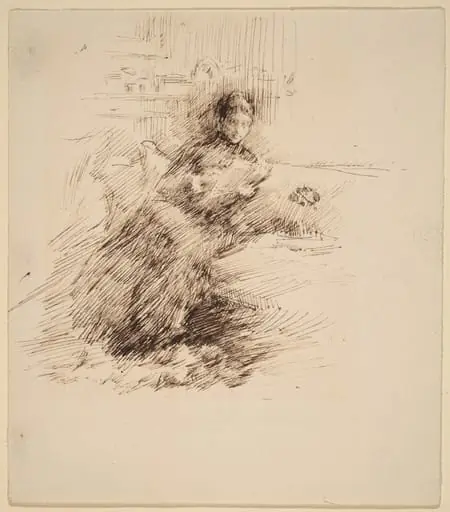
a) L'amour à Paris (Love in Paris) (recto); b) Untitled (verso) is a graphite print by the Impressionist artist Jean-Louis Forain. It dates from 1893 and is held in the collection of the National Gallery of Art.
About this work
Overview
Jean-Louis Forain’s work titled *L’amour à Paris* (Love in Paris) dates to circa 1893 and exists as a lithograph printed on wove Arches vellum paper. The sheet is double-sided: the front (recto) presents a nocturnal interior scene, while the back (verso) carries an untitled graphite drawing made on the same support.
Subject & Meaning
The lithographic image captures a dimly lit Parisian room where three figures are engaged in a quiet encounter.
The lithographic image captures a dimly lit Parisian room where three figures are engaged in a quiet encounter. A woman in a long dress stands near a window, her back turned to the viewer; a bearded man sits at a table holding a small object, and a third figure kneels on the floor, cloaked in a dark coat and hat. The composition suggests an intimate, perhaps clandestine, moment within the city’s private spaces.
Technique & Style
Forain employed the lithographic process, drawing directly onto a stone or metal plate with greasy media before transferring the image onto the vellum paper. The handling is rapid and sketch‑like, with loose, gestural lines that prioritize atmosphere over precise detail. The graphite drawing on the verso likewise demonstrates a spontaneous, observational approach, emphasizing tonal variation rather than fine rendering.
History & Provenance
During his lifetime, Forain enjoyed considerable commercial success, especially for his prints and illustrations, which were widely reproduced in newspapers and magazines. *L’amour à Paris* reflects the period’s demand for accessible, narrative images. The work later entered museum collections, where it is presented as an example of Forain’s printmaking alongside his more celebrated paintings and pastels.
Context
Created in the early 1890s, the piece belongs to the later phase of French Impressionism, when many artists turned to urban subjects and the everyday life of Paris. Forain, a contemporary of Degas and Toulouse‑Lautrec, often focused on the city’s social scenes, using humor and observation to comment on contemporary manners.
Legacy
Although Forain’s reputation has waned compared with some of his Impressionist peers, his prints remain valuable for their documentary quality and insight into Parisian interiors. The double-sided sheet illustrates his versatility across media, offering scholars a glimpse into his working process and the broader print culture of fin‑de‑siècle France.
Artist & collection

Artist
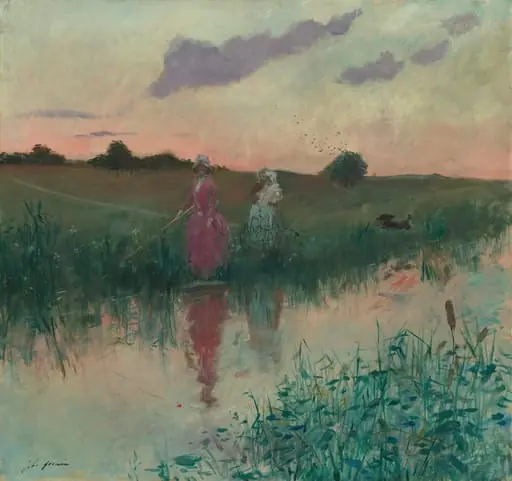
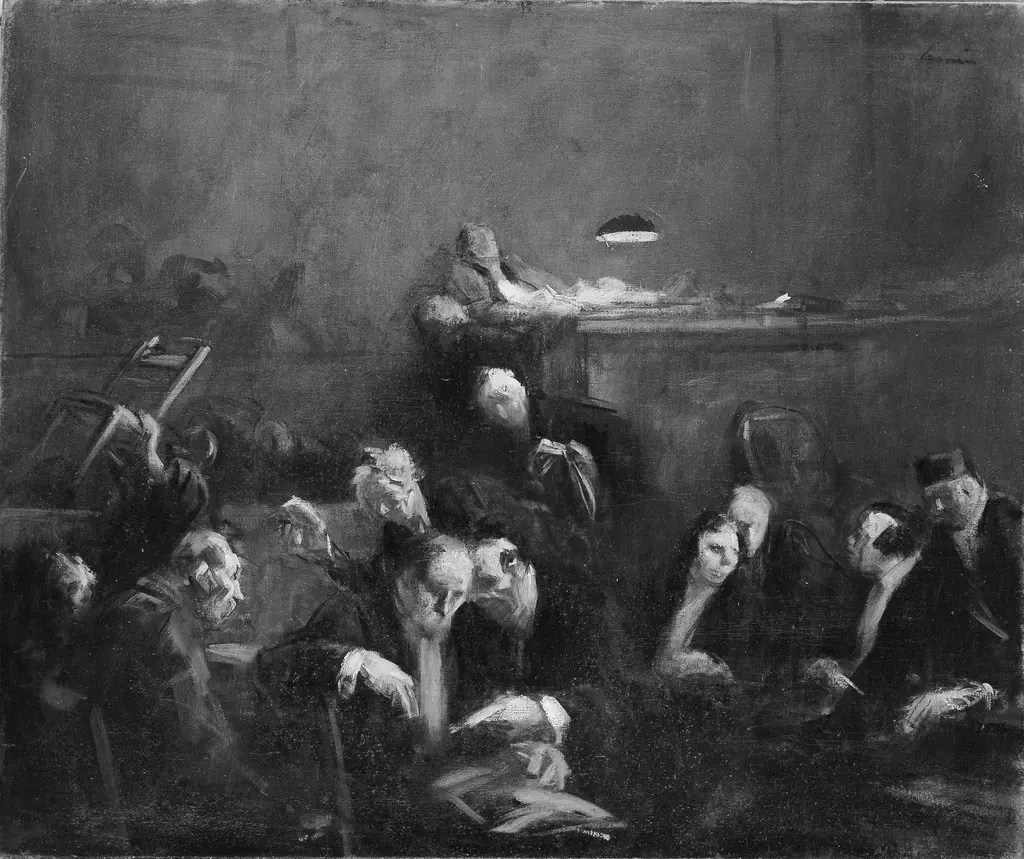
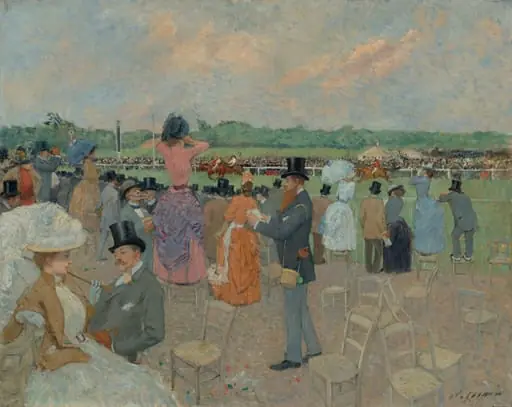
Jean-Louis Forain (French pronunciation: ; 23 October 1852 – 11 July 1931) was a French Impressionist painter and printmaker, working in media including oils, watercolour, pastel, etching and lithograph.

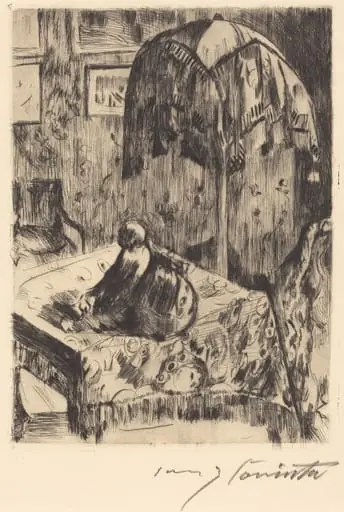 Interieur mit Stehlampe (Interior with Floor Lamp)
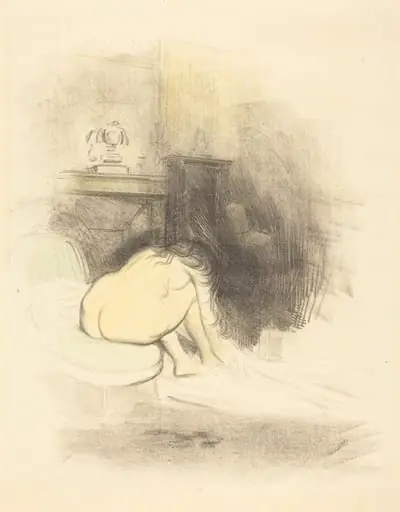 Femme nue, s'essuyant les pieds (planche en hauteur) (Nude Woman Drying Her Feet) (vertical plate)
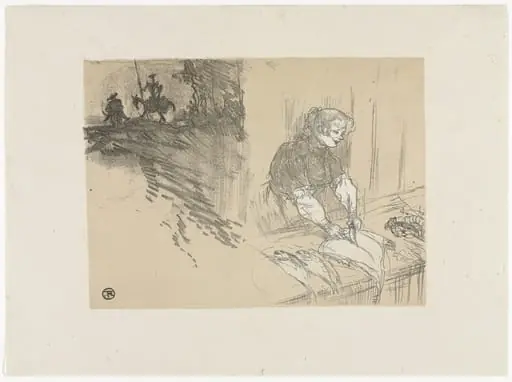 Untitled
 Untitled
 Croquis (Sketch)
 Untitled
 Femme mettant son bas (Woman Putting On Her Stockings)
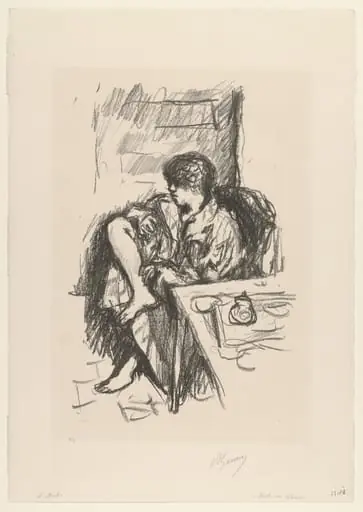 Untitled
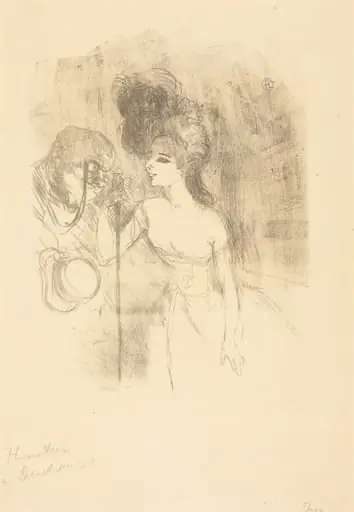 Anna Held and Baldy (Anna Held et Baldy)
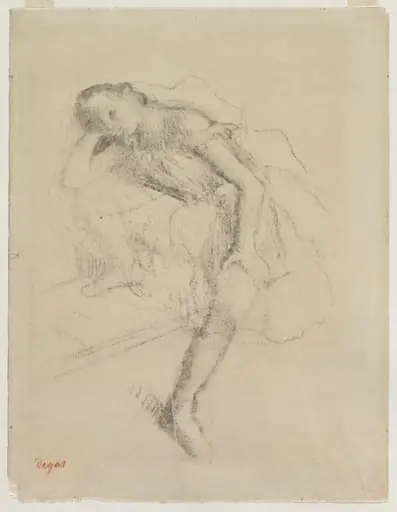 Dancer at Rest
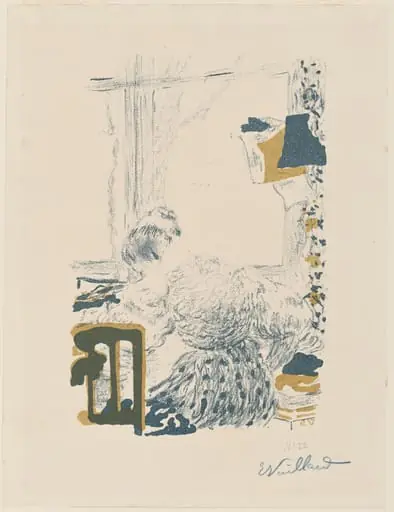 Dressmaker (La Couturière)
 Miss Cumberlege