Artwork
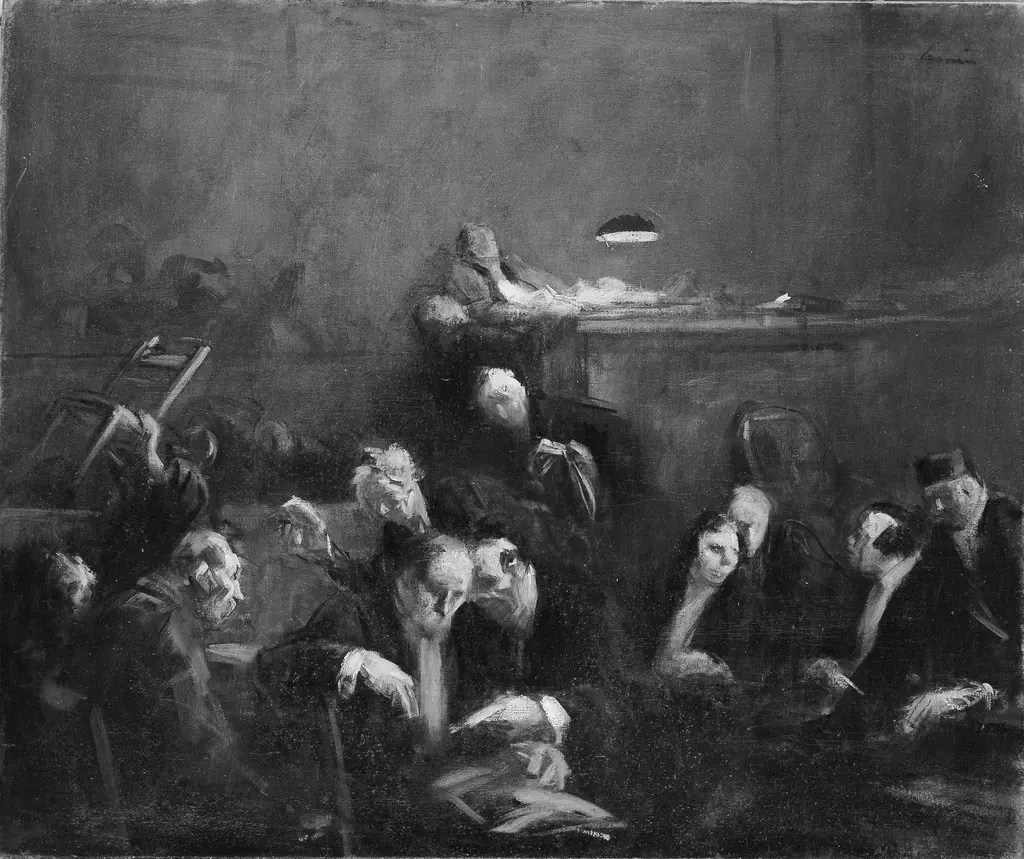
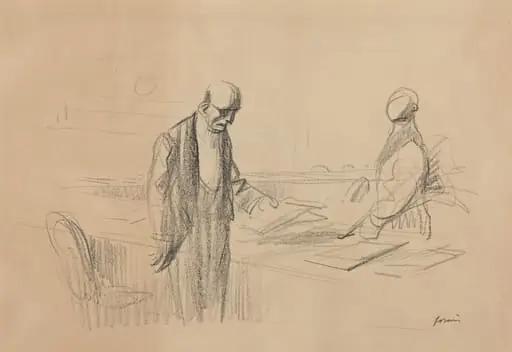
A la table de jeu (At the Gambling Table)
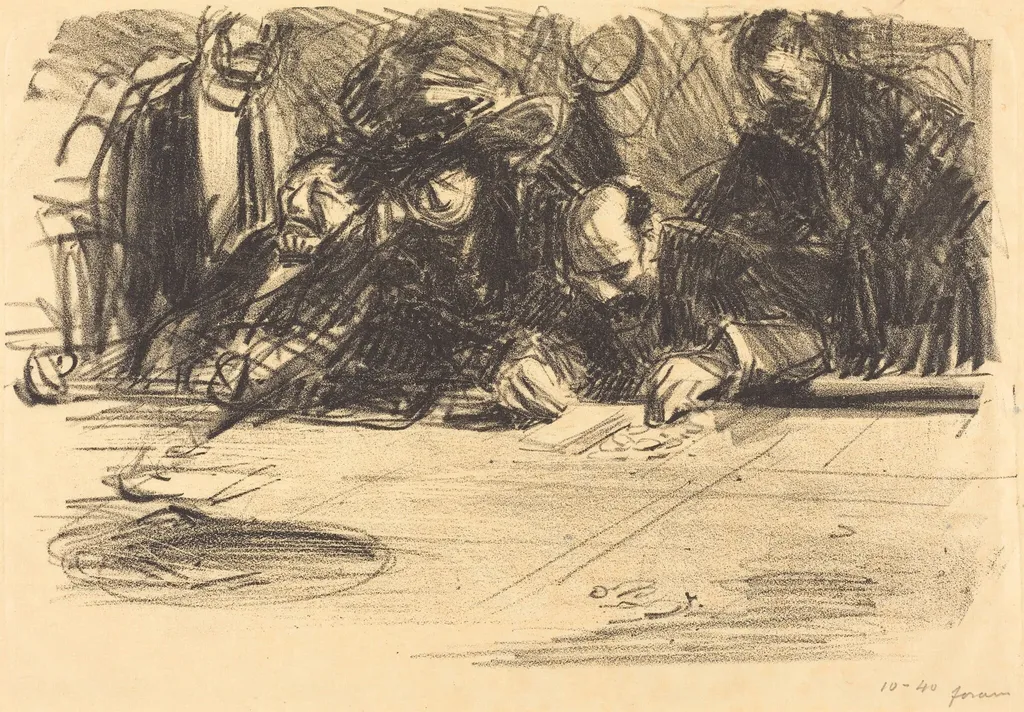
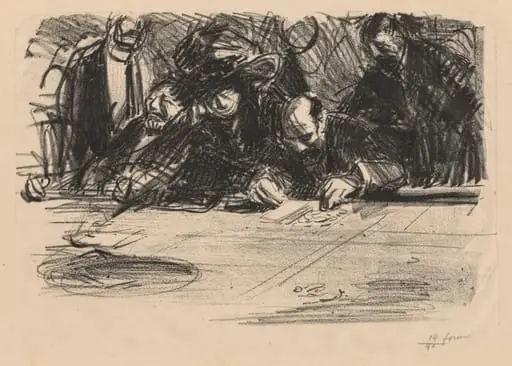
A la table de jeu (At the Gambling Table) is an ink print by Jean-Louis Forain. It dates from 1914 and is held in the collection of the National Gallery of Art.
About this work
Overview
This work belongs to a body of prints that document Parisian social rituals, particularly those occurring in private, dimly lit interiors.
Created around 1914, *A la table de jeu* is a lithograph by Jean-Louis Forain, executed on laid paper. As a prolific printmaker, Forain frequently employed lithography to capture fleeting moments of urban life. This work belongs to a body of prints that document Parisian social rituals, particularly those occurring in private, dimly lit interiors. Its modest scale and monochromatic tone reflect the medium’s capacity for intimate, immediate expression.
Subject & Meaning
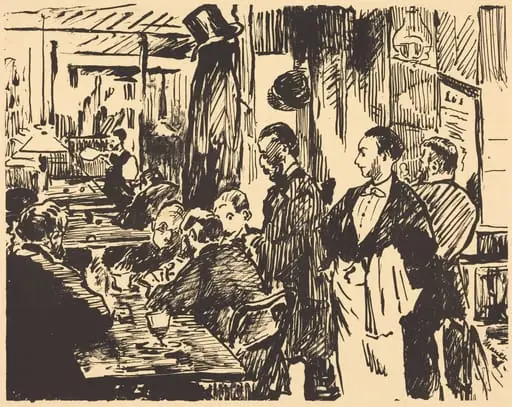
The scene portrays a quiet, tense gathering around a card table, where figures lean in with absorbed focus. Faces are obscured, emphasizing gesture over identity: clenched hands, scattered coins, and the weight of silence suggest high stakes and moral ambiguity. Forain avoids moralizing, instead presenting gambling as a ritualized social act—neither glorified nor condemned, but observed with detached precision.
Technique & Style
Forain used lithographic crayon to render rapid, angular lines that convey motion and tension. The composition relies on stark contrasts between shadow and the dimly lit table surface, with figures emerging from darkness through gestural strokes. The lack of facial detail directs attention to physical cues—fingers gripping cards, coins sliding across felt—enhancing the sense of unease. The paper’s laid texture subtly enhances the sketchlike quality of the image.
History & Provenance
The print was produced during the final years of Forain’s active career, when his reputation as a social chronicler remained strong among collectors. Though less celebrated today than some of his Impressionist contemporaries, his prints circulated widely in periodicals and private collections. This particular impression likely originated from a limited edition, typical of his printmaking practice, though its specific provenance remains undocumented in public records.
Context
In early 20th-century Paris, gambling dens and private card games were common in middle- and upper-class homes, often operating in legal gray areas. Forain, who frequently depicted café life and theatergoers, turned his eye to these secluded spaces as sites of psychological tension. The work aligns with broader artistic interests in modern alienation and the quiet dramas of everyday life, distinct from the public spectacle of Impressionist street scenes.
Legacy
While Forain’s paintings have faded from mainstream attention, his prints continue to be studied for their acute observation of social behavior. *A la table de jeu* exemplifies his ability to distill complex human interactions into economical, evocative forms. It stands as a quiet counterpoint to the more flamboyant depictions of vice in contemporary art, offering instead a restrained, atmospheric record of private moments.
Own this work as a print
Artist & collection

Artist
Jean-Louis Forain (French pronunciation: ; 23 October 1852 – 11 July 1931) was a French Impressionist painter and printmaker, working in media including oils, watercolour, pastel, etching and lithograph.