Artwork
Edgar Degas
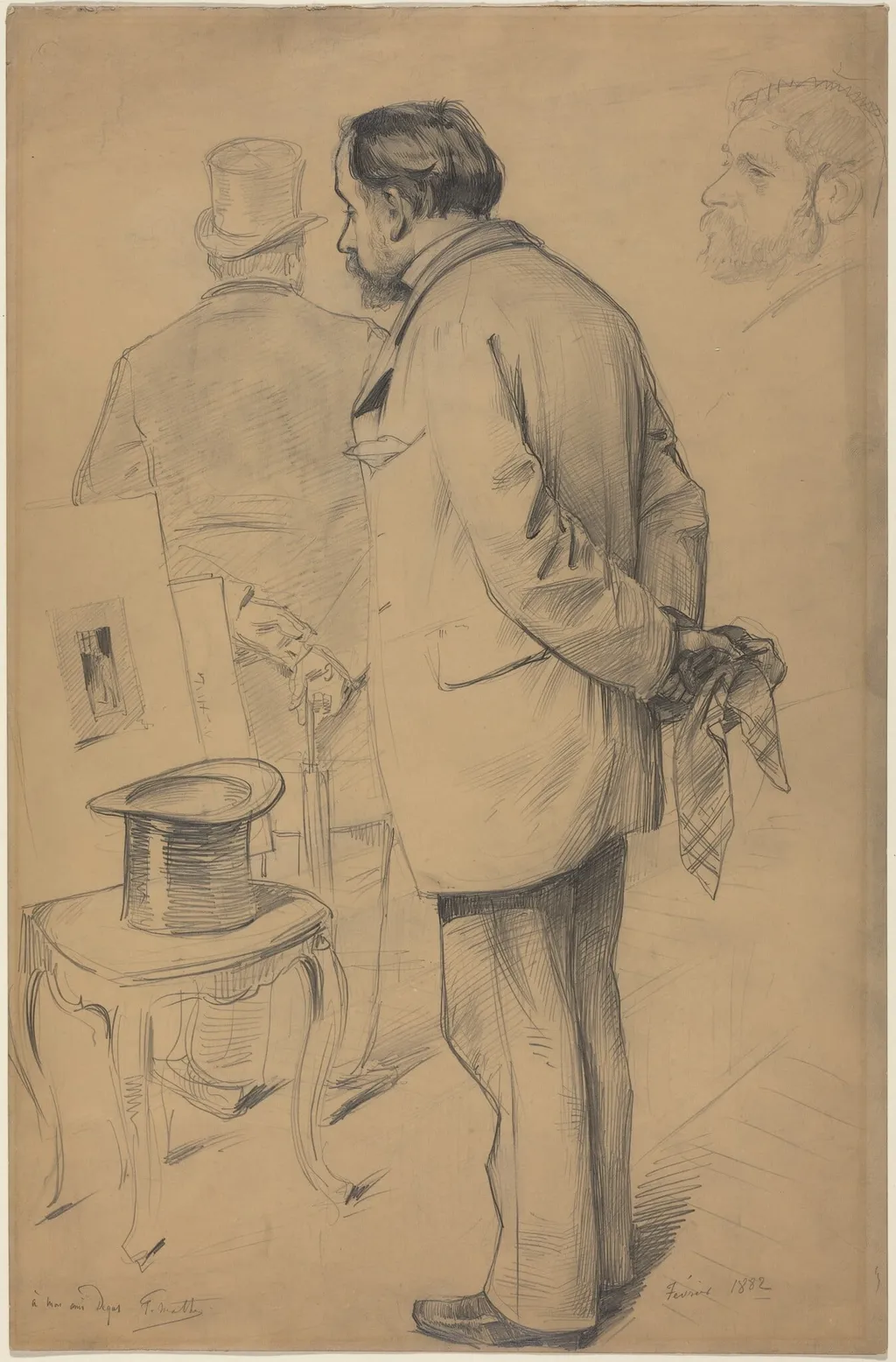
Edgar Degas is a graphite drawing by the Impressionist artist Paul Mathey. It dates from 1882 and is held in the collection of the National Gallery of Art.
About this work
Overview
Paul Mathey’s 1882 graphite drawing, titled “Edgar Degas,” portrays a gentleman‑artist poised before an easel. Executed on paperboard, the work captures a brief moment of artistic activity, rendered with swift, confident strokes that emphasize form over ornament.
Subject & Meaning
The central figure, dressed in a tailored suit, holds a cloth in his left hand as if preparing a canvas. A small table to his left bears a top hat, suggesting the sitter’s social standing and the casual, perhaps private, nature of the scene.
Technique & Style
Mathey employs a loose, expressive line quality, allowing the graphite to convey volume through subtle chiaroscuro. The contrast of light and shadow gives the figure a three‑dimensional presence while the overall composition remains deliberately understated.
History & Provenance
Created in 1882, the drawing was produced during a period when Mathey frequently depicted fellow artists at work. Its title references the renowned painter Edgar Degas, though the work itself is an independent study by Mathey.
Context
The piece reflects late‑19th‑century interest in the artist’s studio as a subject, aligning with contemporary explorations of the creative process. By focusing on a well‑dressed figure, Mathey highlights the intersection of bourgeois identity and artistic labor.
Artist & collection


 Standing Man
 Man wearing a bowler hat
 Study: Joseph Pennell
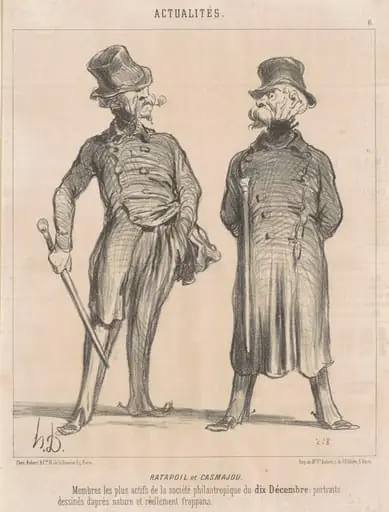 Ratapoil et Casmajou
![Aux Champs-Elysées, Ratapoil. Par suite d'une délibération philantropique [sic] du Comité du dix Décembre...à deux sous à club...deux sous..., by Honoré Daumier](https://artifactworldgallery.com/img/honore-daumier--aux-champs-elysees-ratapoil-par-suite-d-une-deliberation-phi--62ca0cc774af3945-w320.webp) Aux Champs-Elysées, Ratapoil. Par suite d'une délibération philantropique [sic] du Comité du dix Décembre...à deux sous à club...deux sous...
Aux Champs-Elysées, Ratapoil. Par suite d'une délibération philantropique [sic] du Comité du dix Décembre...à deux sous à club...deux sous...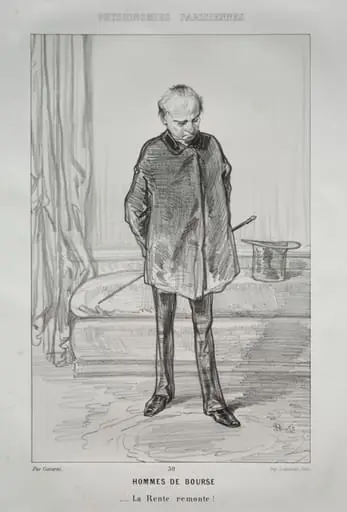 Hommes de Bourse
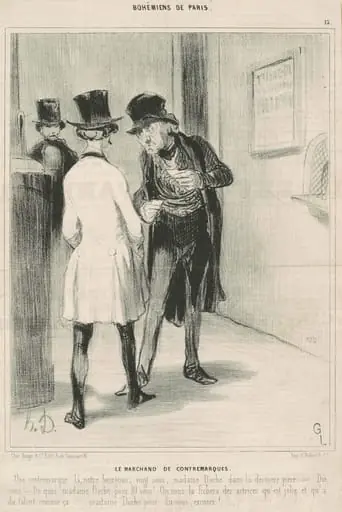 Le marchand de contremarques
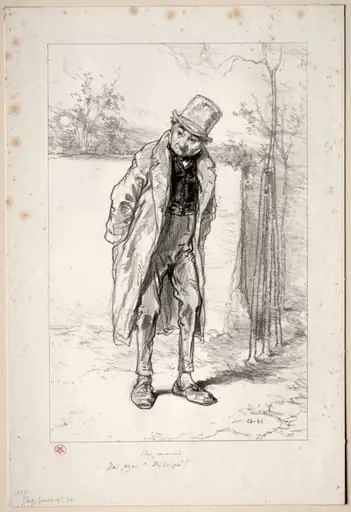 Physionomies Parisiennes: Au Marais. Ici, Azor! ici!
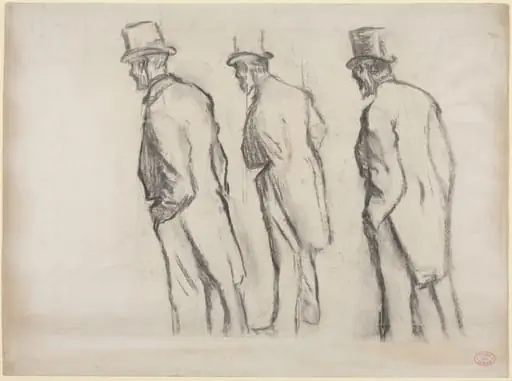 Three Studies of Ludovic Halévy Standing
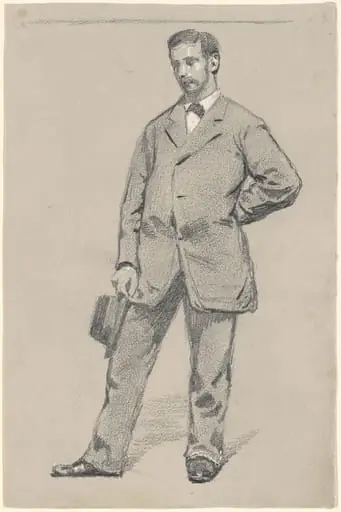 Standing Man
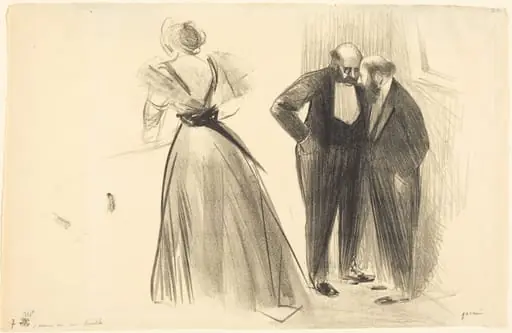 Trois dessins sur une feuille (Three Drawings on a Sheet)
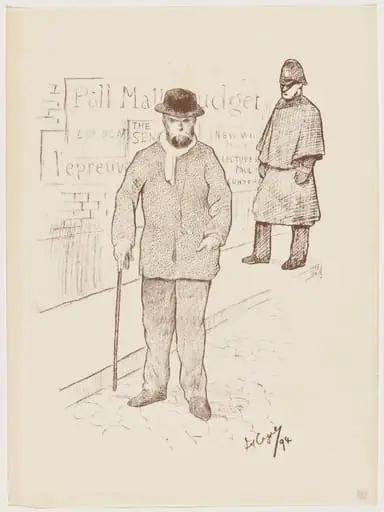 Paul Verlaine à Londres