Artwork
Comedie Parisienne
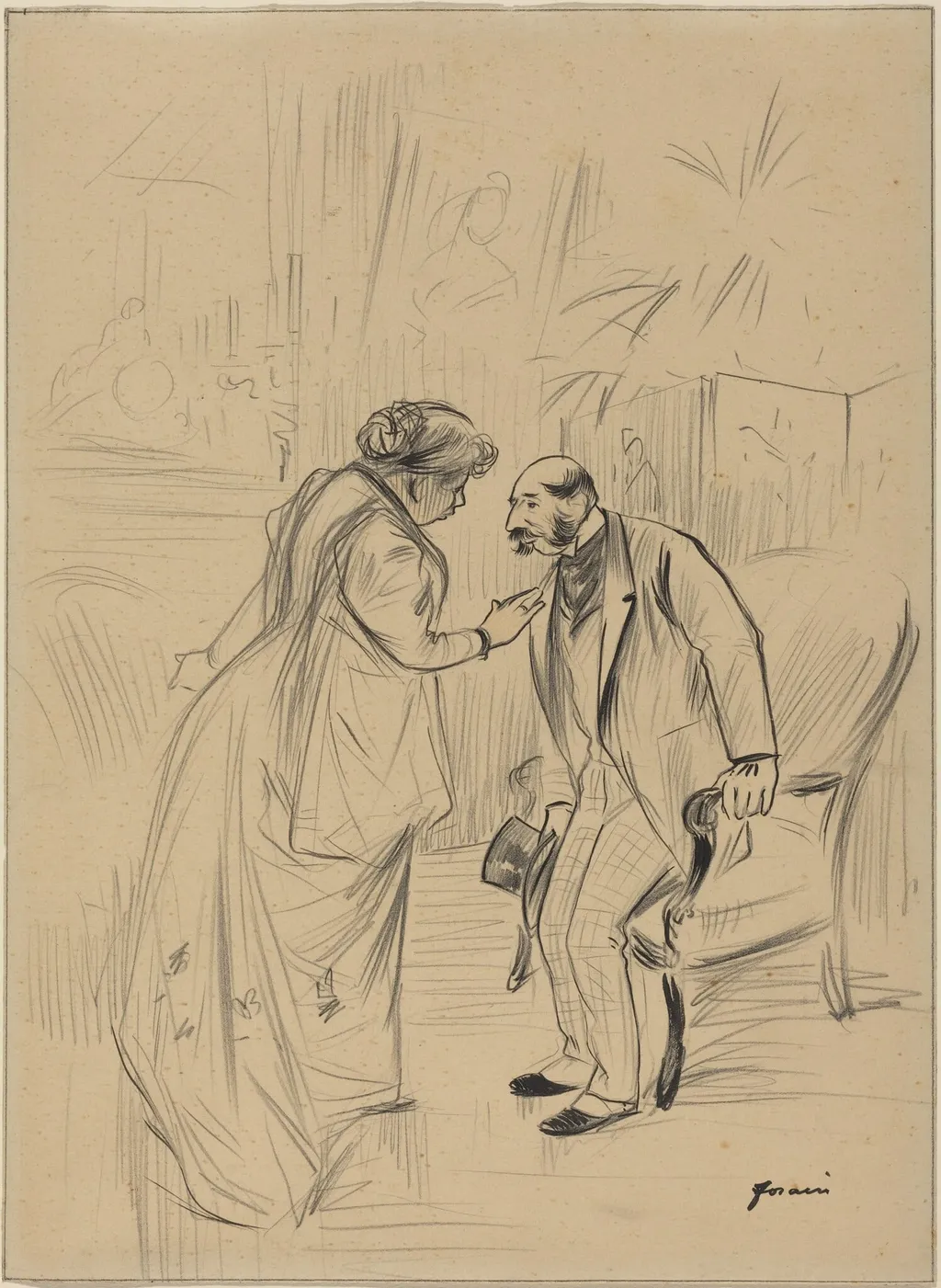
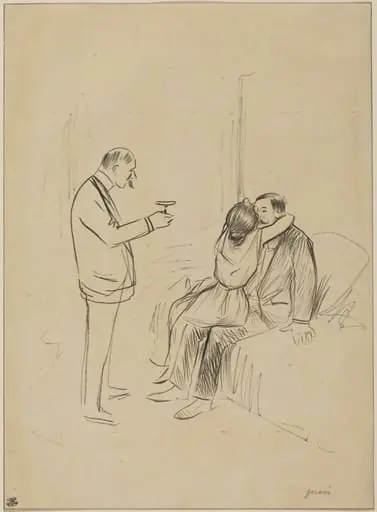
Comedie Parisienne is an ink drawing by the Impressionist artist Jean-Louis Forain. It dates from 1892 and is held in the collection of the National Gallery of Art.
About this work
Overview
Created in 1892, *Comedie Parisienne* is a dynamic drawing by Jean-Louis Forain, executed in graphite and brush ink on wove paper.
Created in 1892, *Comedie Parisienne* is a dynamic drawing by Jean-Louis Forain, executed in graphite and brush ink on wove paper. Though known for oil paintings and printed graphics, Forain frequently turned to drawing for its immediacy. This piece exemplifies his command of graphic media, capturing a fleeting moment with precision and spontaneity, reflecting his deep engagement with urban life and theatrical culture.
Subject & Meaning
The scene portrays two figures—a woman in a long coat and hat, one hand holding her skirt, and a bearded man in a suit, cane in hand—engaged in conversation on a Parisian street. Their gestures and posture suggest a casual yet charged exchange, typical of Forain’s interest in social rituals. The setting, devoid of specific landmarks, universalizes the moment, framing it as a vignette of everyday Parisian theater rather than a narrative.
Technique & Style
Forain employed rapid, fluid strokes to convey motion and texture, particularly in the folds of fabric and the suggestion of passing pedestrians. Cross-hatching and varying line weight create depth without heavy shading. The loose, sketchlike rendering of architecture and crowd implies a scene observed en passant, reinforcing the drawing’s sense of spontaneity and direct observation over studio refinement.
History & Provenance
The work emerged during a period when Forain was actively contributing illustrations to Parisian journals and cultivating a reputation for sharp social observation. While no documented early ownership is recorded, its survival in institutional collections suggests early recognition of its artistic merit. It remains a representative example of his graphic output from the 1890s, a peak decade for his printmaking and drawing.
Context
In the 1890s, Parisian artists increasingly turned to urban scenes as subjects, drawn to the rhythms of modern life. Forain, aligned with Impressionist circles but distinct in his focus on theater and public interaction, captured the city’s performative nature. This drawing aligns with contemporaneous works by Degas and Toulouse-Lautrec, yet retains Forain’s characteristic restraint and observational clarity.
Legacy
*Comedie Parisienne* exemplifies Forain’s enduring contribution to late 19th-century graphic art. His ability to distill complex social interactions into economical, expressive lines influenced later illustrators and cartoonists. Though less celebrated than his painted works, this drawing underscores his role in elevating the sketch as a serious artistic medium, grounded in real-time observation rather than idealized composition.
Artist & collection

Artist
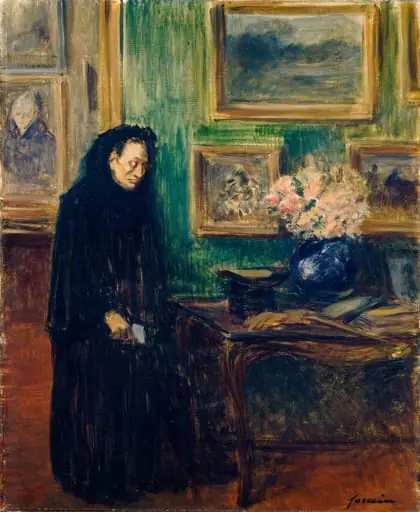
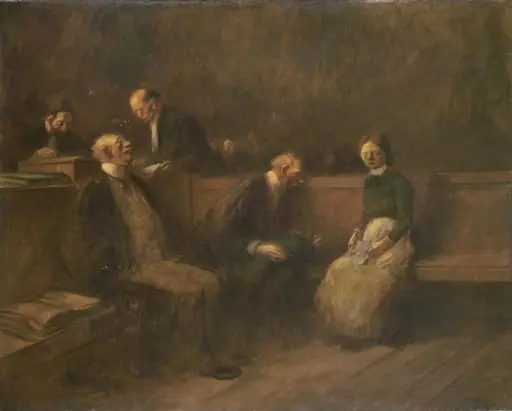
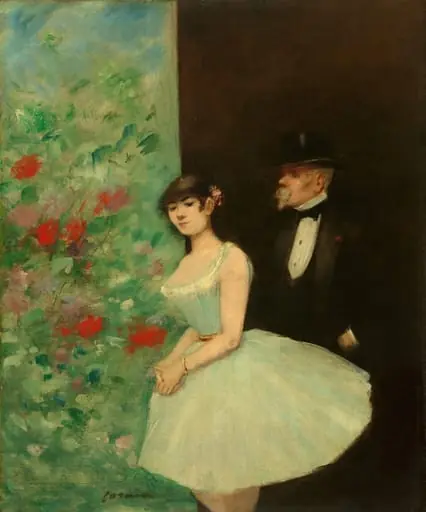
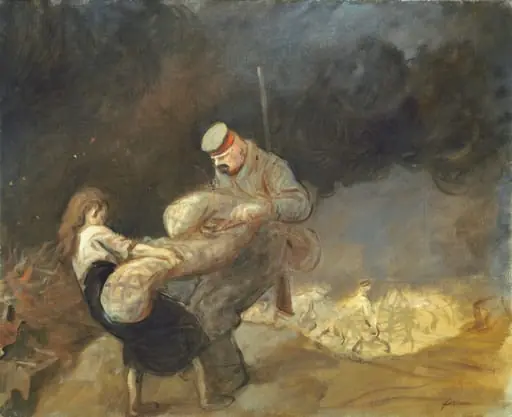
Jean-Louis Forain (French pronunciation: ; 23 October 1852 – 11 July 1931) was a French Impressionist painter and printmaker, working in media including oils, watercolour, pastel, etching and lithograph.

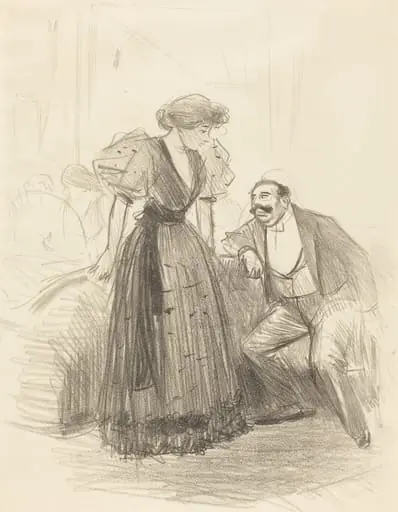 En soirée (At an Evening Party)
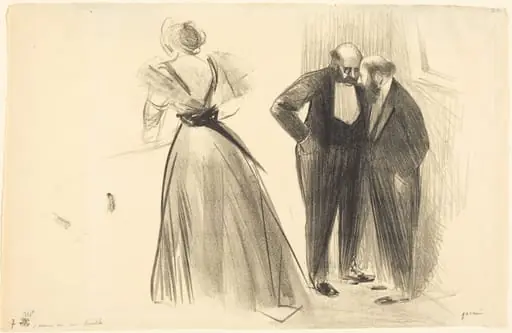 Trois dessins sur une feuille (Three Drawings on a Sheet)
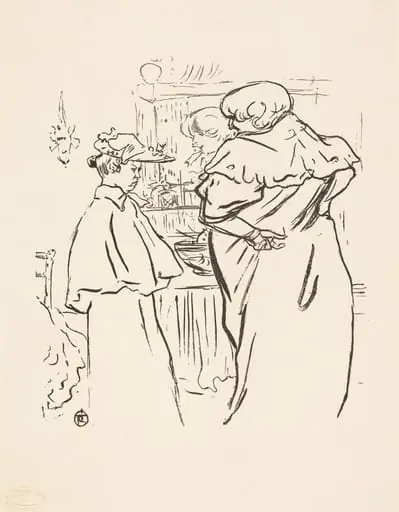 Two Women before a Mirror
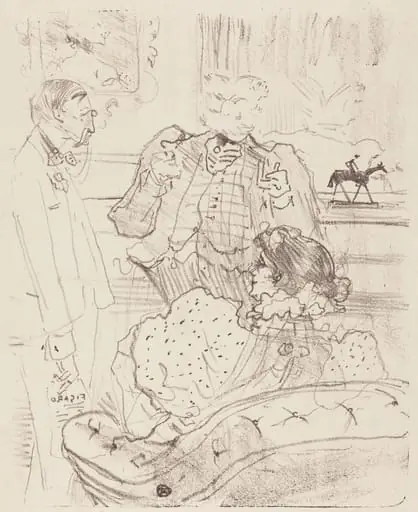 The Forfeit (La gage)
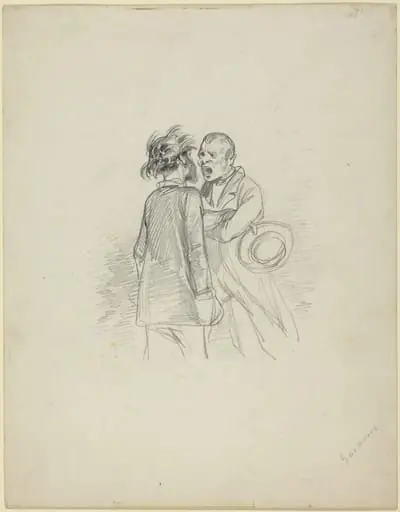 Two Men Arguing
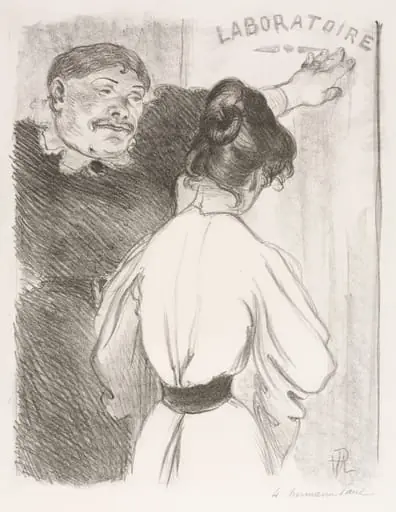 Laboratoire
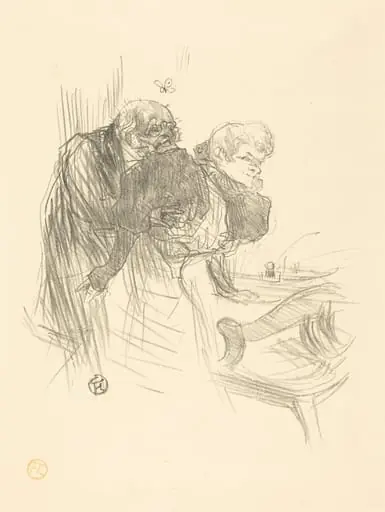 Les vieux papillons
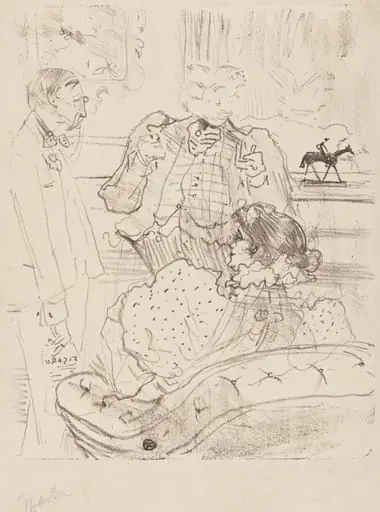 Rosmersholm; Le Gage
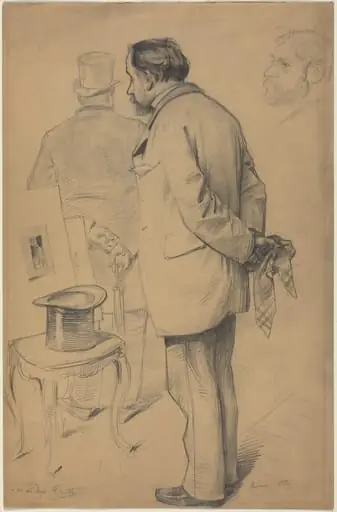 Edgar Degas
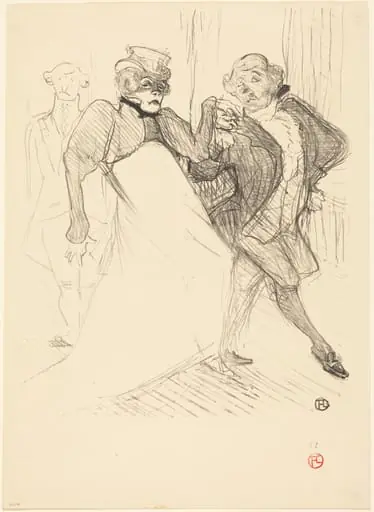 Rejane and Galipaux in "Madame Sans-Gêne" (Réjane et Galipaux dans "Madame Sans-Gêne")
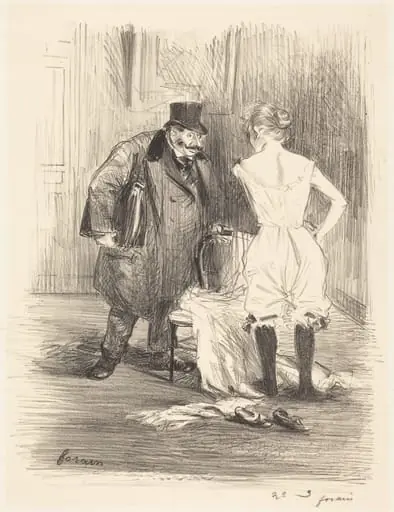 Une saisie (A Seizure)
 To Each His Own