Artwork
Danseuse accotée contre un portant (avec des figurants) (Dancer Leaning against an Upright (with extras))
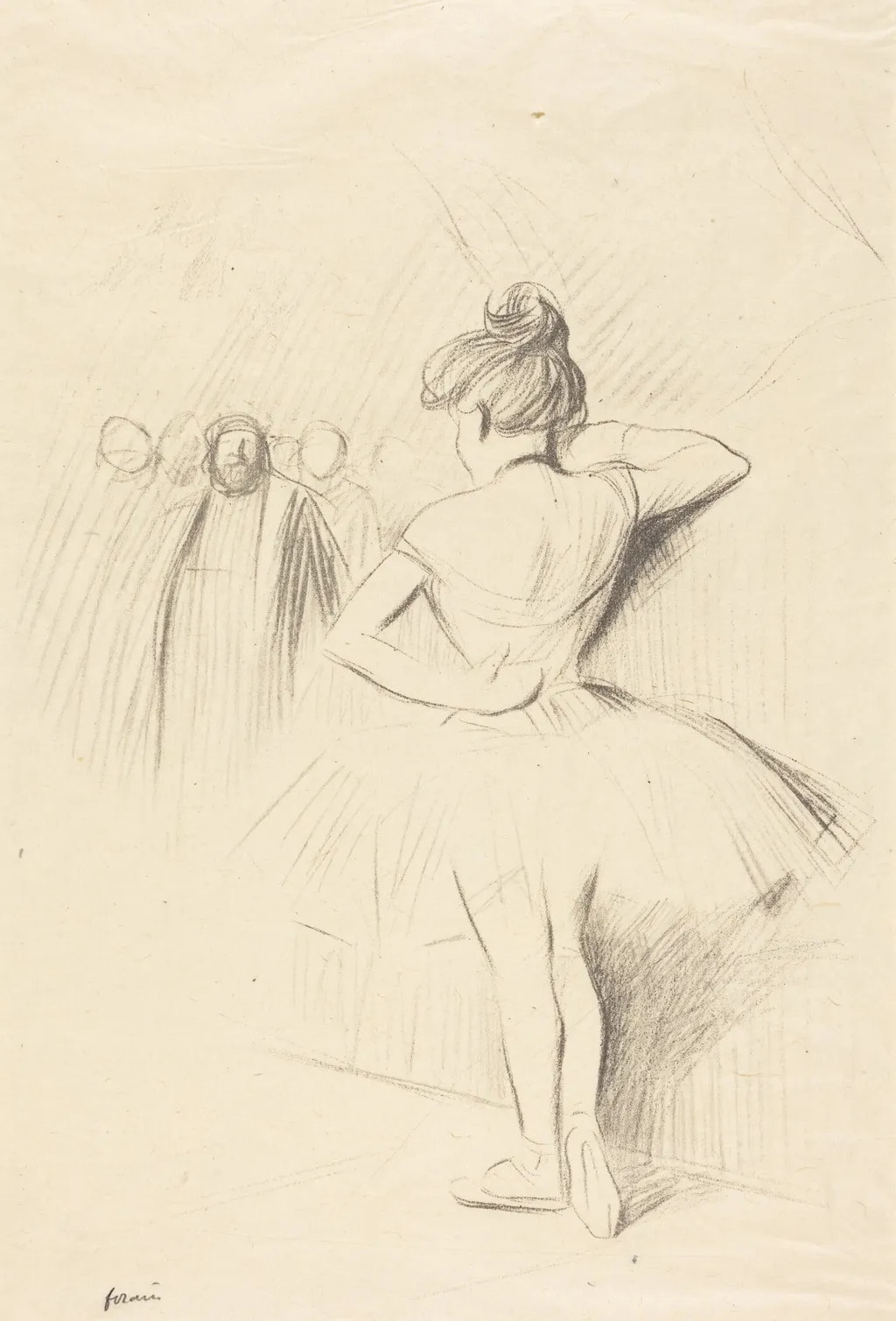
Danseuse accotée contre un portant (avec des figurants) (Dancer Leaning against an Upright (with extras)) is an ink print by the Impressionist artist Jean-Louis Forain. It dates from 1897 and is held in the collection of the National Gallery of Art.
About this work
Overview
Created around 1897, this transfer lithograph by Jean-Louis Forain captures a moment in a dance rehearsal. Executed on laid paper, the work belongs to a body of prints in which Forain explored the dynamics of performance and movement. Unlike finished paintings, this piece emphasizes spontaneity, reflecting the artist’s interest in the unguarded moments behind theatrical spectacle.
Subject & Meaning
The central figure is a dancer leaning backward against a tall support, arms raised mid-motion. Behind her, two indistinct figures manipulate a backdrop, suggesting the mechanical underpinnings of stage performance. The composition reveals the labor hidden from audiences—dancers in motion, stagehands at work—offering a quiet commentary on the duality of spectacle and preparation.
Technique & Style
Forain employed transfer lithography to achieve rapid, fluid lines that mimic sketching. The loose, energetic strokes convey motion and weight without fine detail. Light falls from the left, casting soft shadows and defining form through contrast rather than outline. The paper’s texture enhances the rawness of the image, reinforcing its function as a visual note rather than a polished finish.
History & Provenance
The print emerged during a period when Forain was deeply engaged with printmaking, producing numerous lithographs that documented Parisian theater and café life. While his oil paintings gained public acclaim, his prints circulated more widely among collectors and artists. This work likely originated from his personal studies, later reproduced for private or limited distribution.
Context
In late 19th-century Paris, the theater and ballet were central to urban culture, and artists frequently turned to these spaces for subject matter. Forain, like Degas, was drawn to rehearsals and backstage areas, where the boundary between art and labor blurred. His prints contributed to a broader shift in visual culture, valuing immediacy and candid observation over idealized representation.
Legacy
This lithograph exemplifies Forain’s role in elevating printmaking as a medium for modern observation. Though less celebrated than his paintings, his drawings and prints influenced later artists interested in capturing transient moments. The work remains a testament to the quiet, unglamorous rituals that sustain public performance, preserved through the accessibility of print.
Own this work as a print
Artist & collection

Artist
Jean-Louis Forain (French pronunciation: ; 23 October 1852 – 11 July 1931) was a French Impressionist painter and printmaker, working in media including oils, watercolour, pastel, etching and lithograph.


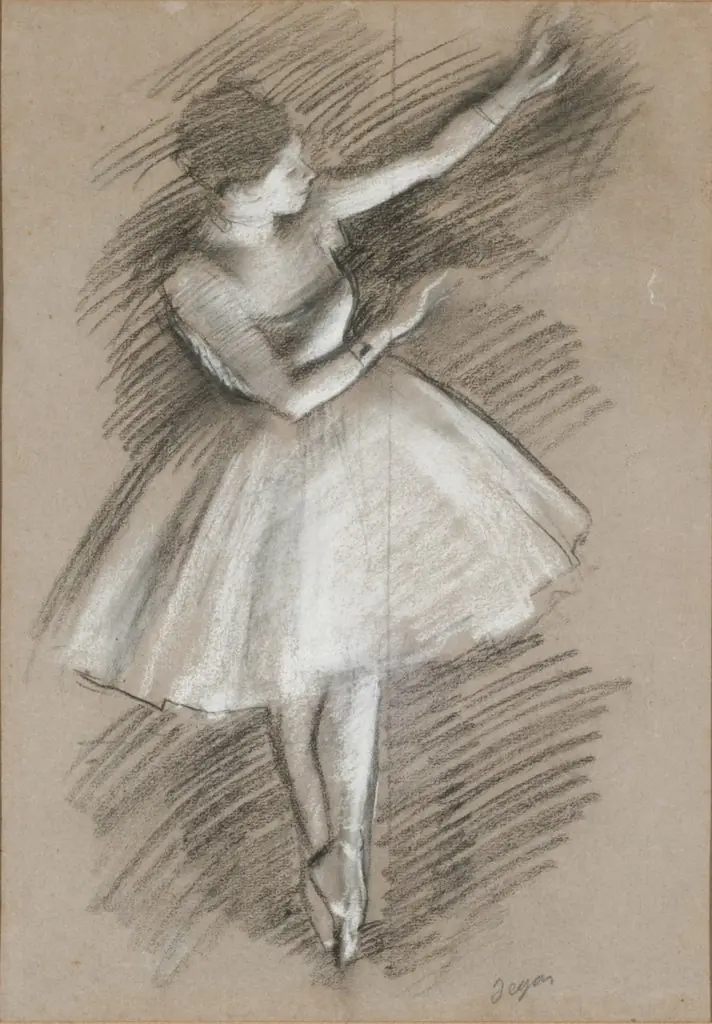 dancer in white
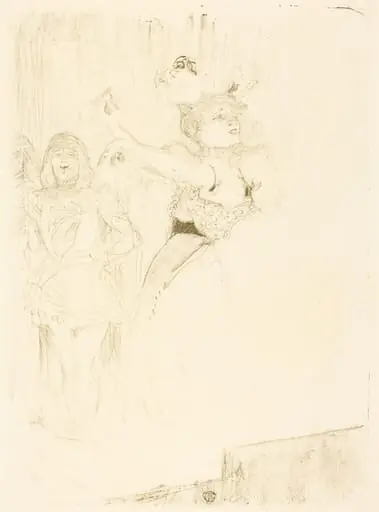 Lender Dancing the Bolero in "Chilperic" (Lender dansant le pas du boléro dans "Chilpéric")
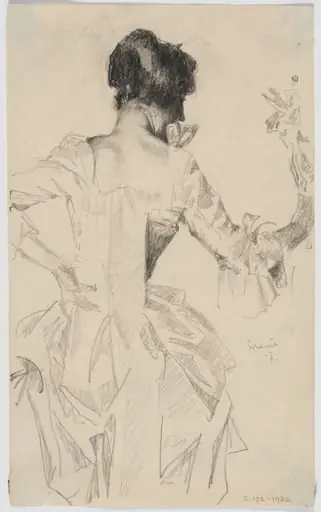 Young woman standing
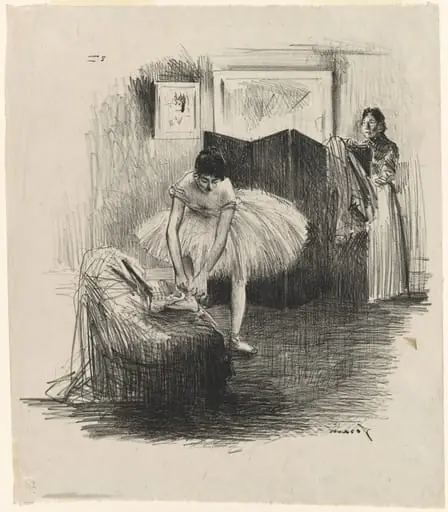 Danseuse rattachant son chausson (Dancer Tying Her Slipper)
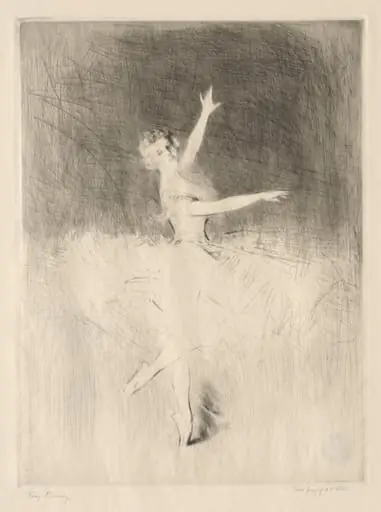 Adeline Génee
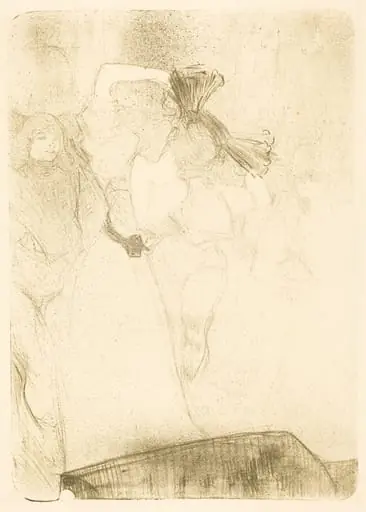 Lender from the Back Dancing the Bolero in "Chilperic" (Lender de dos, dansant le boléro dans "Chilpéric")