Artwork
dancer in white
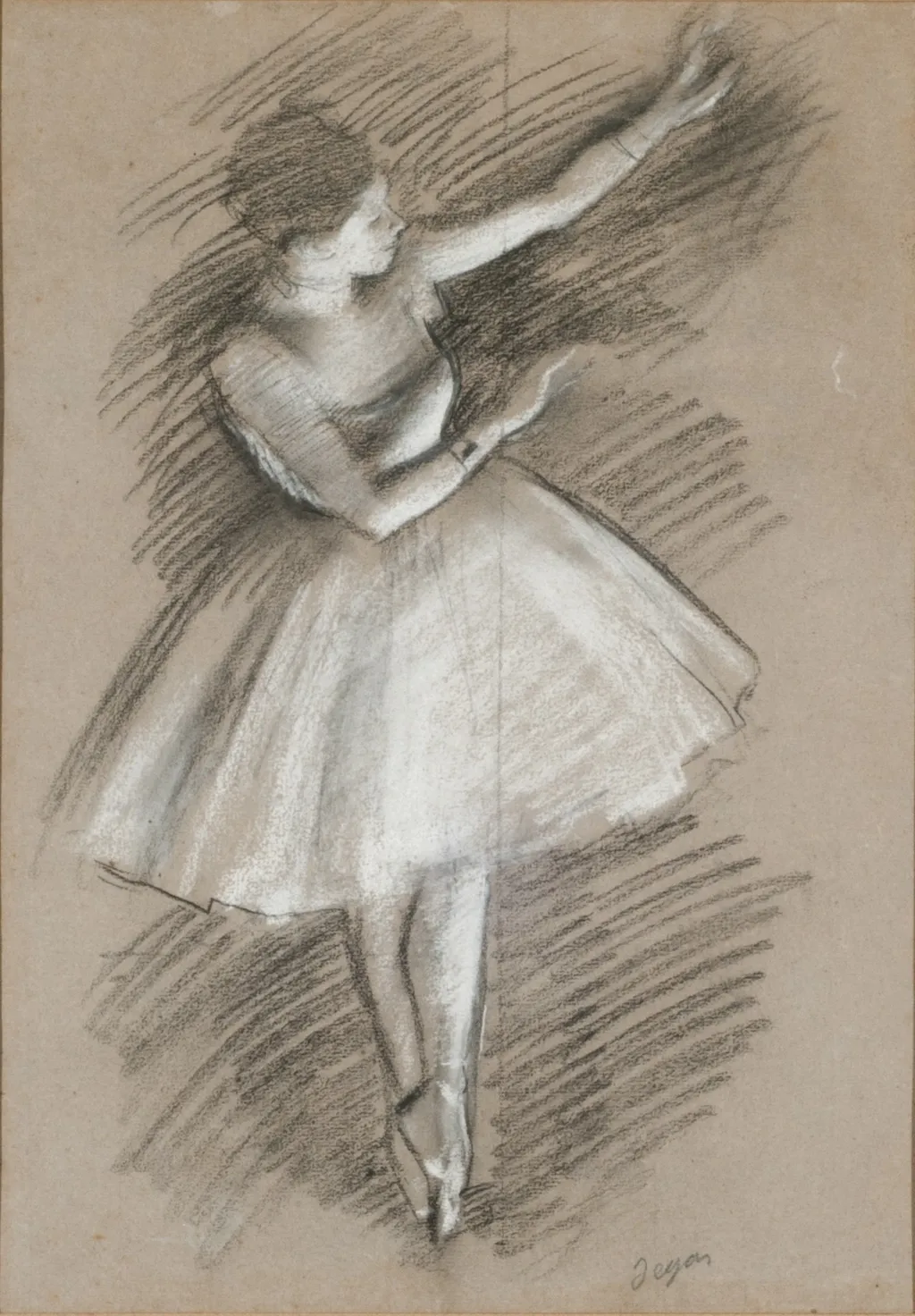
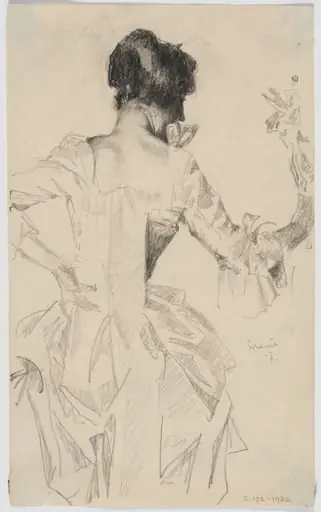
dancer in white is an unspecified painting by the Impressionist artist Edgar Degas. It dates from 1889 and is held in the collection of the National Museum of Fine Arts, Argentina.
About this work
The painting "Dancer in White" by Edgar Degas, created in 1877, features a female figure in a white dress with her right arm raised and left arm bent.
The painting "Dancer in White" by Edgar Degas, created in 1877, features a female figure in a white dress with her right arm raised and left arm bent. Her body is turned to the left, with her face partially visible. The background is a light brown color, with some dark lines and shading that suggest movement.
The dancer's pose and the way her dress flows around her body create a sense of energy and fluidity. The use of light and shadow adds depth and dimension to the painting, drawing the viewer's eye to the dancer's form.
For more information on the artist's use of light and shadow, explore the technique of chiaroscuro.
Overview
Dancer in White is an oil painting by Edgar Degas, completed around 1877. It portrays a solitary ballet performer in a white costume, captured mid-movement. The work is part of Degas’s extensive study of dancers, reflecting his fascination with rehearsal spaces and unguarded moments. It is currently held in the collection of the National Museum of Fine Arts in Buenos Aires.
Subject & Meaning
The painting focuses on a young dancer, her posture relaxed yet alert, suggesting a pause between routines. Her raised right arm and bent left arm convey a sense of natural motion, not staged performance. Degas avoids theatricality, instead emphasizing the physicality and quiet discipline of the dancer’s daily practice, revealing the labor behind the art.
Technique & Style
Degas employs loose brushwork and subtle tonal shifts to suggest movement and volume. The white dress is rendered with delicate variations in hue, avoiding flatness, while the background’s muted browns and dark strokes imply spatial depth without detail. Light falls unevenly, enhancing the three-dimensionality of the figure and reinforcing the sense of a fleeting, observed moment.
History & Provenance
Painted in the late 1870s, the work entered the collection of the National Museum of Fine Arts in Buenos Aires in the 20th century. Its journey from Paris to South America reflects broader patterns of European art acquisition by Latin American institutions during a period of cultural expansion. No significant alterations or restorations are documented in public records.
Context
Degas painted numerous dancers during the 1870s and 1880s, drawn to the Paris Opéra Ballet’s backstage life. Unlike idealized portrayals common in academic art, he depicted dancers in informal moments—stretching, adjusting costumes, resting. This painting aligns with his interest in modern life and the psychological weight of routine, influenced by photography and Japanese prints.
Legacy
Dancer in White exemplifies Degas’s contribution to redefining figure painting through observation rather than idealization. His focus on movement, posture, and the unseen effort of performers influenced later generations of realist and modernist artists. The work remains a quiet testament to the discipline behind performance, valued for its restraint and psychological nuance.
Artist & collection

Artist
Born Hilaire-Germain-Edgar De Gas on 19 July 1834 in Paris, Edgar Degas came from an affluent banking family with aristocratic roots and spent his childhood among the cultivated circles of the French capital.

Museum
National Museum of Fine Arts, Argentina
Continue through works from the same source collection.




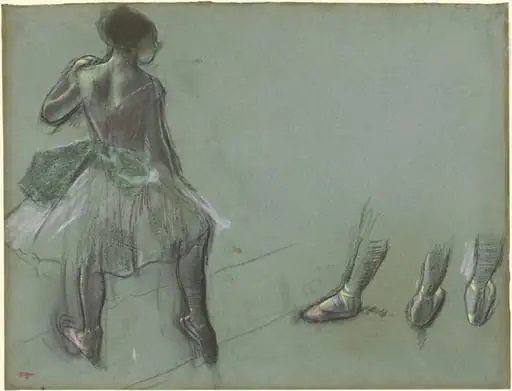 Dancer Seen from Behind and Three Studies of Feet
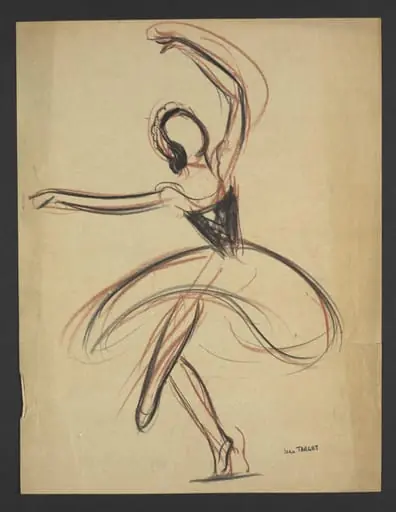 Untitled
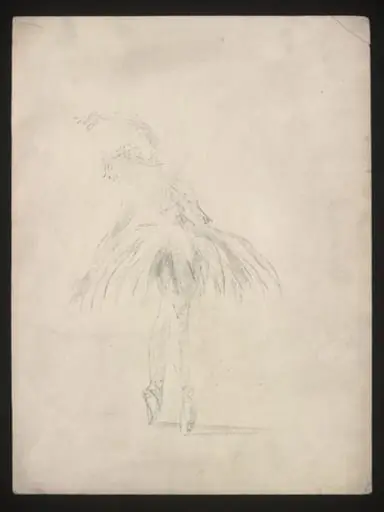 Untitled
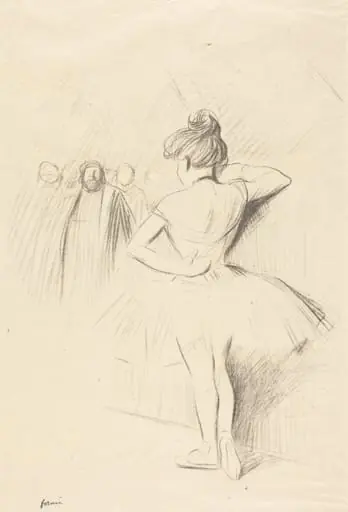 Danseuse accotée contre un portant (avec des figurants) (Dancer Leaning against an Upright (with extras))
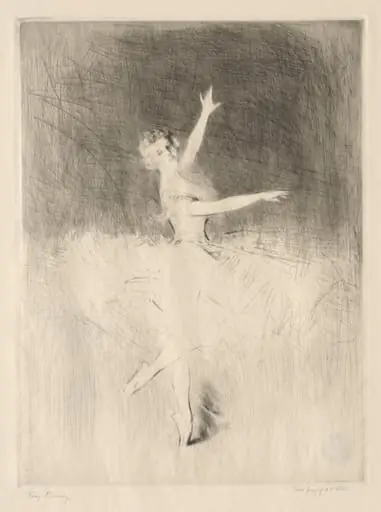 Adeline Génee
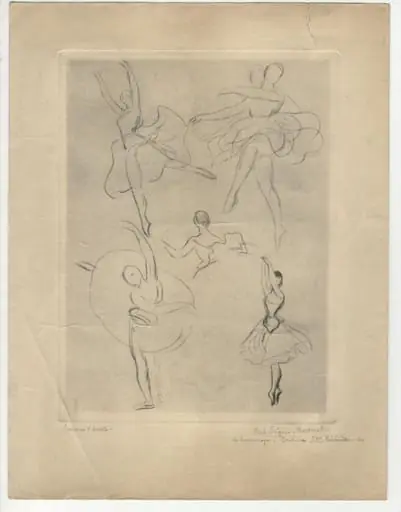 Five ballet dancers
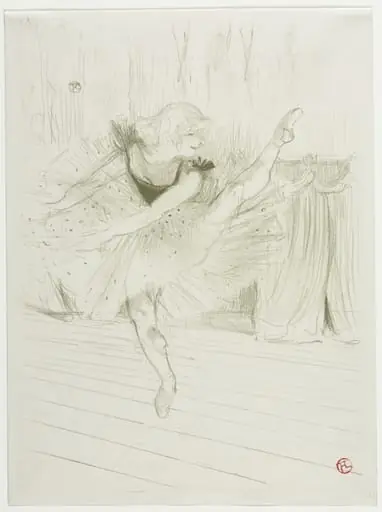 Miss Ida Heath, English Dancer
 Young woman standing
 Standing Woman Leaning on Her Elbow
 The Draped Figure, Back View