Artwork
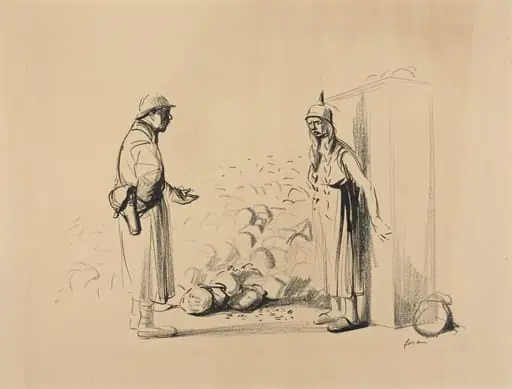
German Raid on a Village
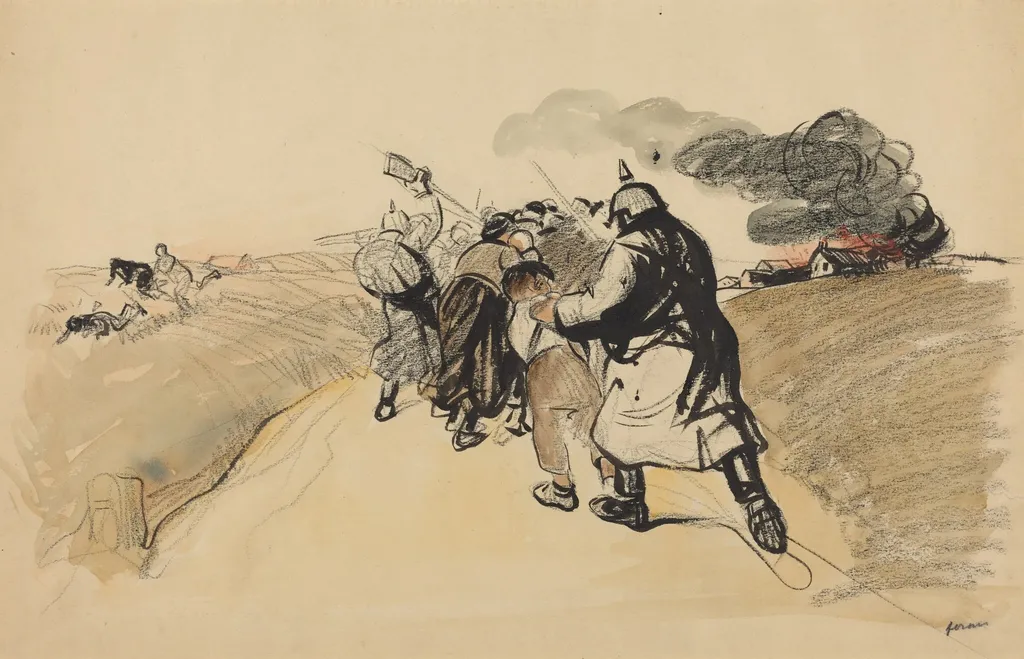
German Raid on a Village is an ink drawing by Jean-Louis Forain. It dates from 1916 and is held in the collection of the National Gallery of Art.
About this work
Overview
Created around 1916, this drawing by Jean-Louis Forain captures a moment of violence during World War I.
Created around 1916, this drawing by Jean-Louis Forain captures a moment of violence during World War I. Executed in brush and black ink, black crayon, and watercolor on wove paper, it belongs to a series of works in which Forain responded to the war’s impact on civilian life. Though known primarily for his satirical and genre scenes, this piece reveals a shift toward urgent, documentary-like expression during a time of national upheaval.
Subject & Meaning
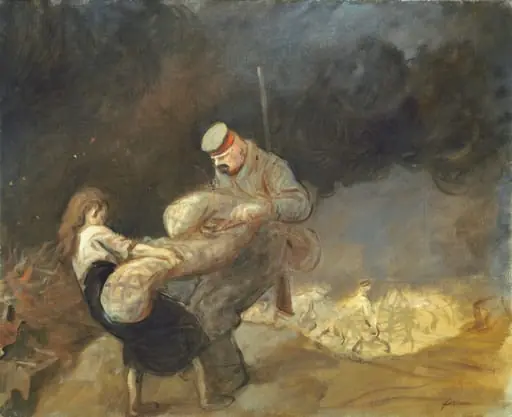
The scene depicts a German military raid on a rural French village, showing figures in flight, burning structures, and panicked animals. No clear hero or villain is identified, but the chaos emphasizes the vulnerability of non-combatants. Forain avoids glorification; instead, he conveys the disorder and terror of invasion through fragmented forms and unbalanced composition, reflecting a civilian perspective on war’s brutality.
Technique & Style
Forain employed rapid, gestural brushwork and smudged crayon lines to convey motion and emotional intensity. Watercolor washes suggest smoke and shadow without detail, while ink defines the most urgent forms—falling figures, collapsing roofs, galloping horses. The loose handling and absence of fine detail heighten the sense of immediacy, aligning the work with expressive drawing traditions rather than polished illustration.
History & Provenance
The drawing was made during Forain’s active engagement with wartime imagery, a period when he produced numerous sketches and prints responding to the conflict. It remained in private hands after its creation and was later acquired by institutions interested in early 20th-century war art. Its survival reflects its status as a personal, rather than commercial, response to the war.
Context
In 1916, France was deep in the throes of total war, with villages near the front lines frequently targeted. Forain, though not a soldier, documented these events as a civilian observer. His work stood apart from official propaganda, offering a raw, unvarnished view of destruction. This piece aligns with broader European artistic responses to war, including those by Otto Dix and George Grosz, though executed with a distinctly French immediacy.
Legacy
While Forain’s reputation faded in the decades after his death, this drawing remains a significant example of how artists recorded wartime trauma outside state-sanctioned narratives. It is studied today for its emotional honesty and technical economy, offering insight into how visual culture processed the civilian experience of World War I beyond the battlefield.
Artist & collection

Artist
Jean-Louis Forain (French pronunciation: ; 23 October 1852 – 11 July 1931) was a French Impressionist painter and printmaker, working in media including oils, watercolour, pastel, etching and lithograph.

 The Germans Arrive
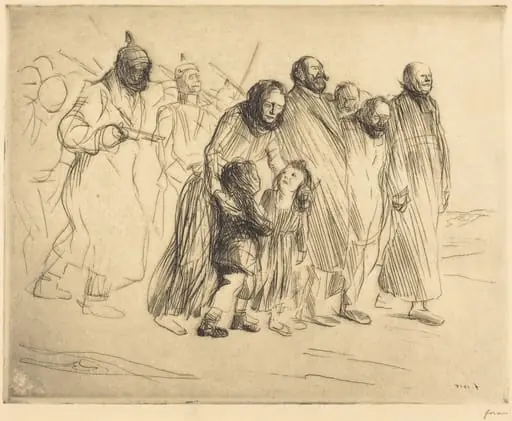 Les notables (petite planche) (The Notables) (small plate)
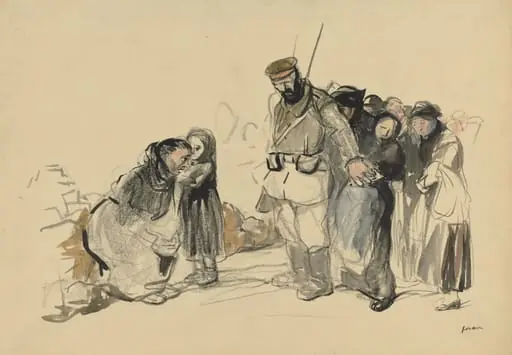 The Slavery in the North
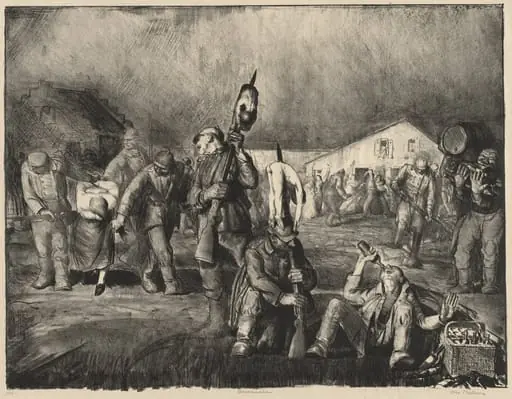 War Series: The Bacchanale
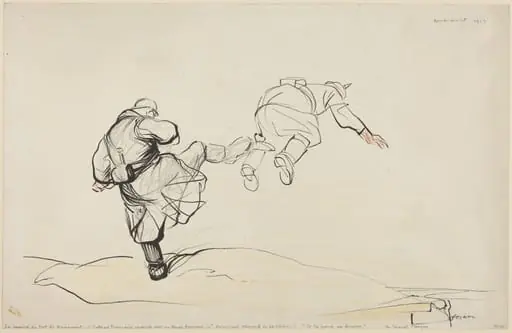 The Taking of Fort Douaumont
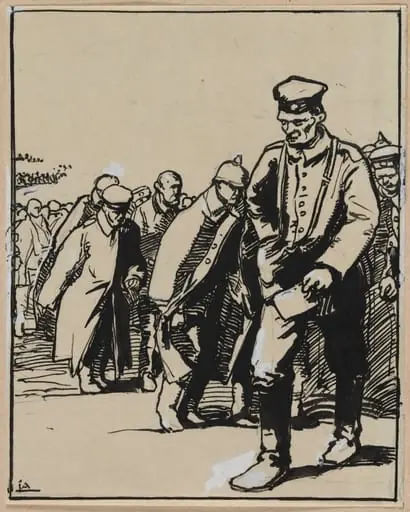 Marche d'un groupe de prisonniers allemands
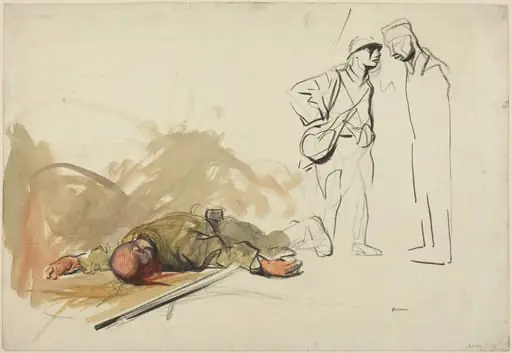 a) Dead German Soldier (recto); b) Head of a Soldier (verso)
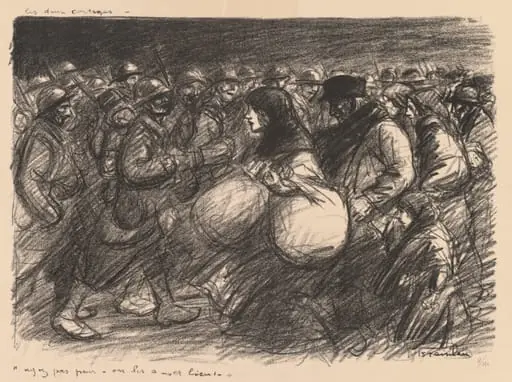 War Sketches: The Two Processions (Croquis de guerre: Les deux cortèges – “Ayez pas peur - on les a - et bien!”)
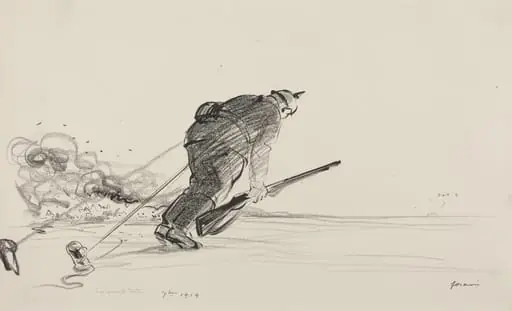 7me 1914
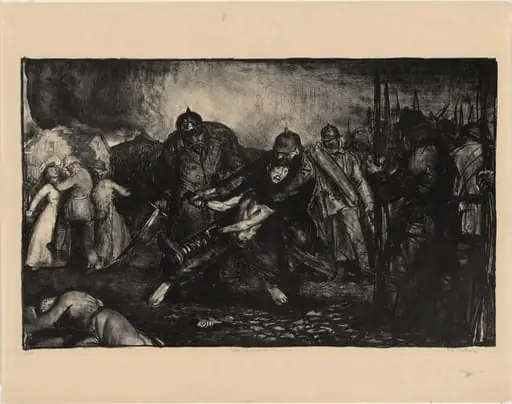
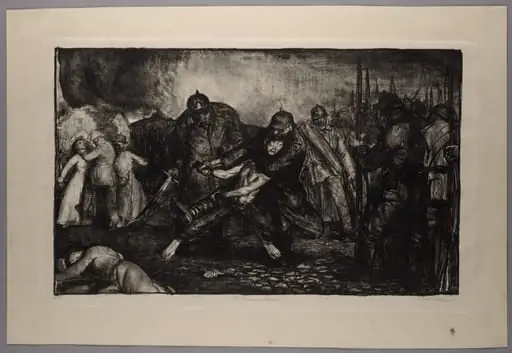 War Series: The Germans Arrive
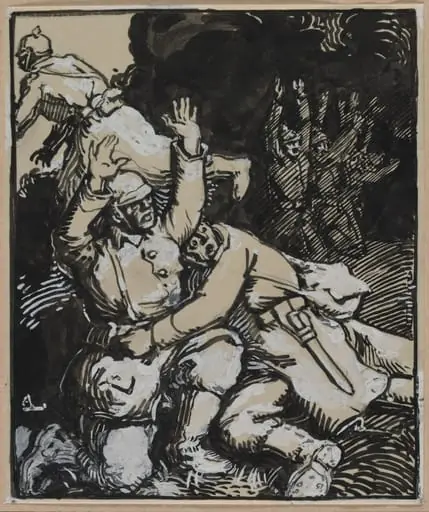 Dans une tranchée, des soldats allemands se rendent
 Hiding the "louis"