Artwork
The Slavery in the North
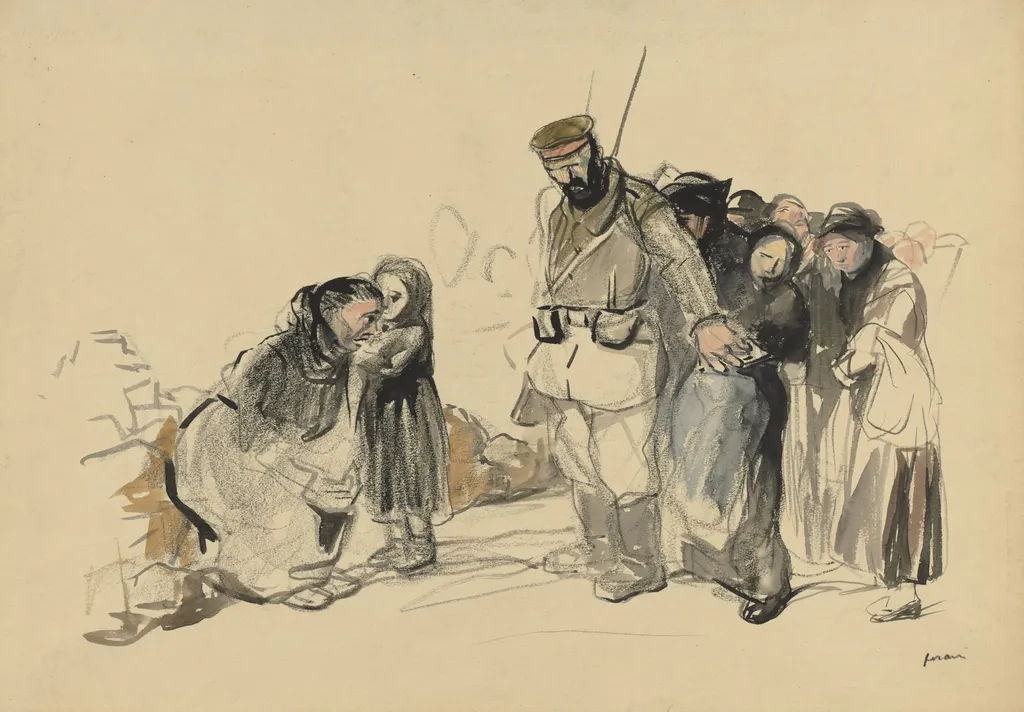
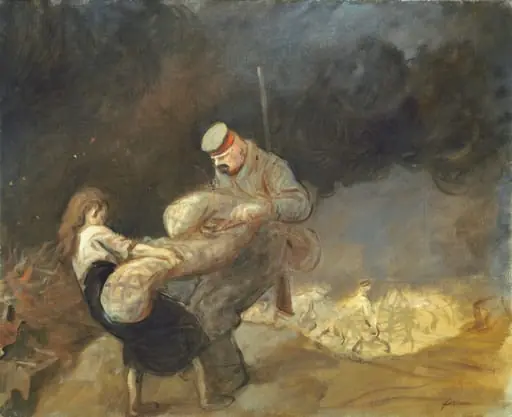
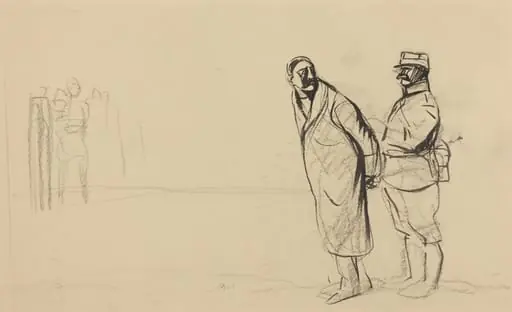
The Slavery in the North is a drawing by the Impressionist artist Jean-Louis Forain. It dates from 1892 and is held in the collection of the Cleveland Museum of Art.
About this work
Overview
Created in 1892 by Jean-Louis Forain, this drawing depicts a moment of tension involving a soldier and a group of civilians in a rugged outdoor setting.
Created in 1892 by Jean-Louis Forain, this drawing depicts a moment of tension involving a soldier and a group of civilians in a rugged outdoor setting. Executed in ink or pencil with swift, expressive lines, the work belongs to a body of sketches that capture unvarnished social encounters. It is part of the collection at The Cleveland Museum of Art, where it is preserved as an example of late 19th-century observational drawing.
Subject & Meaning
The scene portrays a soldier in khaki uniform standing over a group of subdued individuals, one of whom kneels with head bowed. The others cluster nearby, their postures conveying fear or resignation. Though the title references Northern slavery, the image does not depict a historical American setting; instead, it likely alludes to contemporary power imbalances or military authority in France, reflecting Forain’s interest in social hierarchy and oppression.
Technique & Style
Forain employed rapid, fluid strokes to convey urgency and emotional weight. The loose handling of form and minimal detail in the background emphasize the psychological dynamics between figures. The contrast between the rigid, upright soldier and the huddled, vulnerable group is heightened by the sketch’s spontaneous quality, aligning with Realist principles that prioritized authenticity over idealization.
History & Provenance
The drawing was produced during a period when Forain was actively documenting urban and rural life in France, often focusing on marginalized individuals. It entered the Cleveland Museum of Art’s collection in the 20th century, likely through a broader acquisition of European drawings. Its provenance reflects the museum’s interest in works that illustrate social realism outside the academic tradition.
Context
In the 1890s, French artists increasingly turned to scenes of everyday hardship, influenced by the rise of social critique and the decline of academic idealism. Forain, associated with the Impressionist circle but aligned with Realist concerns, used drawing to capture fleeting moments of authority and subjugation. This work resonates with contemporaneous depictions of military presence in civilian life during a time of political tension in Europe.
Legacy
The drawing stands as a quiet but potent record of Forain’s commitment to observing power structures in ordinary moments. While not widely exhibited, it contributes to the understanding of how late 19th-century draftsmen used minimal means to convey complex social narratives. Its preservation in a major American museum underscores its role in transatlantic dialogues about realism and human dignity in art.
Own this work as a print
Artist & collection

Artist
Jean-Louis Forain (French pronunciation: ; 23 October 1852 – 11 July 1931) was a French Impressionist painter and printmaker, working in media including oils, watercolour, pastel, etching and lithograph.

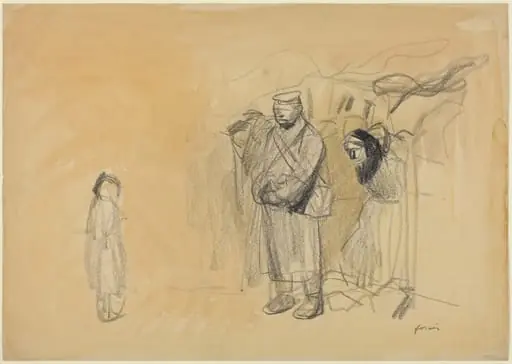 a) German Soldiers and French Child (recto); b) Woman and Child (verso)
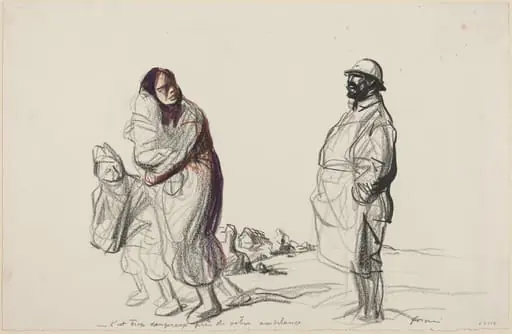 a) C'est trop dangereux pres de votre ambulance (recto); b) Study of Mother and Children (verso)
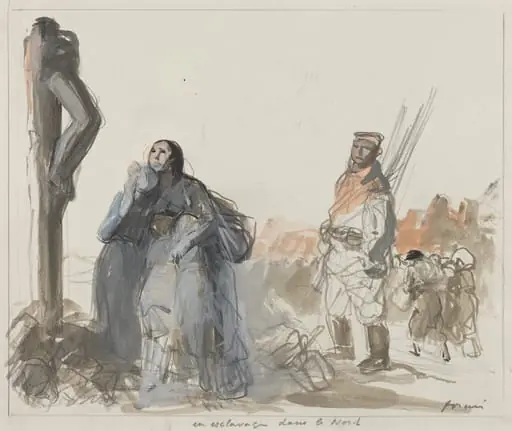 En esclavage dans le Nord
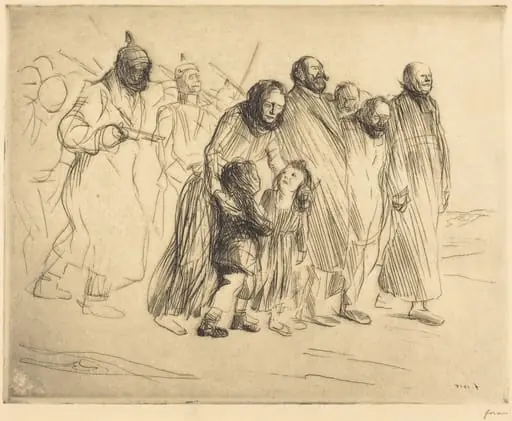 Les notables (petite planche) (The Notables) (small plate)
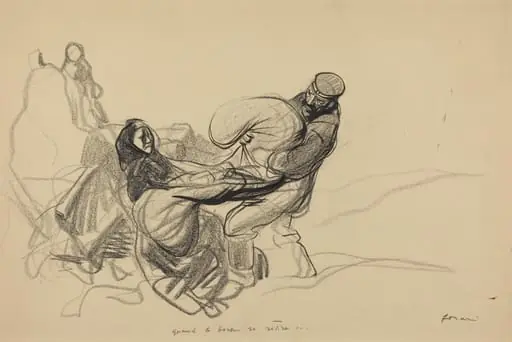 Quand le boche se retire...
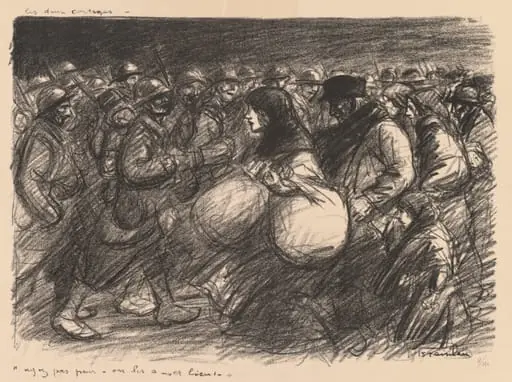 War Sketches: The Two Processions (Croquis de guerre: Les deux cortèges – “Ayez pas peur - on les a - et bien!”)
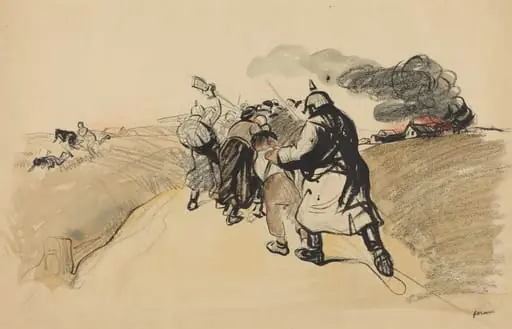 German Raid on a Village
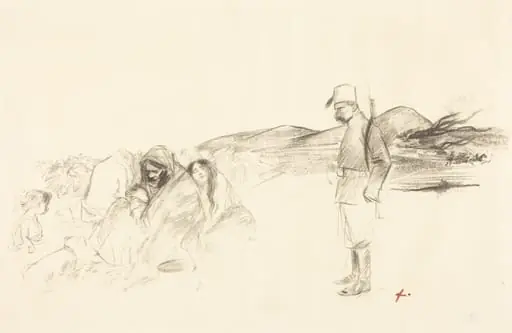 En Grèce (In Greece)
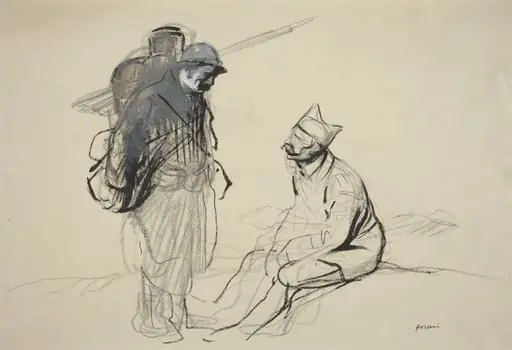 Poilu and Tommy Conversing
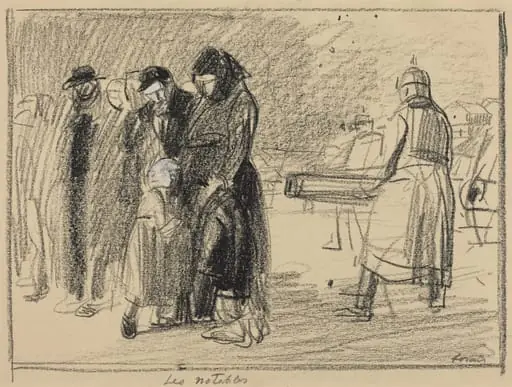 Les notables
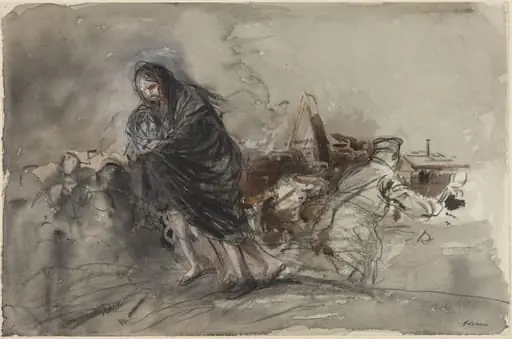 a) Après Douai (After Douai) (recto); b) Figure (verso)
 a) Au front de Vincennes, Bolo pacha (recto); b) Sketch for Au front de Vincennes, Bolo pacha (verso)