Artwork
"J'ose pas encore aller le décrocher...ça lui fera trop de peine." ("I don't dare take them down...it would hurt him too much.")
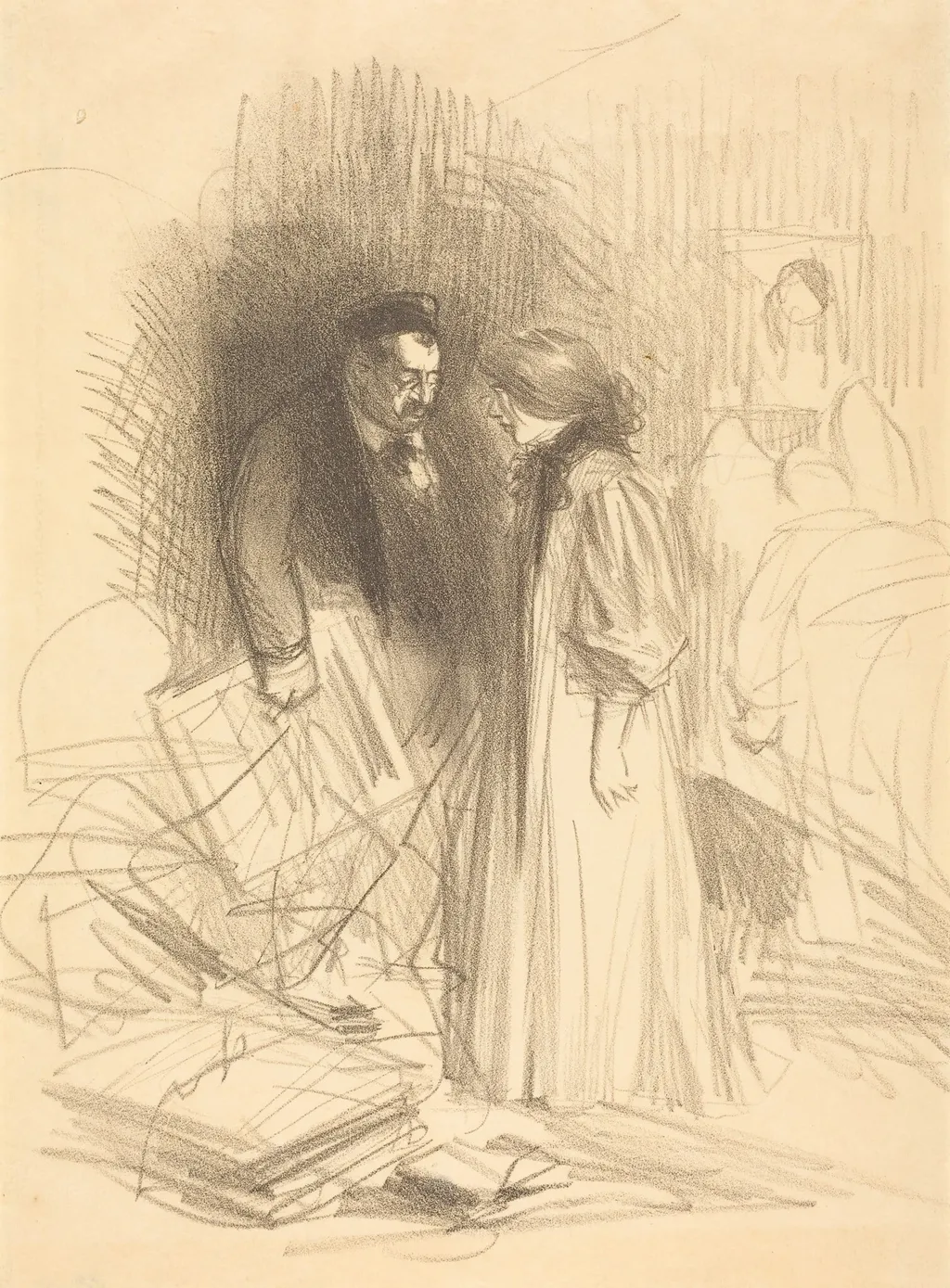
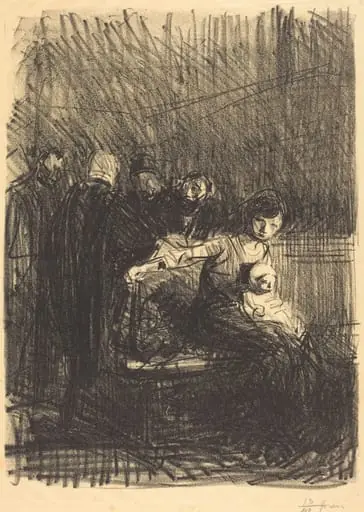
"J'ose pas encore aller le décrocher...ça lui fera trop de peine." ("I don't dare take them down...it would hurt him too much.") is an ink print by the Impressionist artist Jean-Louis Forain. It dates from 1892 and is held in the collection of the National Gallery of Art.
About this work
Overview
Executed on Arches vellum paper, the work reflects Forain’s mastery of lithography, a medium he favored for its capacity to convey immediacy and nuance.
Created around 1892, this lithograph by Jean-Louis Forain captures a quiet, emotionally charged moment of restraint. Executed on Arches vellum paper, the work reflects Forain’s mastery of lithography, a medium he favored for its capacity to convey immediacy and nuance. Though associated with Impressionist circles, his approach leaned toward social observation rather than light studies, distinguishing him from contemporaries focused on plein air painting.
Subject & Meaning
The scene portrays two figures paused in hesitation, their postures suggesting unspoken grief. The title reveals the emotional core: one person refrains from removing a cherished object, fearing it would cause pain to another. The ambiguity of the object—possibly a photograph or keepsake—heightens the intimacy of the moment, inviting viewers to contemplate silent mourning and the weight of unexpressed affection.
Technique & Style
Forain employed rapid, expressive lines typical of late 19th-century lithographic sketching, avoiding polished detail in favor of suggestive form. The figures’ features are rendered with loose, textured strokes, while the background dissolves into soft, indistinct foliage and architecture. This economy of line emphasizes emotional atmosphere over narrative clarity, aligning with the aesthetic of observational drawing favored by many artists of the period.
History & Provenance
The work emerged during a period when Forain was actively producing prints for illustrated journals and private collectors. Though widely circulated in his time, the piece remained largely within private hands and was never part of major institutional collections. Its survival in original Arches paper suggests careful preservation, likely by a collector attuned to the artist’s graphic work rather than his more famous paintings.
Context
In the 1890s, French printmaking experienced a revival, with lithography enabling artists to reach broader audiences. Forain, though commercially successful, operated on the margins of the Impressionist movement, focusing on urban life and psychological subtlety. This piece reflects a broader cultural interest in domestic emotion and quiet human vulnerability, themes increasingly explored in literature and graphic arts of the fin de siècle.
Legacy
While Forain’s reputation faded in the 20th century, this lithograph endures as a quiet example of his skill in conveying complex emotion through minimal means. It stands as a testament to the power of graphic art to capture fleeting, intimate moments without melodrama. Scholars now recognize his prints as valuable documents of late 19th-century social sensibility, distinct from the more celebrated painterly trends of his era.
Artist & collection

Artist
Jean-Louis Forain (French pronunciation: ; 23 October 1852 – 11 July 1931) was a French Impressionist painter and printmaker, working in media including oils, watercolour, pastel, etching and lithograph.

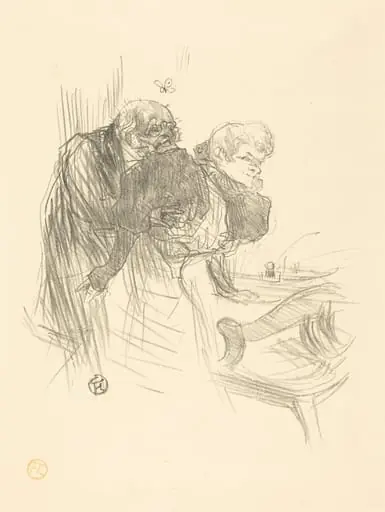 Les vieux papillons
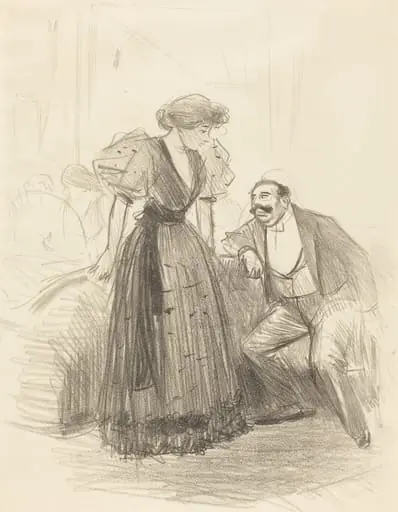 En soirée (At an Evening Party)
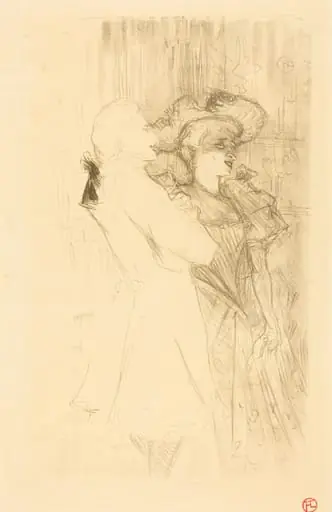 Lender and Auguez in "La chanson de fortunio" (Lender et Auguez dans "La chanson de fortunio")
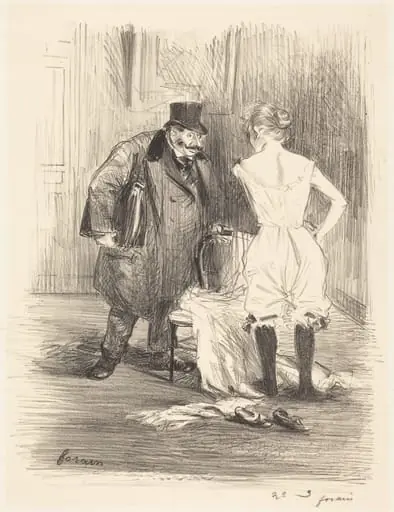 Une saisie (A Seizure)
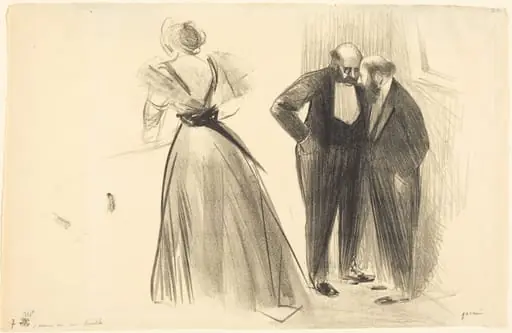 Trois dessins sur une feuille (Three Drawings on a Sheet)
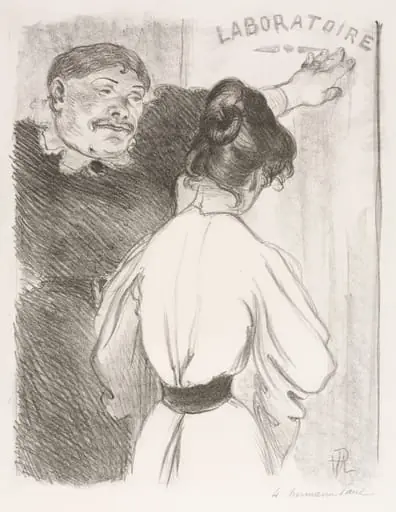 Laboratoire
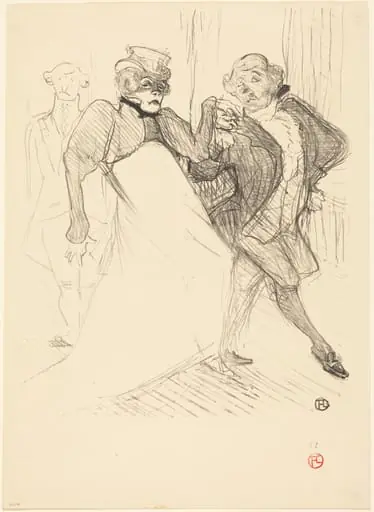 Rejane and Galipaux in "Madame Sans-Gêne" (Réjane et Galipaux dans "Madame Sans-Gêne")
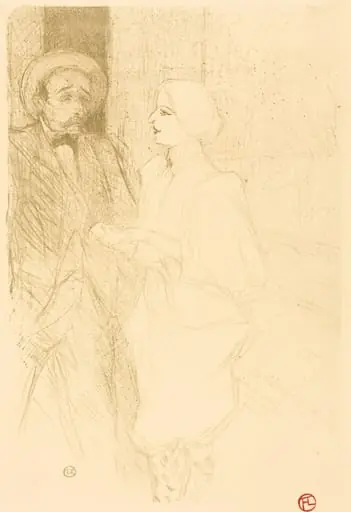 Yahne and Mayer in "L'age difficile" (Yahne et Mayer dans "L'age difficile")
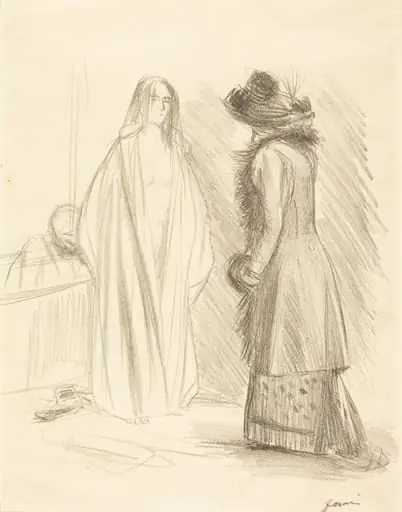 Dans la salle de bains (In the Bathroom)
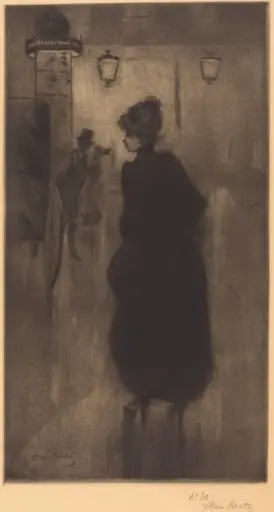 Parisian Woman (The Effect of the Night)
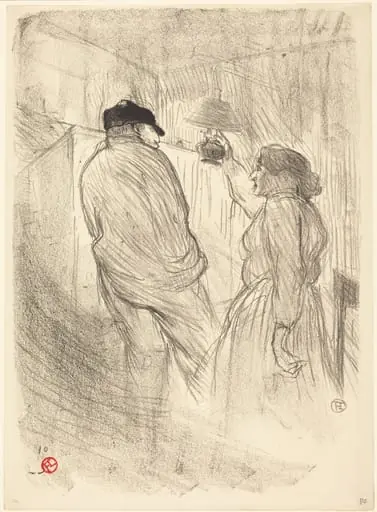 At the Theatre-Libre: Antoine in "L'inquiétude" (Au Théatre-Libre: Antoine dans "L'inquiétude")
 Suspension d'audience (Recess of the Hearing)