Artwork
Parisian Woman (The Effect of the Night)
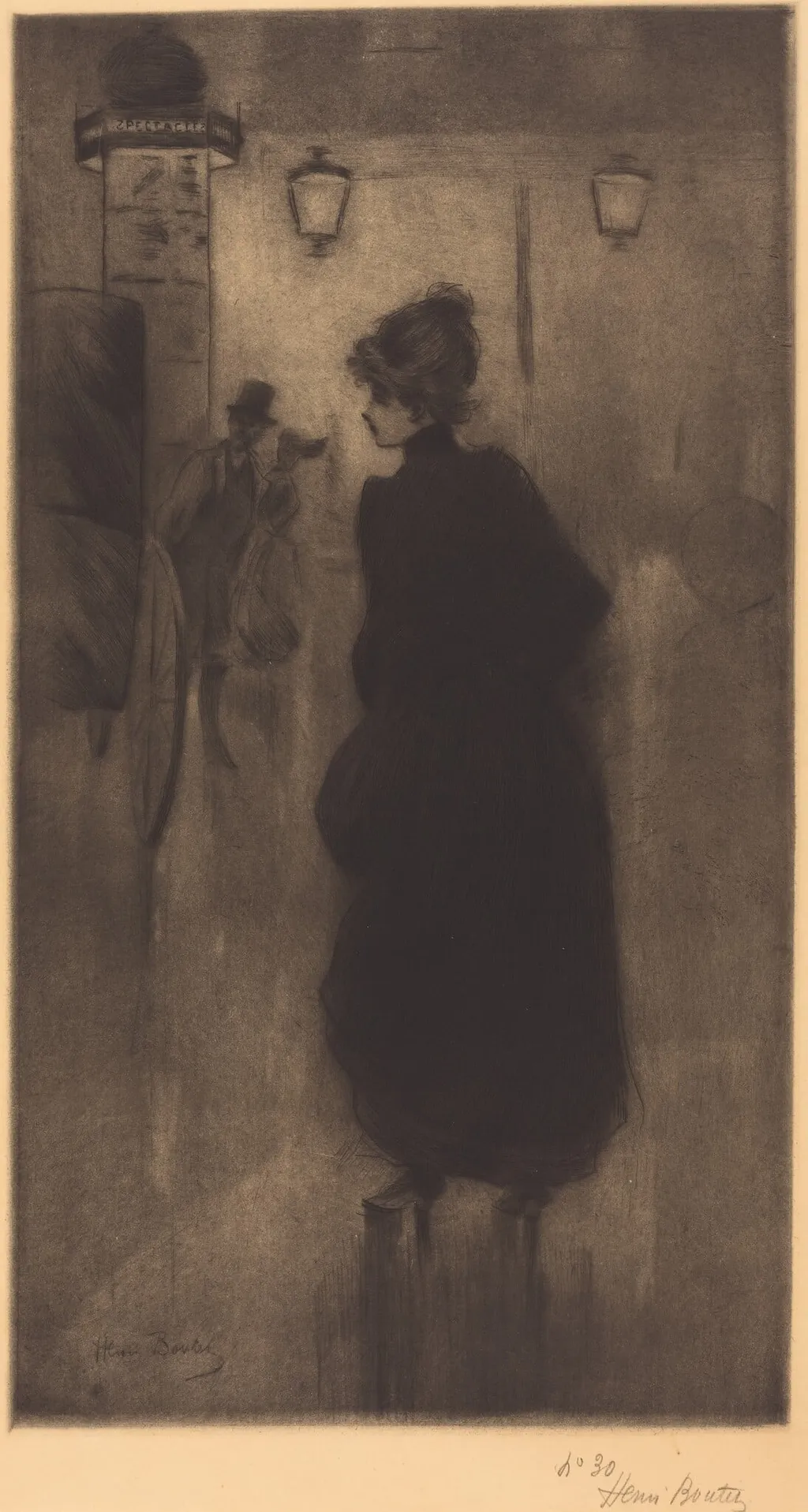
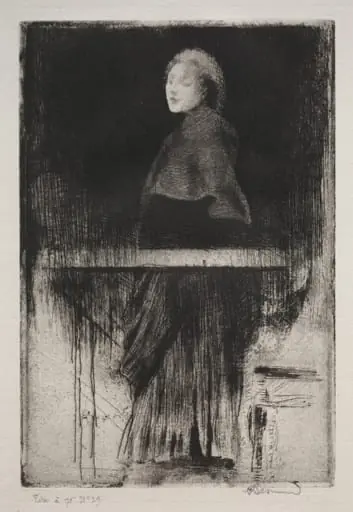
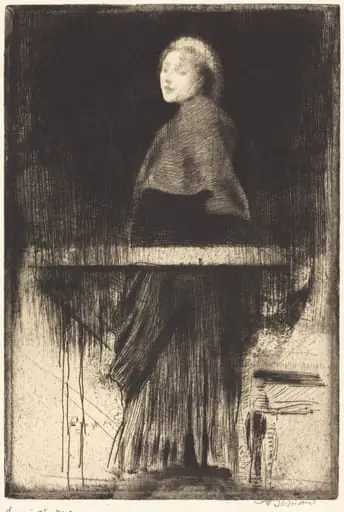
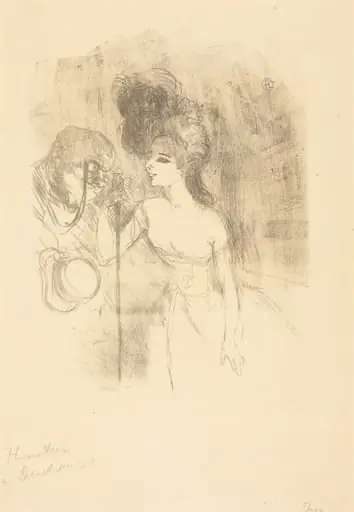
Parisian Woman (The Effect of the Night) is an ink print by the Impressionist artist Henri Boutet. It dates from 1893 and is held in the collection of the National Gallery of Art.
About this work
Overview
Parisian Woman (The Effect of the Night) is a print created by Henri Boutet in 1893, utilizing etching combined with aquatint and roulette on buff wove paper.
Subject & Meaning
The print portrays a contemplative scene: a woman in a dark, long dress, centrally placed and gazing to the left, while a man in the background looks to the right. Her introspective stance contrasts with the man's diverted attention, set against a backdrop featuring two lanterns and a sign on a lighter wall, emphasizing her solitude.
Technique & Style
Boutet employed a muted tonal palette, achieved through etching, aquatint (for textured, shaded areas), and roulette (for fine, expressive lines). The woman's dark dress, rendered in deeper tones, contrasts with the lighter wall, highlighting her as the focal point in a scene of quiet reflection.
History & Provenance
Created in 1893, specific details about the print's history, ownership, or exhibition record before its current location are not provided.
Context
Emerging from the late 19th-century Parisian art scene, this work reflects the era's interest in capturing everyday life and nocturnal effects, possibly influenced by Impressionist and emerging Art Nouveau styles.
Legacy
The print's impact or influence on subsequent artists, as well as its reception over time, is not detailed in the available information.
Artist & collection


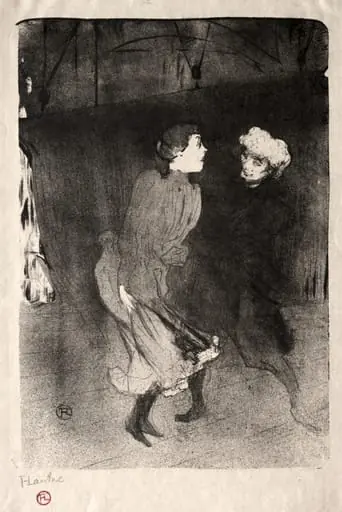 Emilienne d'Alecon and Mariquita of the Follies-Bergère
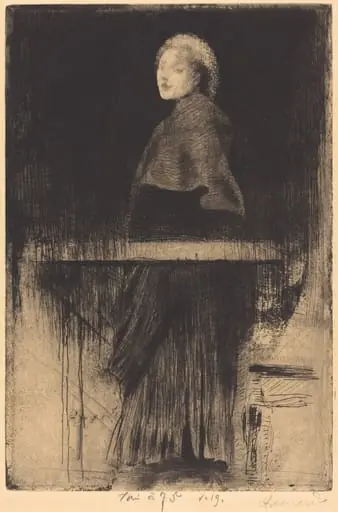 Woman in a Cape (La Femme à la Pelerine)
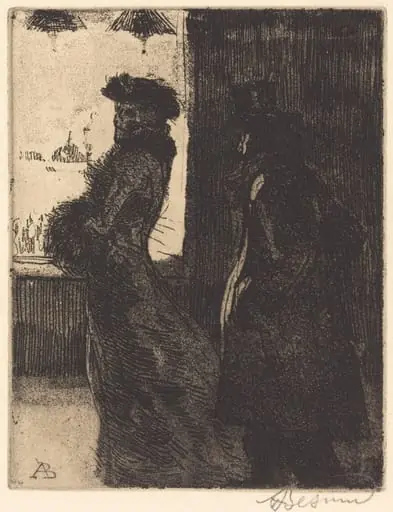 The Unknown Woman (L'inconnue)
 Woman with a Cape
 On the Stage (Sur la scène)
 Woman in a Cape (La femme à la pèlerine)
 Dress Rehearsal at the Folies-Bergere (Répétition générale aux Folies-Bergère)
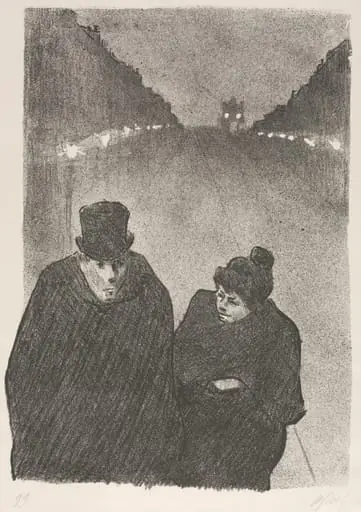 Ah, it's true, my poor old man, you would be the first to whom I would have made to miss his bus. "But I'll Miss My Bus" "My Customers Have Never Missed Their Bus"
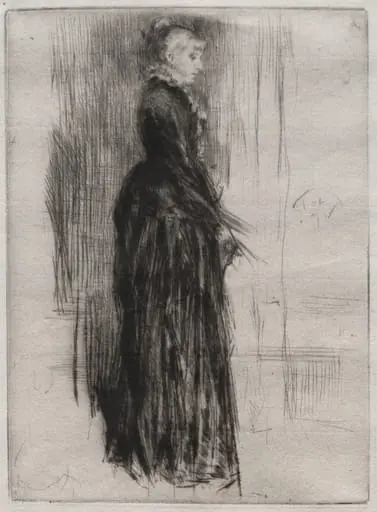 Little Velvet Dress
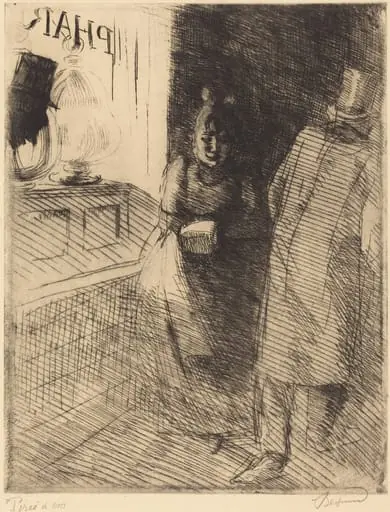 Prostitution (La Prostitution)
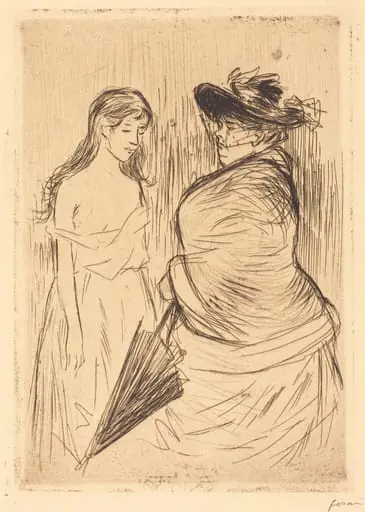 Le Traite des blanches (The White Slave Trade)
 Anna Held and Baldy (Anna Held et Baldy)