Artwork
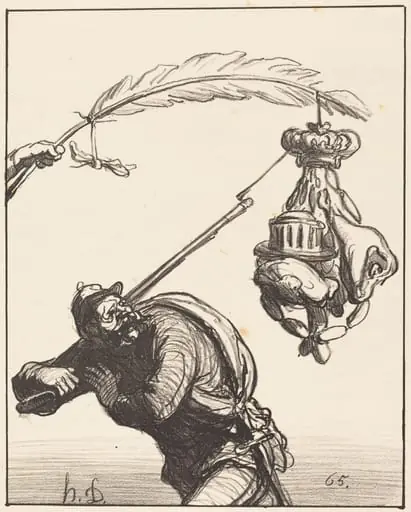
Le pas de l'oie - dans le sang
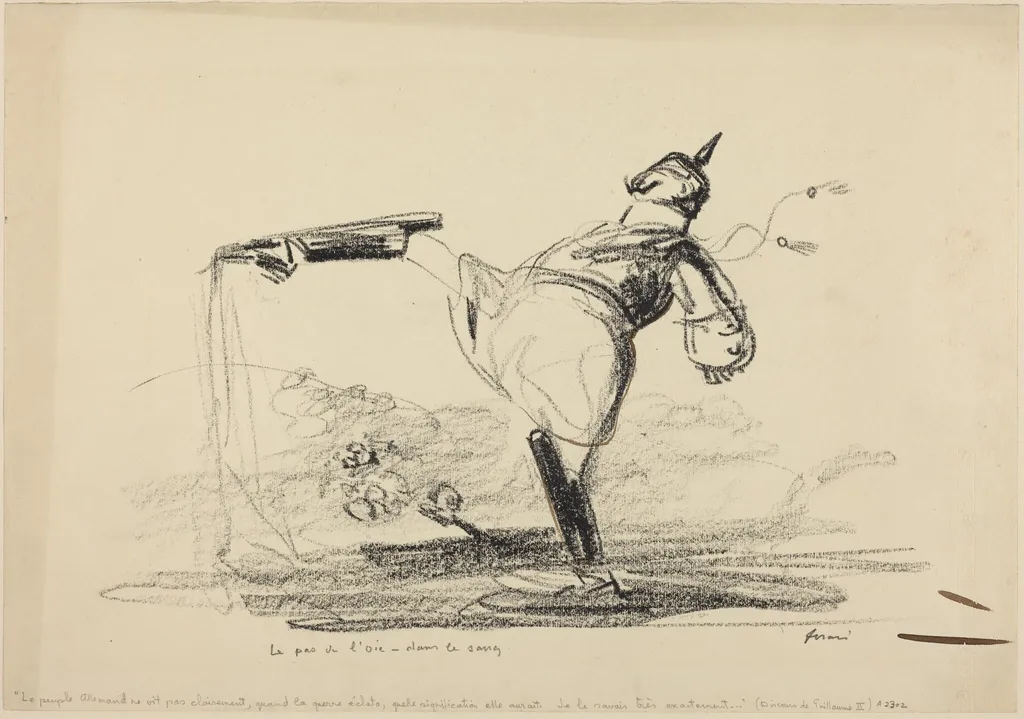
Le pas de l'oie - dans le sang is an ink drawing by Jean-Louis Forain. It dates from 1916 and is held in the collection of the National Gallery of Art.
About this work
Overview
Though best known for his colorful Impressionist paintings and prints, Forain turned to stark graphic media during wartime to convey emotional urgency.
Created circa 1916, *Le pas de l'oie - dans le sang* is a monochromatic drawing by Jean-Louis Forain, executed in black crayon and brush with brown ink on wove paper. Though best known for his colorful Impressionist paintings and prints, Forain turned to stark graphic media during wartime to convey emotional urgency. The work’s simplicity of materials heightens its visceral impact, distinguishing it from his more decorative output.
Subject & Meaning
The drawing portrays a soldier in mid-motion, one leg thrust backward, left arm raised, helmeted head twisted in a snarl. His posture suggests a violent lunge, as if caught between command and chaos. The title, referencing a rigid military march, contrasts sharply with the figure’s wild energy, implying the disintegration of discipline under the strain of war. The absence of context isolates the soldier as a symbol of raw, uncontrolled aggression.
Technique & Style
Forain employs bold, fluid lines and dense tonal contrasts to model form and movement. The brushwork builds shadow with swift, irregular strokes, while crayon defines sharp contours—particularly around the jaw and limbs. The light beige paper acts as a neutral ground, amplifying the ink’s darkness and lending the figure an almost sculptural presence. The technique prioritizes expressive immediacy over detail, aligning with a graphic tradition of wartime reportage.
History & Provenance
The drawing emerged during Forain’s active engagement with wartime imagery, a period when he produced numerous sketches responding to the conflict. Unlike his commercially successful portraits and satires, this piece remained in private hands and was not widely exhibited. Its survival reflects its status as a personal, uncommissioned response to the war, rather than a public statement.
Context
Made during the height of World War I, the work reflects a broader shift among French artists toward depicting the psychological toll of combat. While many contemporaries focused on landscapes or wounded soldiers, Forain chose to capture the moment of violent intent—prioritizing emotional truth over narrative clarity. His choice of a single, isolated figure echoes the anonymity of mass warfare.
Legacy
Though Forain’s name faded from mainstream art history after his death, this drawing remains a compelling example of his ability to merge observational precision with emotional intensity. It stands as a quiet counterpoint to the grandiose war memorials of the era, offering instead a raw, unvarnished glimpse into the psyche of the individual soldier under pressure.
Artist & collection

Artist
Jean-Louis Forain (French pronunciation: ; 23 October 1852 – 11 July 1931) was a French Impressionist painter and printmaker, working in media including oils, watercolour, pastel, etching and lithograph.

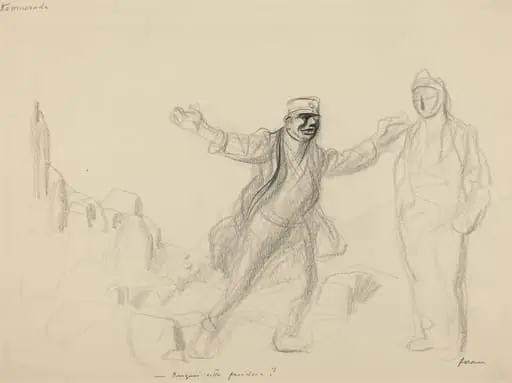 a) Kammerade. Porquoi cette froideur? (recto); b) Study for German Figure (verso)
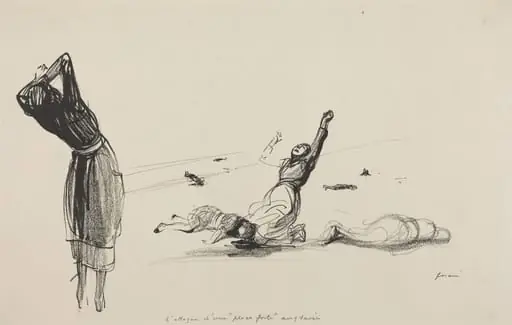 L'attaque d'une "place forte" anglaise
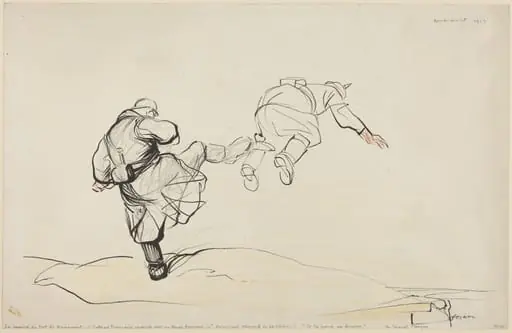 The Taking of Fort Douaumont
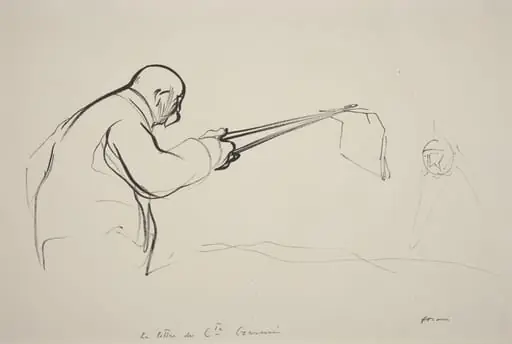 M. Clemenceau. La lettre du Cte Czernin
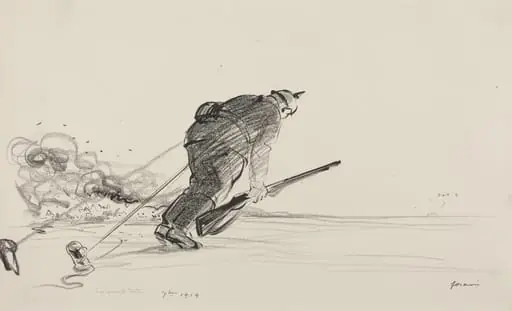 7me 1914
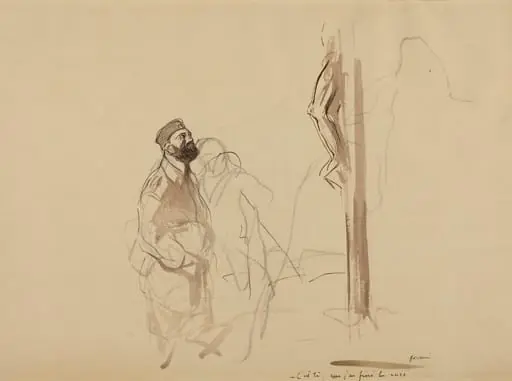 C'est la, que j'ai fini le cure
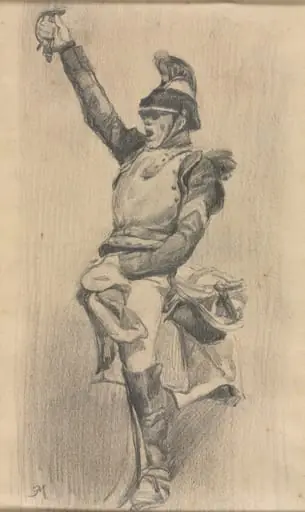 Soldier with Upraised Arm
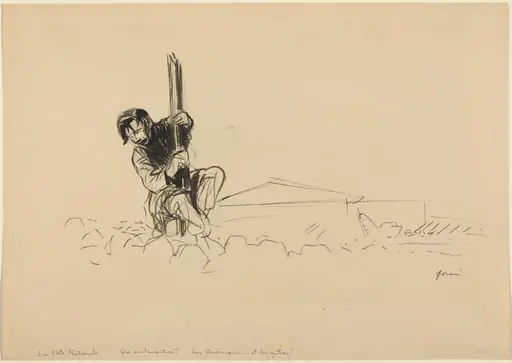 a) La fête nationale (The National Holiday) (recto); b) Woman Holding Child (verso)
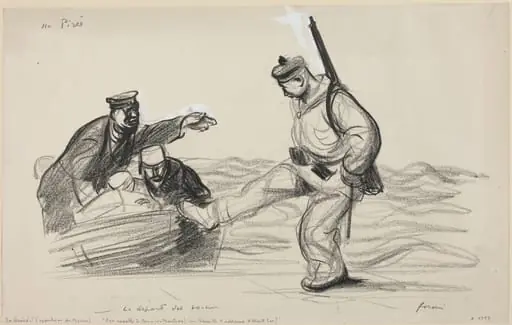 Au Pireê. -Le depart des boches.
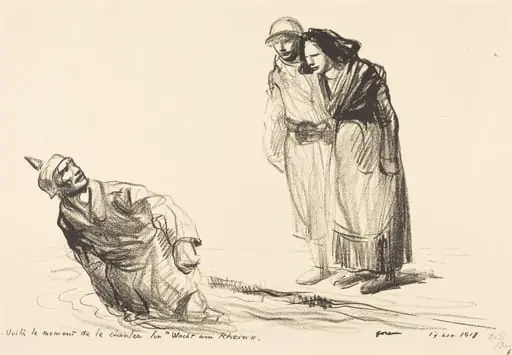 Voilà le Moment de le chantes tun "Wacht am Rhein"
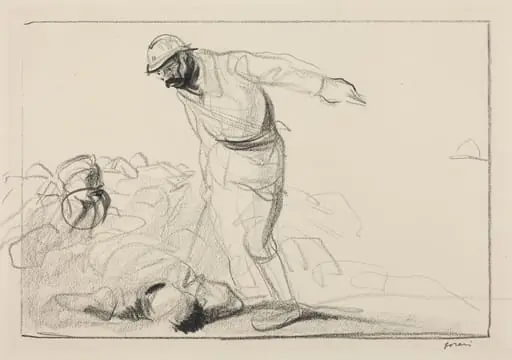 Lost Illusions
 La paix a tout prix