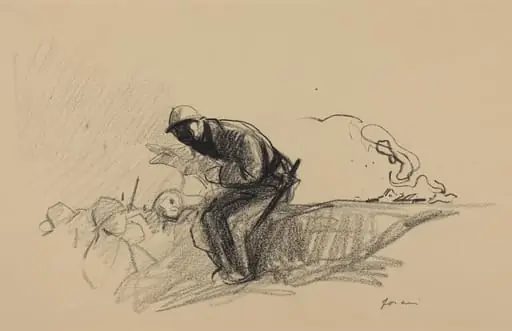
Artwork
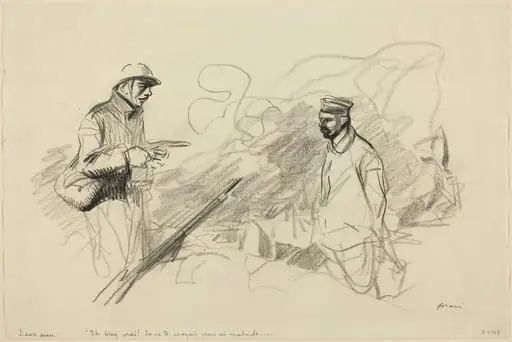
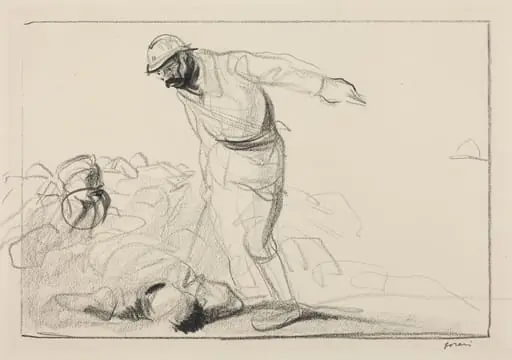
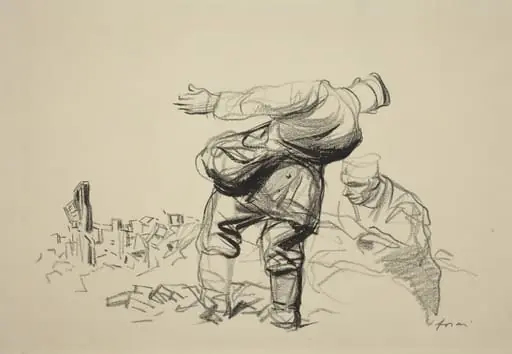
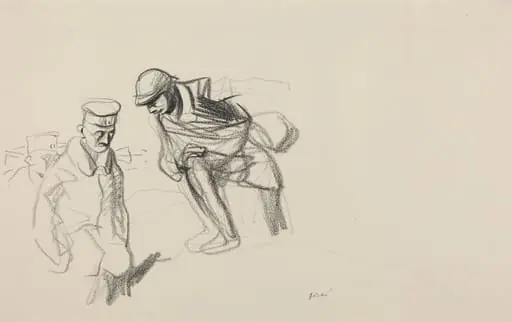
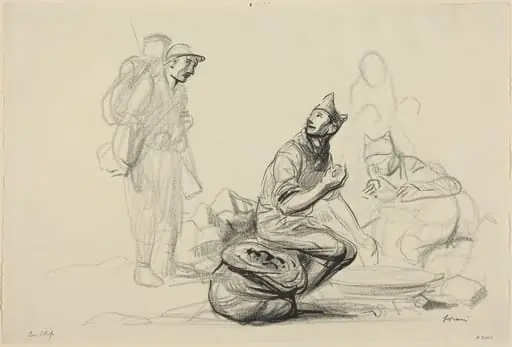
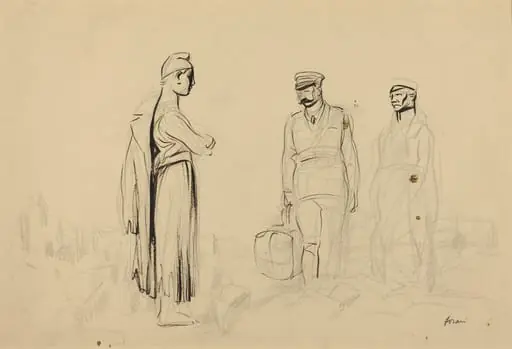
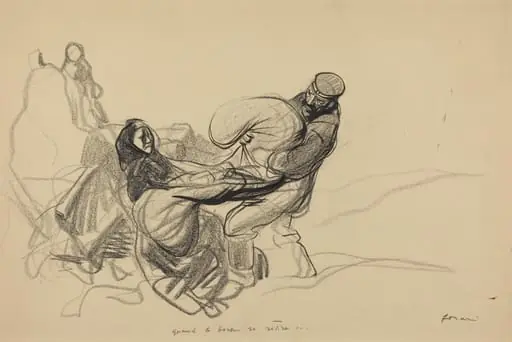
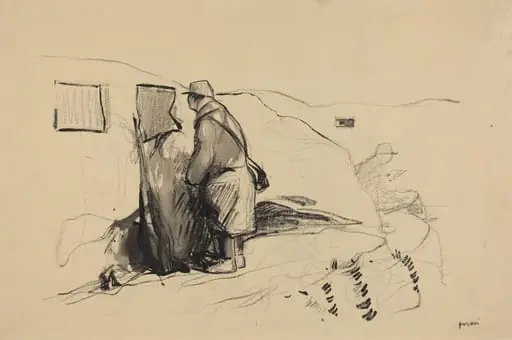
a) Kammerade. Porquoi cette froideur? (recto); b) Study for German Figure (verso)
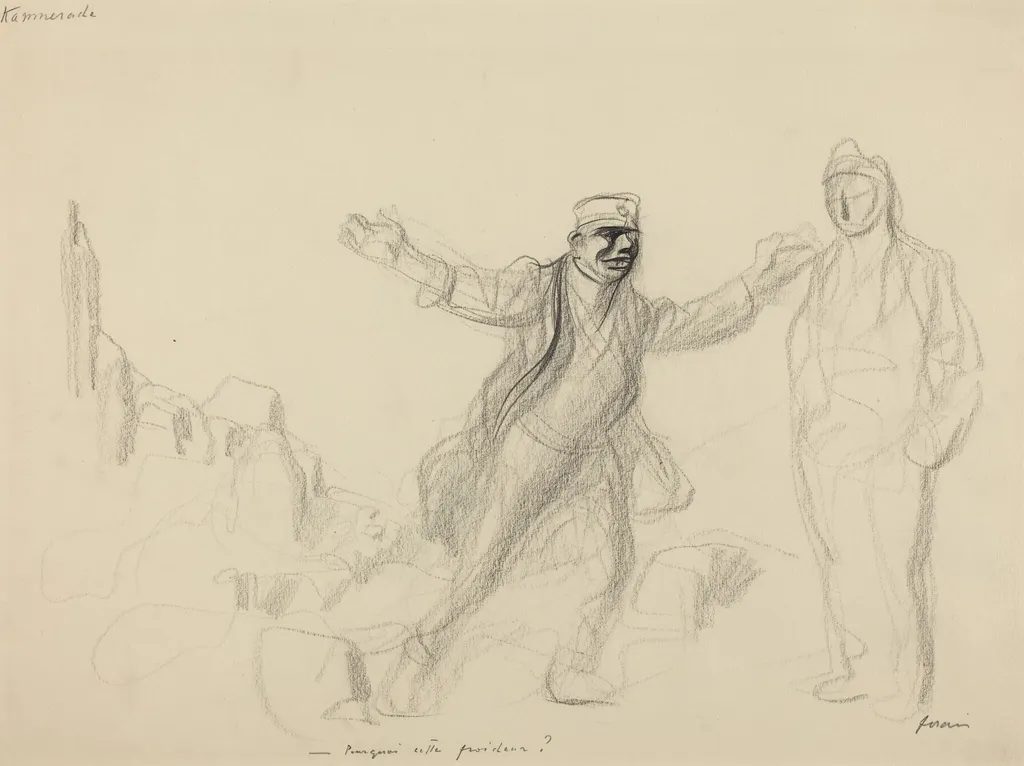
a) Kammerade. Porquoi cette froideur? (recto); b) Study for German Figure (verso) is a crayon drawing by Jean-Louis Forain. It dates from 1916 and is held in the collection of the National Gallery of Art.
About this work
Overview
Created around 1916, these two drawings by Jean-Louis Forain share a single sheet of wove paper, with one image on each side.
Created around 1916, these two drawings by Jean-Louis Forain share a single sheet of wove paper, with one image on each side. Both executed in black crayon, they represent a period of intense figural exploration in the artist’s practice. Though Forain was widely known for his work in painting and printmaking, these studies reveal a more intimate, direct approach to capturing human form and expression.
Subject & Meaning
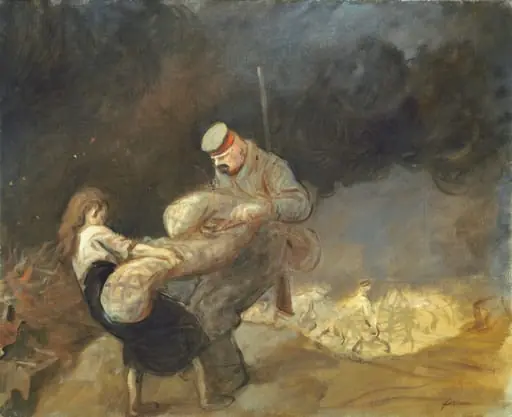
The recto, titled *Kammerade. Porquoi cette froideur?*, suggests a psychological tension, possibly reflecting wartime alienation. The phrase, in French and German, evokes a fractured interpersonal dynamic, perhaps commenting on the strained relations between nations during World War I. The verso, labeled *Study for German Figure*, indicates a deliberate, observational focus on a specific type or archetype, likely shaped by contemporary political and social anxieties.
Technique & Style
Forain employed black crayon with controlled, expressive strokes to model form and suggest texture without heavy shading. The lines are economical yet precise, emphasizing gesture and posture over detail. The paper’s smooth surface allowed for subtle tonal gradations, enhancing the psychological weight of the figures. Both sides demonstrate his ability to convey character through minimal means, a hallmark of his draftsmanship.
History & Provenance
The drawings remained in Forain’s personal collection until after his death in 1931. They were later acquired by a private collector in France and entered a public collection in the mid-20th century. Their dual-sided format suggests they were not intended for public display at the time, but rather served as working studies, preserved for their artistic value rather than as finished works.
Context
Created during World War I, these drawings reflect the cultural climate of a France deeply affected by conflict. Forain, though not a soldier, was attuned to the shifting social dynamics and national animosities. His focus on a German figure and the use of a bilingual title indicate a conscious engagement with the war’s human dimensions, moving beyond satire into quieter, more introspective commentary.
Legacy
These drawings exemplify Forain’s versatility beyond his better-known satirical prints and paintings. They contribute to a broader understanding of his artistic process, revealing how he used sketching to explore emotional and political themes. Though less widely exhibited than his lithographs, they remain important for their directness and their place in early 20th-century French drawing practice.
Artist & collection

Artist
Jean-Louis Forain (French pronunciation: ; 23 October 1852 – 11 July 1931) was a French Impressionist painter and printmaker, working in media including oils, watercolour, pastel, etching and lithograph.