Artwork
Salle de jeu (Gambling Room)
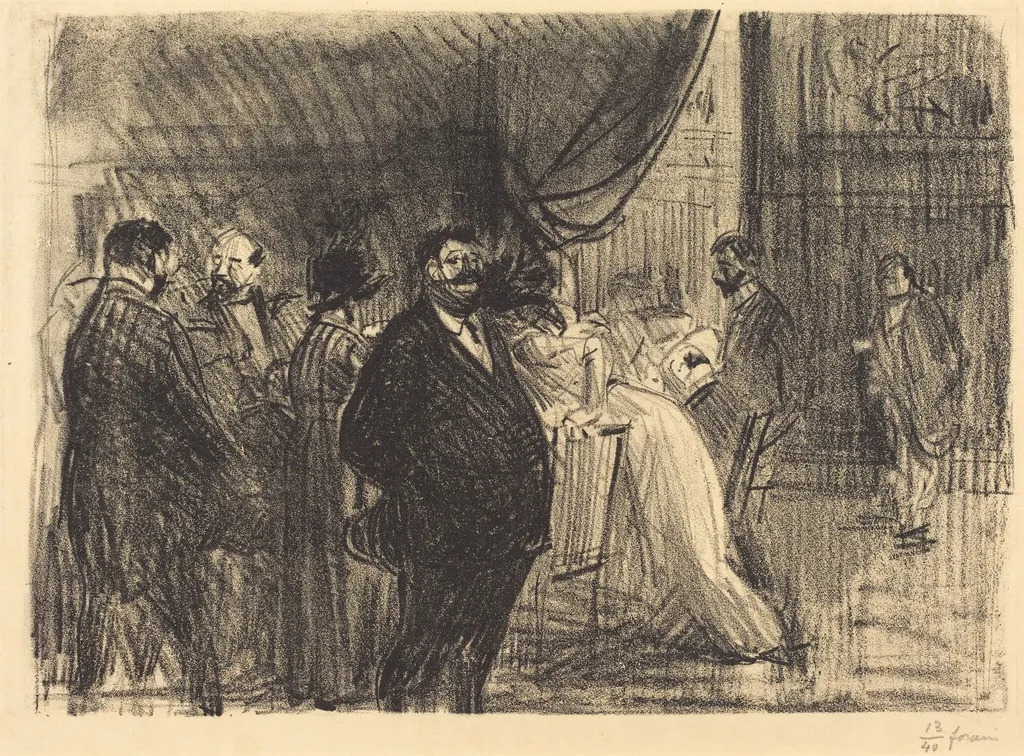
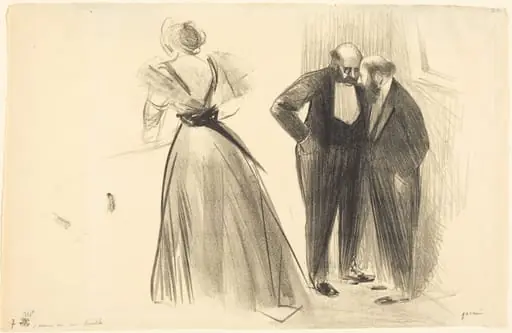
Salle de jeu (Gambling Room) is an ink print by Jean-Louis Forain. It dates from 1914 and is held in the collection of the National Gallery of Art.
About this work
Overview
Salle de jeu (Gambling Room) is a 1914 lithograph by French artist Jean-Louis Forain, executed on laid paper.
Salle de jeu (Gambling Room) is a 1914 lithograph by French artist Jean-Louis Forain, executed on laid paper. Known for his versatility across media—including oil, watercolor, and printmaking—Forain produced this work during a period when he focused increasingly on graphic art. The piece captures a candid interior moment, reflecting his interest in urban social life and the undercurrents of leisure in late 19th- and early 20th-century Paris.
Subject & Meaning
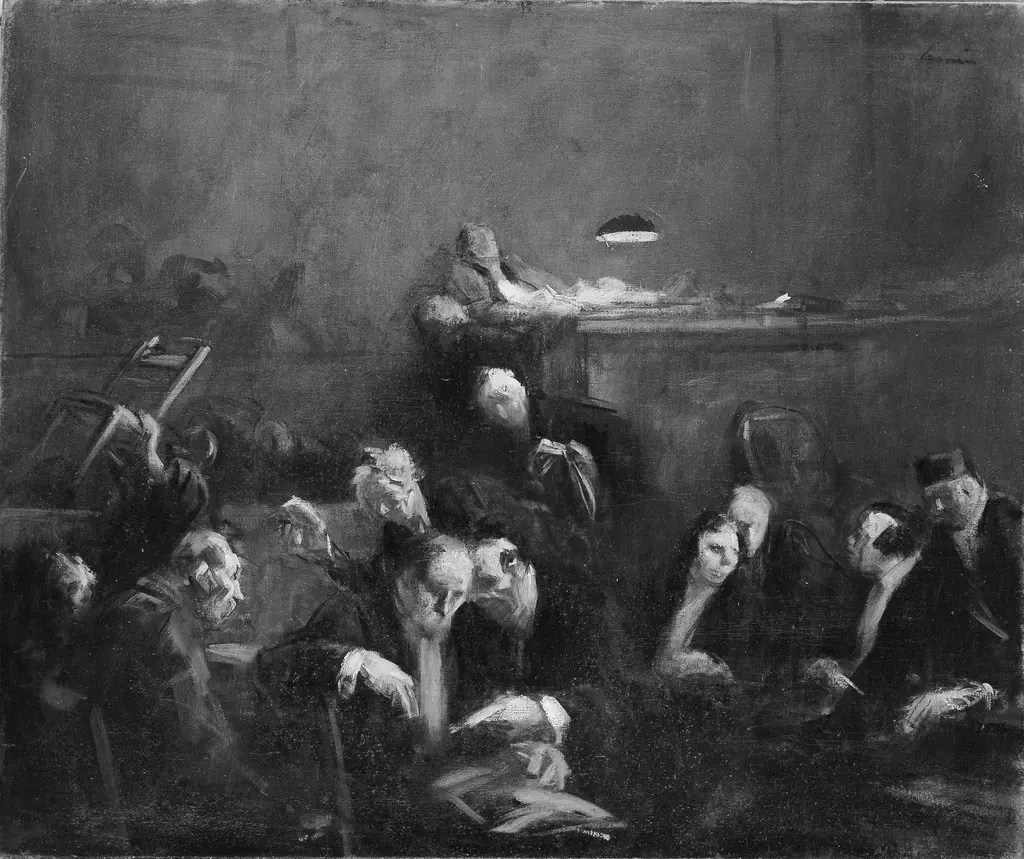
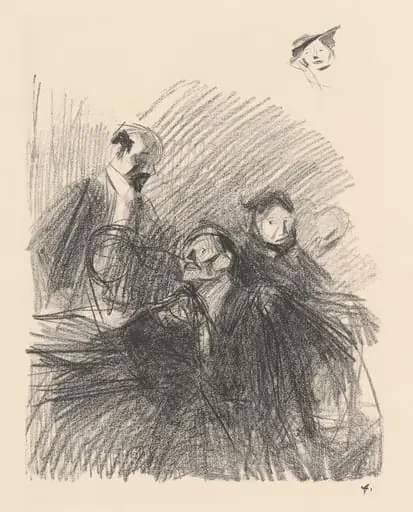
The scene portrays five men gathered around a gambling table in a dimly lit room. One figure, distinguished by a top hat, leans over a woman who holds cards, while the others watch with intense focus. The composition suggests tension and fleeting chance, avoiding moral judgment but emphasizing the psychological weight of the moment. The absence of clear narrative cues invites viewers to interpret the stakes—whether triumph or ruin—as private and unspoken.
Technique & Style
Forain employed lithography to achieve rapid, expressive lines that convey motion and atmosphere rather than precise detail. The use of smudged, uneven strokes and high contrast between light and shadow creates a sense of urgency. The rough texture of the laid paper enhances the gritty realism of the scene. This approach aligns with Impressionist concerns for transient moments, though the subject matter leans toward social observation rather than light or landscape.
History & Provenance
Created in 1914, the print emerged during the final years of Forain’s active career, when his reputation as a satirical illustrator and printmaker was well established. Though widely exhibited and collected in his time, his work fell into relative obscurity after his death in 1931. This particular lithograph remains in public and private collections, valued for its documentary insight into Parisian gambling culture rather than as a major artistic landmark.
Context
In early 20th-century Paris, gambling dens were common in working-class neighborhoods and often frequented by men seeking escape or fortune. Forain, who frequently depicted urban life, captured these spaces with unflinching realism. Unlike moralizing contemporaries, he presented such scenes without overt critique, allowing the atmosphere and body language to convey the emotional undercurrents of risk and isolation in modern city life.
Legacy
While Forain’s broader oeuvre has not retained the prominence of his Impressionist peers, Salle de jeu endures as a compelling example of his graphic precision and psychological insight. The print is studied for its ability to distill social dynamics through minimal means, influencing later generations of illustrators and printmakers interested in capturing the quiet dramas of everyday life.
Artist & collection

Artist
Jean-Louis Forain (French pronunciation: ; 23 October 1852 – 11 July 1931) was a French Impressionist painter and printmaker, working in media including oils, watercolour, pastel, etching and lithograph.