Artwork
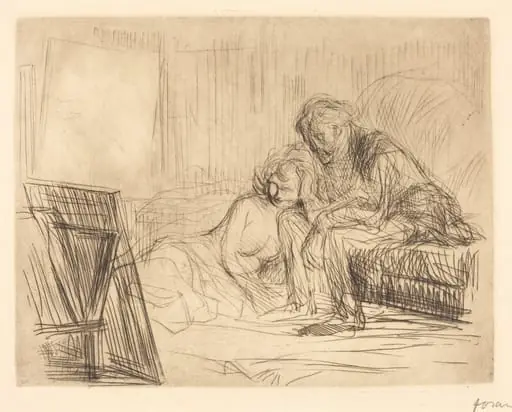
Un tableau de papa! (1ère planche) (A Painting of Daddy's!) (first plate)
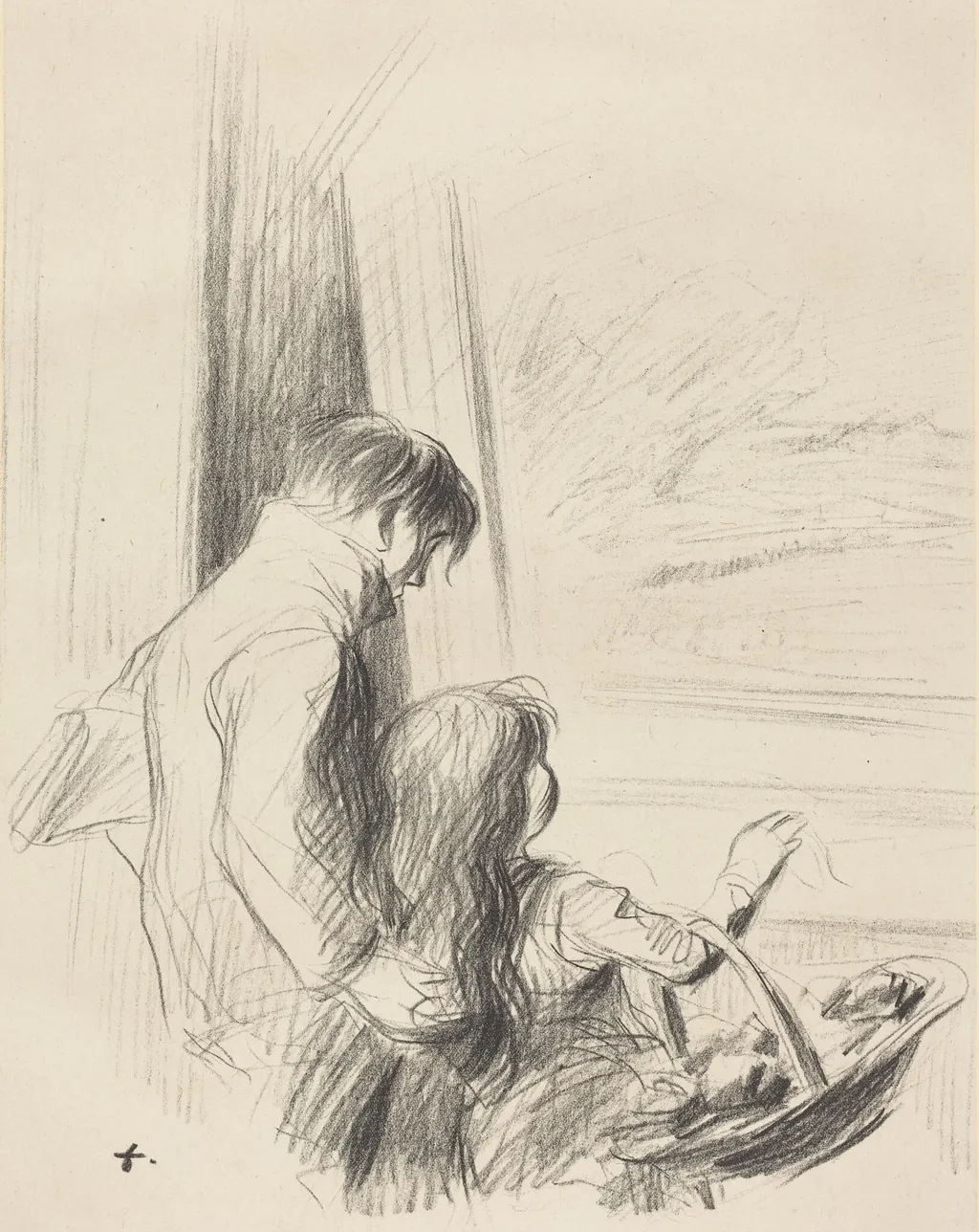
Un tableau de papa! (1ère planche) (A Painting of Daddy's!) (first plate) is an ink print by the Impressionist artist Jean-Louis Forain. It dates from 1897 and is held in the collection of the National Gallery of Art. Created around 1897, *Un tableau de papa!
About this work
Overview
Jean-Louis Forain, a French artist active in multiple mediums, produced this work as part of a series exploring domestic life.
Created around 1897, *Un tableau de papa! (1ère planche)* is a transfer lithograph printed using the chine collé technique on wove paper. Jean-Louis Forain, a French artist active in multiple mediums, produced this work as part of a series exploring domestic life. His approach combined the spontaneity of sketching with the precision of printmaking, reflecting his dual role as both a chronicler of everyday scenes and a satirical observer of social norms.
Subject & Meaning
The image portrays a woman in a modest interior, bent slightly forward, one hand gripping a basket, the other resting on her hip. Her posture and simple attire suggest a moment of quiet labor, possibly in a domestic setting. Forain’s depiction avoids idealization, instead capturing an unembellished gesture that hints at the routines of middle-class life. The scene carries a subtle irony, characteristic of his critique of bourgeois routines without overt mockery.
Technique & Style
Forain employed transfer lithography, allowing him to draw directly on a stone with crayon and then transfer the image to paper. The chine collé method added delicate texture by adhering thin paper to a heavier support. His lines are swift and economical, emphasizing movement and posture over detail. The background is minimal—a dark vertical form and faint, wavering strokes imply space without definition, focusing attention on the figure’s quiet presence.
History & Provenance
This print emerged during a period when Forain was prolific in graphic arts, contributing regularly to illustrated journals. Though widely circulated and commercially successful in his lifetime, his reputation waned in the 20th century as modernist movements shifted artistic priorities. Unlike his Impressionist peers, Forain’s legacy remained tied to illustration and satire rather than fine art canonization, though his prints are now held in major museum collections.
Context
In late 19th-century France, printmaking experienced a revival as artists sought accessible ways to reach broader audiences. Forain’s work aligned with this trend, drawing from the observational ethos of Impressionism while embracing the immediacy of caricature. His focus on ordinary moments—often tinged with gentle irony—reflected a cultural interest in the private lives of the middle class, a theme echoed in literature and theater of the era.
Legacy
Forain’s prints, including this one, remain valuable for their unpretentious documentation of daily life. While overshadowed in public memory by painters like Monet, his contributions to graphic art influenced later illustrators and satirists. The work exemplifies how printmaking could serve as both artistic expression and social commentary, preserving fleeting moments with clarity and restraint.
Artist & collection

Artist
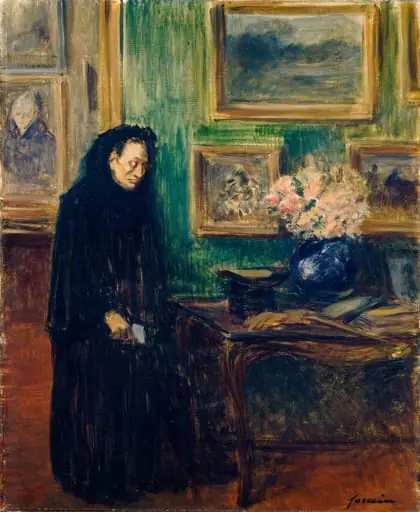
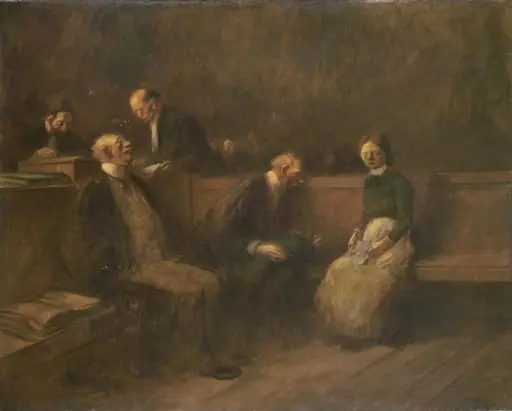
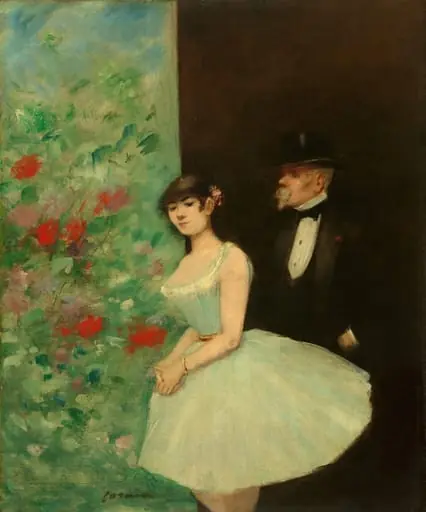
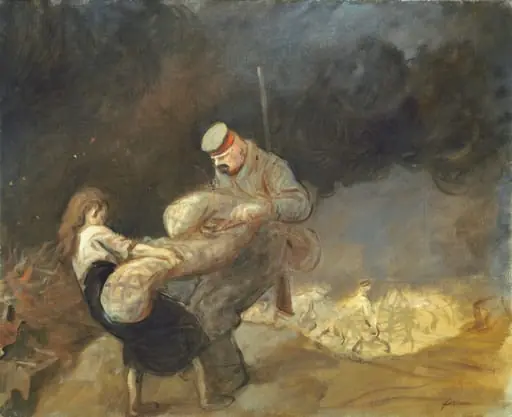
Jean-Louis Forain (French pronunciation: ; 23 October 1852 – 11 July 1931) was a French Impressionist painter and printmaker, working in media including oils, watercolour, pastel, etching and lithograph.

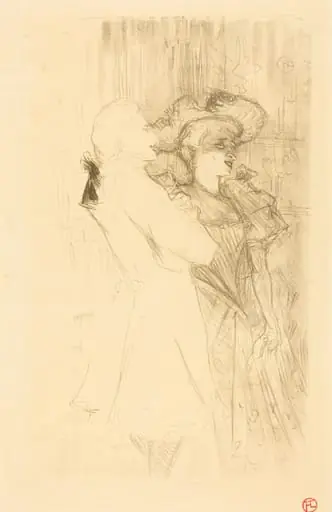 Lender and Auguez in "La chanson de fortunio" (Lender et Auguez dans "La chanson de fortunio")
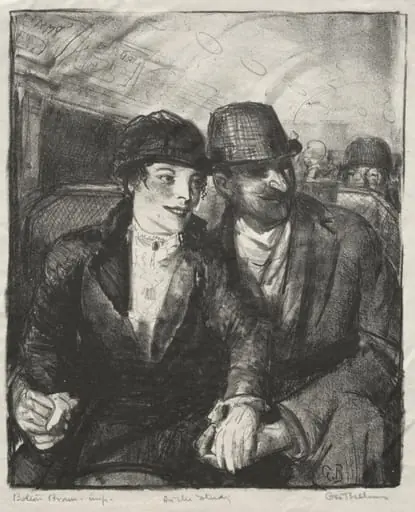 In the Subway
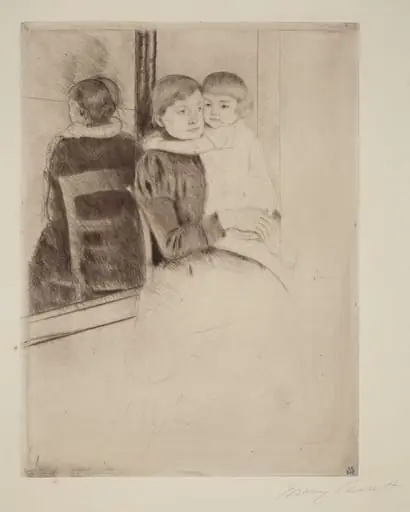 The Mirror
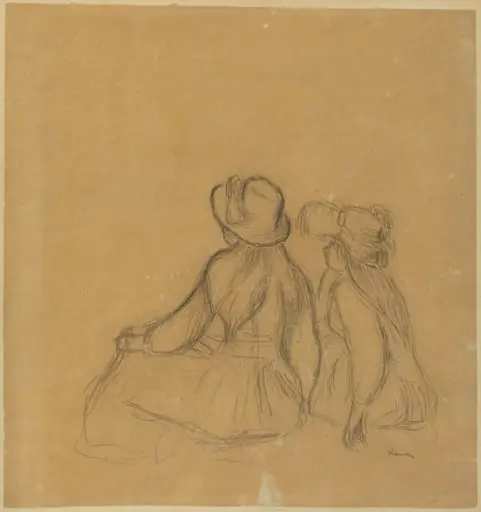 Girlhood
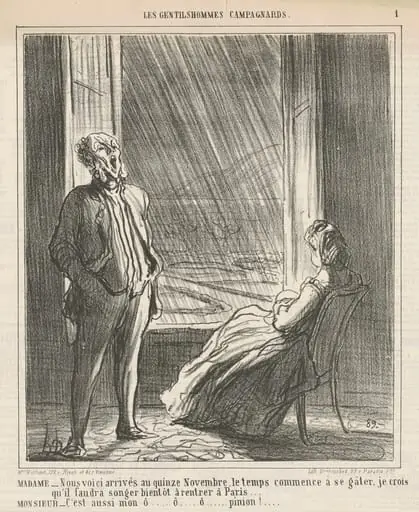 Madame ...Nous voici ... au quinze Novembre
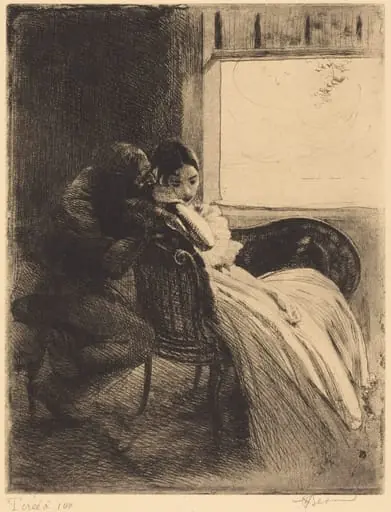 The Flirt (Le flirt)
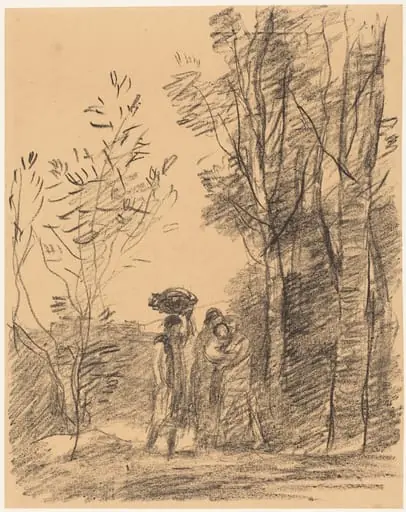 The Meeting in the Woods (La Rencontre du bosquet)
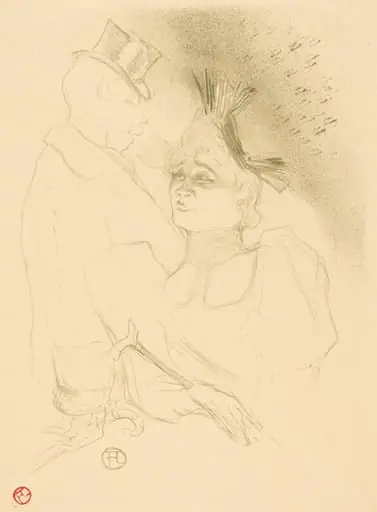 Mlle. Lender and Baron (Mlle. Lender et Baron)
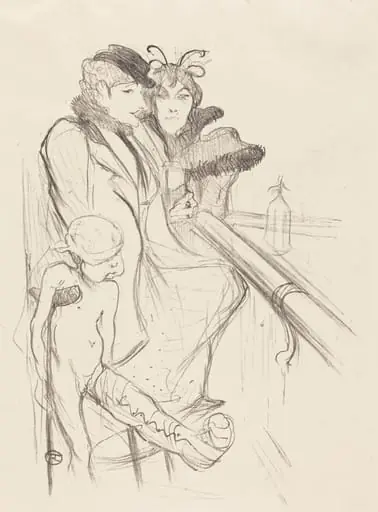 Wounded Eros (Eros vanné)
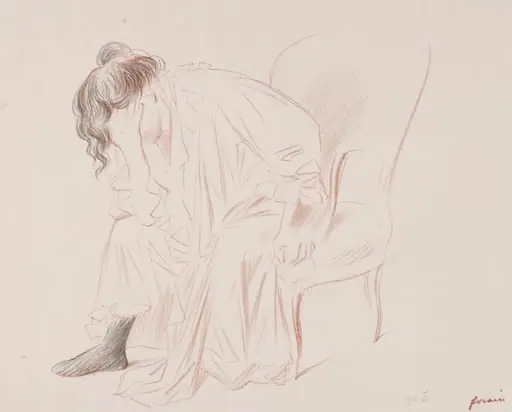 Woman Seated
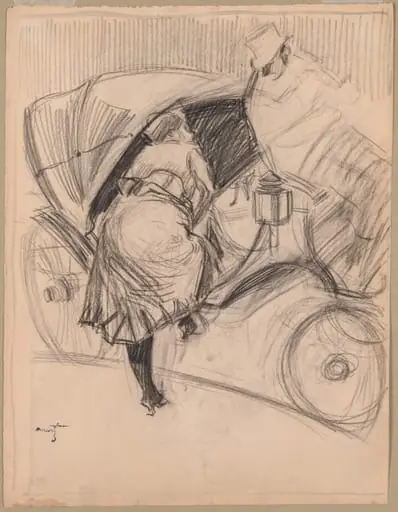 Woman Entering a Fiacre (recto)
 Le repos du modèle (1ère planche) (The Model's Rest) (first plate)