Artwork
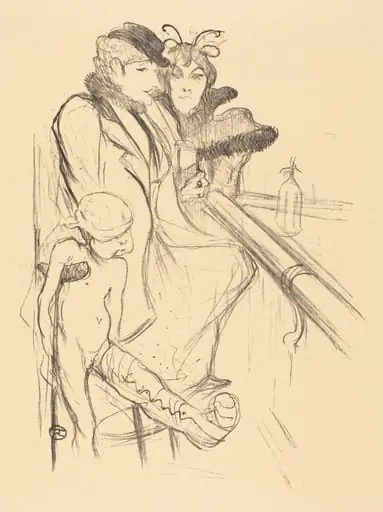
Wounded Eros (Eros vanné)
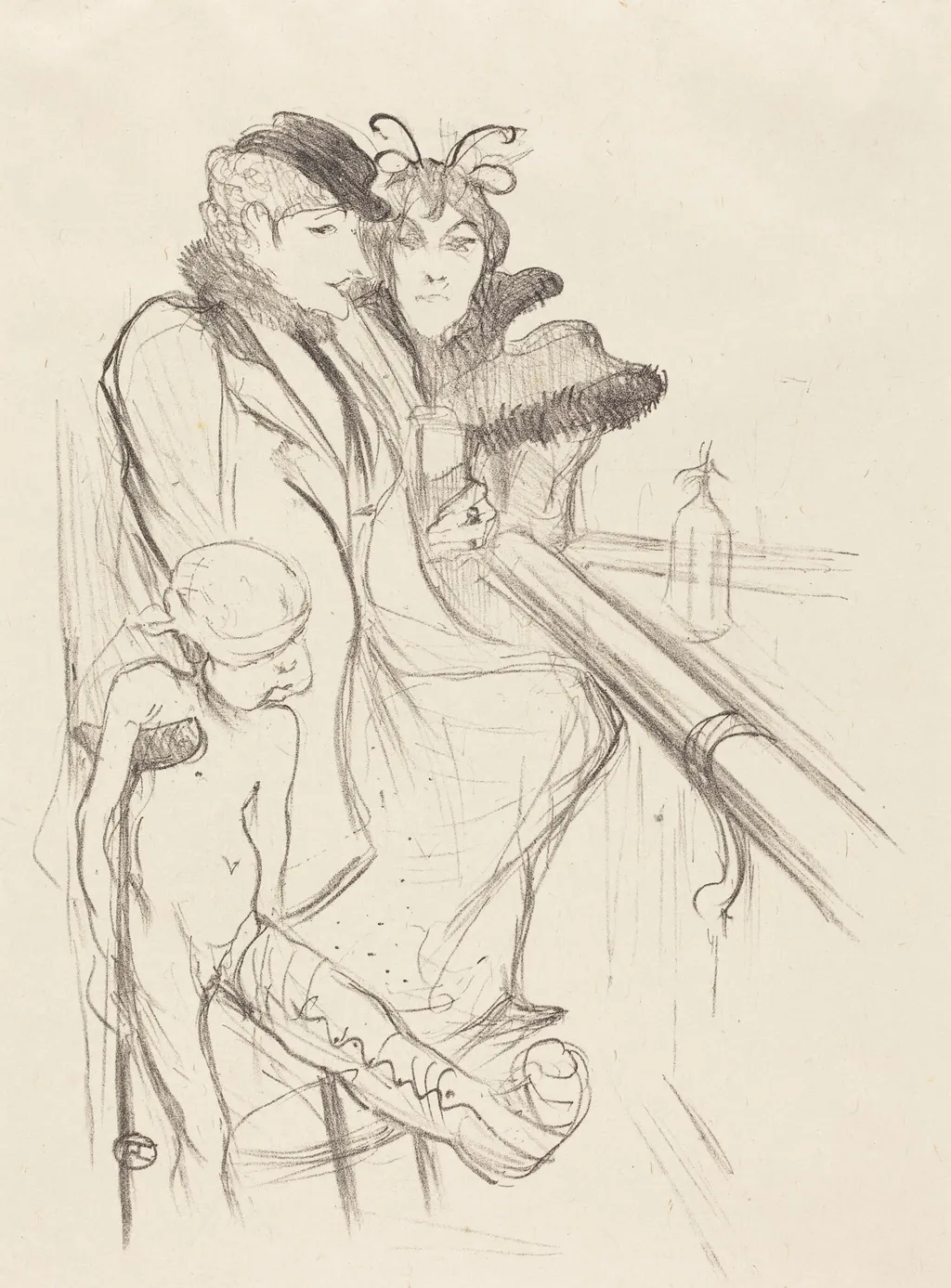
Wounded Eros (Eros vanné) is an ink print by the Impressionist artist Henri de Toulouse-Lautrec. It dates from 1894 and is held in the collection of the National Gallery of Art.
About this work
Overview
Though best known for scenes of Parisian entertainment, this work departs from his typical subjects, presenting a solitary, introspective figure.
Created in 1894, *Wounded Eros (Eros vanné)* is a lithograph by Henri de Toulouse-Lautrec, executed in black ink on laid paper. Though best known for scenes of Parisian entertainment, this work departs from his typical subjects, presenting a solitary, introspective figure. The medium allowed for expressive line work and tonal contrast, characteristic of Lautrec’s graphic style. The image conveys emotional stillness rather than theatrical energy, marking a quieter moment in his oeuvre.
Subject & Meaning
The figure is a man seated on a couch, hat and long coat still on, head supported by one hand. His posture suggests exhaustion or melancholy, not physical injury. The title, referencing the wounded god of love, implies emotional vulnerability rather than literal wounding. The absence of context or narrative cues invites contemplation of inner states. Lautrec often portrayed individuals isolated within urban environments, and here, the figure embodies quiet despair amid the city’s undercurrents.
Technique & Style
Lautrec employed lithography to achieve sharp, fluid lines and deep contrasts between light and shadow. The dark background isolates the figure, enhancing its psychological weight. His use of simplified forms and minimal detail focuses attention on gesture and expression. The rough texture of the laid paper subtly interacts with the ink, adding tactile depth. This technique, rooted in printmaking traditions, allowed Lautrec to translate observational sketches into intimate, reproducible images.
History & Provenance
Produced in 1894, the print emerged during a period when Lautrec was increasingly withdrawn from the nightlife scenes he once chronicled. His physical ailments, stemming from childhood fractures, deepened his sense of alienation. While the print was likely made for private circulation or limited publication, no definitive early ownership records are widely documented. It remains part of broader collections of his graphic work, valued for its emotional resonance over commercial appeal.
Context
In mid-1890s Paris, lithography was a favored medium for artists exploring modern life beyond academic norms. Lautrec’s work intersected with Symbolist interests in mood and inner experience, even as he remained grounded in observed reality. Unlike Impressionist contemporaries, he avoided light-filled scenes, favoring dim interiors and solitary figures. This print reflects a shift toward psychological depth, aligning with broader fin-de-siècle preoccupations with alienation and identity.
Legacy
Though less celebrated than his cabaret posters, *Wounded Eros* exemplifies Lautrec’s capacity for emotional nuance in printmaking. It influenced later artists interested in the expressive potential of line and psychological portraiture. The work’s quiet intensity contributed to a reevaluation of his graphic output beyond mere documentation of nightlife. Today, it stands as a testament to his ability to convey solitude with minimal means, bridging realism and introspection.
Artist & collection
Artist
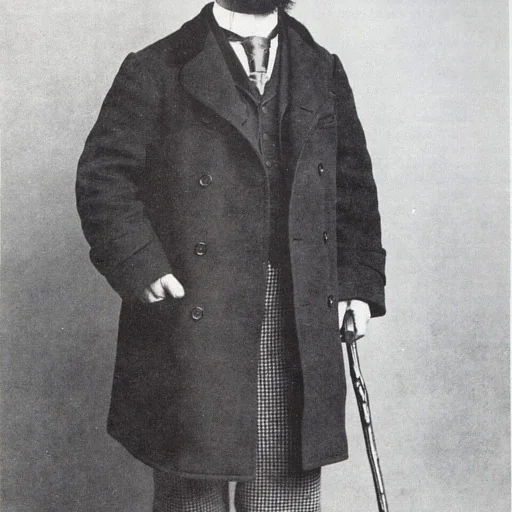
Comte Henri Marie Raymond de Toulouse-Lautrec-Montfa (24 November 1864 – 9 September 1901), known as Toulouse-Lautrec (French: ), was a French painter, printmaker, draughtsman, caricaturist, and illustrator.

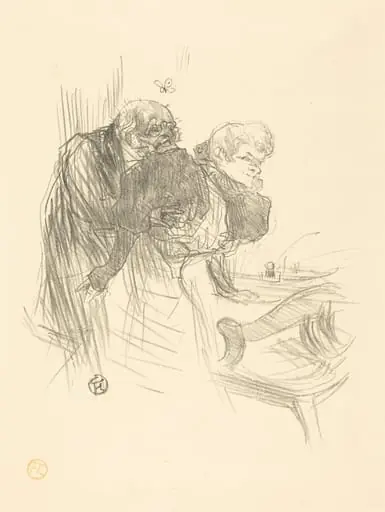 Les vieux papillons
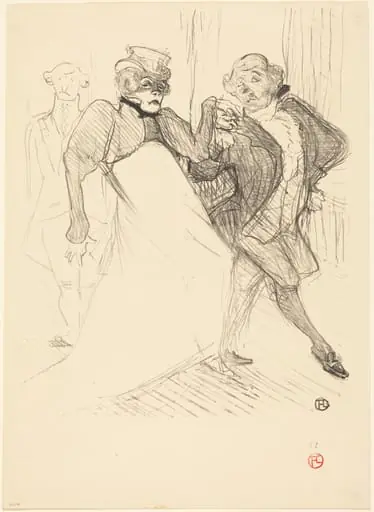 Rejane and Galipaux in "Madame Sans-Gêne" (Réjane et Galipaux dans "Madame Sans-Gêne")
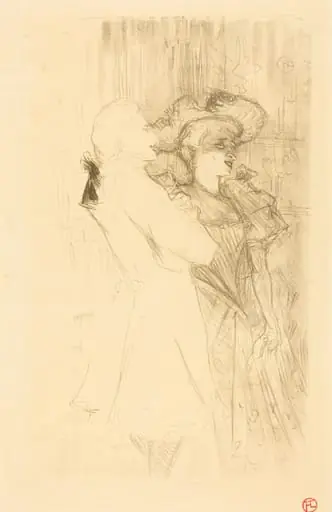 Lender and Auguez in "La chanson de fortunio" (Lender et Auguez dans "La chanson de fortunio")
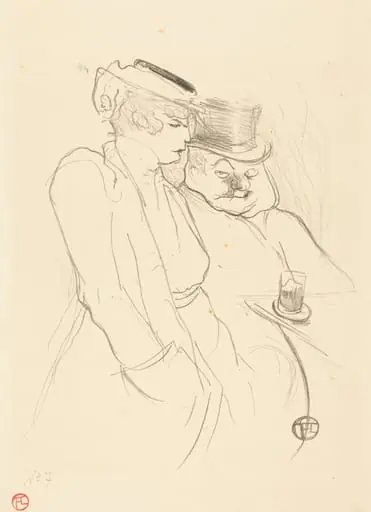 En quarante
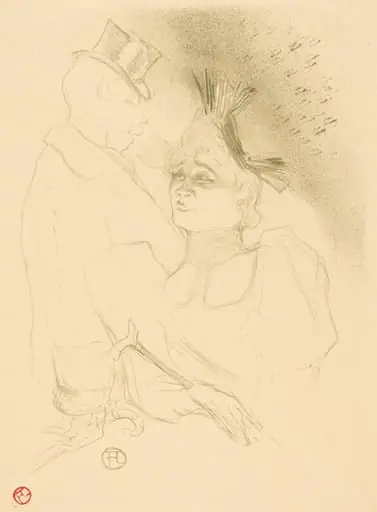 Mlle. Lender and Baron (Mlle. Lender et Baron)
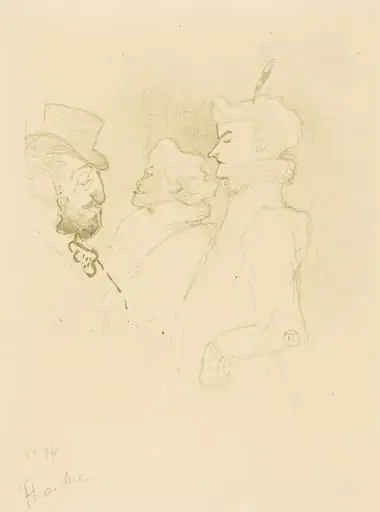 Why Not?...Once Is Not a Habit (Pourquoi pas?...Une fois n'est pas coutume)
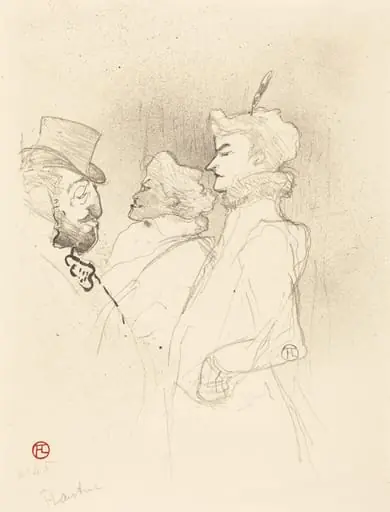 Why Not?...Once Is Not a Habit (Pourquoi pas?...Une fois n'est pas coutume)
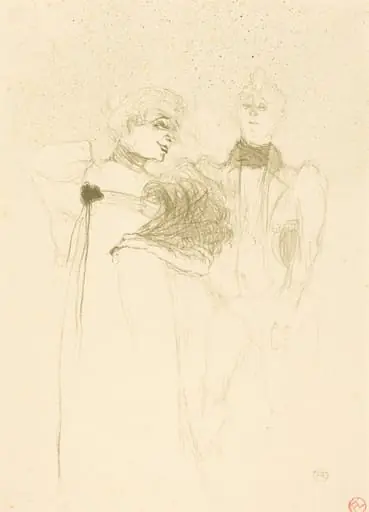 Mlle. Lender in "Madame Satan" (Mlle. Lender dans "Madame Satan")
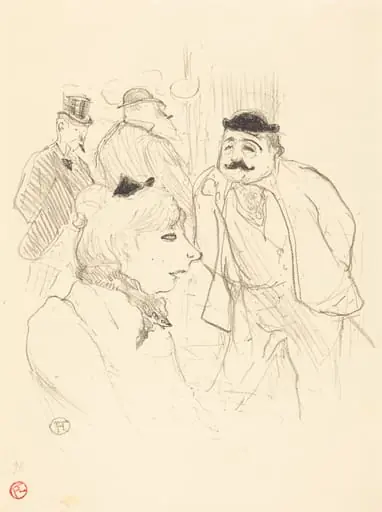 La Tige (Moulin-Rouge)
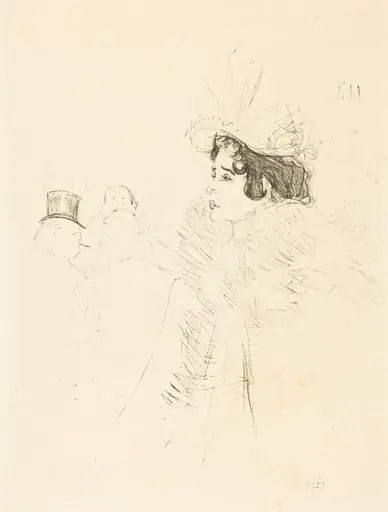 Miss May Belfort in the Irish and American Bar, rue Royale (Miss Belfort Belfort au Irish and American Bar, Rue Royale)
 Wounded Eros (Eros vanné)
 Count Robert de Montesquiou