Artwork
San Giorgio, Venice
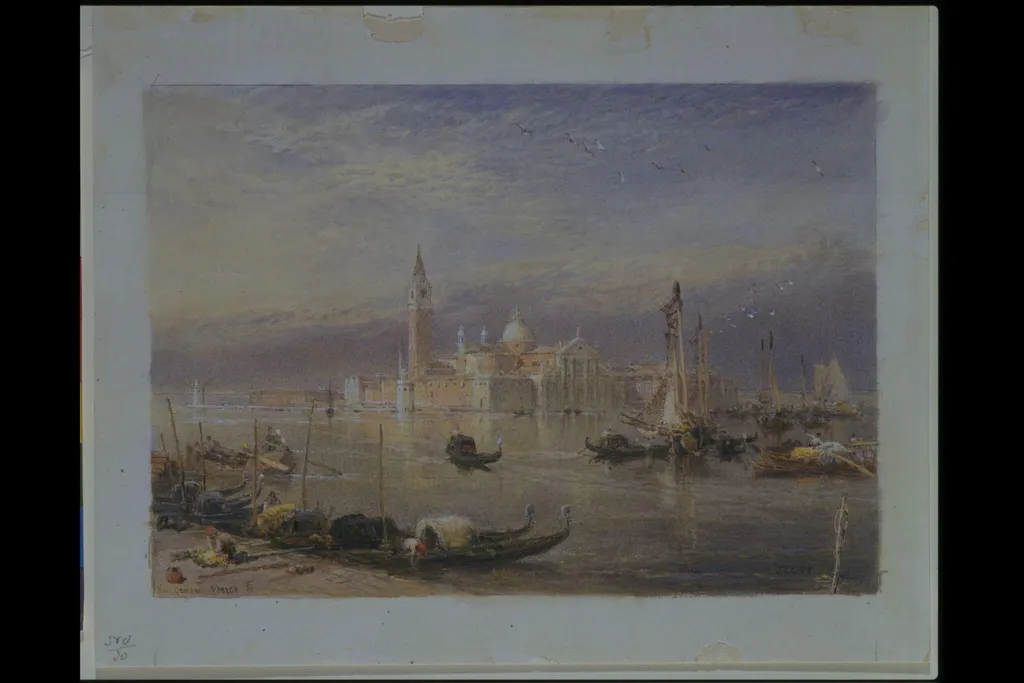
San Giorgio, Venice is a watercolor work on paper by the British Romanticist artist Myles Birket Foster. It dates from 1850 and is held in the collection of the Victoria and Albert Museum.
About this work
Overview
The composition emphasizes stillness, with minimal human activity and a restrained palette that reflects the overcast conditions of the day.
Created in 1850, this watercolour by Myles Birket Foster presents a quiet view of San Giorgio Maggiore, an island in Venice. Rendered in delicate washes, the work captures the island’s church and surrounding waters under a subdued sky. The composition emphasizes stillness, with minimal human activity and a restrained palette that reflects the overcast conditions of the day. It is part of the Victoria and Albert Museum’s collection.
Subject & Meaning
The scene centers on the Basilica of San Giorgio Maggiore, its silhouette rising above the lagoon, framed by calm water and small rowboats. The absence of bustling activity suggests a moment of pause, perhaps reflecting the contemplative tone common in 19th-century topographical art. The painting does not dramatize the site but instead honors its quiet dignity, aligning with the era’s interest in tranquil, observed landscapes.
Technique & Style
Foster employed transparent watercolour washes to build subtle tonal gradations, avoiding sharp outlines in favor of soft transitions. The muted greys and pale blues of sky and water convey atmospheric depth without vivid contrast. Delicate brushwork defines the church’s form and the ripples of the lagoon, while the boats are suggested with minimal strokes, reinforcing the painting’s restrained, observational approach.
History & Provenance
Painted during Foster’s early career, the work reflects his engagement with European travel and topographical recording, common among British artists of the period. It entered the Victoria and Albert Museum’s collection as part of its broader effort to document 19th-century British watercolour practice. No significant changes in ownership are recorded prior to its museum acquisition.
Context
In mid-19th-century Britain, watercolour was widely used for travel sketches and landscape documentation. Artists like Foster contributed to a growing interest in foreign scenery, particularly Venice, which was admired for its light and architecture. This work aligns with a tradition of precise, atmospheric rendering rather than romanticized spectacle, reflecting contemporary tastes in genteel art.
Legacy
Foster’s approach influenced later British watercolourists focused on quiet observation, though he is not associated with Impressionism. His work remains valued for its technical restraint and fidelity to natural light. While not widely replicated, this painting exemplifies a specific strand of Victorian landscape art that prioritized mood over drama, preserving a momentary stillness in Venice’s waters.
Artist & collection

Artist
Myles Birket Foster (4 February 1825 – 27 March 1899) was a British illustrator, watercolourist and engraver in the Victorian period. His name is also to be found as Myles Birkett Foster.

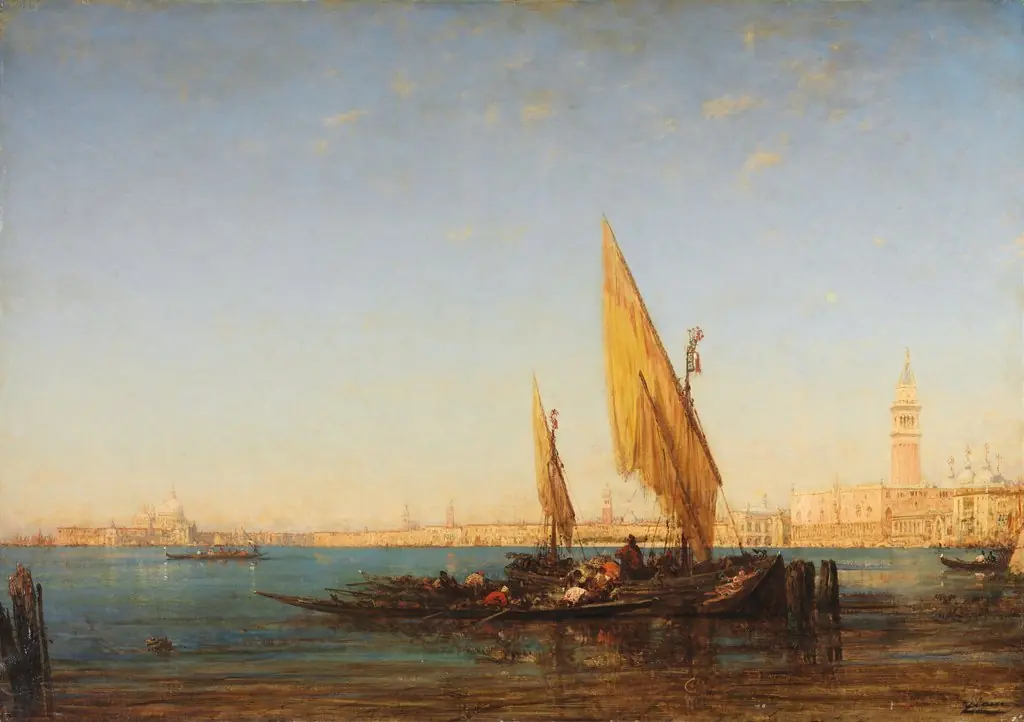 Venice: a Scene with Boats
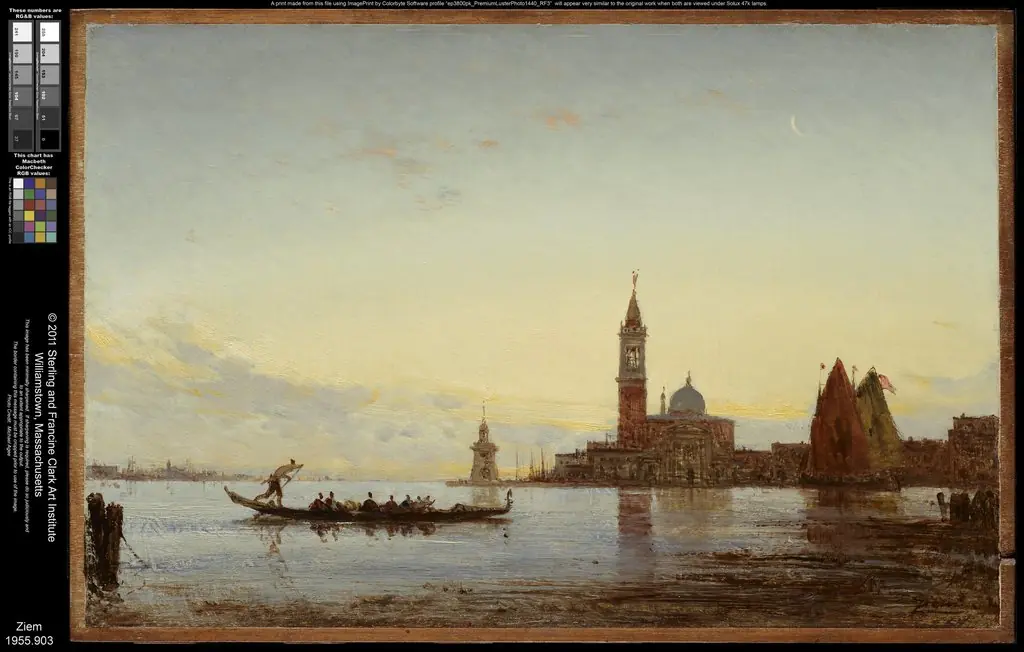 The Grand Canal, Venice (Gondola before San Giorgio)
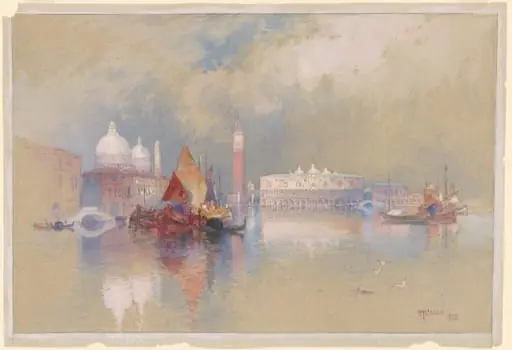 View of Venice
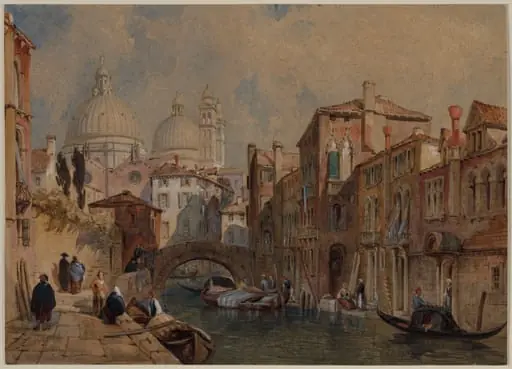 View of Venice: The Dome of Santa Maria della Salute Seen from the Rear of the Da Mula Palace, looking Eastward
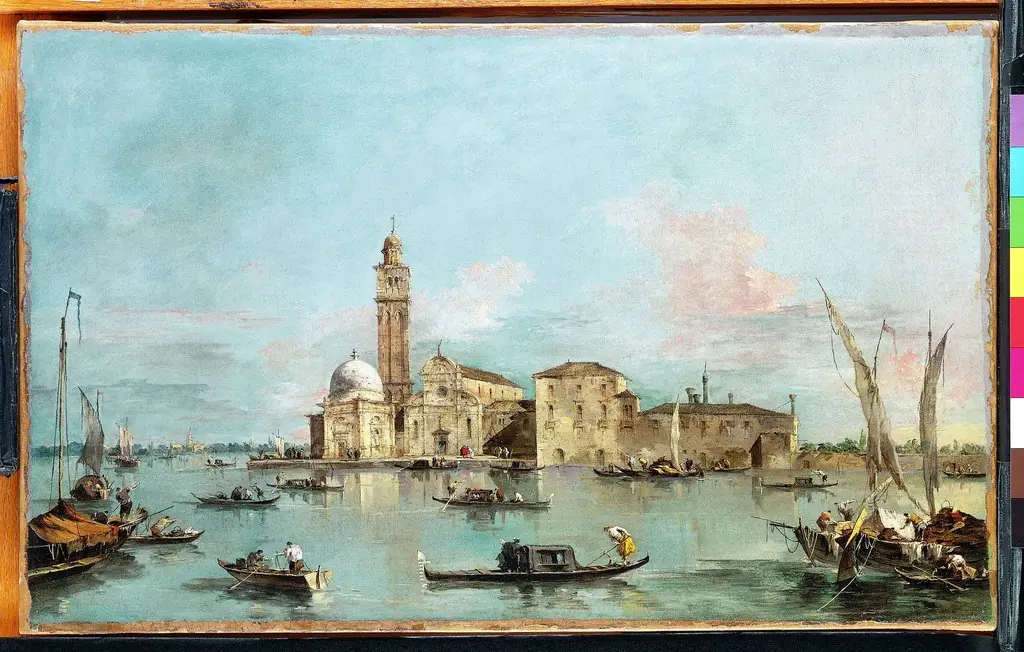 The Island of San Michele, Venice
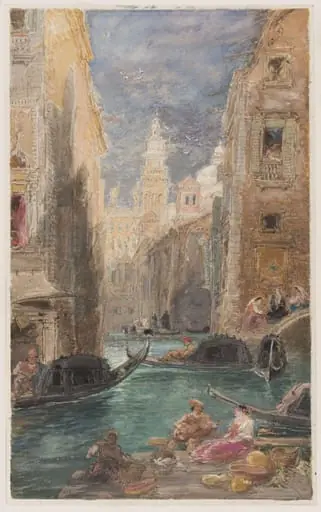 Canal in Venice
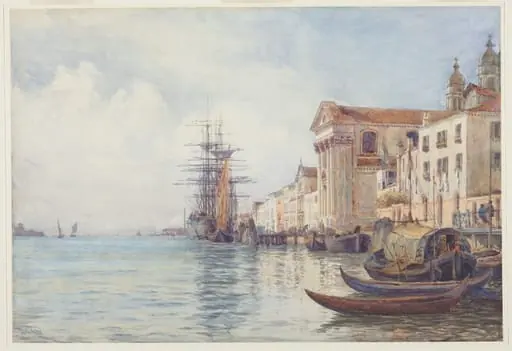 The Giudecca Canal with Shipping near the Chiesa dei Gesuati