Artwork
View of the Dome, Brighton Pavilion, in use as a hospital for Indian soldiers during the Great War
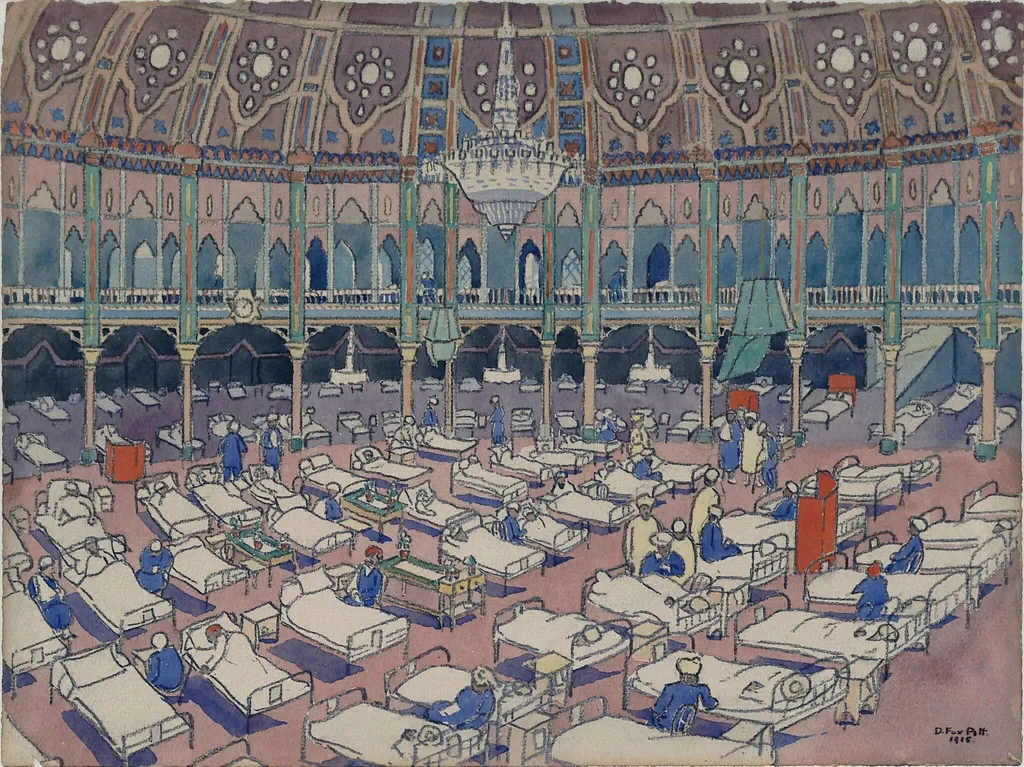
View of the Dome, Brighton Pavilion, in use as a hospital for Indian soldiers during the Great War is a watercolor work on paper by Douglas Fox Pitt. It dates from 1915 and is held in the collection of the Victoria and Albert Museum. The watercolour portrays the dome of Brighton’s Royal Pavilion repurposed as a wartime hospital ward during the First World War.
About this work
Overview
Rows of beds line the interior, each occupied by Indian soldiers in distinctive blue uniforms, while tall windows admit natural light.
The watercolour portrays the dome of Brighton’s Royal Pavilion repurposed as a wartime hospital ward during the First World War. Rows of beds line the interior, each occupied by Indian soldiers in distinctive blue uniforms, while tall windows admit natural light. The decorative ceiling with arches and patterned motifs remains visible, and vivid red pillars contrast with the surrounding pink and blue walls, conveying the building’s altered function.
Subject & Meaning
The composition records a moment when a former royal residence was transformed into a medical facility for troops from the Indian sub‑continent. By emphasizing the crowded beds and uniformed patients, the work underscores the scale of the war’s human toll and the integration of colonial forces into the British war effort, highlighting both the urgency of care and the cultural intersections within the space.
Technique & Style
Executed in watercolour, the artist employs a restrained palette of pinks, blues, and reds to delineate architectural details and uniformed figures. Transparent washes capture the luminous quality of the tall windows, while finer brushwork renders the intricate ceiling arches. The balance between broad colour fields and precise line work conveys both the grandeur of the Pavilion’s interior and the immediacy of a bustling medical ward.
History & Provenance
Created during or shortly after the Great War, the painting documents the Pavilion’s temporary conversion for military use. It entered the collection of the Victoria and Albert Museum, where it is catalogued as a visual record of the building’s wartime role. The work has been retained as part of the museum’s holdings on British home front history.
Context
During World War I, the Royal Pavilion in Brighton was requisitioned by the British government to accommodate Indian soldiers wounded on the Western Front. The building’s exotic architecture, originally inspired by Indo‑Saracenic design, made it a fitting venue for Indian troops. This watercolour reflects broader patterns of repurposing civilian structures for medical care and illustrates the presence of colonial forces on British soil.
Artist & collection
Artist
Douglas Fox Pitt painted watercolours of British buildings in the early 1900s. His 1915 View of the Dome, Brighton Pavilion, in use as a hospital for Indian soldiers during the Great War shows the royal palace…

 Interior (sală) de spital
 Untitled
 Le train de Berne (The Train for Berne)
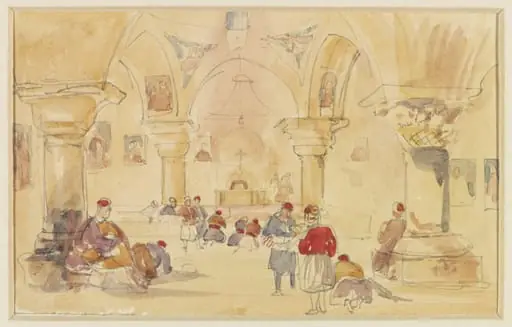 Chapel of St. Helena, Crypt of the Holy Sepulchre, Jerusalem
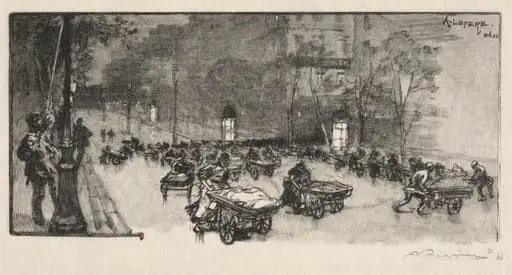 Le Boulevard, au coin du Fauborg Montmartre
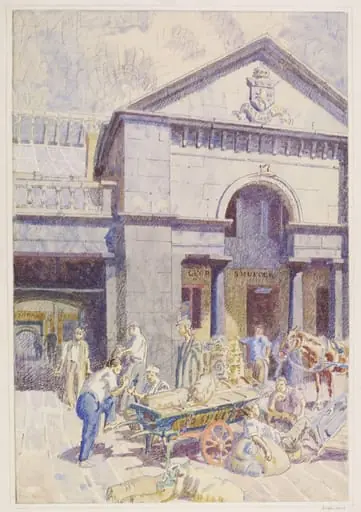 Covent Garden Market, London
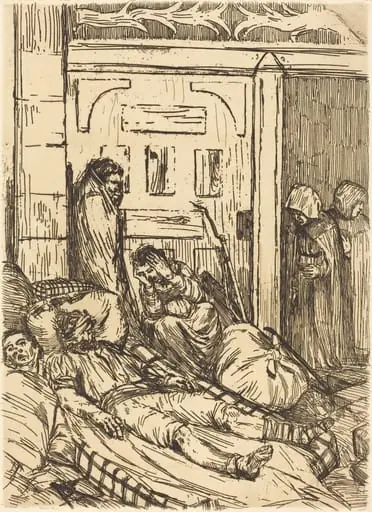 Field Hospital (L'ambulance)
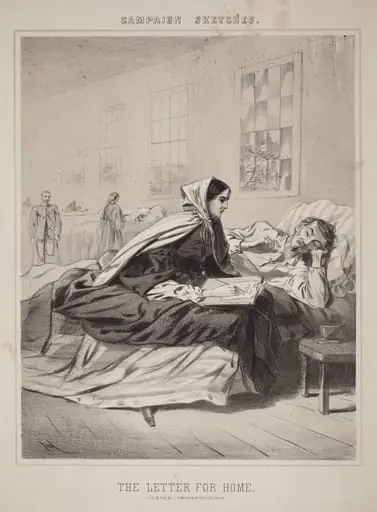 Campaign Sketches: The Letter for Home
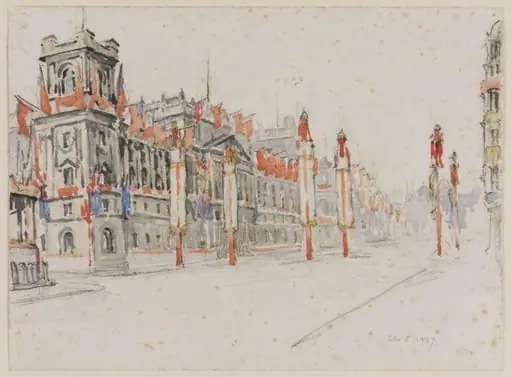 The Foriegn Office looking up Whitehall
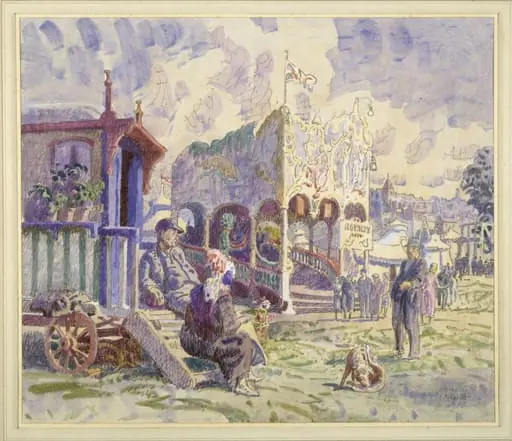 The Fair Ground, Hampstead Heath
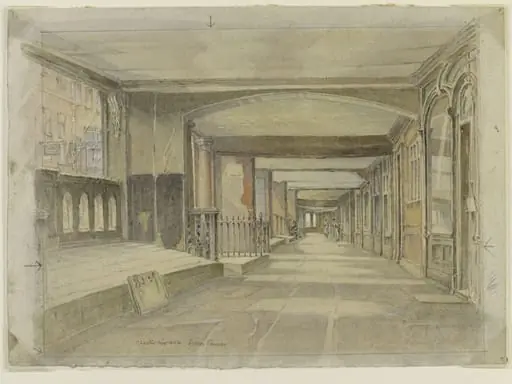 Watergate Street Row, looking East, Chester
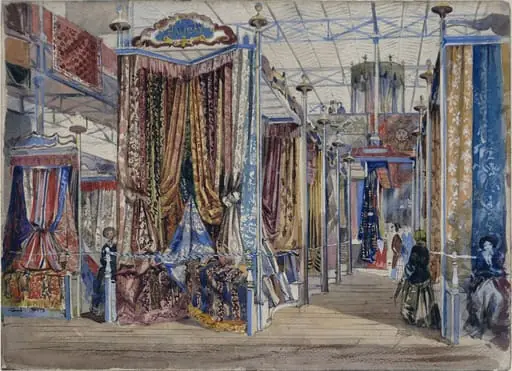 Display of fabric in the Halifax and Kendal courts at The Great Exhibition of 1851