Artwork
Campaign Sketches: The Letter for Home
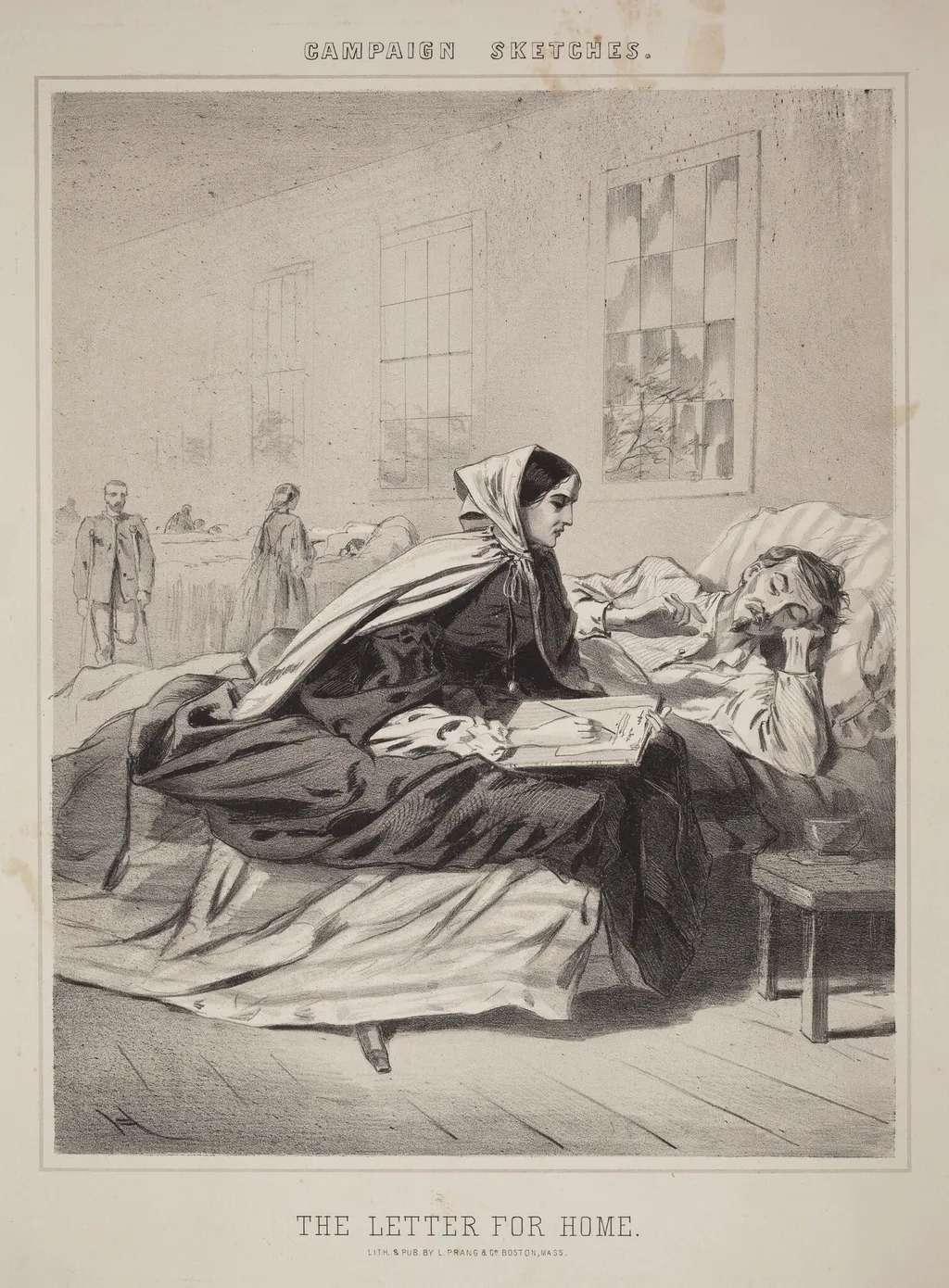
Campaign Sketches: The Letter for Home is an ink print by the Impressionist artist Winslow Homer. It dates from 1863 and is held in the collection of the National Gallery of Art.
About this work
Overview
Created in 1863, this lithograph by Winslow Homer is part of a series documenting Civil War life. It captures a quiet, intimate moment within a military encampment, contrasting the stillness of a sickroom with the distant activity of soldiers outside. The work was produced as a printed image for mass distribution, reflecting the era’s growing demand for visual journalism during the conflict.
Subject & Meaning
The title, 'The Letter for Home,' frames the act of writing as both personal and universal, a lifeline across distance and danger.
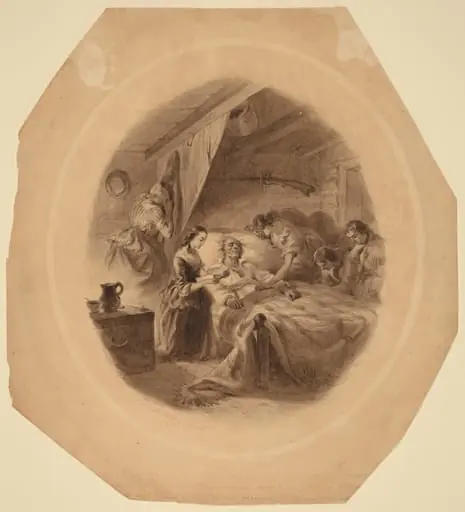
A woman in a dark shawl sits beside a bedridden figure, holding a sheet of paper—perhaps composing or reading a letter. The scene suggests emotional labor: maintaining connection with loved ones far away. Outside the window, soldiers gather around a fire, their presence underscoring the war’s pervasive reach. The title, 'The Letter for Home,' frames the act of writing as both personal and universal, a lifeline across distance and danger.
Technique & Style
Homer employed rapid, fluid lines typical of sketchbook drawing, translating the immediacy of field notes into lithographic form. The rough texture of walls and sparse furnishings convey austerity without detail. Contrast between the dim interior and the warm glow of the campfire is suggested through tonal variation rather than shading, emphasizing mood over realism. The medium allowed for quick reproduction, aligning with journalistic intent.
History & Provenance
Made during Homer’s time as an illustrator for Harper’s Weekly, the print was produced in 1863 as part of a series documenting Union Army life. It was likely distributed to Northern audiences seeking firsthand glimpses of the war’s human dimension. The original lithographic stone or plates are not known to survive, but multiple impressions were circulated, embedding the image in contemporary visual culture.
Context
In 1863, illustrated newspapers were a primary source of war imagery for civilians. Homer’s sketches offered unvarnished views of soldiers and civilians affected by conflict, countering idealized portrayals. This image reflects the growing role of women as caregivers and emotional anchors during wartime, while also revealing how print media shaped public perception of the Union cause.
Legacy
Though not widely exhibited in Homer’s lifetime, this work contributes to his reputation as a keen observer of ordinary life amid extraordinary circumstances. It exemplifies early American photojournalistic art, bridging illustration and documentary practice. Later scholars have cited it as an early example of emotional realism in print, influencing how war’s domestic toll was visually represented.
Artist & collection
Artist
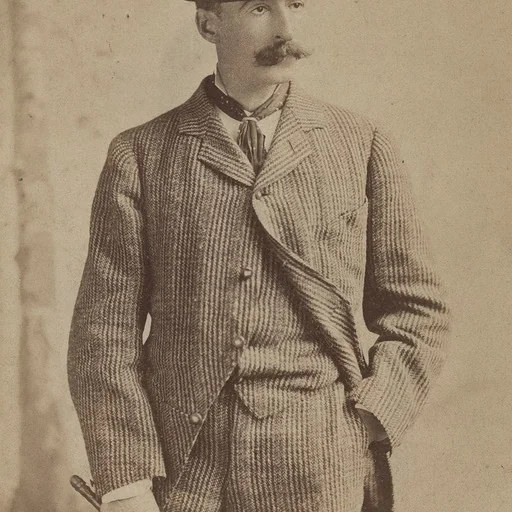
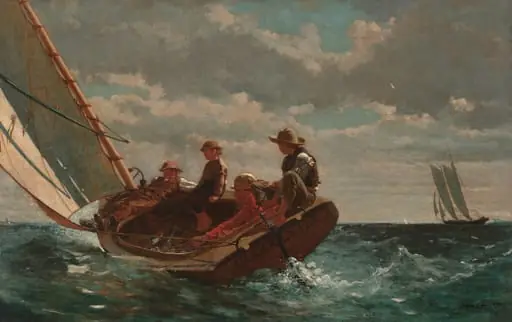
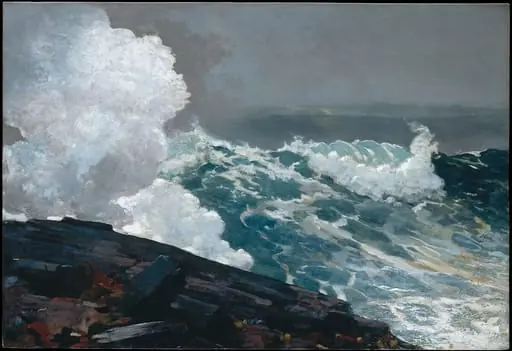
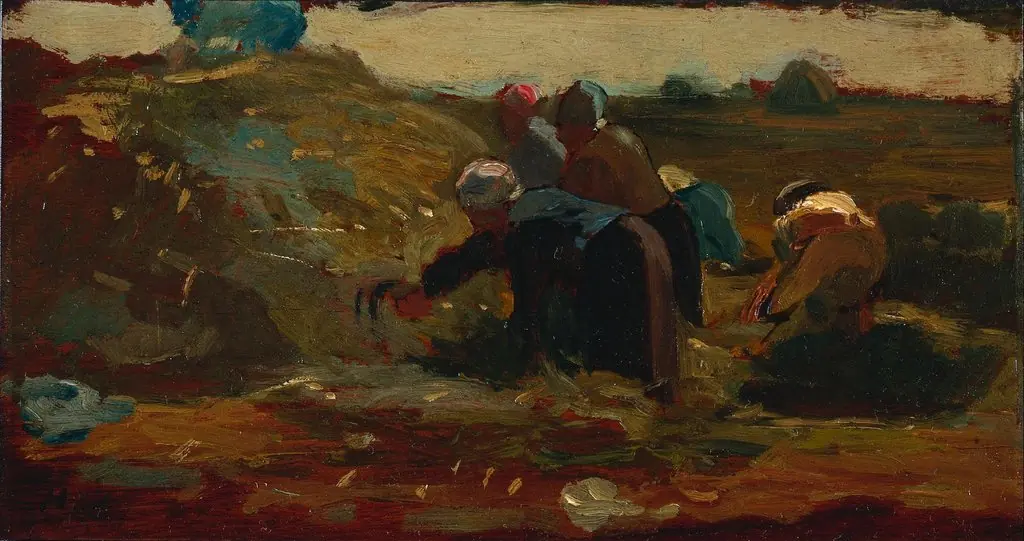
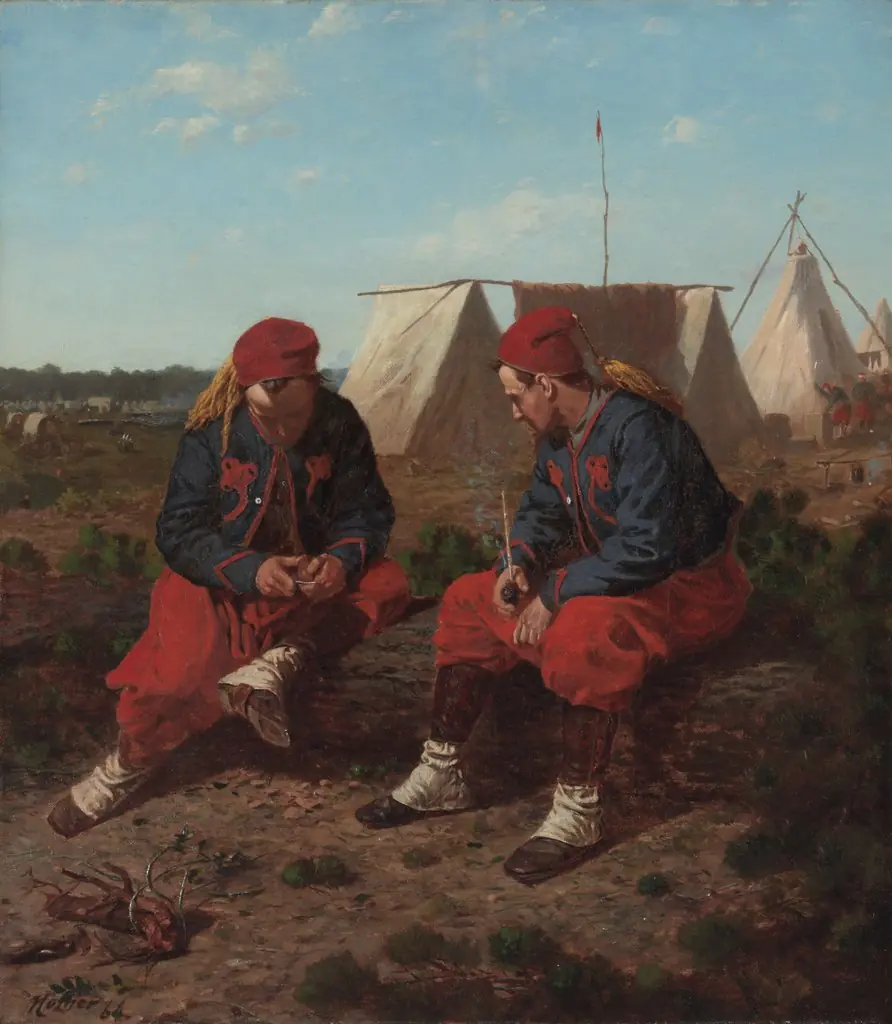
Winslow Homer (February 24, 1836 – September 29, 1910) was an American landscape painter and illustrator, best known for his marine subjects.

![Indian Summer [L'estate di San Martino], by Eleuterio Pagliano](https://artifactworldgallery.com/img/eleuterio-pagliano--indian-summer-l-estate-di-san-martino--c18fa1d8e52f5b86-w320.webp)