Artwork
Costumes de Chasse d'Humann
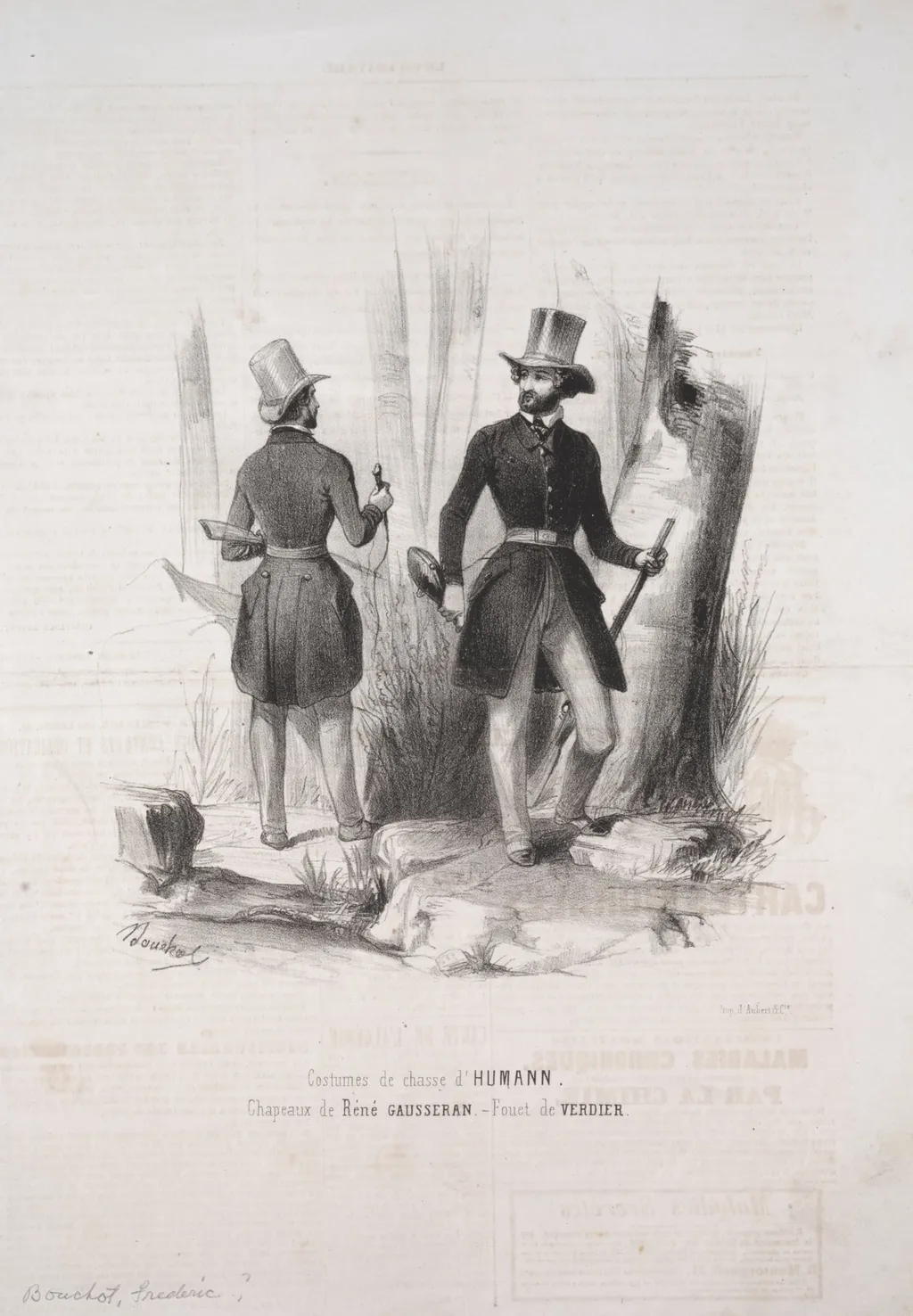
Costumes de Chasse d'Humann is a print by the Romanticist artist Frédéric Bouchot. It dates from 1804 and is held in the collection of the Cleveland Museum of Art.
About this work
Overview
Created around 1804 by Frédéric Bouchot, this print is part of a series documenting contemporary French fashion through staged scenes of leisure.
Created around 1804 by Frédéric Bouchot, this print is part of a series documenting contemporary French fashion through staged scenes of leisure. It depicts two men in hunting attire, rendered with loose, sketch-like lines that emphasize texture and posture over detail. The work resides in the collection of The Cleveland Museum of Art, where it is cataloged as a study in regional dress and social performance.
Subject & Meaning
The figures are dressed in stylized hunting costumes, their poses suggesting a moment of pause rather than action. One holds a book and walking stick, the other leans on a cane and wears a tall hat—items that signal status and refinement more than utility. The inclusion of named accessories, linked to specific artisans, implies the image functions as a fashion advertisement, linking clothing to the reputations of its makers.
Technique & Style
Bouchot employed a delicate, linear approach, using ink and wash to suggest foliage and terrain with minimal strokes. The background is sparse, with thin, uneven trees and scattered brushwork that evokes woodland without defining it. The figures are rendered with greater precision, drawing attention to their garments and accessories. The overall effect is that of a preparatory sketch, prioritizing clarity of costume over atmospheric depth.
History & Provenance
The print originated in early 19th-century France as part of a broader interest in documenting regional dress and artisanal craftsmanship. It entered the Cleveland Museum of Art’s collection through documented acquisition, likely as part of a larger group of fashion plates or topographical studies. Its preservation reflects institutional interest in the intersection of dress, identity, and print culture during the Napoleonic era.
Context
This work emerged during a period when illustrated fashion journals were gaining popularity in France, particularly among the urban elite. Hunting attire, though rooted in rural tradition, was increasingly adopted as a symbol of aristocratic leisure. By naming the hatmaker and whip-maker, Bouchot aligns the image with commercial interests, positioning fashion as both cultural expression and market commodity.
Legacy
Though not widely exhibited, the print contributes to scholarly understanding of how fashion was visualized and marketed in early 19th-century Europe. It exemplifies the transition from purely functional dress to identity-driven attire, documented through the medium of print. Its presence in a major museum underscores its value as a historical artifact of social performance and artisanal branding.
Artist & collection

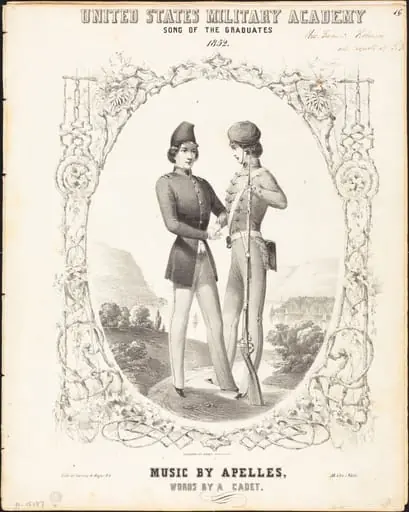 United States Military Academy, Song of the Graduates
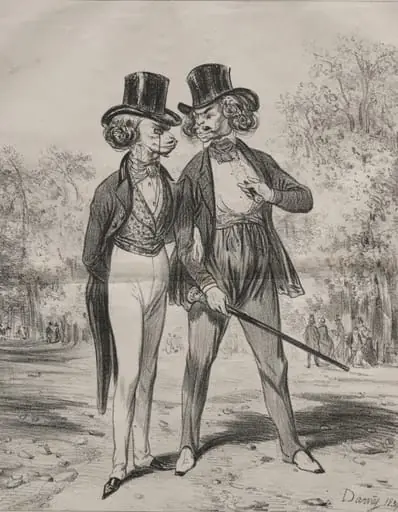 Modes incroyables. Lions d'automne
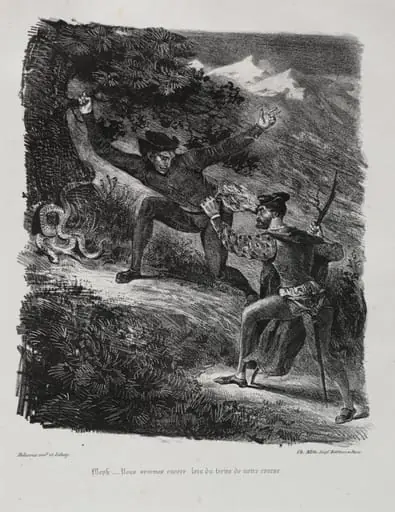 Illustrations for Faust: Faust and Méphistophélés in the mountains of the Hartz
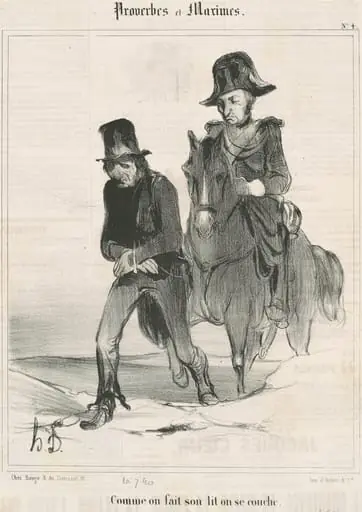 Comme on fait son lit on se couche
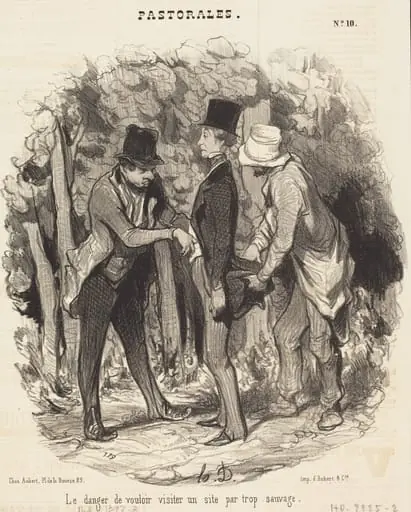 Le Danger de... visiter un site par trop sauvage
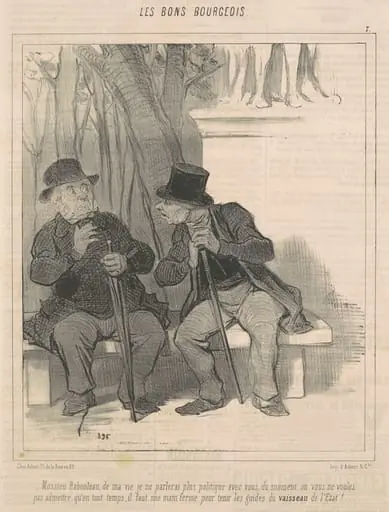 Mossieu Rabourdeau ... je ne parlerai plus politique avec vous ..
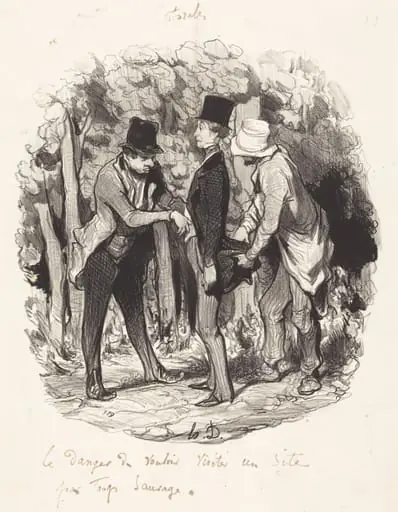 Le Danger de... visiter un site par trop sauvage
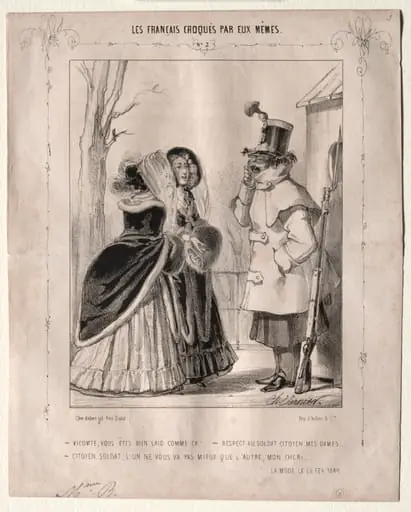 Les Français croquès par eux-mêmes: Vicomte, vous êtes bien laid comme ca!,,,Respect au soldat citoyen, mes dames...Citoyen, soldat, l'un ne vous va pas mieux que l'autre, mon cher!
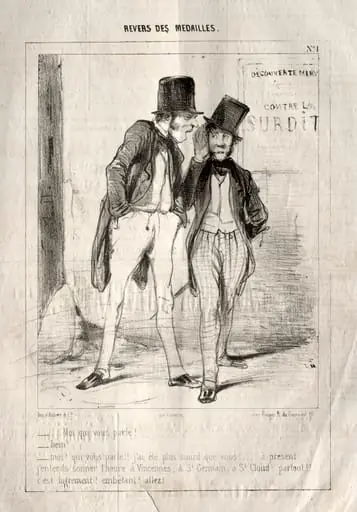 Revers des Médailles
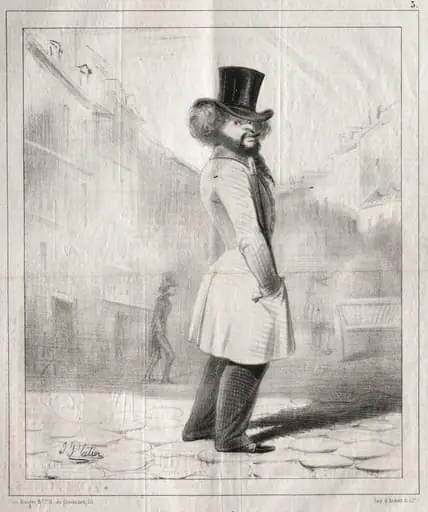 Le Lion de bas étage
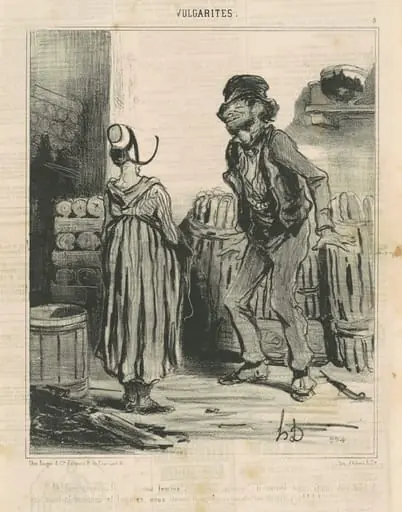 Ah! Fouchtrra! ... Ma femme ...
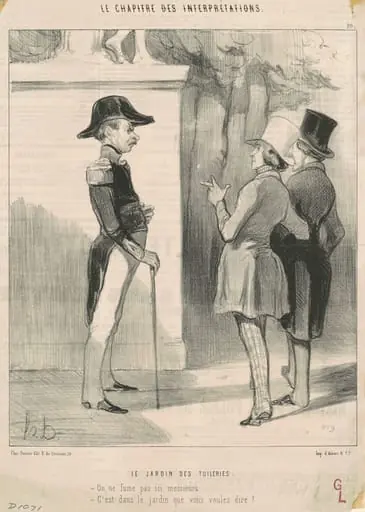 Le jardin des Tuileries