Artwork
Illustrations for Faust: Faust and Méphistophélés in the mountains of the Hartz
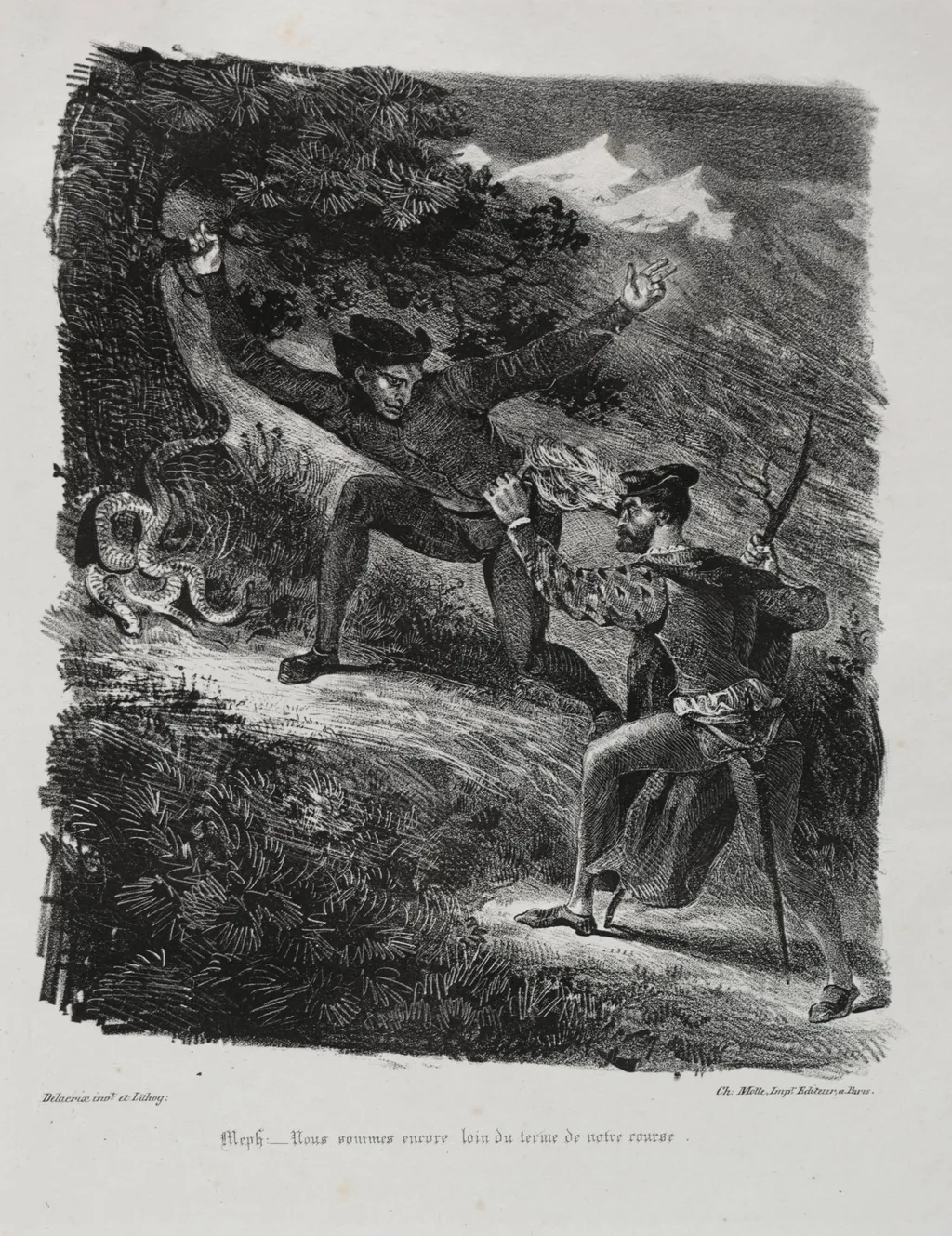
Illustrations for Faust: Faust and Méphistophélés in the mountains of the Hartz is a print by the Romanticist artist Eugène Delacroix. It dates from 1828 and is held in the collection of the Cleveland Museum of Art.
About this work
Overview
Created in 1828, this print by Eugène Delacroix is part of a series illustrating Goethe’s Faust.
Created in 1828, this print by Eugène Delacroix is part of a series illustrating Goethe’s Faust. Executed during the height of French Romanticism, it captures a pivotal moment between the scholar Faust and the demonic Méphistophélés amid the wild terrain of the Harz Mountains. Delacroix’s approach prioritized emotional intensity over academic restraint, aligning with broader Romantic ideals that valued inner experience over formal order.
Subject & Meaning
The scene portrays Faust, a man seeking forbidden knowledge, in the company of Méphistophélés, his cunning guide. Their interaction is charged with ambiguity—neither fully ally nor enemy. The isolated, craggy landscape reflects the psychological weight of their pact, suggesting moral peril and existential isolation. Nature here is not backdrop but participant, amplifying the unease of the moment.
Technique & Style
Delacroix employed bold contrasts of light and shadow, drawing from chiaroscuro traditions to heighten drama. His loose, expressive brushwork and dynamic composition reject classical clarity, favoring atmospheric tension. Influenced by Rubens and Titian, he used rich, layered pigments to evoke mood rather than detail, allowing the viewer to feel the scene’s unease more than observe its specifics.
History & Provenance
Commissioned as illustrations for a French edition of Goethe’s Faust, the series was produced between 1825 and 1828. Delacroix worked closely with the publisher to ensure visual coherence with the text. The prints were widely circulated, helping to establish his reputation beyond painting. This particular image was among the most frequently reproduced, reflecting its resonance with contemporary audiences.
Context
In the 1820s, European intellectuals were deeply engaged with Goethe’s Faust as a symbol of restless ambition and spiritual crisis. Delacroix’s illustrations emerged amid a surge of interest in German literature and the supernatural. His interpretation diverged from Neoclassical norms, embracing emotional ambiguity and natural wildness—hallmarks of Romanticism’s rejection of Enlightenment rationalism.
Legacy
Delacroix’s Faust illustrations influenced later artists exploring psychological depth and symbolic landscapes. They helped redefine printmaking as a medium for serious artistic expression, not merely reproduction. The series remains a touchstone for understanding how Romantic visual language translated literary themes into visceral, atmospheric imagery.
Artist & collection
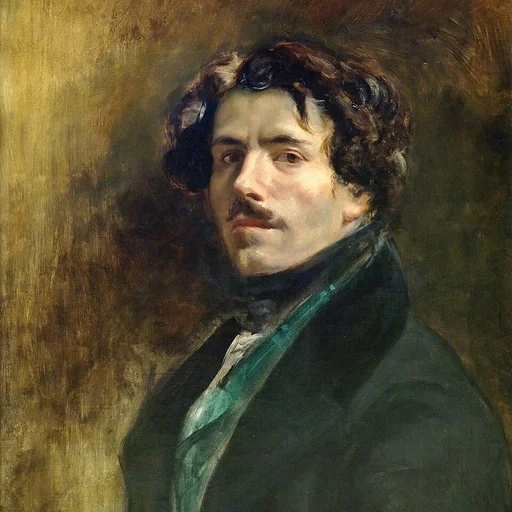
Artist
Ferdinand Victor Eugène Delacroix ( DEL-ə-krwah, -KRWAH; French: ; 26 April 1798 – 13 August 1863) was a French Romantic artist who was regarded as the leader of the French Romantic school.

 Inconvénient pour un propriétaire de ne pas...
 La Rencontre sous bois
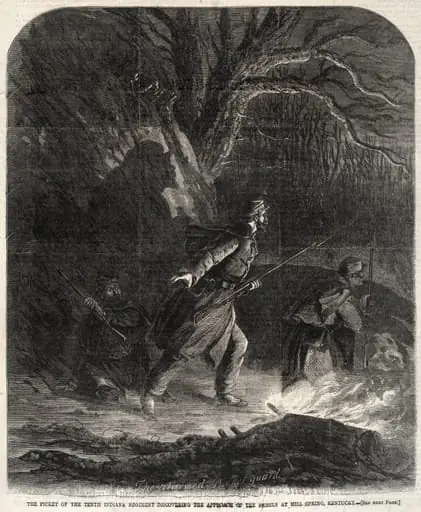 The Picket of the Tenth Indiana Regiment discovering the Approach of the Rebels at Mill Spring, Kentucky
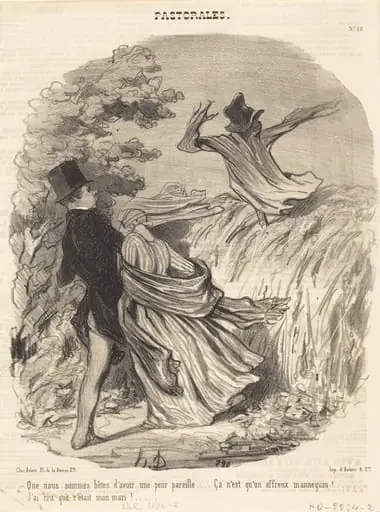 Que nous sommes bêtes d'avoir une peur pareille...
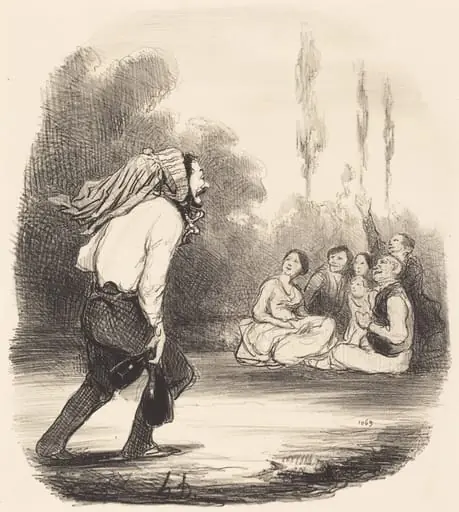 Le Plus farceur de la société
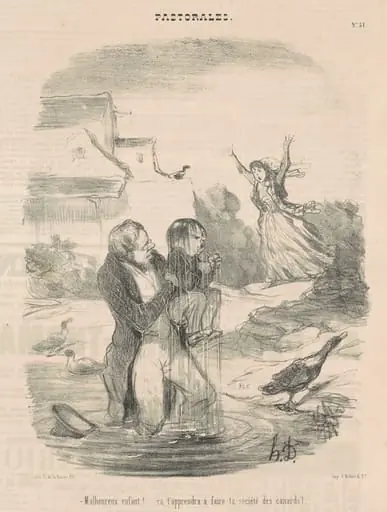 Malheureux enfant! ... Ca t'appendra a faire ...
 The Ingenuous Wobbler
 Le Danger de... visiter un site par trop sauvage
 Ah! Saperlotte! ... Le raisin n'est pas bon cette année! ...
 Costumes de Chasse d'Humann
 Un Pauvre père de famille qui...
 Illustrations for Faust: Méphistophélés visits Faust