Artwork
The Optical Viewer
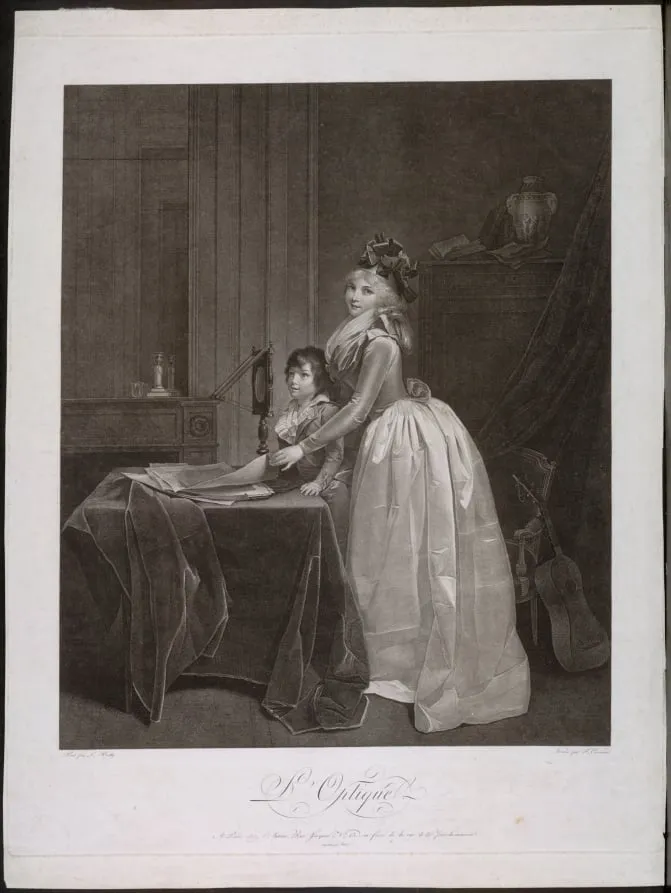
The Optical Viewer is a print by the Romanticist artist Frédéric Cazenave. It dates from 1793 and is held in the collection of the Cleveland Museum of Art.
About this work
If you like this, look up *france, 18th century* for more of these playful illusions.
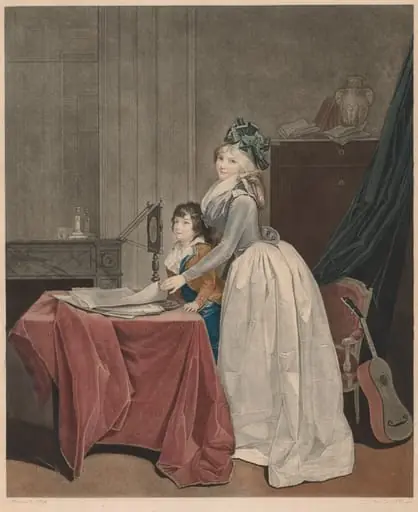
A woman and a boy lean over a wooden box, peering at prints through a lens. The room is dim, lit by a single candle.
This box is a zograscope, a gadget from the 1700s that made flat pictures look deep. People used it like an early 3D movie—cities and big events popped off the paper. The prints were called *vues d’optiques*, designed to trick the eye.
If you like this, look up *france, 18th century* for more of these playful illusions.
Overview
The Optical Viewer is a print depicting a woman and a boy using a zograscope, a device that creates a three-dimensional illusion from flat images.
Subject & Meaning
The scene shows two figures leaning over a wooden box, peering through a lens at specially designed prints called vues d'optiques, which were meant to create an immersive experience.
Technique & Style
The zograscope, equipped with a concave lens, was a popular entertainment device in the 1700s, used to view prints that appeared three-dimensional.
Context
The print reflects the 18th-century fascination with optical devices and illusionistic effects, offering a glimpse into the leisure activities of the time.
Artist & collection