Artwork
L'innocence en danger
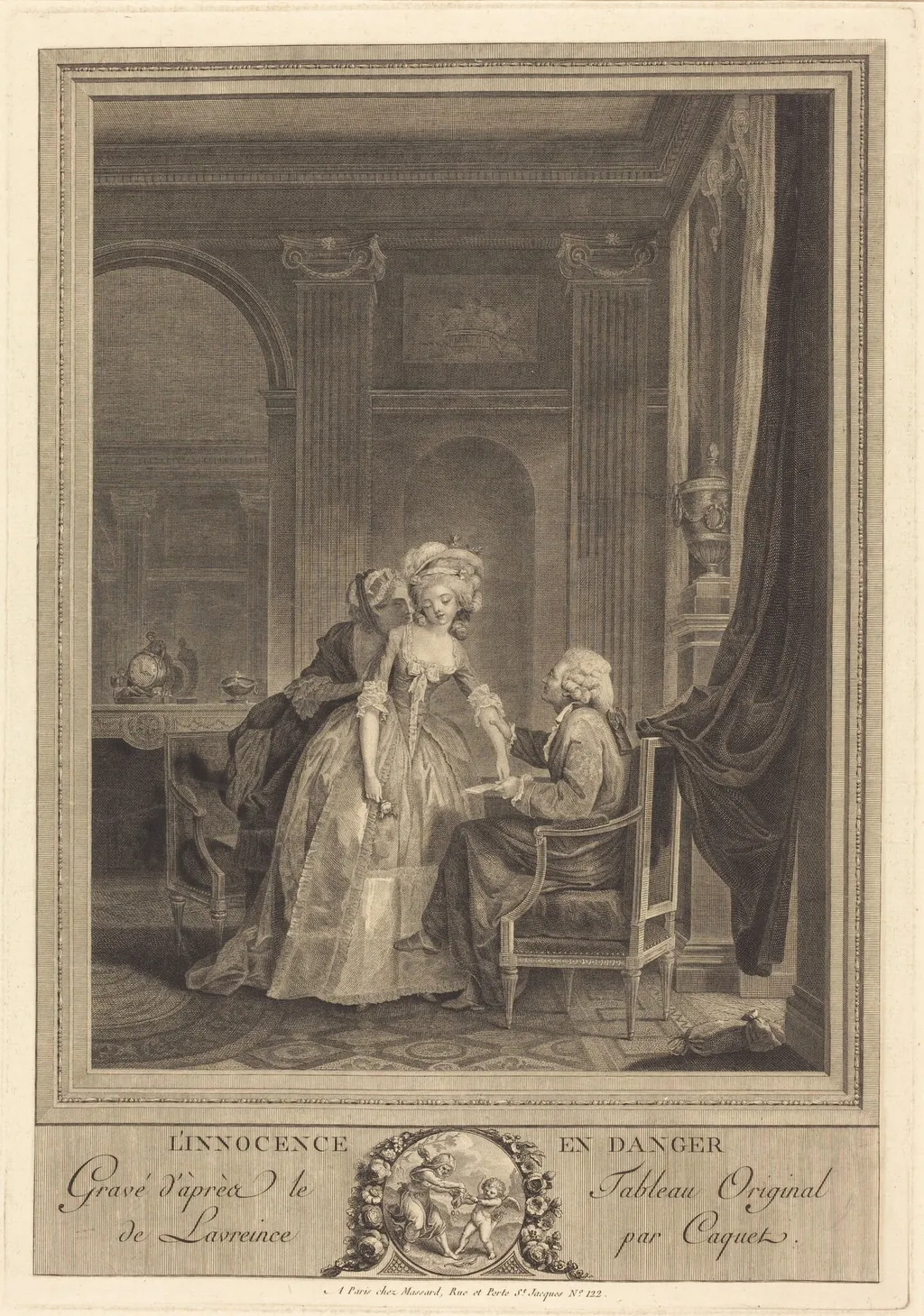
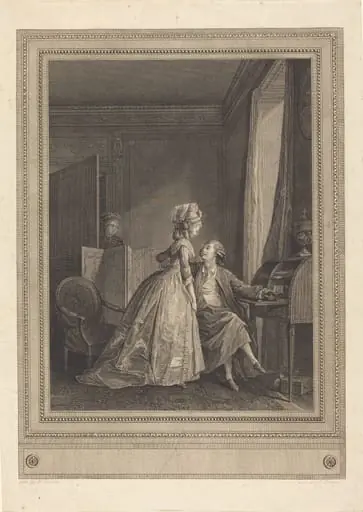
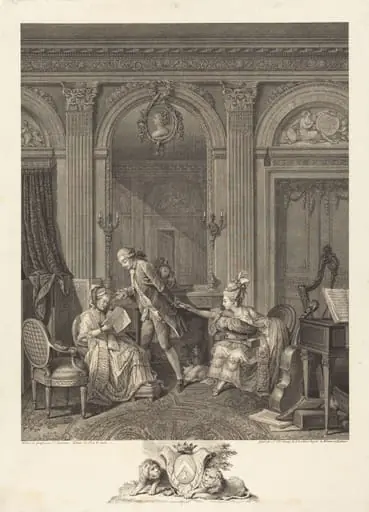
L'innocence en danger is an ink print by the Romanticist artist Jean Gabriel Caquet. It dates from 1785 and is held in the collection of the National Gallery of Art.
About this work
Overview
The setting, richly detailed with ornate furnishings and architectural elements, frames the scene as both intimate and theatrical.
L'innocence en danger is an 1785 print by Jean Gabriel Caquet, executed in etching and engraving. It depicts a domestic interior with three figures caught in a moment of subtle unease. The composition centers on a woman in white, standing beside a seated man in a wig, while a second woman in dark attire leans forward, her posture suggesting vigilance or intervention. The setting, richly detailed with ornate furnishings and architectural elements, frames the scene as both intimate and theatrical.
Subject & Meaning
The title, L'innocence en danger, implies a narrative of vulnerability under threat. The woman in white, positioned centrally and upright, may symbolize innocence, while the leaning figure in dark clothing appears to observe or guard her. The seated man, passive and formally dressed, contributes to an atmosphere of restrained tension. The scene resists clear resolution, inviting interpretation of social or moral peril within a private space, common in late 18th-century moralizing imagery.
Technique & Style
Caquet employed fine lines and controlled cross-hatching to render texture and depth, characteristic of engraved prints of the period. The arched windows and heavy drapery are defined with precise etched contours, while the figures’ garments are modeled with subtle gradations of tone. The composition balances symmetry and asymmetry: the ornate room anchors the scene, yet the figures’ gestures introduce dynamic tension, reflecting the influence of Rococo narrative traditions adapted to more restrained sensibilities.
History & Provenance
Created in 1785, the print emerged during a period when French printmakers increasingly produced works for private collectors rather than public display. Caquet, active in Paris, specialized in reproductive and genre prints, often adapting compositions from paintings. While the exact provenance of this impression is undocumented, its survival in institutional collections suggests it was valued for its technical refinement and moral ambiguity, aligning with Enlightenment-era interest in psychological nuance.
Context
In the years preceding the French Revolution, visual culture increasingly explored themes of moral vulnerability and social hierarchy. Domestic interiors became stages for subtle dramas, reflecting anxieties about gender, class, and propriety. Caquet’s print fits within this trend, echoing the work of contemporaries like Greuze, who used quiet scenes to evoke ethical dilemmas. The emphasis on clothing, posture, and spatial arrangement signals a shift toward psychological realism in printmaking.
Legacy
L'innocence en danger remains a representative example of late 18th-century French printmaking, valued for its restrained emotional tone and technical precision. Though not widely reproduced in modern scholarship, it contributes to understanding how printmakers translated narrative tension into intimate, accessible formats. Its endurance in museum collections underscores its role as a quiet but significant document of pre-revolutionary visual culture, capturing the fragility of social norms in a changing world.
Artist & collection