Artwork
Gardens of an Italian Villa (Villa Medici?)
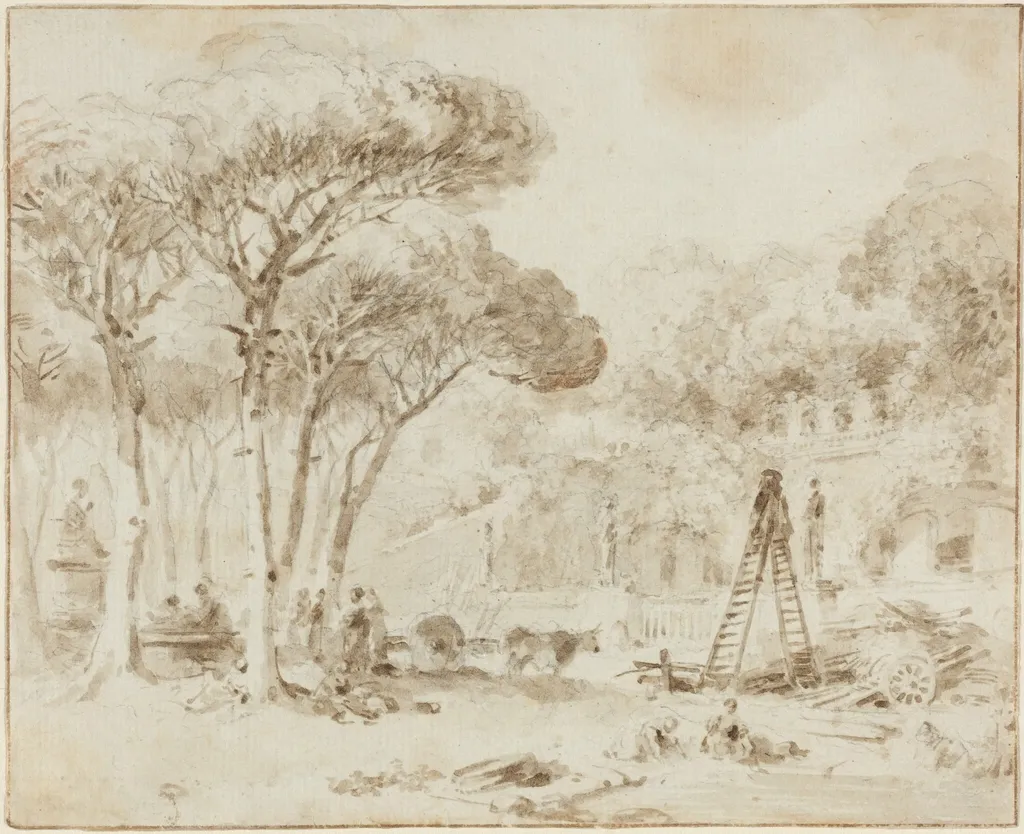
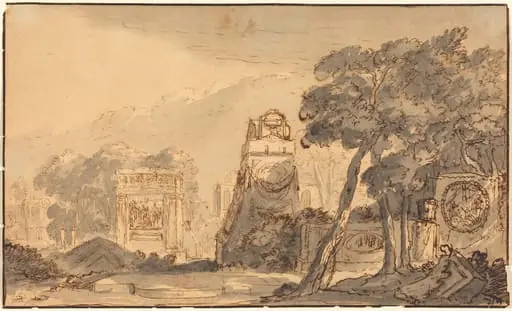
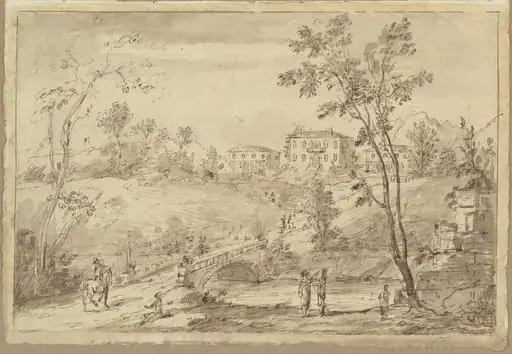
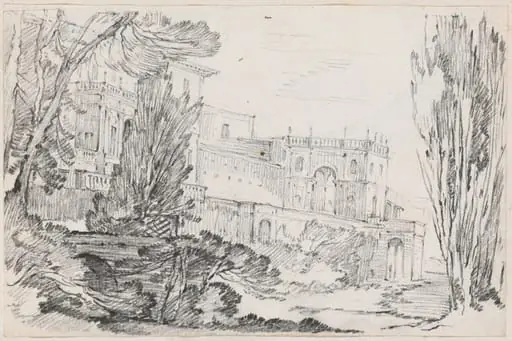
Gardens of an Italian Villa (Villa Medici?) is an ink drawing by the Romanticist artist Jean Honoré Fragonard. It dates from 1774 and is held in the collection of the National Gallery of Art. Jean‑Honoré Fragonard’s drawing titled Gardens of an Italian Villa, likely depicting the Villa Medici, dates from 1774.
About this work
The painting is called Gardens of an Italian Villa.
It was created during a specific time, 1773 or 1774, and this is interesting because it shows what the artist was thinking about during that period. The artist used a certain method to create the work, with brush and brown ink over graphite on laid paper.
You can learn more about this style by looking into the movement: Romanticism.
Overview
Jean‑Honoré Fragonard’s drawing titled Gardens of an Italian Villa, likely depicting the Villa Medici, dates from 1774. Executed with brush and brown ink applied over a graphite sketch on laid paper, the work records a cultivated landscape scene in a medium more typical of preparatory studies than finished paintings.
Subject & Meaning
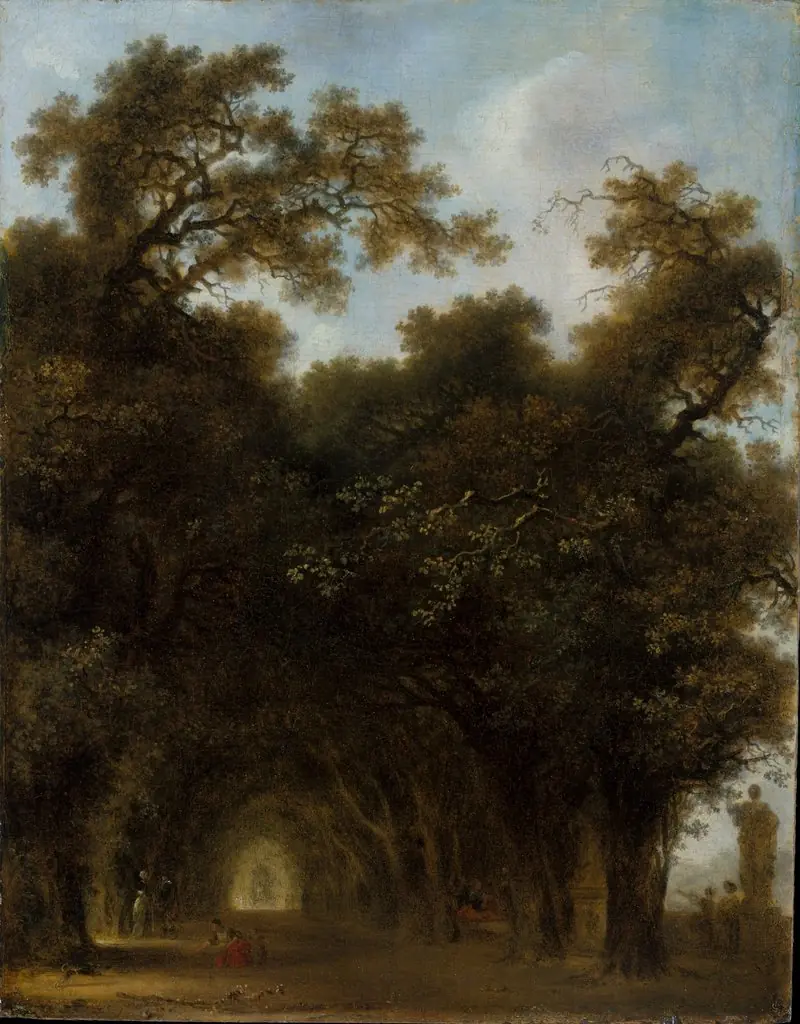
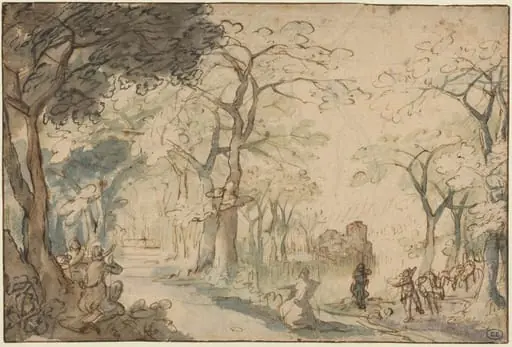
The composition presents a cultivated garden set against the architecture of an Italian villa, suggesting an interest in the picturesque qualities of aristocratic leisure spaces. By focusing on the interplay of foliage, pathways, and built forms, the drawing reflects an appreciation for the harmonious integration of nature and architecture.
Technique & Style
Fragonard employed a layered approach: an initial graphite underdrawing establishes the layout, followed by fluid brushwork in brown ink that defines foliage and structural details. The use of laid paper, with its faint ribbed texture, adds a subtle tonal depth, aligning the piece with the Romantic era’s emphasis on atmospheric effect and emotive observation.
Context
Created in the mid‑1770s, the drawing emerges during the late Rococo period when Fragonard, known for his lively genre scenes, began exploring more subdued, landscape‑focused subjects. This shift anticipates the growing Romantic fascination with nature as a source of emotional resonance and individual reflection.
History & Provenance
The work is catalogued as a drawing rather than a finished painting, indicating it may have served as a study for a larger composition or as a collectible illustration of Italian garden design. Its precise ownership history remains undocumented, but it is attributed to Fragonard’s late output before his death in 1806.
Own this work as a print
Artist & collection

Artist
Jean-Honoré Fragonard was born on 5 April 1732 in Grasse, the son of a glover, and moved with his family to Paris in 1738.