Artwork
Man between Two Fir Trees
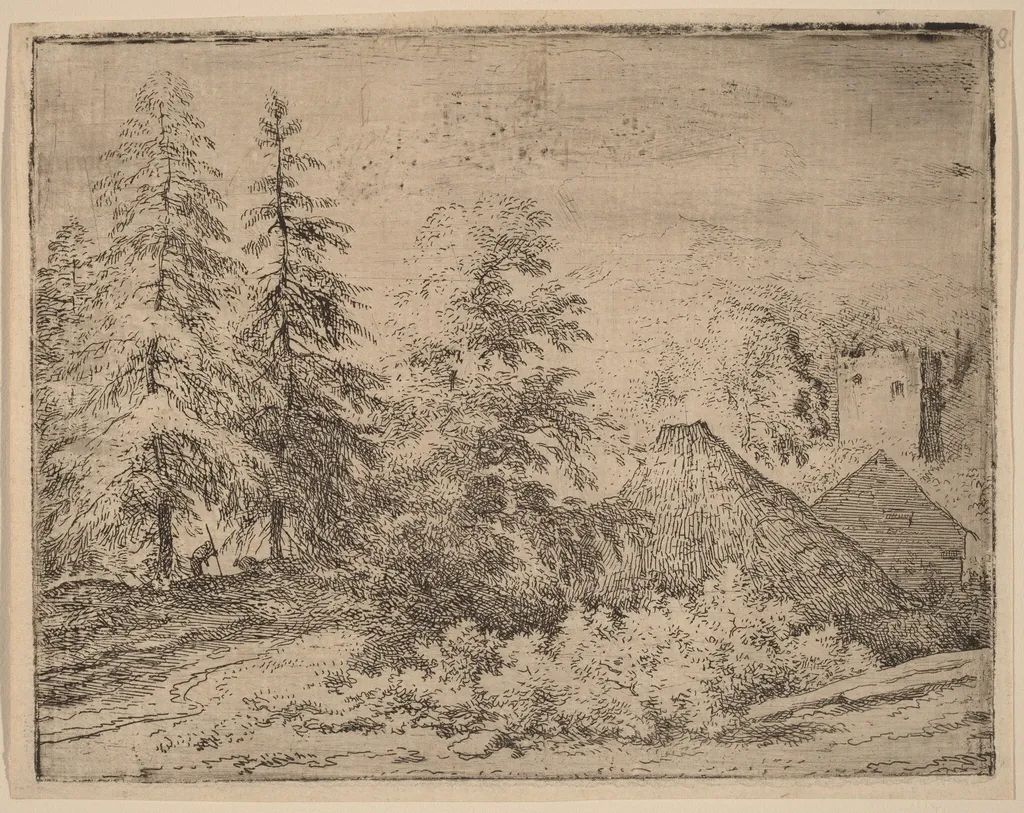
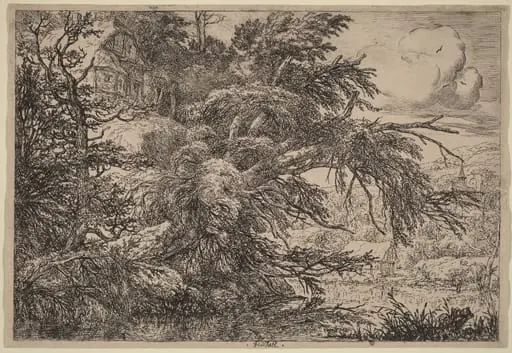
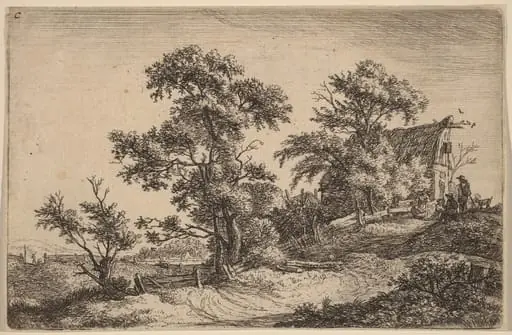
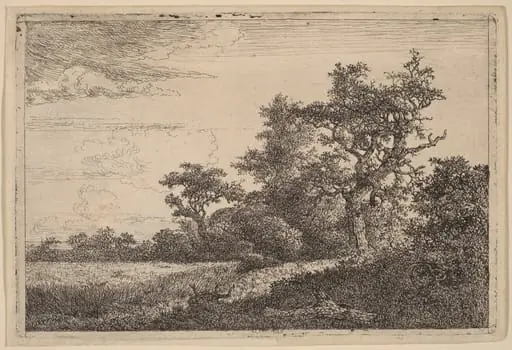
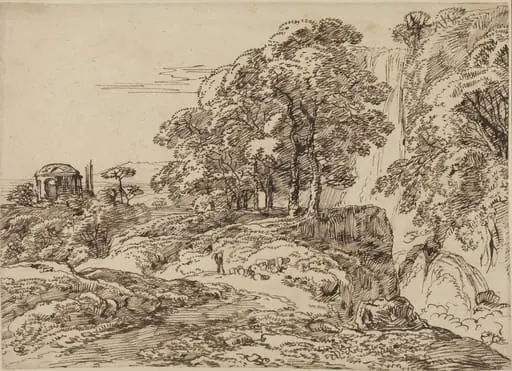
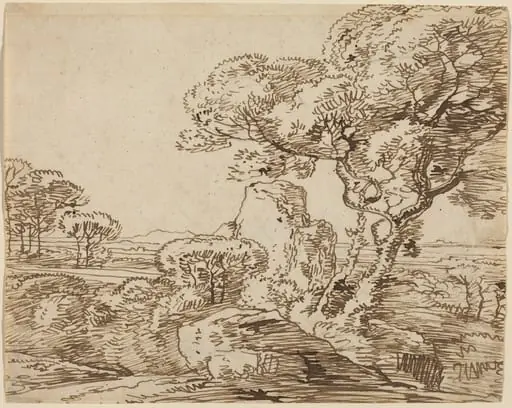
Man between Two Fir Trees is an ink print by the Baroque artist Allart van Everdingen. It dates from 1650 and is held in the collection of the National Gallery of Art.
About this work
Overview
Man between Two Fir Trees is an etching created by Dutch Golden Age artist Everdingen around 1650. The print features a serene forest composition.
Subject & Meaning
A lone figure, diminutive in scale, walks between two towering fir trees, emphasizing the vastness of the natural surroundings. The scene conveys a sense of solitude and the individual's place within nature.
Technique & Style
Executed in etching, the work showcases dense, spiky tree branches and rolling, bush-covered hills through fine, scratchy lines in black and white. The technique imparts a textured, almost tactile quality, akin to scratching.
History & Provenance
Created circa 1650 by Everdingen, a renowned Dutch printmaker and painter of the Golden Age, known for etchings and mezzotints.
Context
Characteristic of 17th-century Dutch landscape art, the piece reflects the period's emphasis on naturalism and the emotional resonance of solitude in nature.
Legacy
While specific legacy details of *Man between Two Fir Trees* are not highlighted, it contributes to Everdingen's broader influence on Dutch printmaking and the evolution of landscape representation.
Own this work as a print
Artist & collection
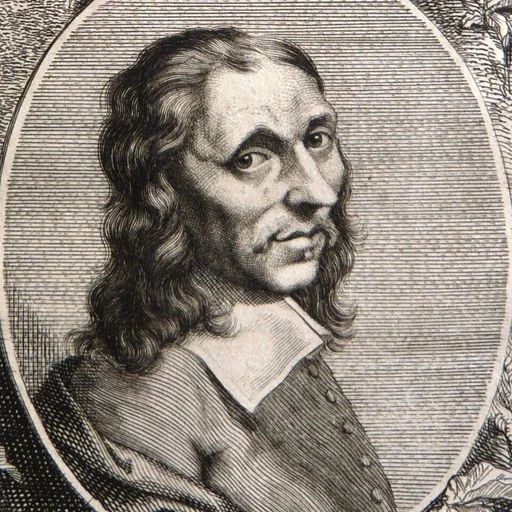
Artist
Allaert van Everdingen (Dutch pronunciation: ; bapt. 18 June 1621 – 8 November 1675 (buried)), was a Dutch Golden Age painter and printmaker in etching and mezzotint.