Artwork
The Banquet of Antony and Cleopatra
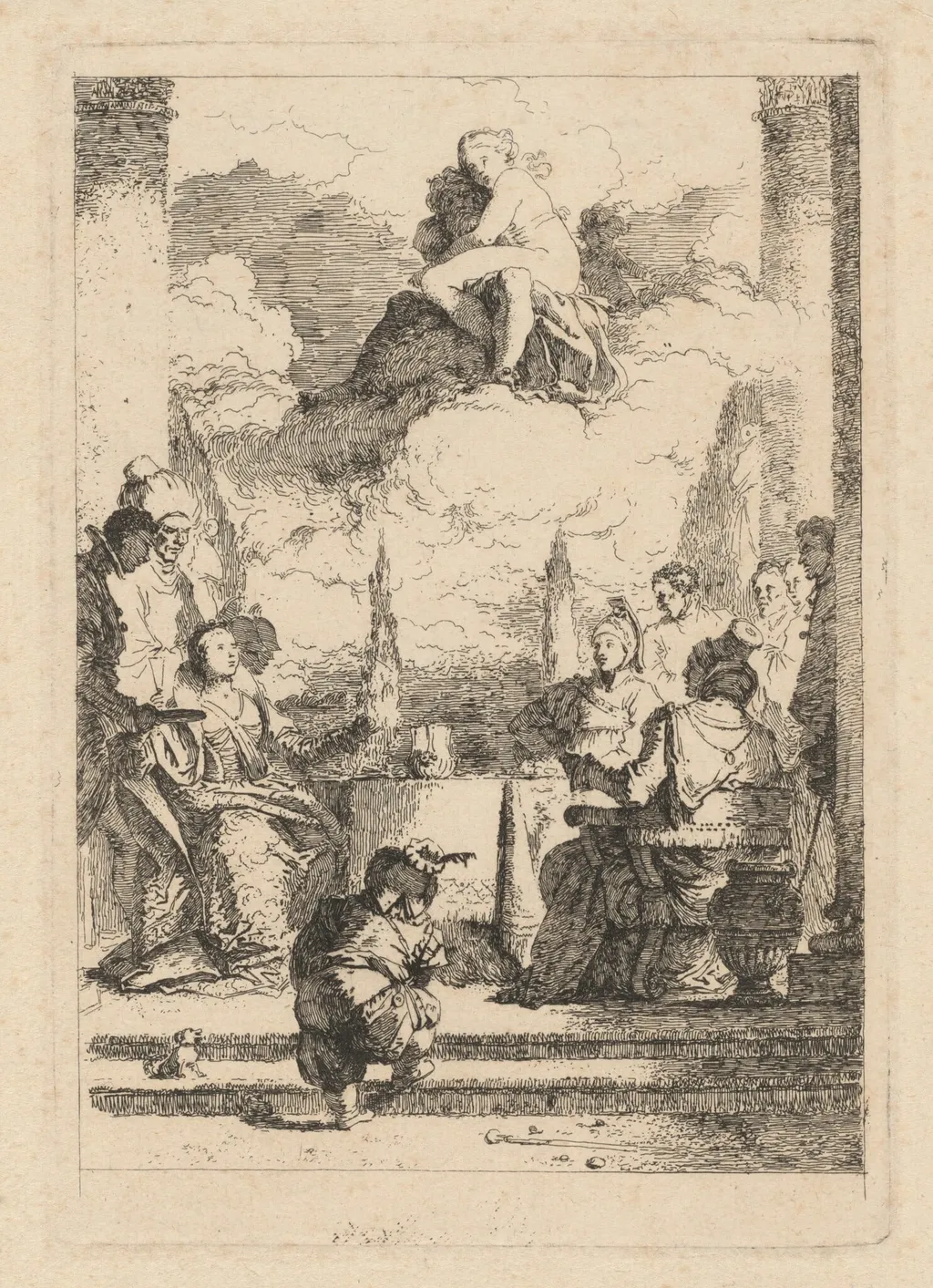
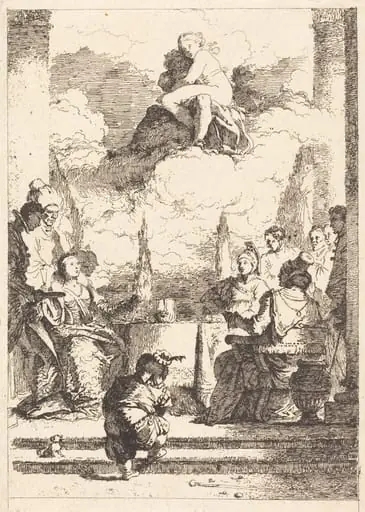
The Banquet of Antony and Cleopatra is an ink print by the Romanticist artist Jean Honoré Fragonard. It dates from 1764 and is held in the collection of the National Gallery of Art.
About this work
Overview
Jean‑Honoré Fragonard’s 1764 etching, titled *The Banquet of Antony and Cleopatra*, presents a scene from the legendary Roman‑Egyptian love story. Executed on laid paper, the print captures a moment at a sumptuous banquet where the two historical figures are seated opposite one another.
Subject & Meaning
In the composition, Cleopatra is shown dropping a pearl into a bowl of vinegar, a gesture historically associated with her display of wealth and daring. Antony watches the act from across the table, while the queen’s expression conveys a hint of ennui, suggesting a playful subversion of the drama traditionally attached to the episode.
Technique & Style
Fragonard employed the etching process, incising lines into a copper plate that were then inked and pressed onto paper. The fine, crisp lines preserve the delicate detail of the dissolving pearl, allowing the fleeting action to remain permanently rendered. The overall tone is light‑hearted rather than solemn, reflecting the artist’s pre‑revolutionary sensibility.
History & Provenance
Created several decades before the upheavals of the French Revolution, the print belongs to the later period of Fragonard’s career when he explored printmaking alongside his more familiar oil paintings. Its survival on laid paper indicates it was likely intended for a limited audience of collectors familiar with the artist’s work.
Context
The subject draws on a well‑known anecdote from Plutarch and later dramatizations, wherein Cleopatra’s demonstration of a pearl’s dissolution served as a test of Antony’s generosity. Fragonard’s treatment aligns with the 18th‑century French fascination with classical themes, yet his rendering emphasizes wit over heroic grandeur.
Artist & collection

Artist
Jean-Honoré Fragonard was born on 5 April 1732 in Grasse, the son of a glover, and moved with his family to Paris in 1738.

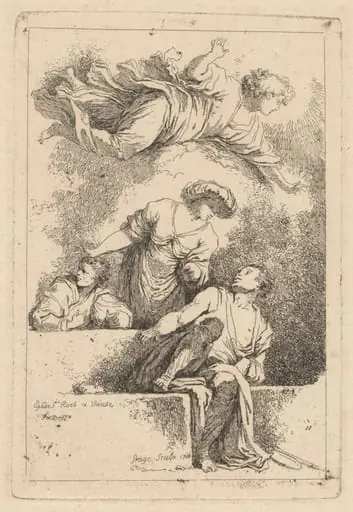 The Disciples at the Tomb
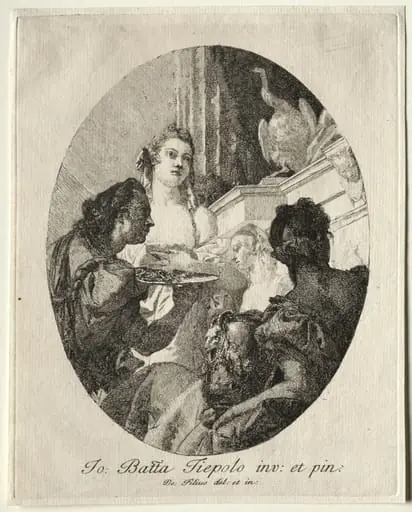 Three Women Presenting Gifts of Marc Anthony to Cleopatra
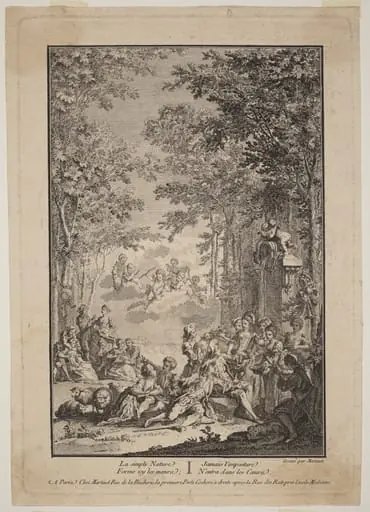 La simple Nature
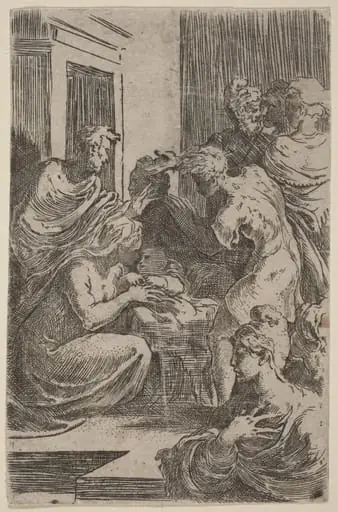 The Adoration of the Shepherds
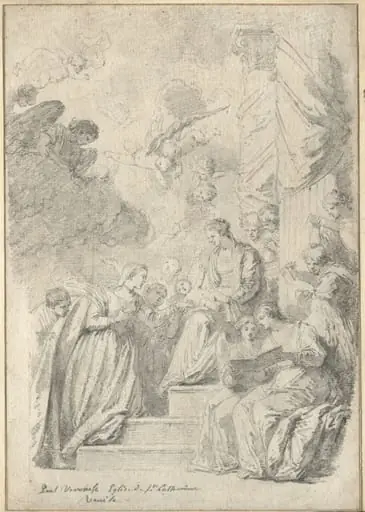 The Mystic Marriage of Saint Catherine
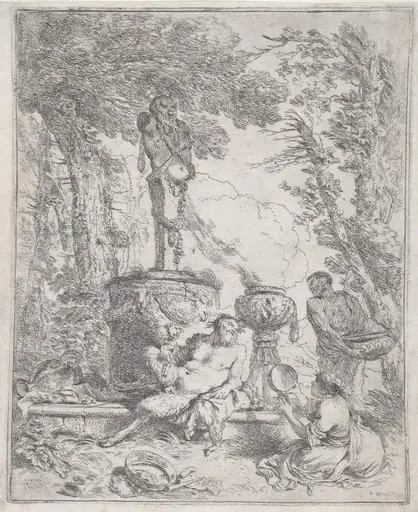 Pan Reclining before a Herm
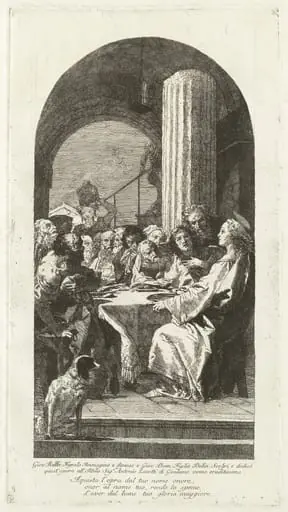 The Last Supper
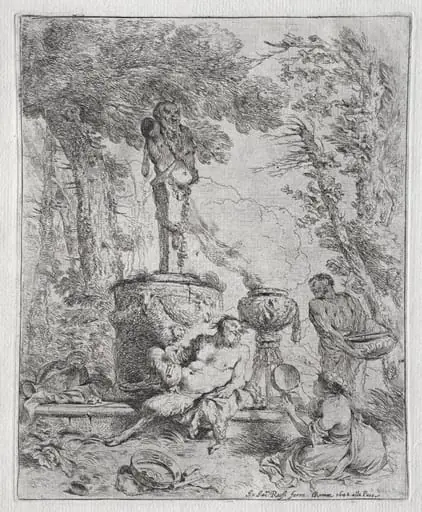 Fete of Pan
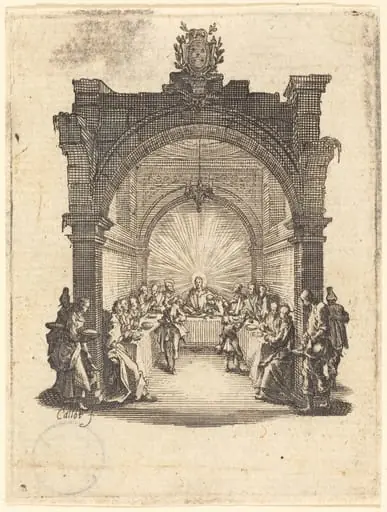 The Last Supper
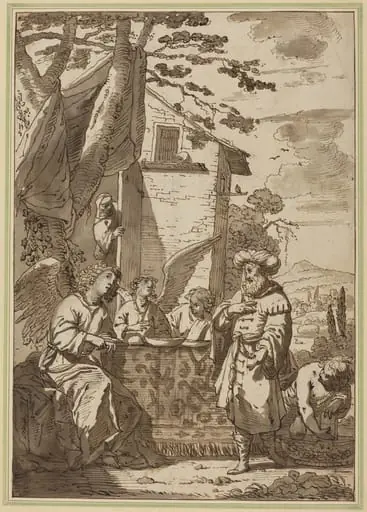 Abraham Entertaining the Angels
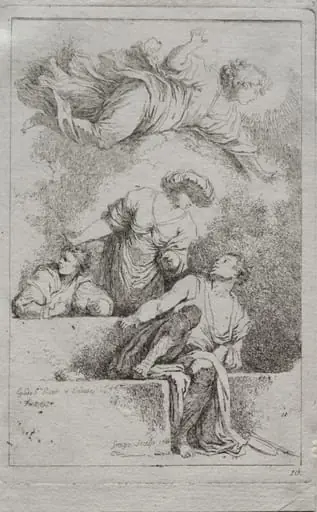 The Disciples at the Tomb
 The Feast of Anthony and Cleopatra (Le festin d'Antoine et de Cleopatre)