Artwork
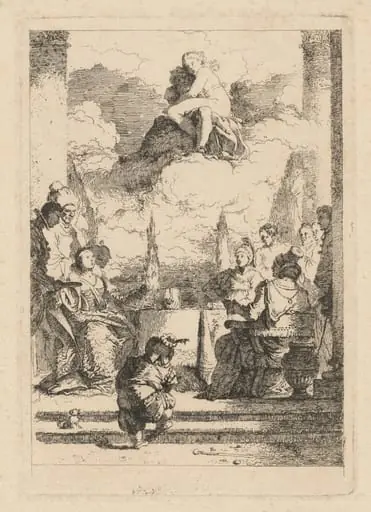
The Feast of Anthony and Cleopatra (Le festin d'Antoine et de Cleopatre)
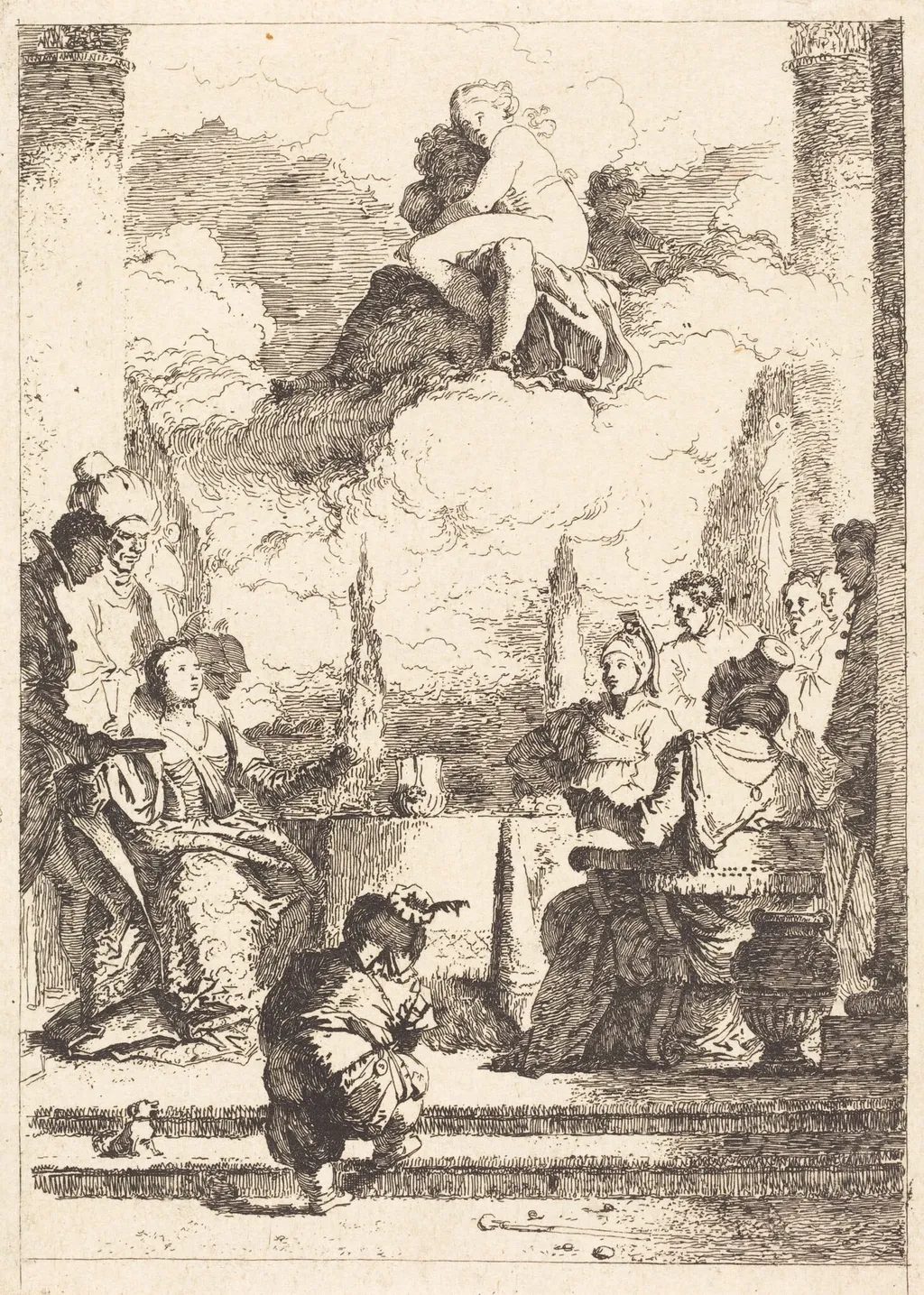
The Feast of Anthony and Cleopatra (Le festin d'Antoine et de Cleopatre) is an ink print by the Baroque artist Jean Honoré Fragonard. It dates from 1769 and is held in the collection of the National Gallery of Art. Jean‑Honoré Fragonard’s etching *Le festin d’Antoine et de Cléopâtre* was executed in 1769.
About this work
Overview
Jean‑Honoré Fragonard’s etching *Le festin d’Antoine et de Cléopâtre* was executed in 1769. The monochrome print depicts a bustling banquet scene, crowded with figures surrounding a central table. At the heart of the composition a woman in draped garments is attended by a man leaning toward her, while other participants stand or kneel, their gestures suggesting lively interaction.
Subject & Meaning
The work alludes to the legendary feast shared by the Roman general Mark Antony and the Egyptian queen Cleopatra, a moment traditionally associated with opulence and political intrigue. Fragonard emphasizes the theatricality of the encounter, using the crowded arrangement and expressive poses to convey a sense of celebration intertwined with narrative tension.
Technique & Style
Created through the etching process, the artist incised the design onto a copper plate, allowing acid to bite the lines. Ink was then applied, pooling in deeper grooves to produce soft shadows and varied textures. Fragonard’s handling of line is loose and swirling, imparting movement and a dramatic atmosphere characteristic of his late‑Rococo sensibility.
History & Provenance
The print emerged in the final decade of Fragonard’s career, a period when he increasingly turned to printmaking to disseminate his compositions. While specific ownership records are scarce, the work is documented in several 19th‑century catalogues of Fragonard’s prints and appears in museum collections devoted to French Rococo art.
Artist & collection

Artist
Jean-Honoré Fragonard was born on 5 April 1732 in Grasse, the son of a glover, and moved with his family to Paris in 1738.

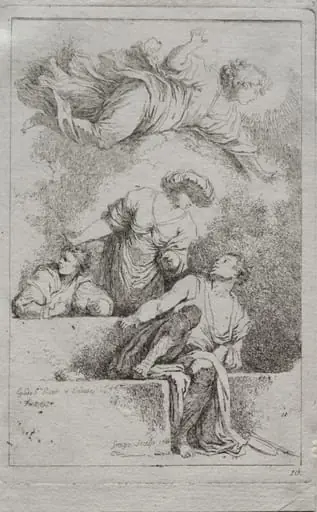 The Disciples at the Tomb
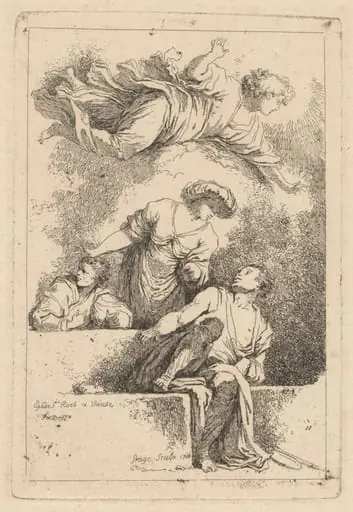 The Disciples at the Tomb
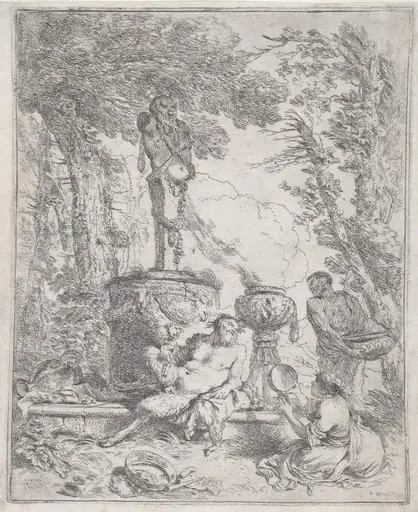 Pan Reclining before a Herm
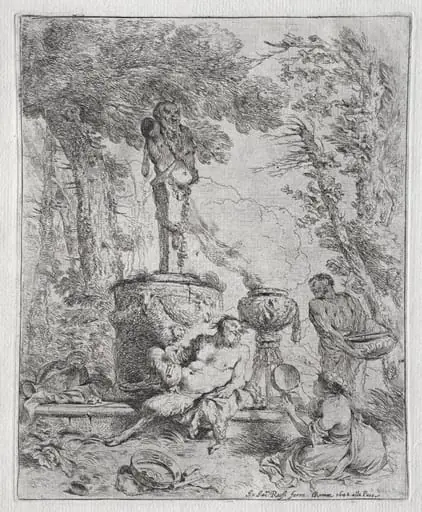 Fete of Pan
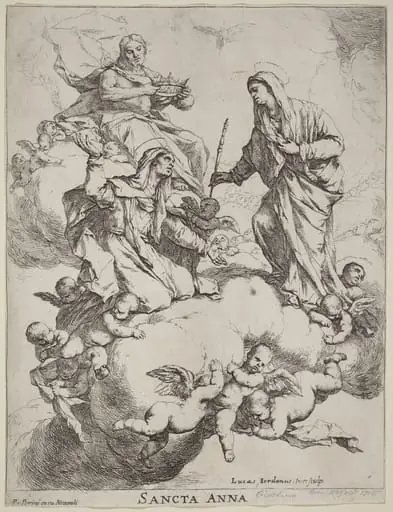 Saint Anne Received by the Virgin and Christ
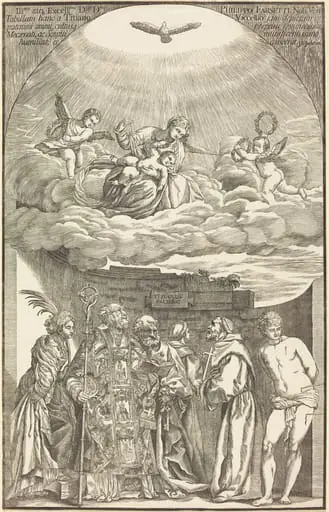 The Virgin in Clouds and Six Saints
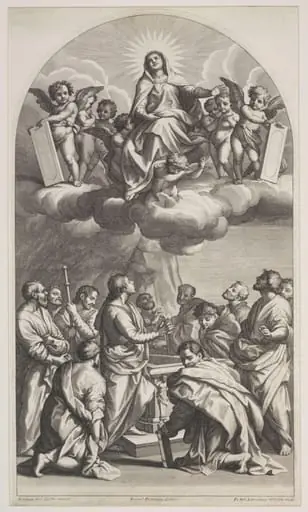 Assumption of the Virgin
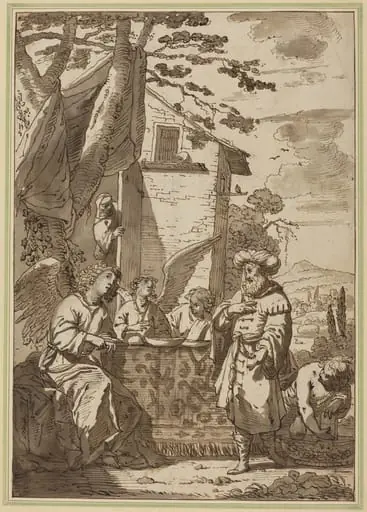 Abraham Entertaining the Angels
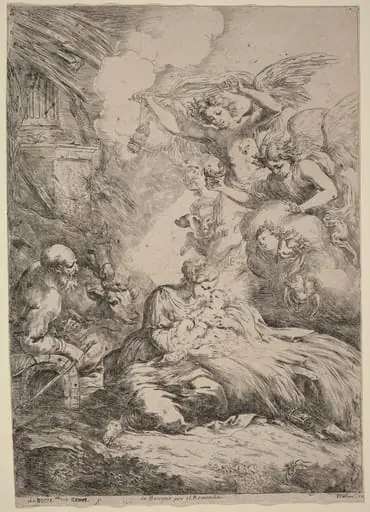 The Holy Family Adored by Angels (The Large Nativity)
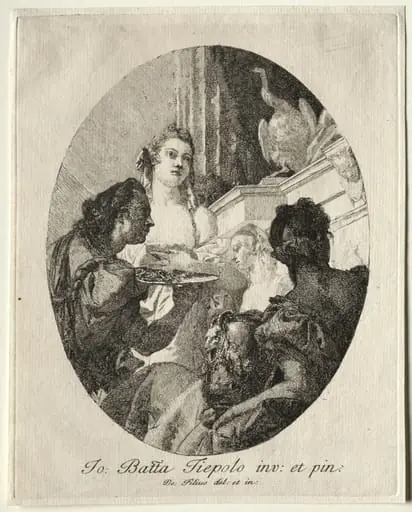 Three Women Presenting Gifts of Marc Anthony to Cleopatra
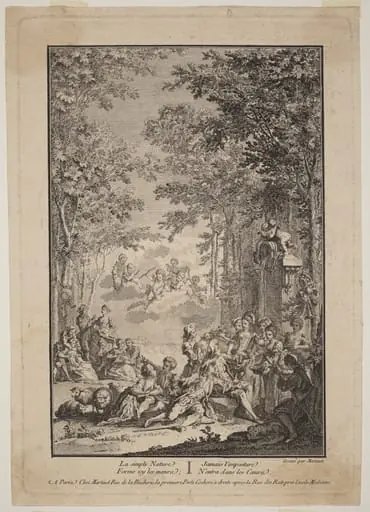 La simple Nature
 The Banquet of Antony and Cleopatra