Artwork
The Bedroom (Le Coucher or Ma Chemise brule)
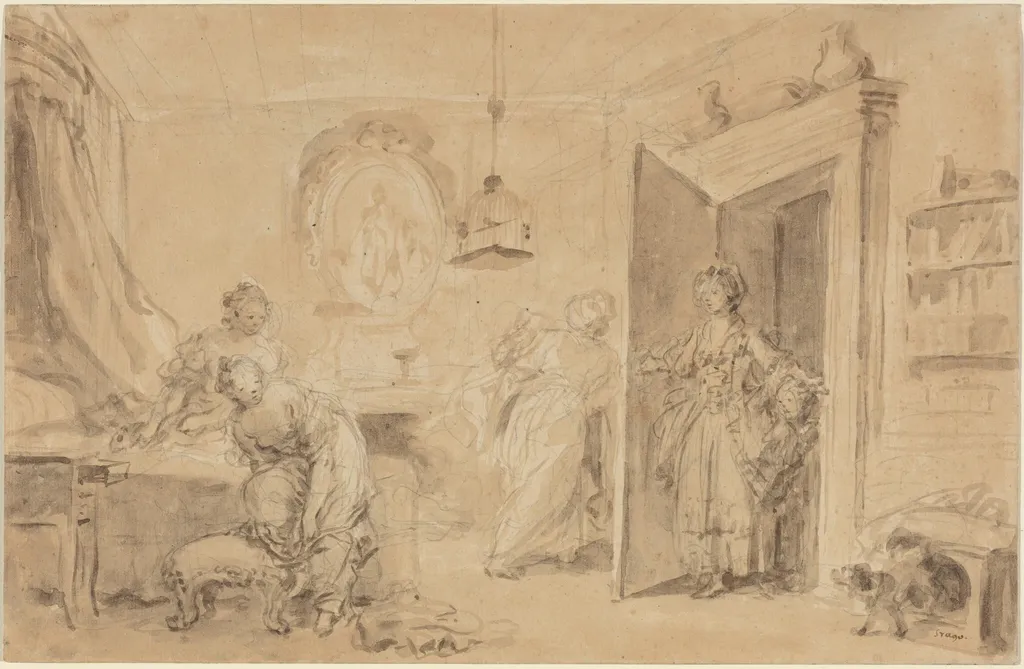
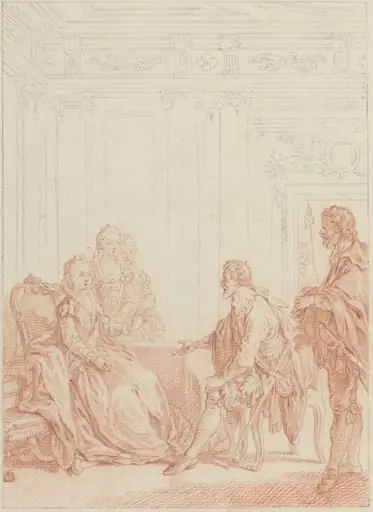
The Bedroom (Le Coucher or Ma Chemise brule) is an ink drawing by the Baroque artist Jean Honoré Fragonard. It dates from 1769 and is held in the collection of the National Gallery of Art. Created in 1769, this drawing by Jean-Honoré Fragonard is executed in brush and brown ink with wash over graphite on laid paper.
About this work
Overview
Created in 1769, this drawing by Jean-Honoré Fragonard is executed in brush and brown ink with wash over graphite on laid paper.
Created in 1769, this drawing by Jean-Honoré Fragonard is executed in brush and brown ink with wash over graphite on laid paper. It depicts an intimate interior scene, likely a private chamber, rendered with fluid lines and subtle tonal gradations. The work belongs to a series of intimate, anecdotal drawings Fragonard produced during the height of his career, reflecting his interest in domestic moments and quiet sensuality.
Subject & Meaning
The scene portrays a solitary figure in a bedroom, possibly undressing or preparing for rest, with a garment—perhaps a chemise—suggesting a moment of personal transition. The title, alternatively known as Ma Chemise brûle, hints at a fleeting, almost poetic association between clothing and the body, evoking themes of vulnerability and private ritual rather than narrative drama.
Technique & Style
Fragonard employed loose, expressive brushwork and diluted ink washes to suggest light and texture with minimal strokes. Graphite underdrawing guides the composition, while the washes create soft shadows and atmospheric depth. The spontaneity of the brush recalls his mastery of the Rococo sketch tradition, prioritizing mood over detail, and capturing motion in stillness.
History & Provenance
The drawing emerged in the late 18th century as part of Fragonard’s private collection of studies and informal works. It passed through several French collections before entering a public institution in the 19th century. Its multiple titles suggest evolving interpretations, but its origin as a personal exercise, not a commissioned piece, remains consistent across records.
Context
Produced during the twilight of the Ancien Régime, the drawing reflects a shift in artistic focus from grand historical themes to intimate, everyday subjects. Fragonard’s contemporaries, including Boucher and Watteau, similarly explored private life, but this work stands out for its restrained palette and psychological nuance, anticipating emerging sensibilities of the early modern era.
Legacy
Though less known than Fragonard’s painted masterpieces, this drawing exemplifies his skill in conveying emotion through economy of means. It influenced later 19th-century draftsmen who valued spontaneity and psychological insight over finish. Today, it is studied as a key example of Rococo graphic art’s capacity for quiet intimacy.
Artist & collection

Artist
Jean-Honoré Fragonard was born on 5 April 1732 in Grasse, the son of a glover, and moved with his family to Paris in 1738.

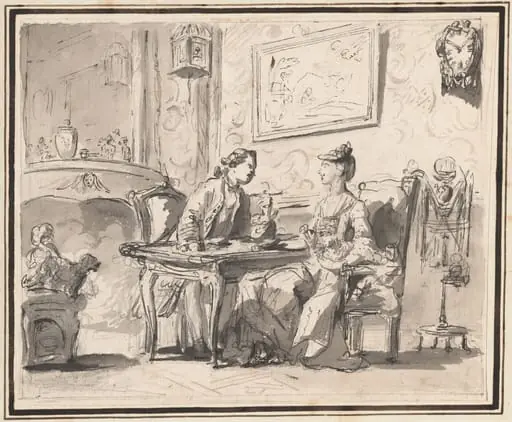 Conversation Piece
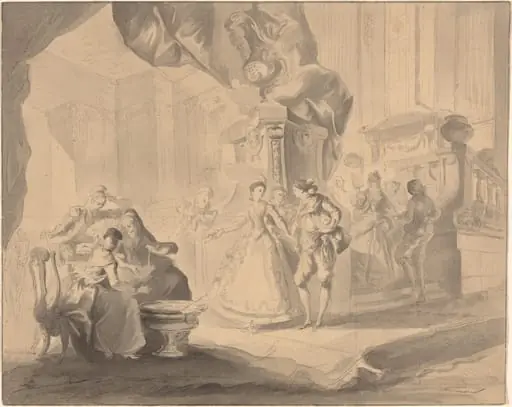 Dance in a Palace
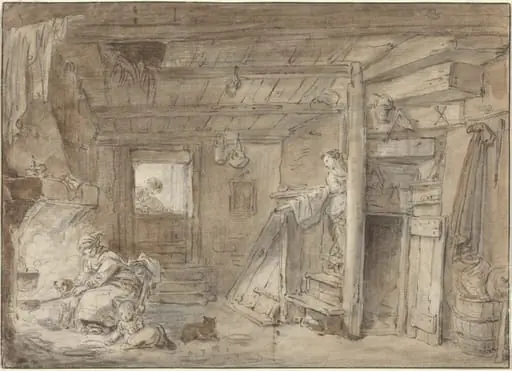 Interior of a Farmhouse with Figures
 Study for "The Rustic Dancers"
 The Coquette
 Psyche Received on Mount Olympus
 Kindly Martine
 A Landscape with Seated Soldiers and Fishermen
 The Holy Family with Saint Catherine, Saint John the Evangelist, and an Angel
 The Happy Family with Children Playing
 A group of figures in Western dress
 Quoi! Vous servez Valois...