Artwork
Psyche Received on Mount Olympus
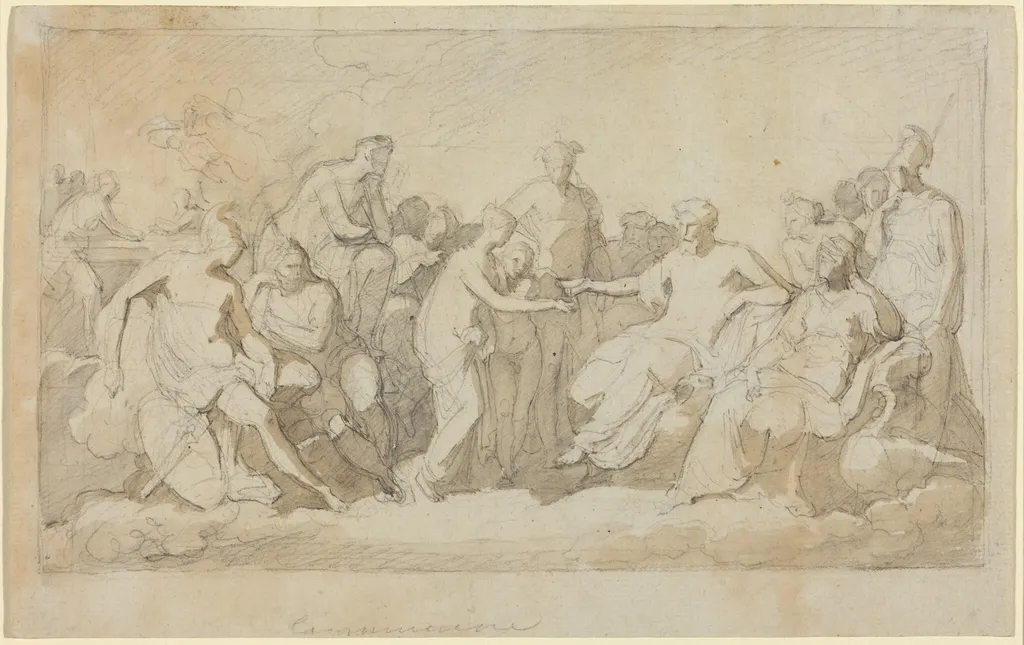
Psyche Received on Mount Olympus is a graphite drawing by the Romanticist artist Vincenzo Camuccini. It dates from 1808 and is held in the collection of the National Gallery of Art.
About this work
Overview
It illustrates a moment from the classical myth of Psyche, rendered in the restrained palette typical of the artist’s early nineteenth‑century practice.
Vincenzo Camuccini’s drawing *Psyche Received on Mount Olympus* was executed in 1808. Rendered on laid paper with graphite underdrawing and a brown wash, the work measures a modest size and functions as a preparatory study rather than a finished painting. It illustrates a moment from the classical myth of Psyche, rendered in the restrained palette typical of the artist’s early nineteenth‑century practice.
Subject & Meaning
The composition captures the instant when Psyche is welcomed among the Olympian deities. Figures are arranged in a dynamic, swirling cluster: some stand erect, others kneel or reach outward, suggesting a ceremonial reception. The cloudy, atmospheric background reinforces the otherworldly setting of the gods, while the gestures convey both reverence and narrative tension within the mythic episode.
Technique & Style
Camuccini employed a loose, rapid graphite sketch as the structural base, over which he applied a uniform brown wash. This limited tonal range creates a warm, shadowed ambience and emphasizes form through chiaroscuro rather than line detail. The drawing’s fluid contours and unfinished quality reflect a study intended to explore composition and movement before a larger oil version.
History & Provenance
Created during Camuccini’s mature Neoclassical period, the drawing was likely produced as a preparatory work for a larger commission or as a pedagogical example. It remained in private collections before entering a museum holding of 19th‑century Italian drawings, where it is catalogued as an illustration of the artist’s methodical approach to mythological subjects.
Context
In the early 1800s, Roman artists revived classical antiquity’s ideals of order, clarity, and archaeological accuracy. Camuccini, a leading figure in this movement, applied those principles to narrative subjects, integrating precise anatomical modeling with idealized poses. This drawing exemplifies the Neoclassical fascination with myth as a vehicle for moral and aesthetic instruction.
Legacy
The study offers insight into Camuccini’s preparatory process and his contribution to the visual language of Neoclassicism. By preserving the sketch’s spontaneous energy alongside disciplined composition, it informs scholars of how major mythological paintings were conceived, and it continues to serve as a reference point for the study of early 19th‑century Italian drawing techniques.
Artist & collection
Artist
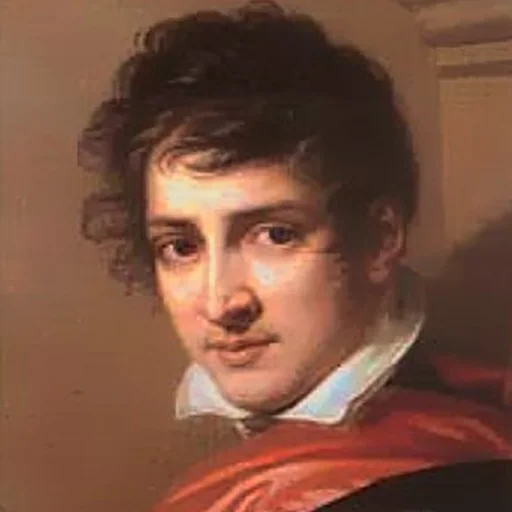
Vincenzo Camuccini (22 February 1771 – 2 September 1844) was an Italian Neoclassical painter. He was considered the premier academic painter of his time in Rome. Camuccini was known for his sober grandeur and archeological accuracy.

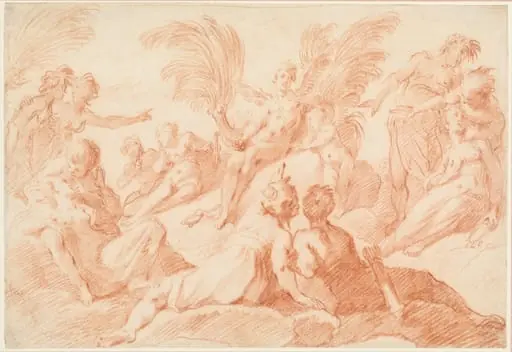 Harpocrates
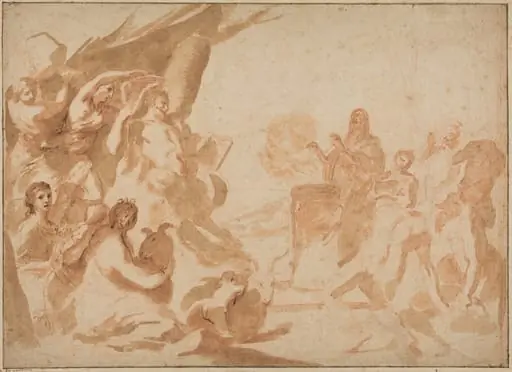 A Sacrifice to Pan
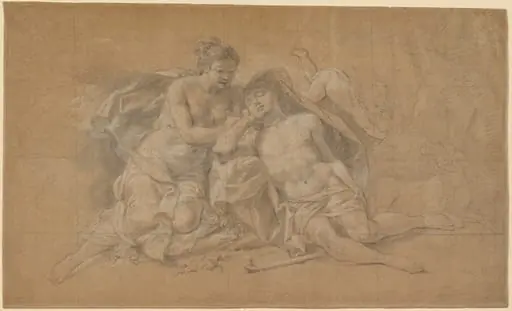 Diana and Endymion
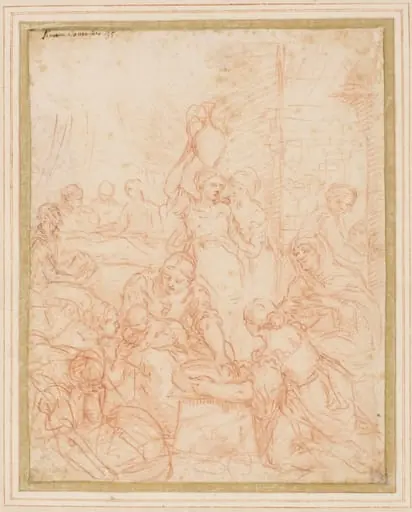 The Birth of the Virgin
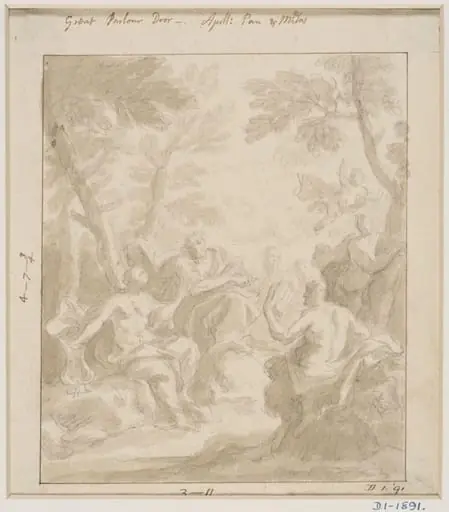 Design for an overdoor painting depicting Apollo, Pan and Midas
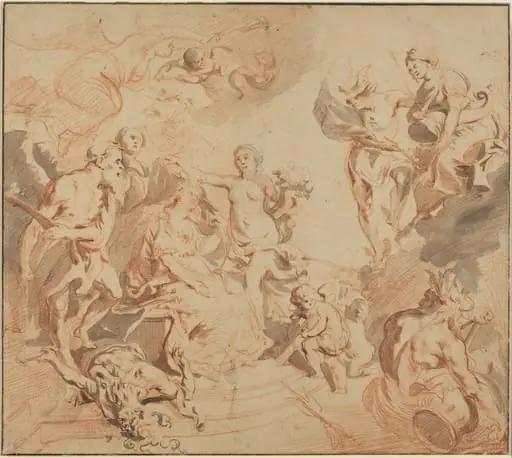 Antwerp Blessed with Abundance
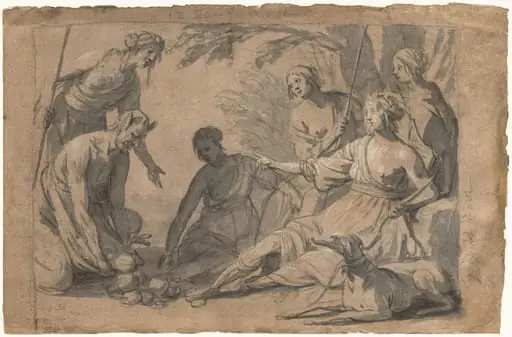 Diana and Four Nymphs Receiving Gifts from a Satyr
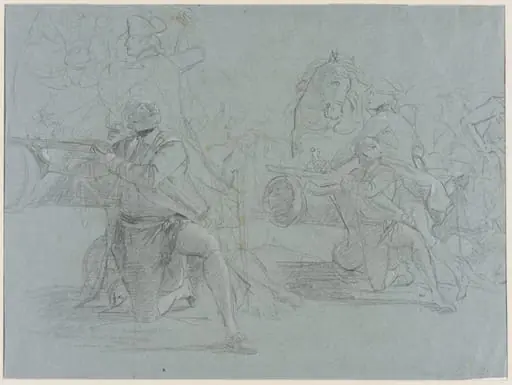 Study for 'The Siege of Gibraltar'
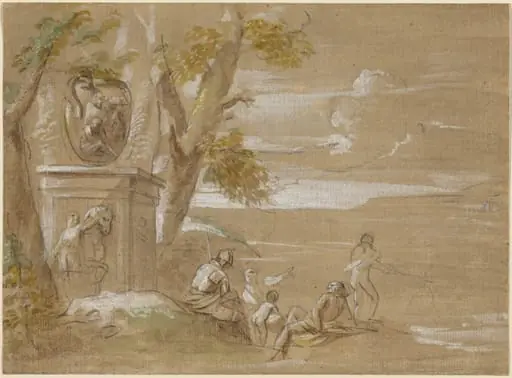 A Landscape with Seated Soldiers and Fishermen
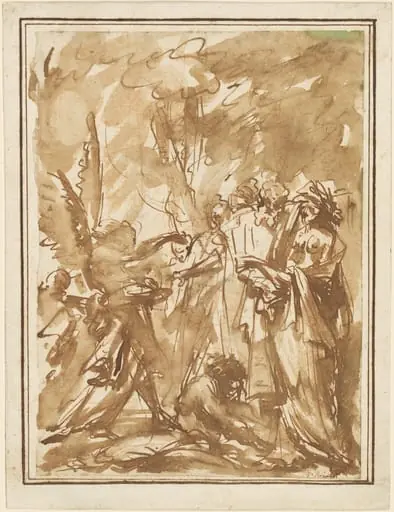 Scherzo with Antique Figures
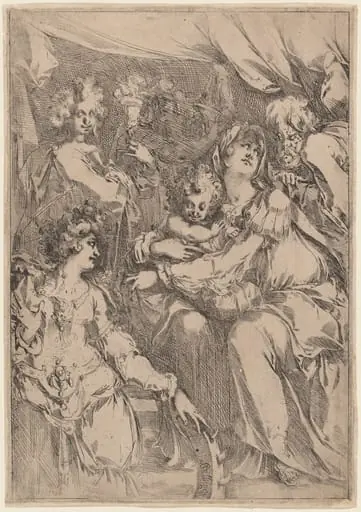 The Holy Family with Saint Catherine, Saint John the Evangelist, and an Angel
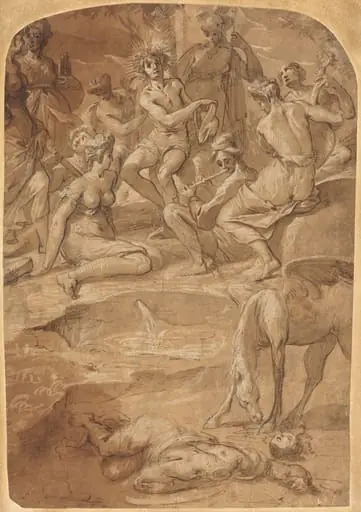 Apollo and the Muses on Mount Parnassus