Artwork
Madame de Pompadour
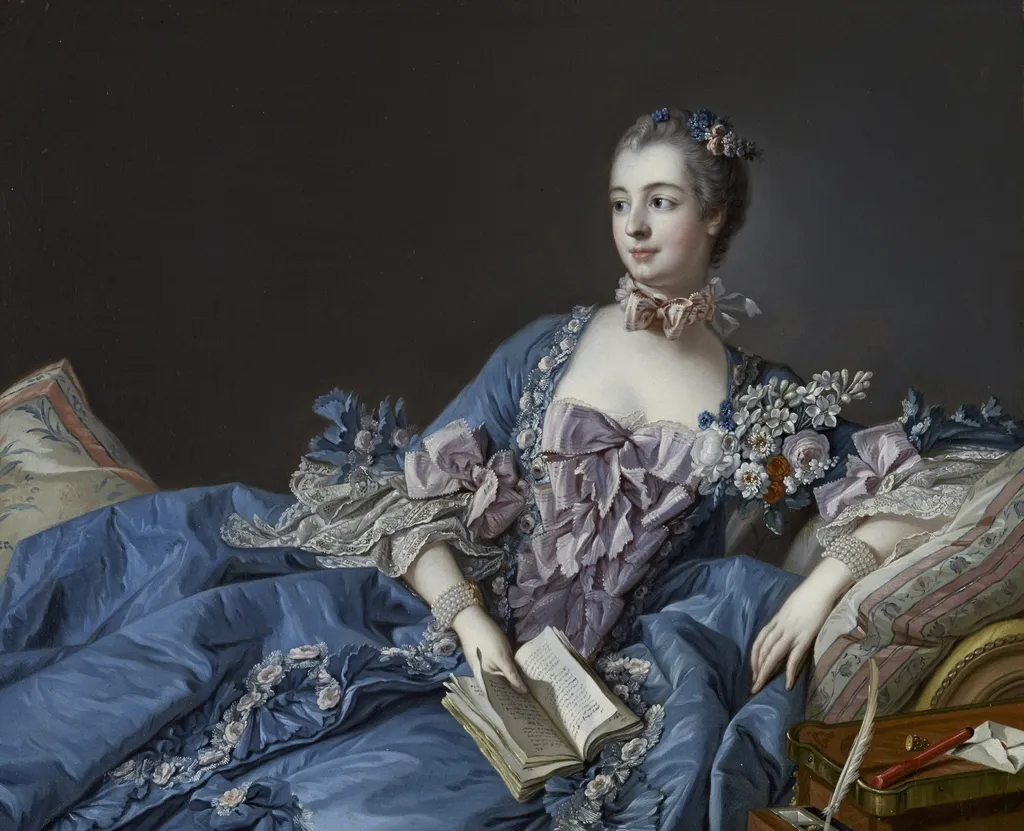
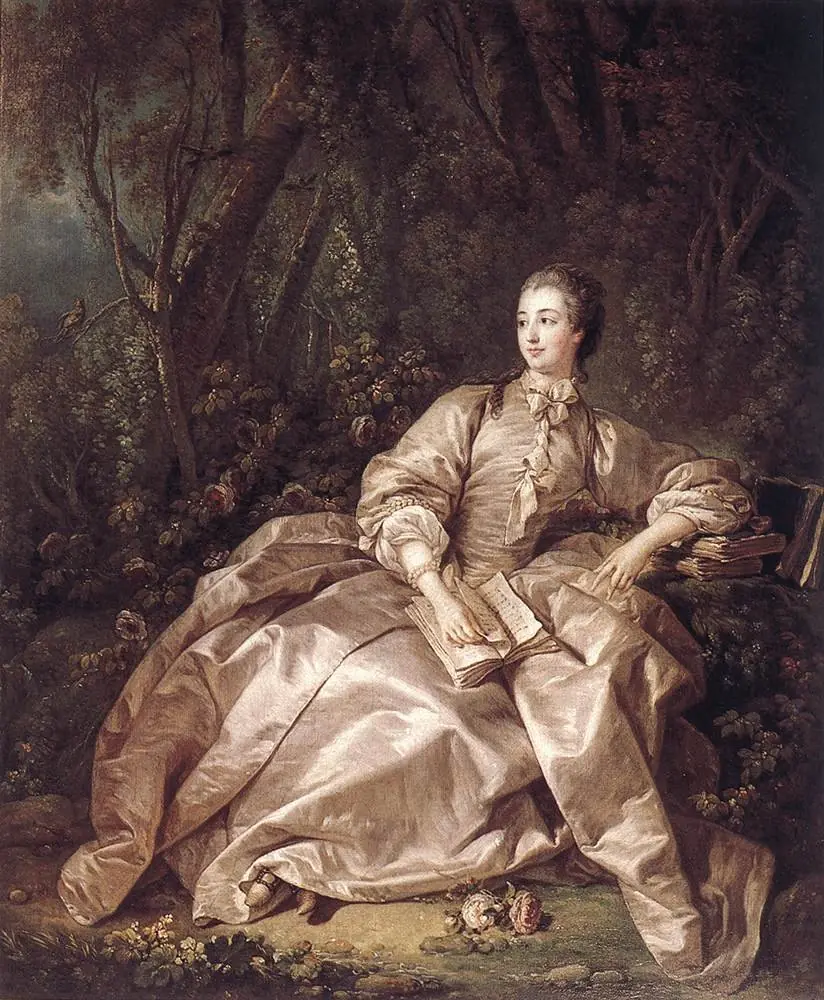
Madame de Pompadour is an oil painting by the Rococo painting artist François Boucher. It dates from 1756 and is held in the collection of the National Galleries Scotland.
About this work
Overview
Painted in 1756 by François Boucher, this oil portrait captures Madame de Pompadour, the influential mistress of Louis XV. Executed in the Rococo style, the work reflects the refined aesthetics of the French court. It is currently housed in the Scottish National Gallery, where it remains a key example of 18th-century portraiture commissioned to convey status and cultural sophistication.
Subject & Meaning
Her relaxed posture, open book, and elegant attire suggest cultivated leisure and literary interest.
Madame de Pompadour is portrayed not merely as a noblewoman but as an intellectual and tastemaker. Her relaxed posture, open book, and elegant attire suggest cultivated leisure and literary interest. The composition avoids overt grandeur, instead emphasizing personal refinement. The choice of attire and setting aligns with her role in shaping artistic and cultural trends at court, presenting her as both fashionable and intellectually engaged.
Technique & Style
Boucher employs delicate brushwork to render the textures of lace, silk, and skin with subtle precision. The use of chiaroscuro gently models her form against a dark background, enhancing three-dimensionality without dramatic contrast. Soft lighting highlights the pearlescent sheen of her jewelry and the intricate floral embroidery on her gown. The overall effect is one of intimate elegance, characteristic of Rococo’s preference for sensuous detail over monumental scale.
History & Provenance
Commissioned during the height of Madame de Pompadour’s influence, the painting was likely intended for private display. It entered the Scottish National Gallery’s collection in the 19th century, having passed through private European hands. Its survival and preservation reflect its enduring value as a document of aristocratic identity and artistic patronage in pre-revolutionary France.
Context
Created during a period when the French court embraced ornamental refinement, the portrait aligns with Rococo ideals of pleasure, intimacy, and decorative splendor. Madame de Pompadour’s patronage of the arts made her a central figure in the movement’s development. Boucher’s depiction reflects not just her appearance but her role as a cultural arbiter, bridging aristocratic life and artistic production.
Legacy
The portrait endures as a representative image of 18th-century French elite femininity. It illustrates how portraiture functioned as a tool of personal branding in an era before photography. Boucher’s treatment of texture and light influenced later portraitists, while the image continues to inform scholarly understanding of gender, power, and aesthetics in the ancien régime.
Own this work as a print
Artist & collection

Artist
François Boucher was a French painter, draughtsman and etcher, who worked in the Rococo style.