Artwork
Napoléon signs his abdication at Fontainebleau 11 April 1814
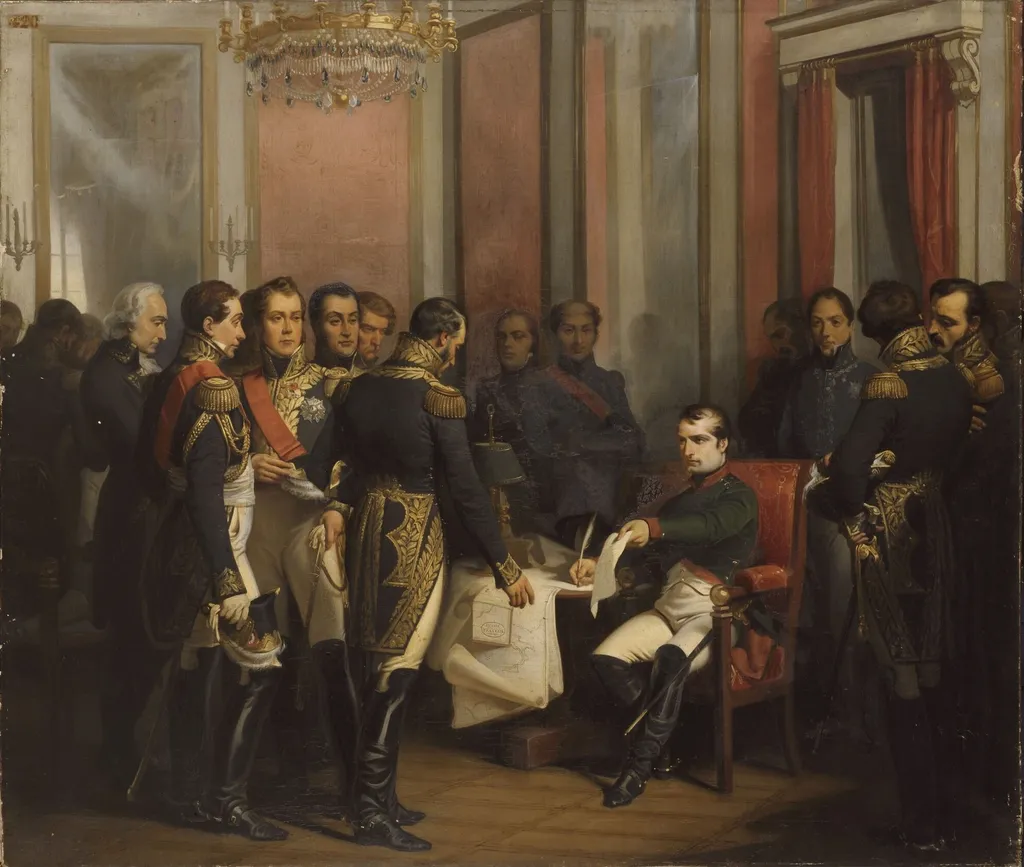
Napoléon signs his abdication at Fontainebleau 11 April 1814 is an oil painting by François Bouchot. It is held in the collection of the Palace of Versailles.
About this work
Overview
François Bouchot’s 1843 oil on canvas records the moment of Napoleon’s abdication at Fontaine‑la‑Grande on 11 April 1814. The composition gathers three senior figures of the Empire in an opulent interior, emphasizing the solemnity of the political act.
Subject & Meaning
The central figure, seated in a red chair, is shown signing the abdication document with a quill, embodying the formal relinquishment of power. Flanking him are Armand Augustin Louis de Caulaincourt, François Joseph Lefebvre, and Henri Gatien Bertrand—high‑ranking generals and confidants whose presence underscores the military’s role in the transition.
Technique & Style
Bouchot employs a polished academic style, rendering the textures of silk, gold trim, and polished wood with meticulous brushwork. The chiaroscuro from the chandelier’s light creates a focal glow on the signing table, while the rich red drapery and gilded décor frame the scene with a sense of ceremonial gravitas.
History & Provenance
Completed in the mid‑19th century, the work entered the French national collection and is now displayed at the Palace of Versailles. Its placement among other Napoleonic artifacts situates it within the broader state narrative of the Empire’s rise and fall.
Context
The painting was produced during the July Monarchy, a period when French artists frequently revisited the Napoleonic era to reflect on national identity. By portraying the abdication in a dignified setting, Bouchot contributes to a measured, rather than sensational, recollection of the event.
Own this work as a print
Artist & collection