Artwork
Portrait of Elizabeth Charlotte of the Palatine with her Slave
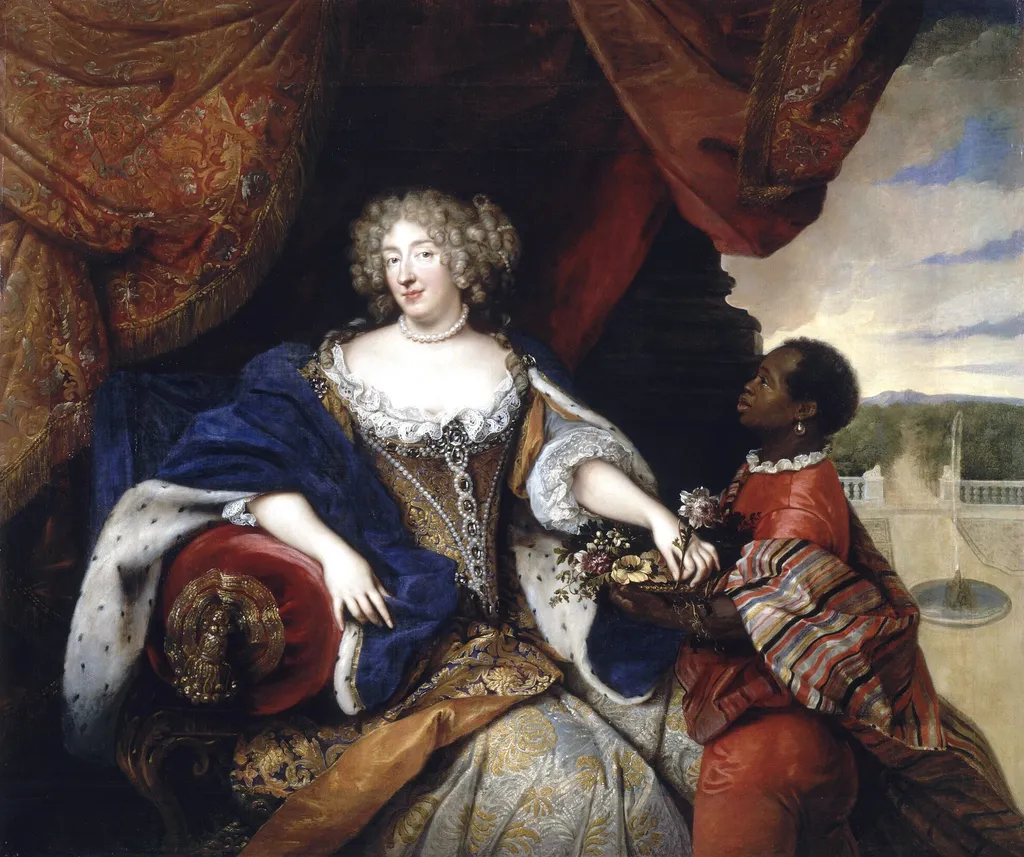
Portrait of Elizabeth Charlotte of the Palatine with her Slave is an oil painting by the Rococo painting artist François de Troy. It dates from 1690 and is held in the collection of the Palace of Versailles.
About this work
Overview
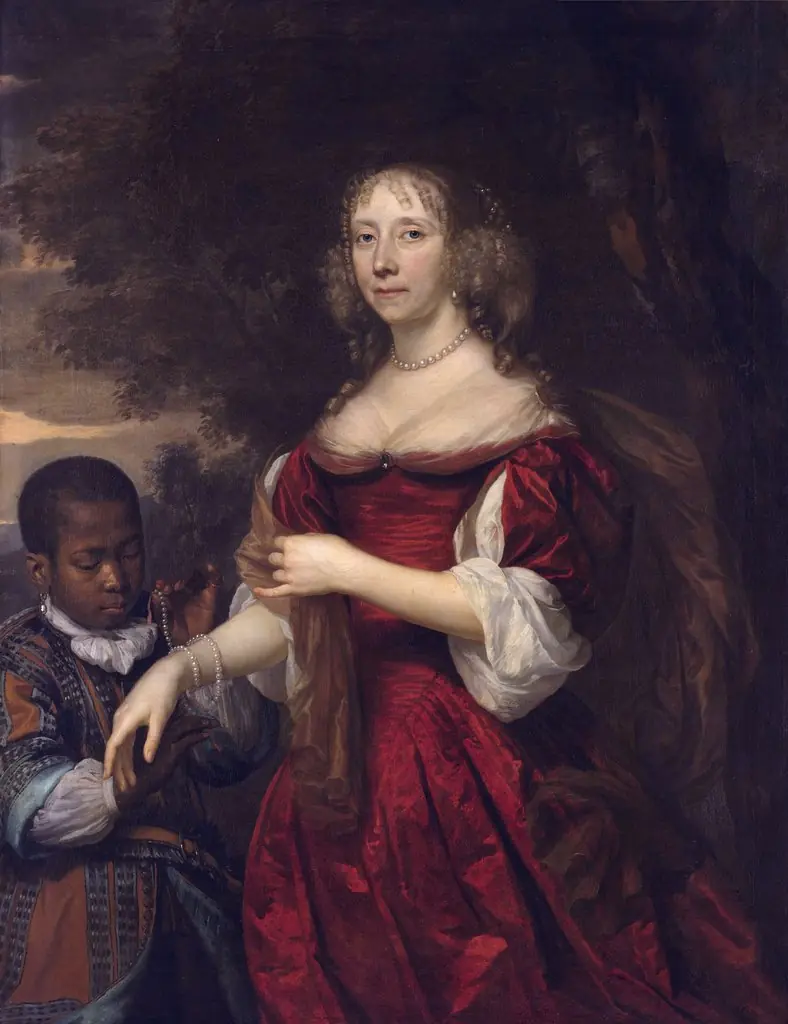
François de Troy’s 1690 oil painting presents Elizabeth Charlotte of the Palatinate, Duchess of Orléans, seated outdoors beside a young attendant.
François de Troy’s 1690 oil painting presents Elizabeth Charlotte of the Palatinate, Duchess of Orléans, seated outdoors beside a young attendant. The composition balances the duchess’s elaborate blue dress with gold embroidery against the attendant’s simpler red-and‑white attire, set before a draped curtain and a distant garden. The work exemplifies the refined portraiture typical of the late‑seventeenth‑century French court.
Subject & Meaning
The central figure is Elizabeth Charlotte, a prominent member of the French royal family, depicted with the poise expected of a duchess. Beside her stands a youthful domestic servant, identified in contemporary records as a “bijou,” a term indicating a small, decorative presence. Their juxtaposition underscores the social hierarchy and the patron’s interest in displaying both status and household composition.
Technique & Style
Executed in oil on canvas, the portrait employs the light, fluid brushwork associated with the early Rococo. Troy renders the duchess’s silk and lace with meticulous attention to texture, while the attendant’s fabrics are painted with broader strokes, creating a subtle contrast. The luminous palette and delicate handling of light enhance the sense of elegance and intimacy.
History & Provenance
Originally commissioned for the French court, the painting entered the royal collection and has remained in state ownership. It is currently displayed in the Palace of Versailles, where it forms part of the museum’s holdings of late‑Baroque portraiture, reflecting the continuity of the French monarchy’s artistic patronage.
Context
Created during a period when French aristocratic portraiture emphasized refinement and courtly display, the work aligns with Troy’s role as principal painter to the exiled King James II and later director of the Académie Royale. The inclusion of a domestic figure alongside a high‑ranking noble illustrates contemporary attitudes toward representation of household members within elite portraiture.
Own this work as a print
Artist & collection
Artist
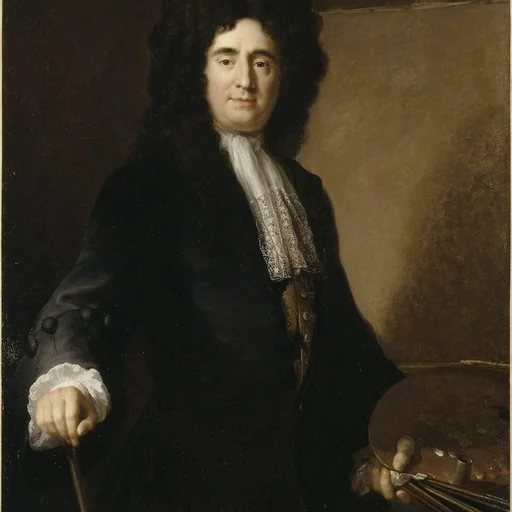
François de Troy (9 January 1645 – 1 May 1730) was a French painter and engraver who became principal painter to King James II in exile at Saint-Germain-en-Laye and Director of the Académie Royale de peinture et de sculpture.