Artwork
The toilet of Venus
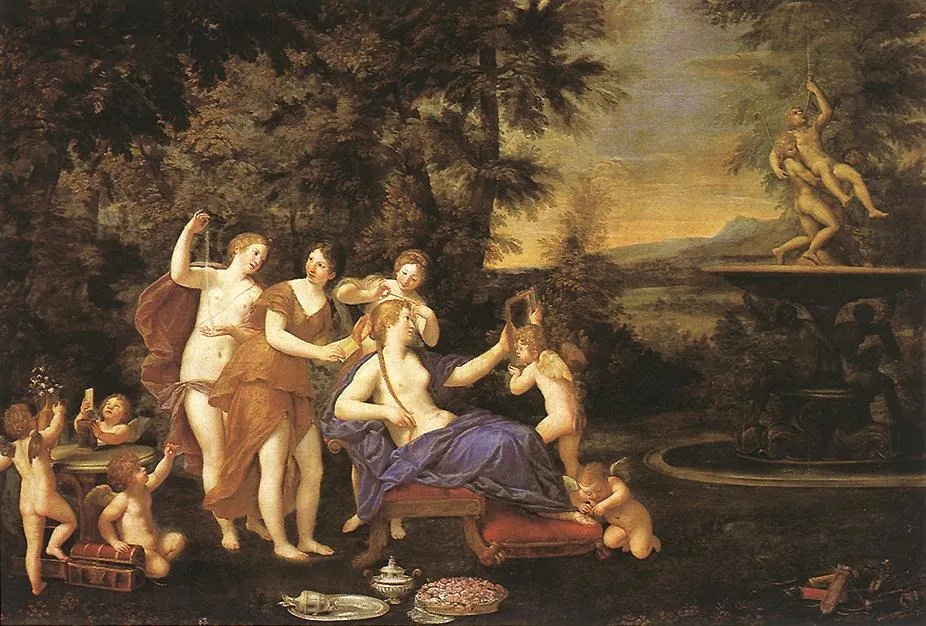
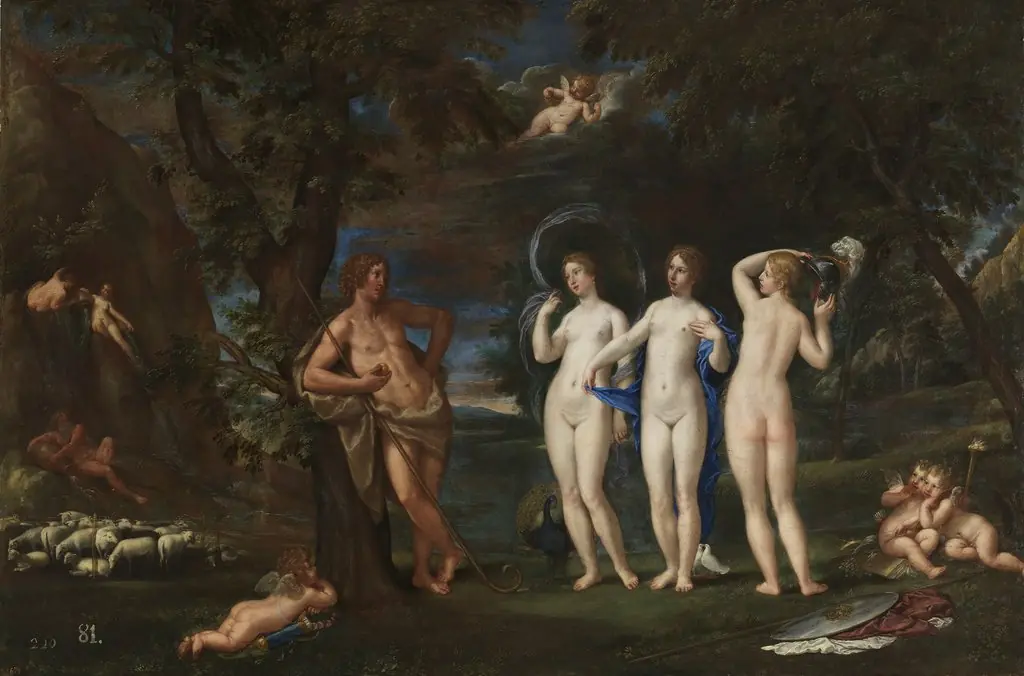
The toilet of Venus is an oil painting by the Early Baroque Italian artist Francesco Albani. It dates from 1635 and is held in the collection of the Museo del Prado.
About this work
Overview
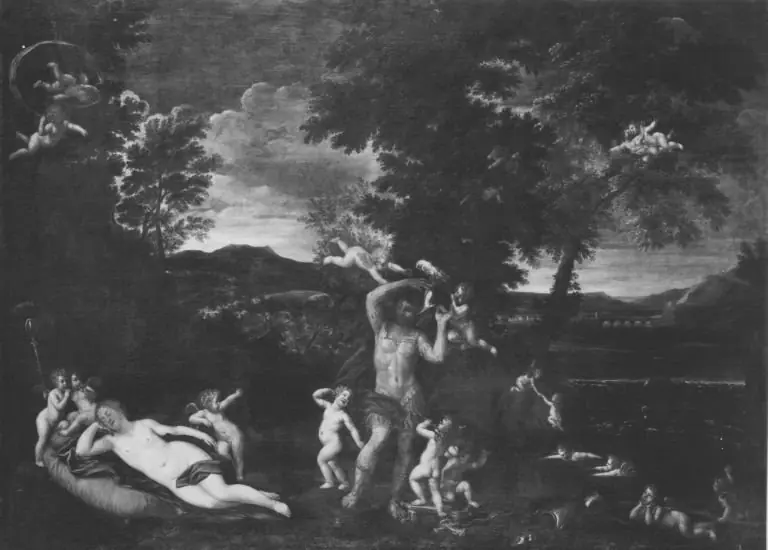
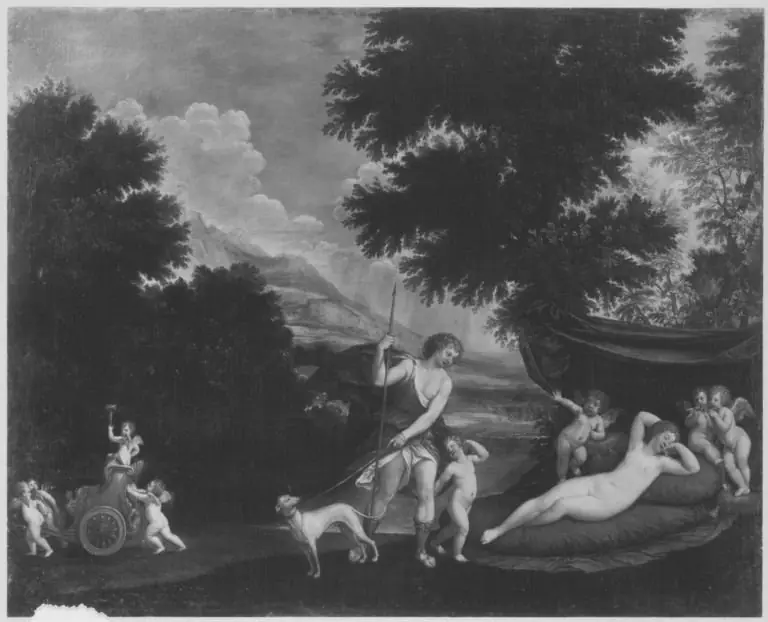
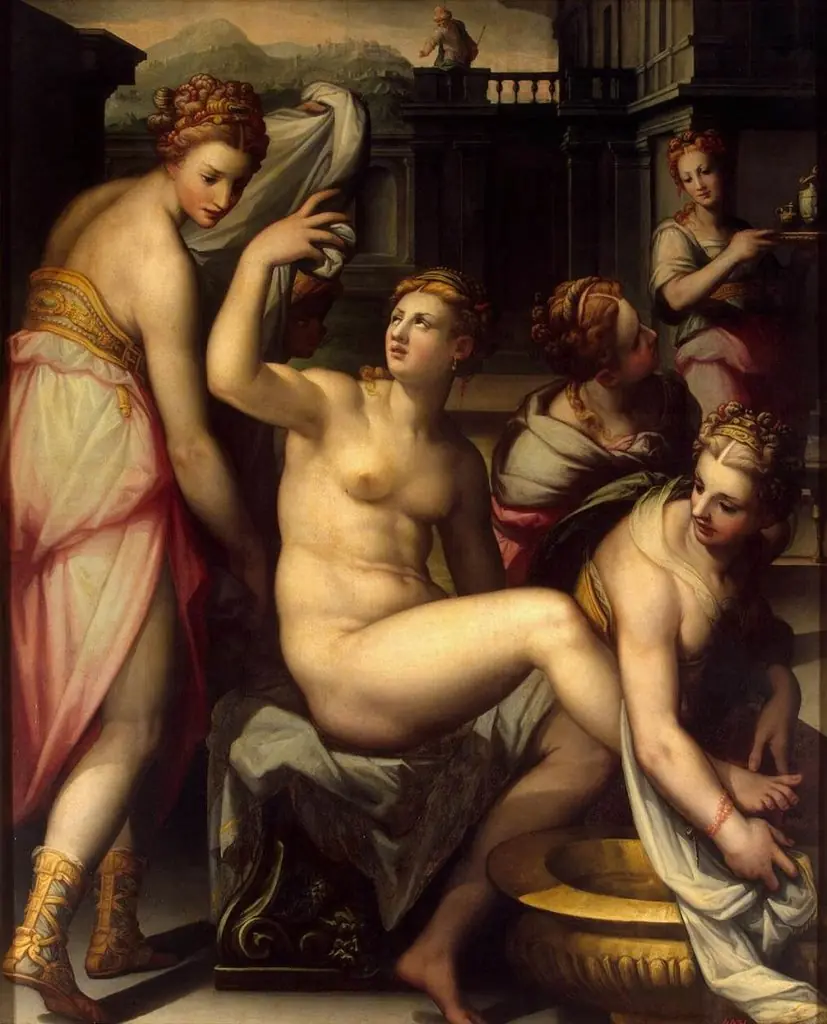
Francesco Albani's The Toilet of Venus, executed in 1635, depicts the Roman goddess of love attended by her nymphs and cupids during her ablutions.
Francesco Albani's The Toilet of Venus, executed in 1635, depicts the Roman goddess of love attended by her nymphs and cupids during her ablutions. The composition centers on Venus seated on a red cushion, holding a mirror that reflects her image, while surrounding figures engage in acts of grooming and preparation. Albani arranges the figures in a dynamic yet harmonious grouping, contrasting the flowing drapery of the attendants with the exposed flesh of the goddess and the smaller, winged putti. The setting includes a fountain with a statue and a table laden with fruit and a vase, elements that underscore the themes of fertility and natural abundance typical of the artist's mythological scenes. Painted during the height of the Bolognese School's influence, the work exemplifies Albani's signature style, characterized by a soft, luminous palette and a graceful, idealized treatment of the human form. This piece reflects the artist's mature period, where he frequently returned to pastoral and mythological subjects, blending classical antiquity with a sensuous, almost ethereal atmosphere that distinguishes his contribution to early Baroque painting.
Subject & Meaning
The painting portrays Venus seated on a red cushion, holding a small mirror as she attends to her 'toilette.' She is surrounded by other women, some draped in flowing robes and others nearly nude, along with small winged figures. A nearby fountain with a statue, a table laden with fruit, and a distant landscape further enrich this idyllic, mythological depiction of beauty and preparation.
Technique & Style
Albani employs oil paint to create a vivid and dynamic scene. The artist utilizes sharp contrasts between light and shadow, illuminating the figures with bright highlights while casting deep areas of shade. This dramatic interplay of light enhances the three-dimensionality of the forms and imbues the mythological narrative with a sense of liveliness and depth.
History & Provenance
Completed by Francesco Albani in 1635, *The Toilet of Venus* exemplifies the artist's work during the Baroque period. This oil painting has since become part of the esteemed collection at the Museo del Prado, where it remains accessible for public viewing. Its creation date places it within a significant era for mythological painting in Italy.
Artist & collection

Artist
Francesco Albani or Albano was an Italian Baroque painter of Albanian descent who was active in Bologna, Rome, Viterbo (1609–1610), Mantua (1621–1622) and Florence (1633).