Artwork
Last Supper
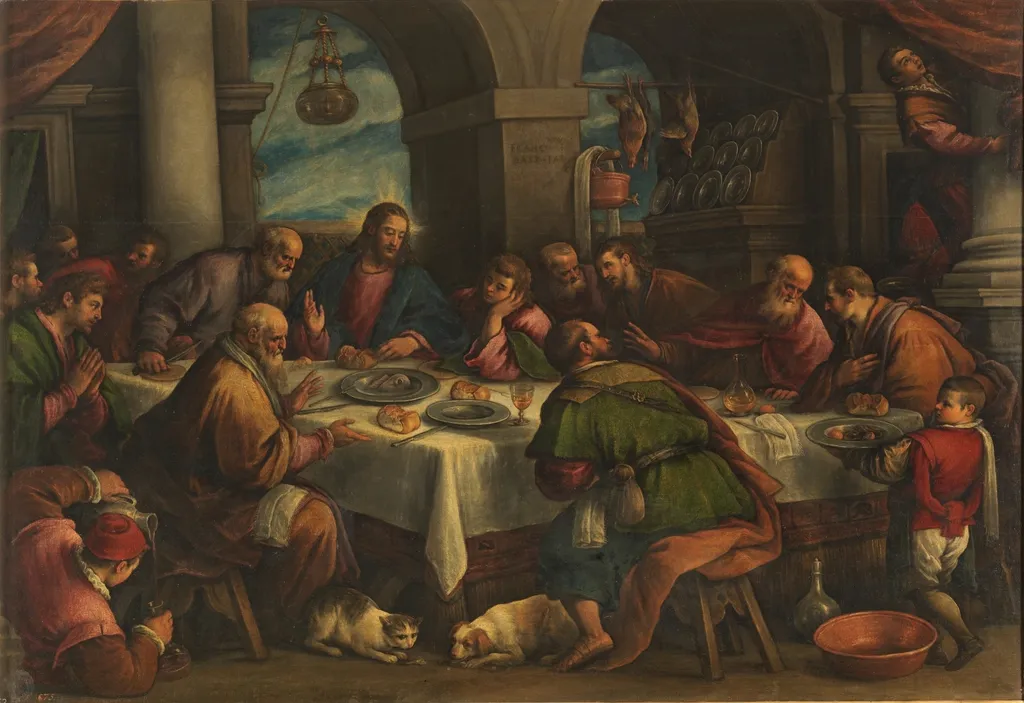
Last Supper is an oil painting by the Early Baroque Italian artist Francesco Bassano the Younger. It is held in the collection of the Museo del Prado.
About this work
Overview
The composition is populated by figures in contemporary robes, each engaged in a quiet exchange that underscores the narrative moment.
Francesco Bassano the Younger completed his oil on canvas rendition of the Last Supper in 1594. Executed during the transition from late Renaissance to early Baroque, the work presents a solemn gathering around a long table within an architecturally defined interior. The composition is populated by figures in contemporary robes, each engaged in a quiet exchange that underscores the narrative moment.
Subject & Meaning
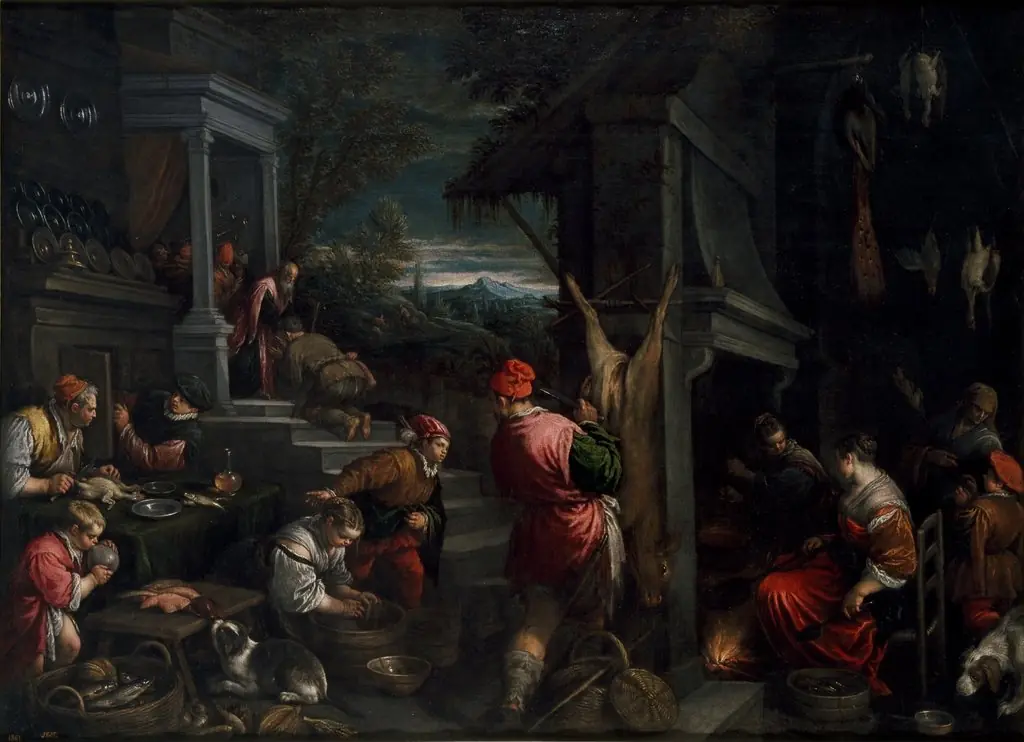
The painting portrays the biblical episode of Christ’s final meal with his disciples, emphasizing the ritual elements of bread, wine, and a knife. These objects function as visual symbols of the Eucharistic sacrifice, while the varied gestures of the participants—leaning forward, raising hands, or gazing intently—convey a mixture of anticipation, contemplation, and emotional tension.
Technique & Style
Bassano employs a rich palette of saturated hues and meticulous brushwork to render textures ranging from the sheen of polished metal to the softness of fabric. Light filters through the arches, creating chiaroscuro contrasts that model the figures and enhance spatial depth. The composition balances dynamic movement with a structured arrangement of architectural elements, reflecting early Baroque sensibilities.
History & Provenance
Born into the prominent Bassano workshop, Francesco was the eldest son of Jacopo Bassano and trained alongside his brothers before establishing an independent studio in Venice. The Last Supper entered the Spanish royal collection in the 18th century and has been part of the Museo del Prado’s holdings in Madrid since the museum’s early acquisitions, where it remains on public display.
Context
Created at a time when Venetian artists were integrating dramatic narrative with luminous color, the work reflects the Counter‑Reformation’s emphasis on clear, emotionally resonant religious imagery. Bassano’s choice to depict the scene in a grand interior rather than a humble setting aligns with contemporary trends that sought to elevate sacred moments to a universal, almost theatrical, scale.
Own this work as a print
Artist & collection
Artist
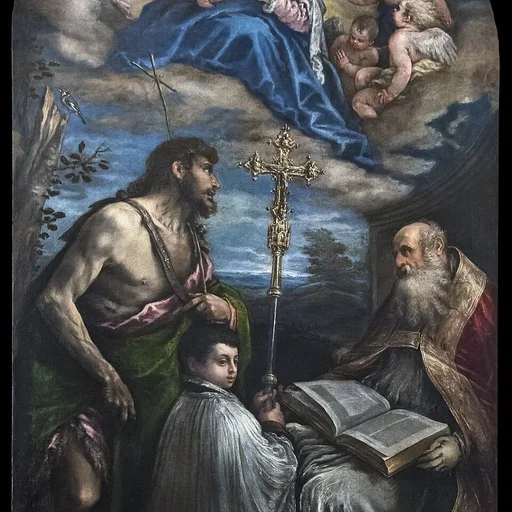
Francesco Bassano the Younger (Italian: Francesco Bassano il Giovane; 26 January 1549 – 4 July 1592), also called Francesco Giambattista da Ponte or Francesco da Ponte the Younger, was an Italian painter of the Renaissance period.