Artwork
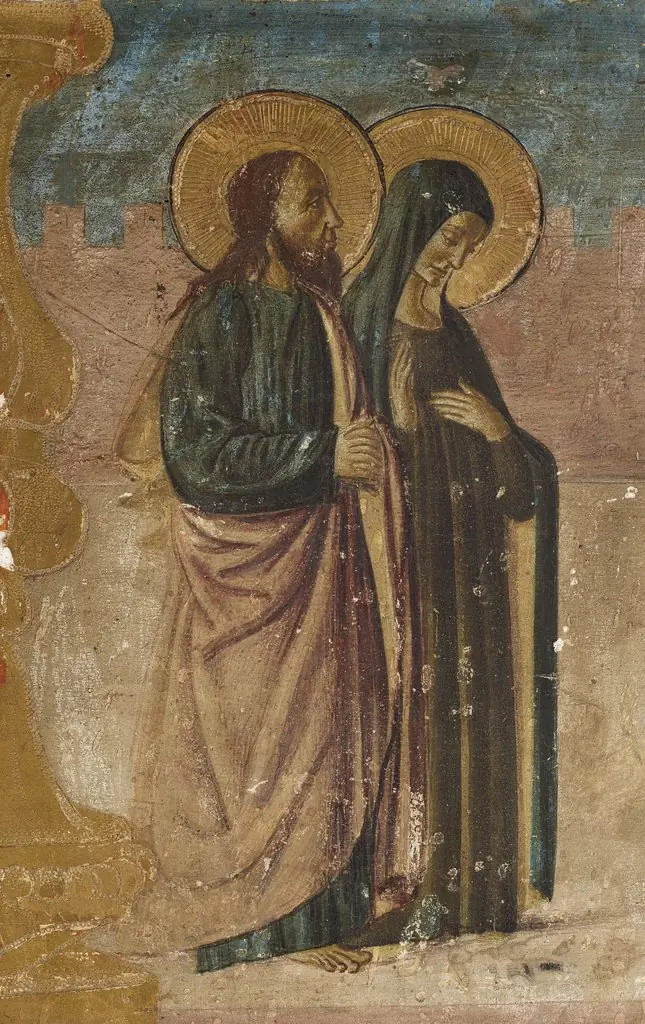
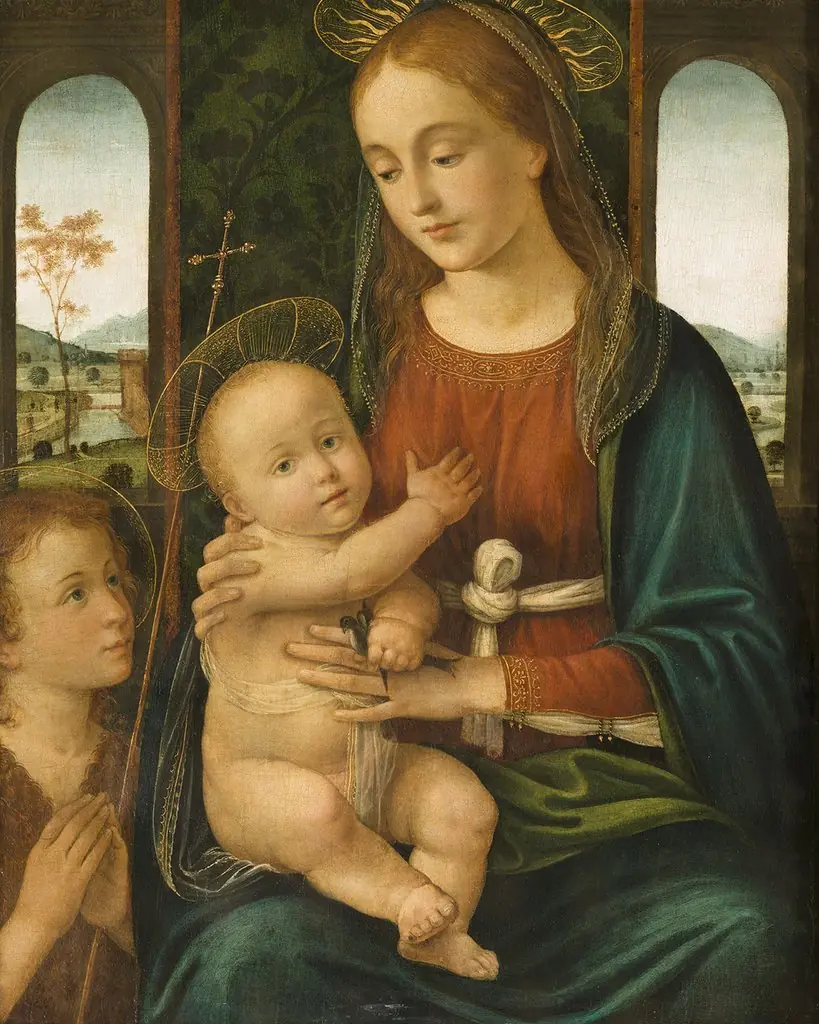
Mary and John Adoring the Child
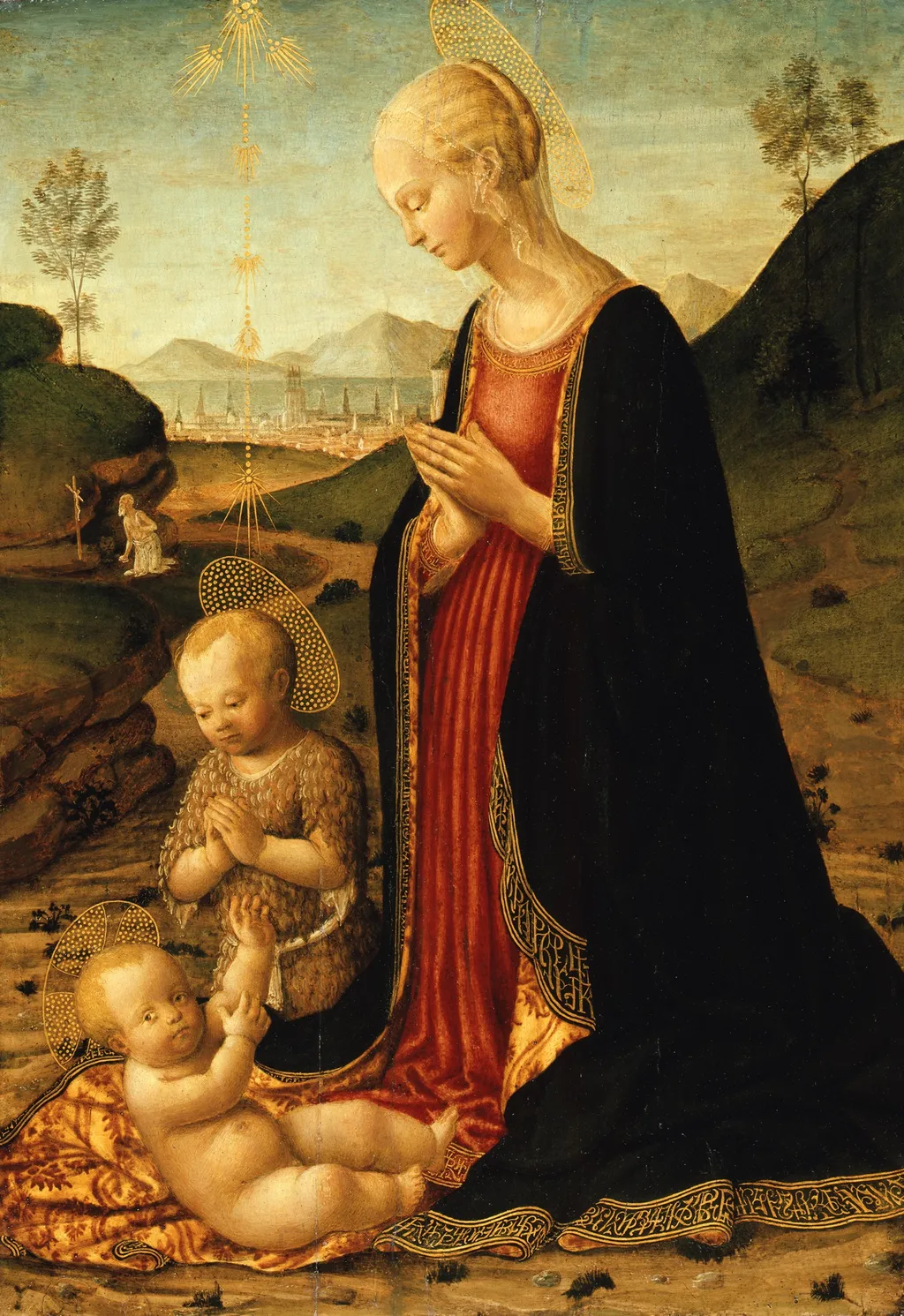
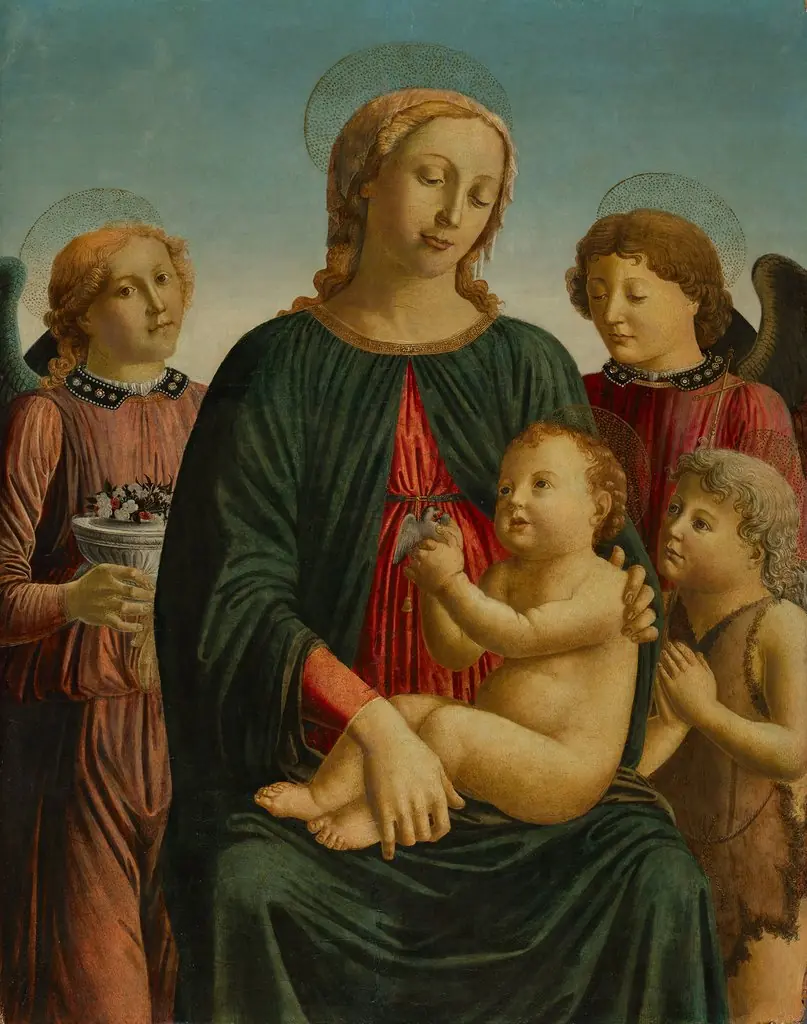
Mary and John Adoring the Child is a paint painting by the Early Renaissance artist Francesco Botticini. It dates from 1496 and is held in the collection of the Gemäldegalerie Berlin.
About this work
Overview
Executed in tempera on wood, it reflects the devotional priorities of late 15th-century Florence.
Painted in 1496 by Francesco Botticini, this small devotional panel portrays the Virgin Mary, the Christ Child, and Saint John the Baptist in a quiet moment of reverence. Executed in tempera on wood, it reflects the devotional priorities of late 15th-century Florence. The work is part of a broader tradition of intimate religious imagery intended for private contemplation, and it remains in the collection of the Gemäldegalerie in Berlin.
Subject & Meaning
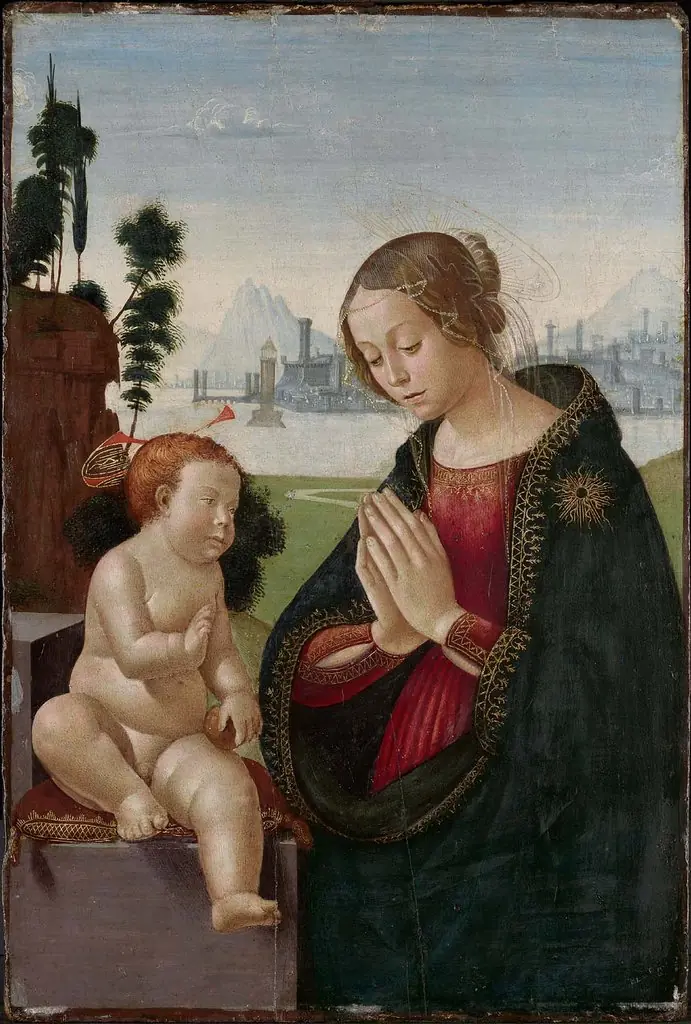
The Virgin Mary stands centrally, her gaze lowered toward the two children seated before her. The Christ Child, naked and barefoot, is accompanied by Saint John the Baptist, dressed in a simple tunic. Their posture and mutual attention suggest a spiritual bond, emphasizing Mary’s role as mother and intercessor. The scene avoids narrative drama, instead inviting quiet meditation on divine presence and human devotion.
Technique & Style
Botticini employed tempera paint with fine brushwork to render textures of fabric, skin, and landscape with precision. Gold leaf outlines the figures’ halos and the trim of Mary’s cloak, adding luminosity without overt grandeur. The landscape background, with rolling hills and a distant city, is rendered in atmospheric perspective, grounding the sacred figures in a tangible, natural world consistent with Early Renaissance ideals.
History & Provenance
Commissioned during Botticini’s active years in Florence, the panel likely originated in a private chapel or domestic setting. It entered the Gemäldegalerie Berlin’s collection in the 19th century, following the broader dispersal of Italian religious art after the Napoleonic era. Its survival in relatively intact condition is uncommon for works of this scale and era.
Context
In late Quattrocento Florence, small-scale religious panels like this one were popular among wealthy patrons seeking personal spiritual focus. Botticini, influenced by Ghirlandaio and the workshop traditions of his time, maintained a restrained, elegant style that avoided theatricality. This work aligns with contemporaneous devotional practices that emphasized humility, intimacy, and the humanity of sacred figures.
Legacy
Though not widely exhibited, the painting exemplifies the quiet devotional aesthetic of Florentine Renaissance art beyond major altarpieces. Its preservation offers insight into how religious imagery functioned in private life, and its detailed landscape reflects the period’s growing interest in natural observation. Botticini’s work, while less celebrated than his peers, contributes to the diversity of 15th-century Italian painting.
Own this work as a print
Artist & collection
Artist
Francesco Botticini (real name Francesco di Giovanni, 1446 – 16 January 1498) was an Italian painter of the Early Renaissance.