Artwork
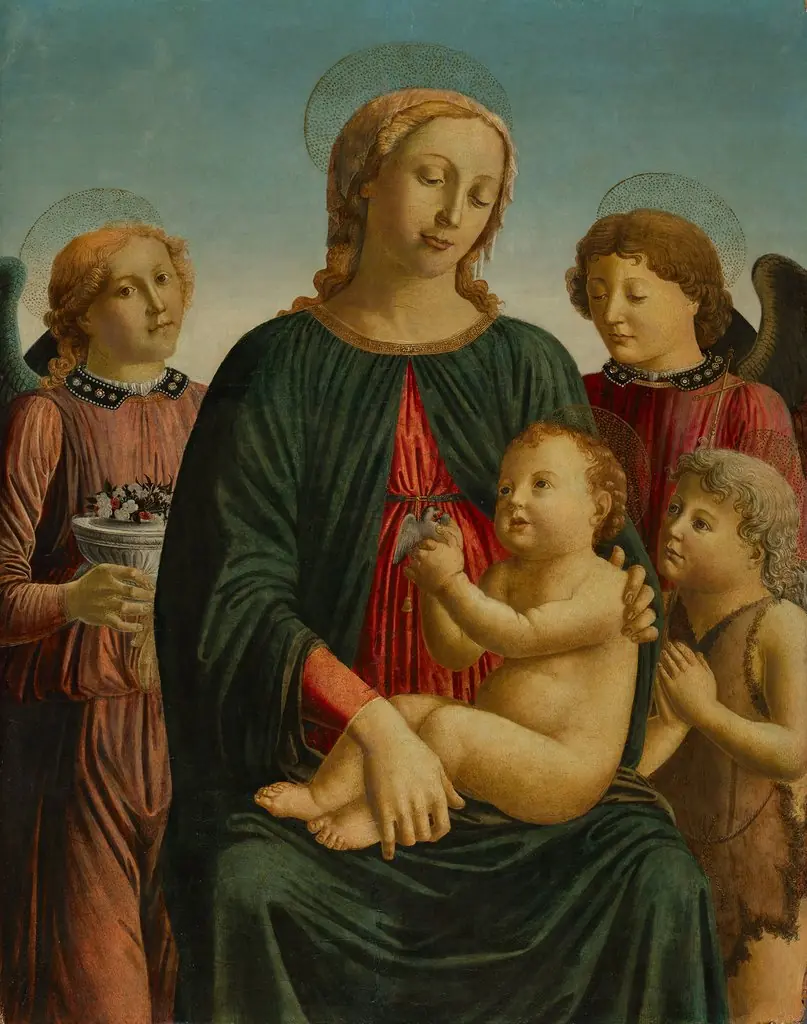
Madonna and Child Enthroned
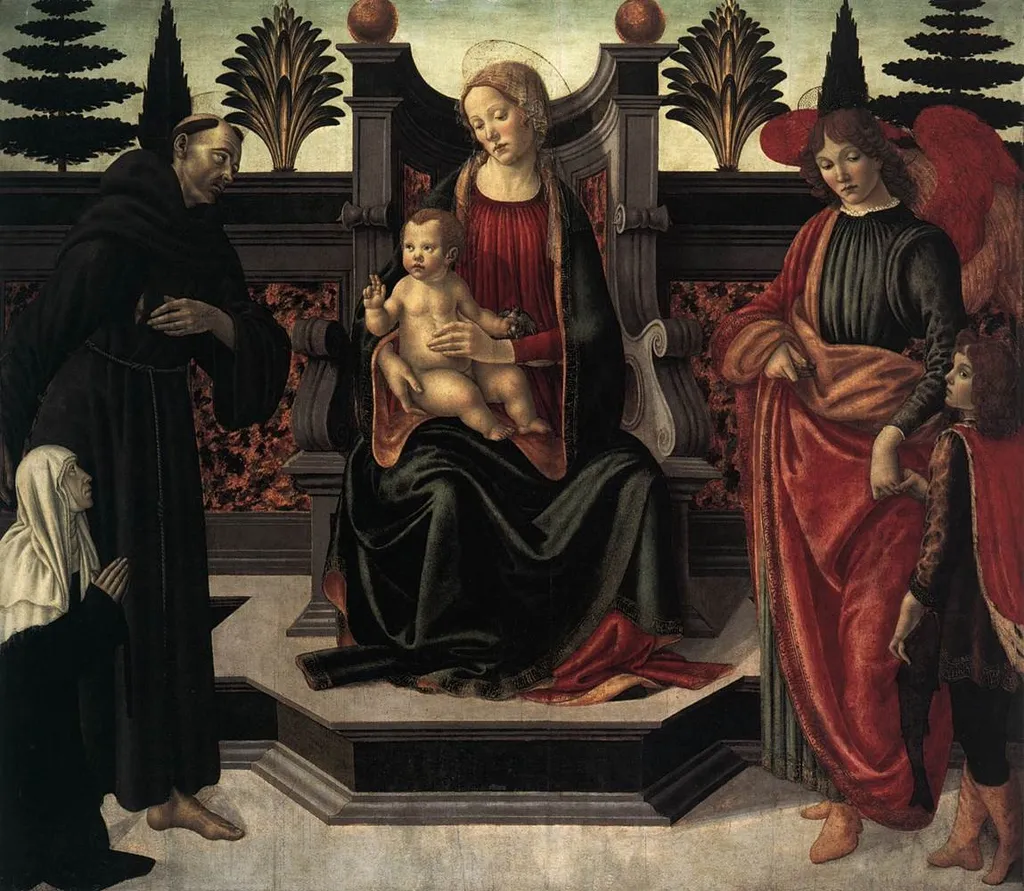
Madonna and Child Enthroned is a tempera painting by the Early Renaissance artist Francesco Botticini. It dates from 1498 and is held in the collection of the National Galleries Scotland.
About this work
Overview
Madonna and Child Enthroned is a tempera painting created in 1498 by Francesco Botticini, an Early Renaissance artist based in Florence. The work features a seated Madonna holding the Christ Child on her lap, accompanied by four figures standing in attendance.
Subject & Meaning
The painting depicts a traditional religious scene of the Madonna and Child, with the addition of four attendant figures: two robed individuals, an angel (identified by wings and a red cloak), and a small child. The composition conveys serenity, with the Madonna's calm expression and the Christ Child's gesture of waving one hand while holding an object (likely symbolic).
Technique & Style
Executed in tempera, the painting showcases the characteristic depth and luminosity of this medium. The color palette is predominantly composed of dark reds, blues, and greens, accented with gold detailing on the throne, reflecting early Renaissance stylistic developments in 15th-century Italian art.
History & Provenance
Completed in the year of Botticini's death (1498), the painting is now part of the collection at the Scottish National Gallery.
Context
The work embodies the religious and artistic trends of the Early Renaissance in Florence, with its traditional composition and stylistic elements aligning with the period's artistic advancements.
Legacy
As a representative piece of early Renaissance art, *Madonna and Child Enthroned* contributes to the understanding of 15th-century Italian artistic evolution, though its specific influence or renown within Botticini's oeuvre and the broader art historical canon is not distinctly highlighted by available information.
Artist & collection
Artist
Francesco Botticini (real name Francesco di Giovanni, 1446 – 16 January 1498) was an Italian painter of the Early Renaissance.

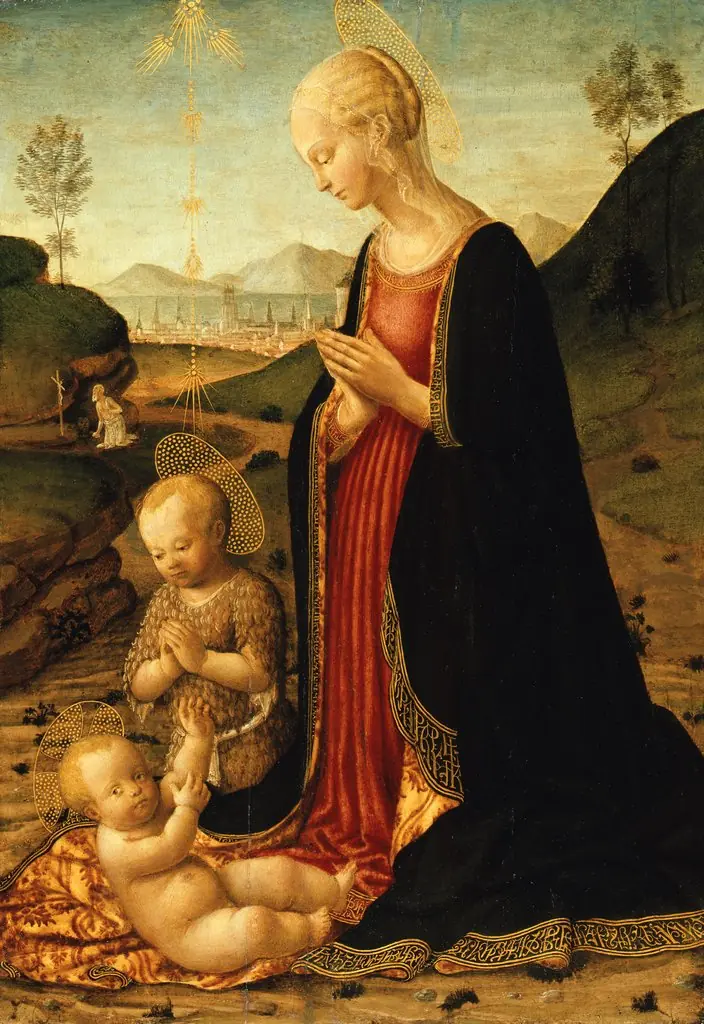
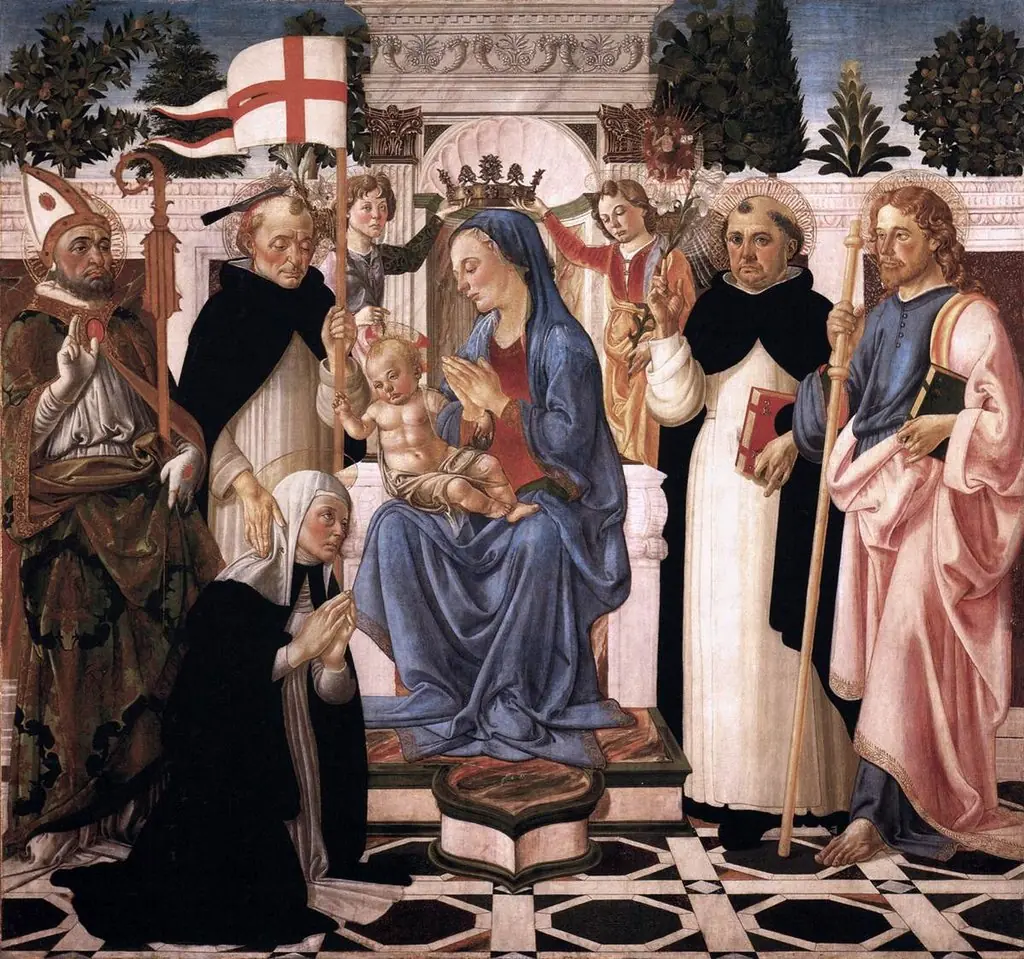 Madonna and Child with Five Saints and Two Angels
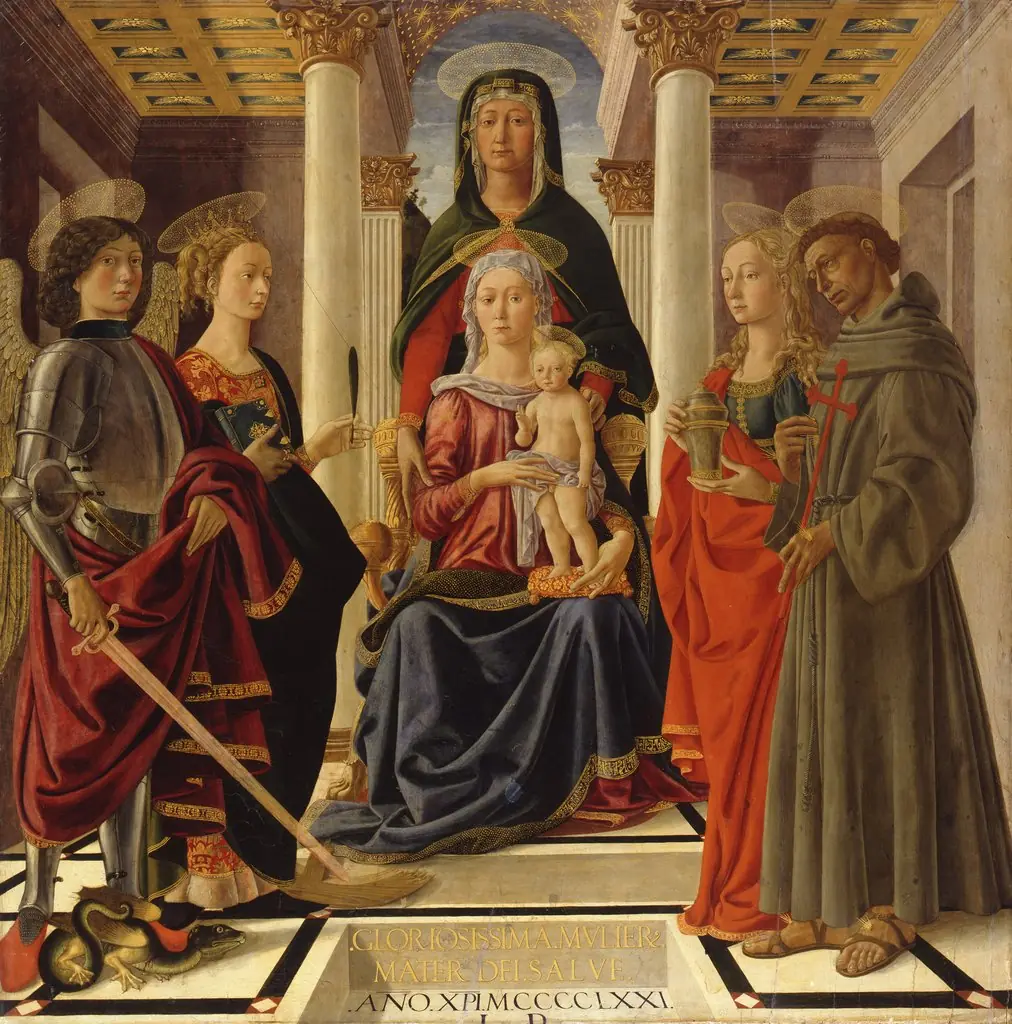 St. Anne Selbdritt with Archangel Michael and Saints
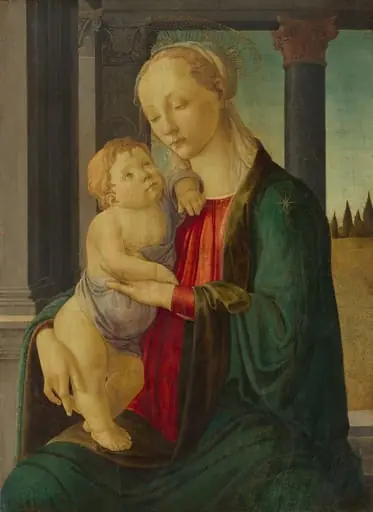 Madonna and Child
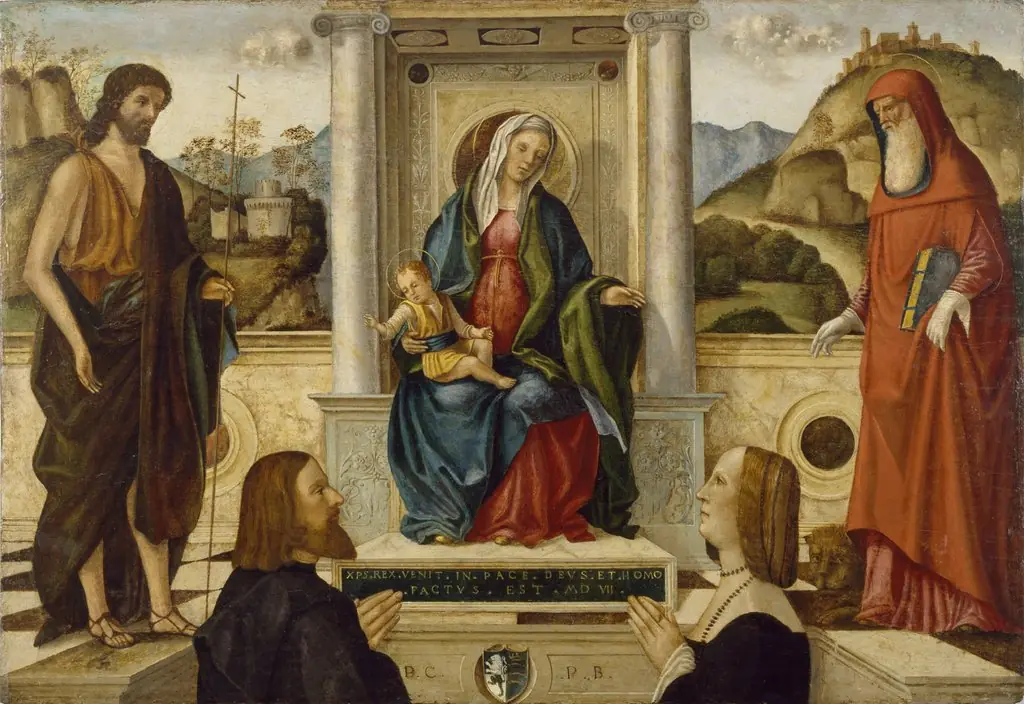 Madonna and Child Enthroned with Saints and Donor
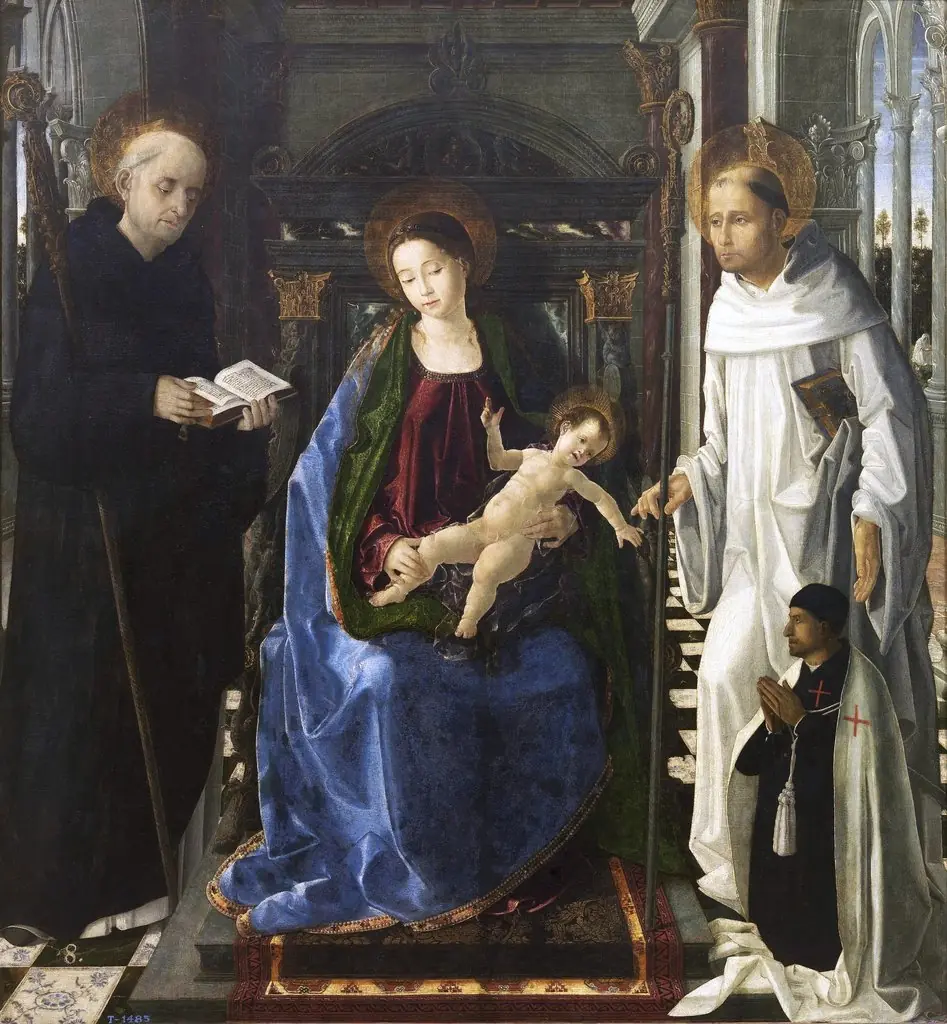 The Virgin of the Knight of Montesa
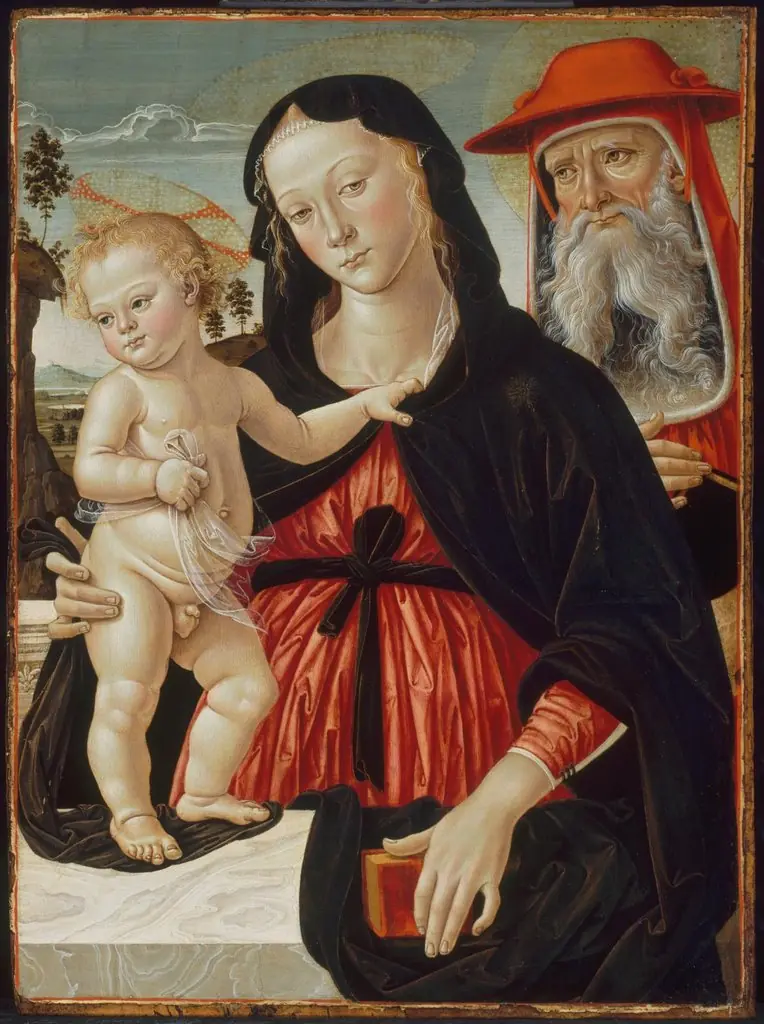 Virgin and Child with Saint Jerome
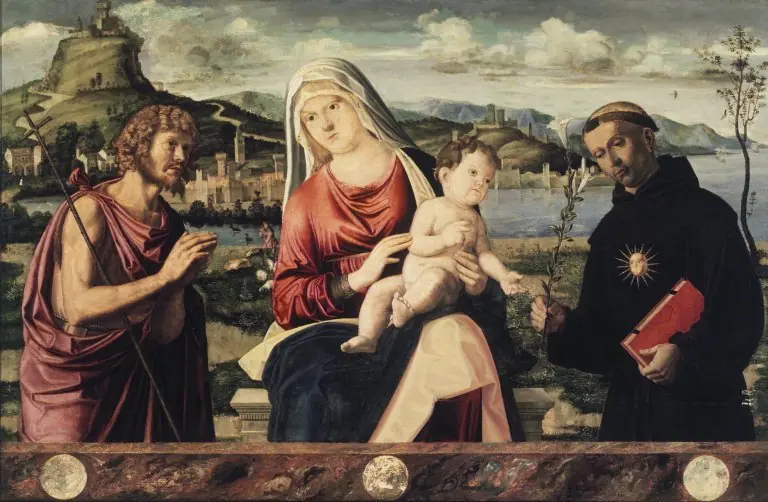 Madonna and Child with Saints John the Baptist and Nicholas of Tolentino
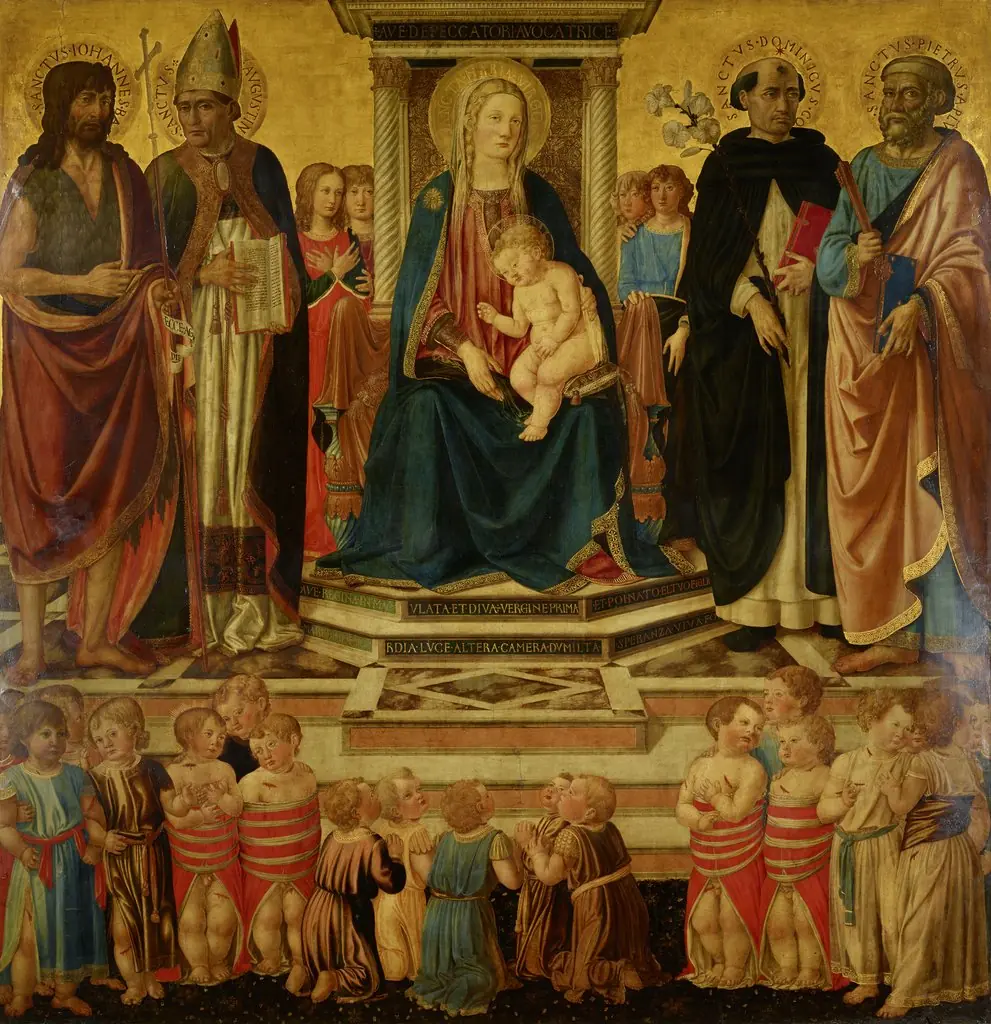 The Virgin and Blessing Child Enthroned with Sts. John, Augustine, Dominic, Peter and Victims of the bethemitic Child Murder
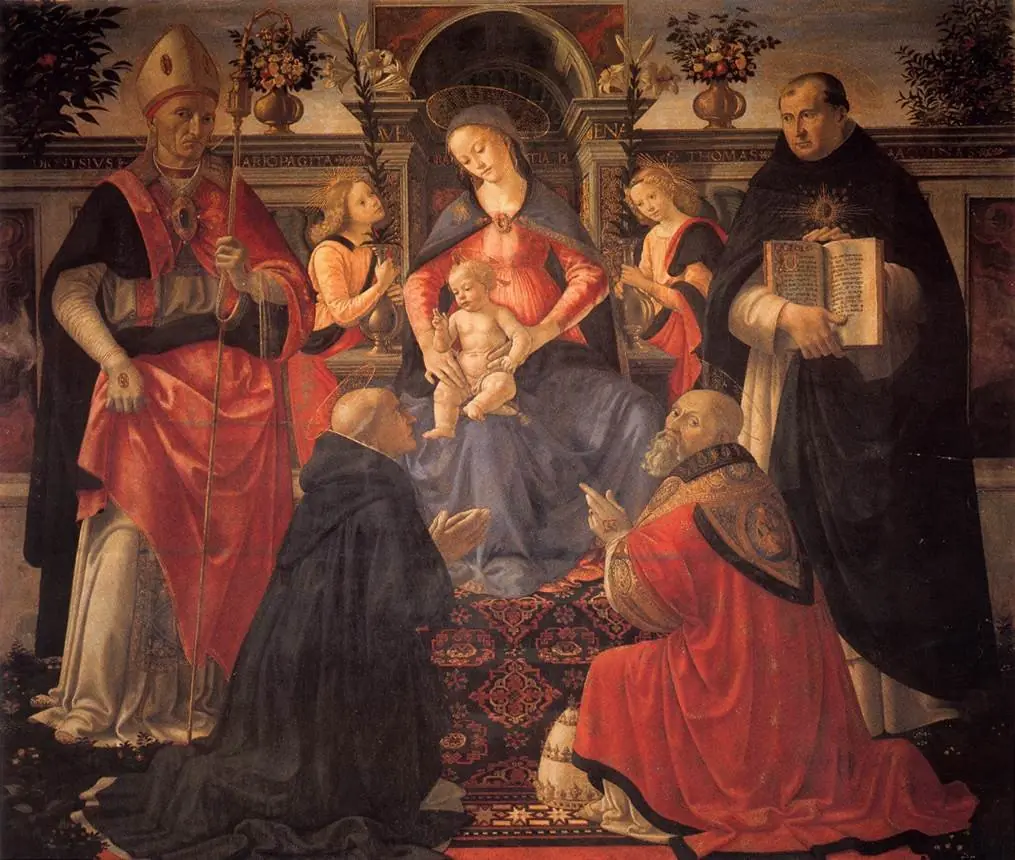 Madonna and Child Enthroned between Angels and Saints
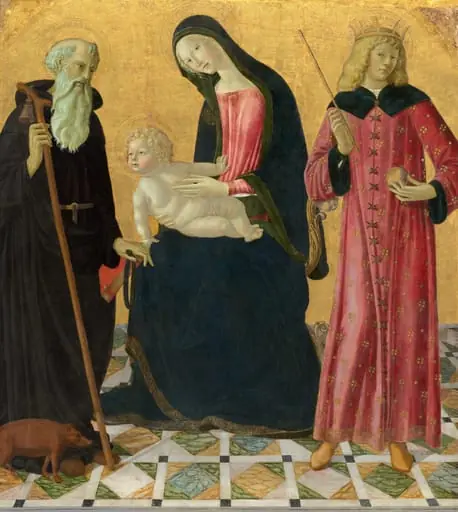 Madonna and Child with Saint Anthony Abbot and Saint Sigismund
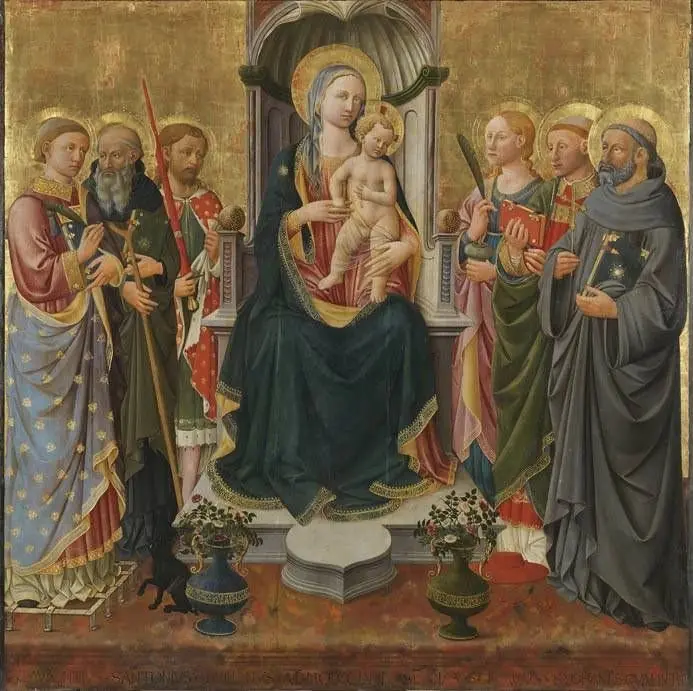 Madonna and Child and 6 Saints