Artwork
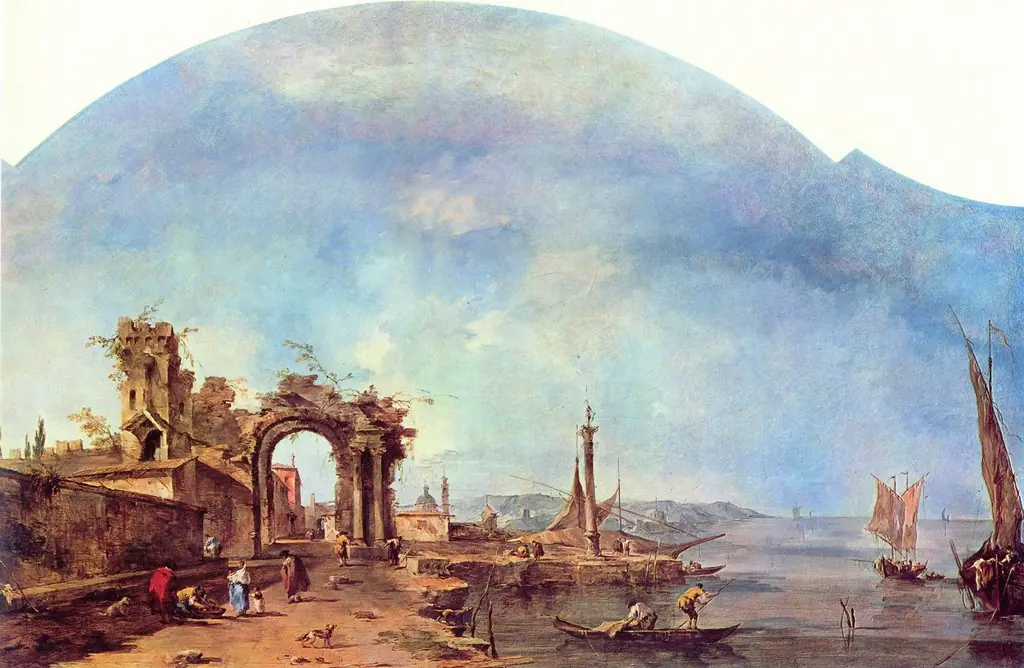
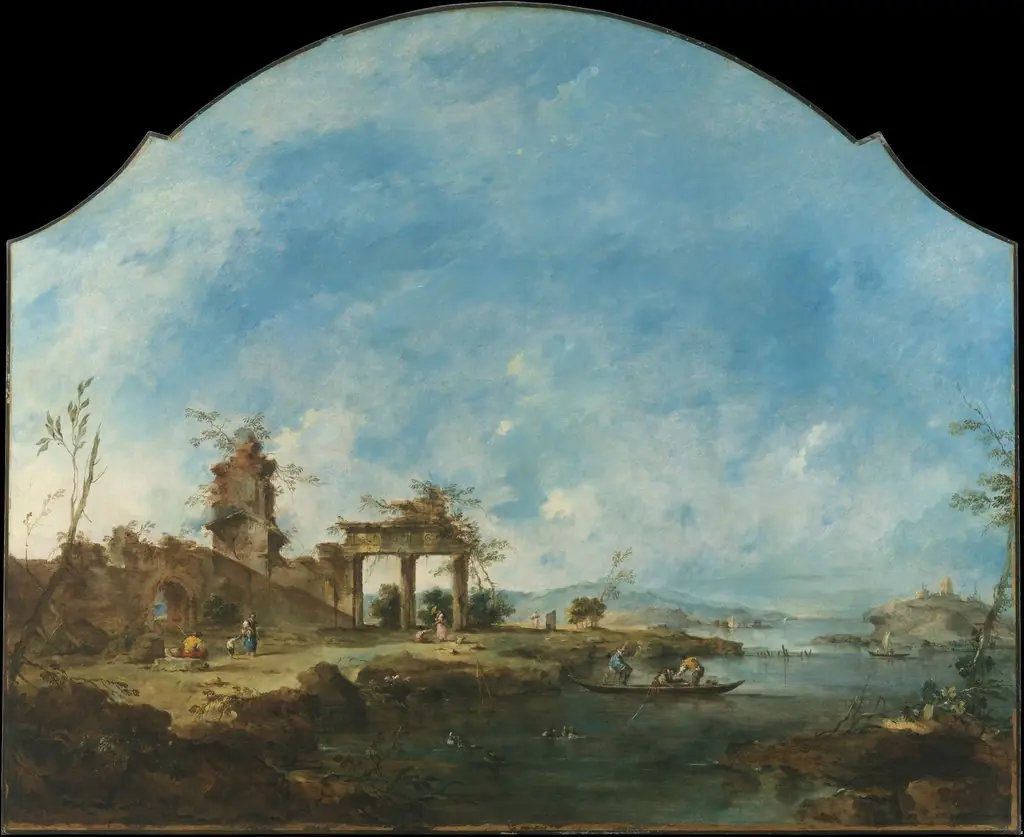
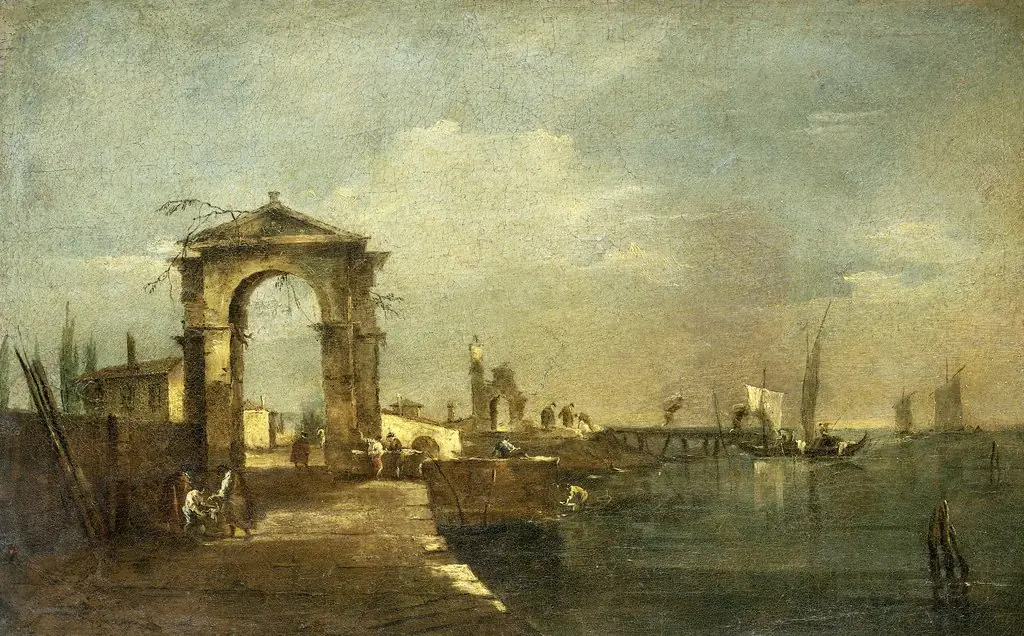
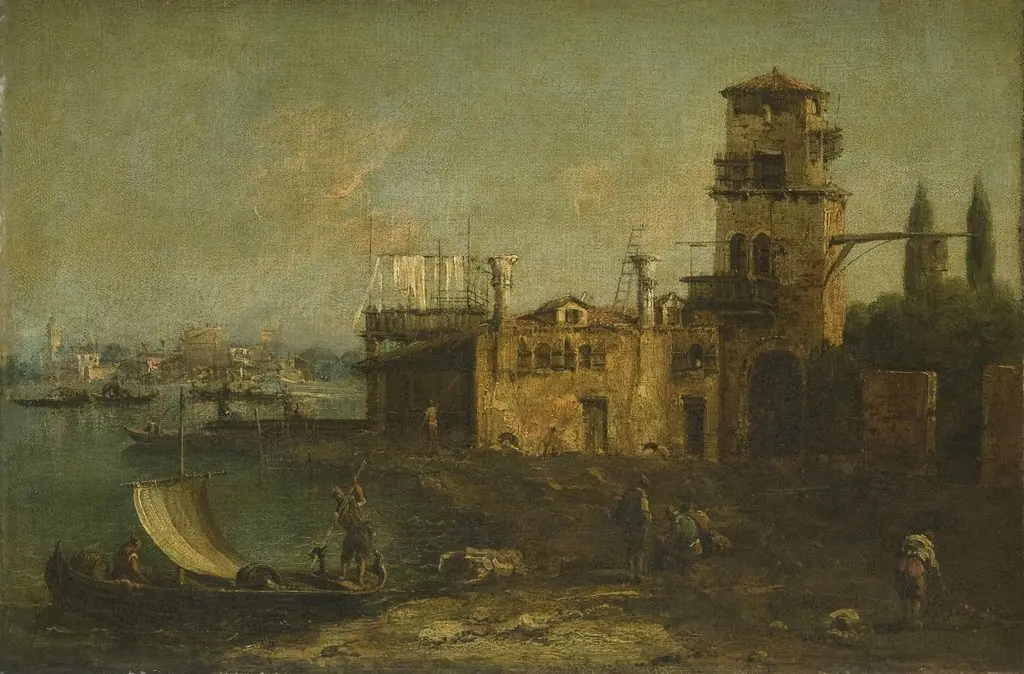
Capriccio with an Obelisk on a Lagoon
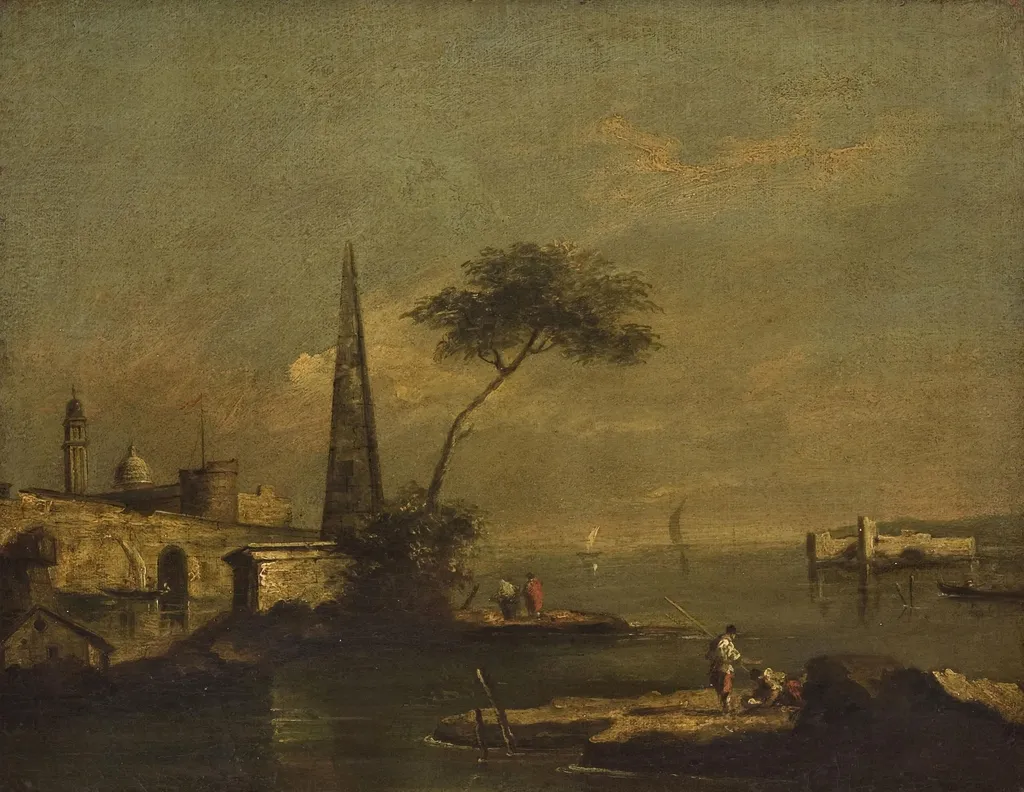
Capriccio with an Obelisk on a Lagoon is an oil painting by the Rococo painting artist Francesco Guardi. It dates from 1762 and is held in the collection of the Philadelphia Museum of Art.
About this work
Overview
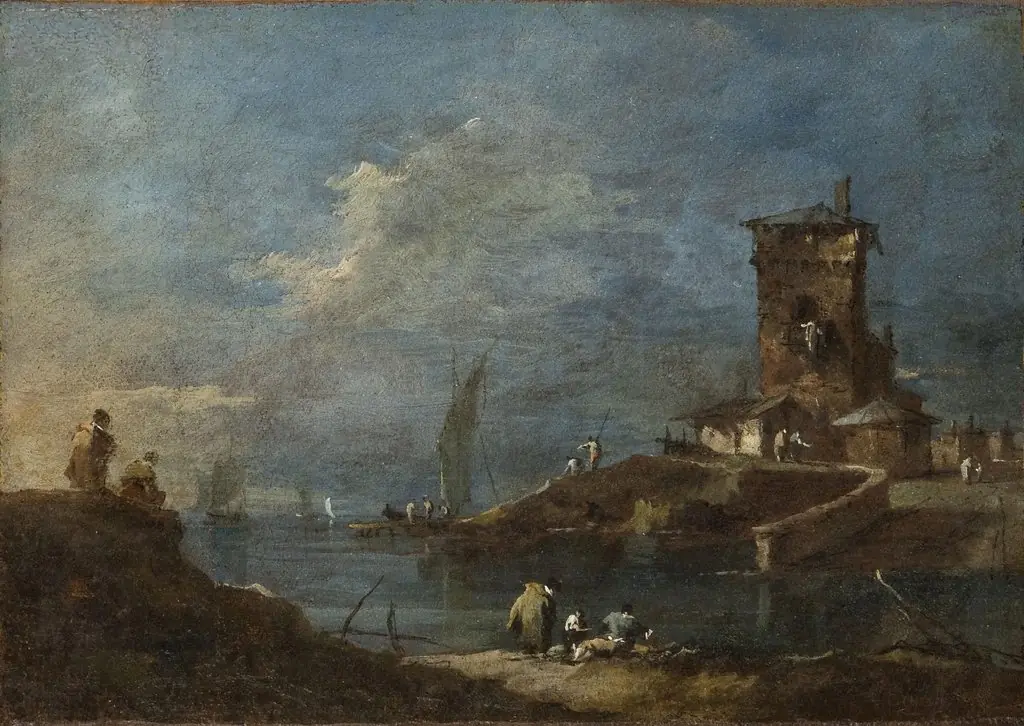
Capriccio with an Obelisk on a Lagoon is an 18th-century oil painting by Venetian artist Francesco Guardi, created circa 1762. It exemplifies the Rococo style through its imaginative depiction of architecture and maritime elements.
Subject & Meaning
The painting centers on a prominent obelisk situated on a serene lagoon, accompanied by sparse figures, a distant domed building with a tall tower, and a few individuals gathered at the water’s edge. The composition conveys a sense of tranquility and contemplation.
Technique & Style
Guardi employs characteristic Rococo sensibilities, utilizing soft, hazy light and nuanced shadow to create depth and atmosphere. The dreamy, fanciful quality of the scene is typical of his approach to capriccios.
History & Provenance
Following his brother’s death in 1760, Guardi shifted focus from religious works to vedute and imaginative capriccios like this one. The painting is now part of the Philadelphia Museum of Art’s collection.
Context
As a member of the Venetian School, Guardi’s work reflects the city’s aesthetic traditions while embracing the playful, inventive spirit of Rococo. This piece combines real and imagined elements, common in 18th-century Venetian capriccios.
Legacy
While specific impact of *Capriccio with an Obelisk on a Lagoon* on later art is not distinctly documented, it contributes to the broader appreciation of Guardi’s contribution to the Rococo movement and the evolution of vedute and capriccio genres.
Own this work as a print
Artist & collection

Artist
Francesco Lazzaro Guardi (Italian pronunciation: ; 5 October 1712 – 1 January 1793) was an Italian painter, nobleman, and a member of the Venetian School.