Artwork
Seaport with a Castle
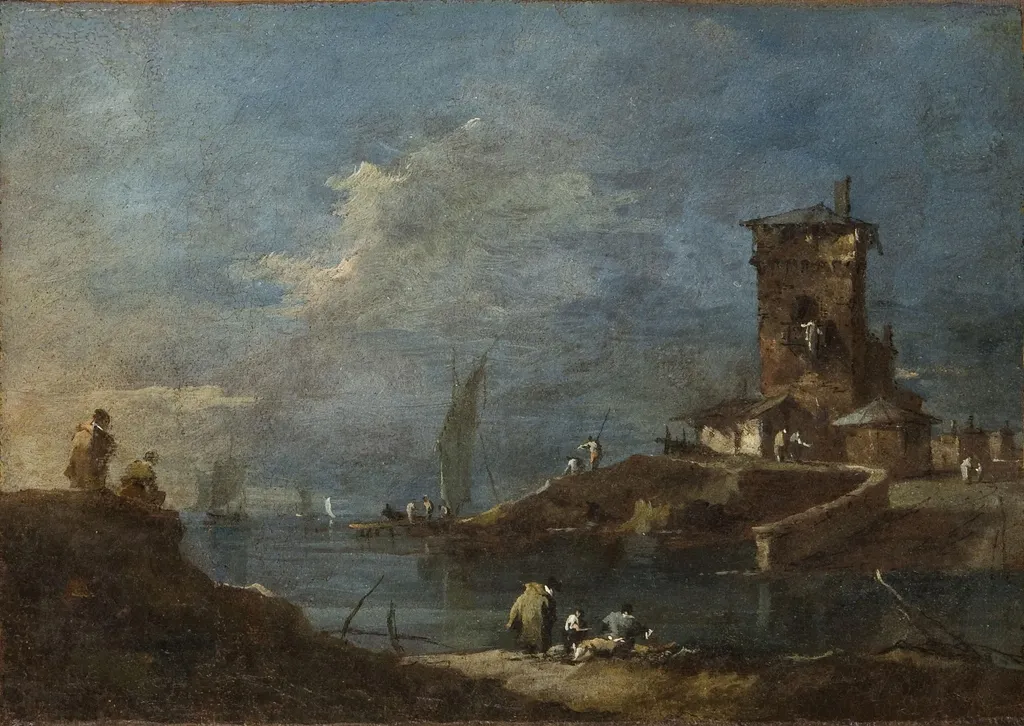
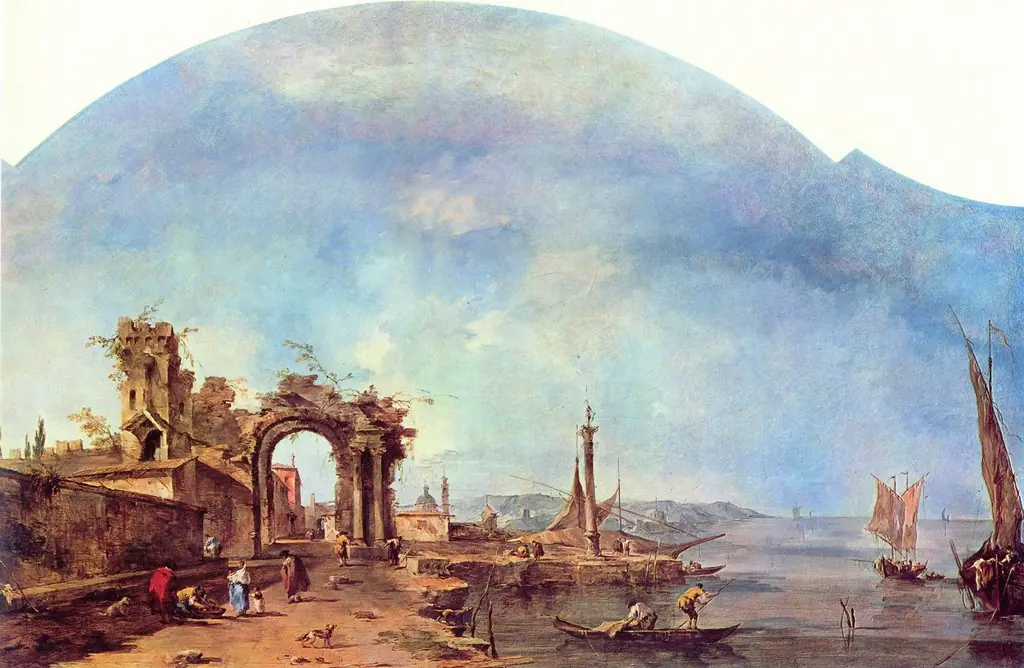
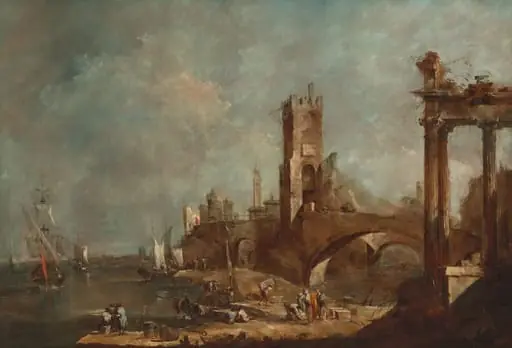
Seaport with a Castle is an oil painting by the Rococo painting artist Francesco Guardi. It dates from 1762 and is held in the collection of the Philadelphia Museum of Art. Created circa 1762, this oil painting presents a tranquil harbor framed by a prominent fortified castle.
About this work
Overview
The work exemplifies Guardi’s mature approach to urban landscape, emphasizing atmosphere over strict topographical accuracy.
Created circa 1762, this oil painting presents a tranquil harbor framed by a prominent fortified castle. The composition balances the bustling activity of boats and laborers in the foreground with the imposing architecture that rises behind them, all under a clear sky dotted with delicate clouds. The work exemplifies Guardi’s mature approach to urban landscape, emphasizing atmosphere over strict topographical accuracy.
Subject & Meaning
The scene captures a lively Mediterranean port where fishermen, cargo handlers, and sailors interact with the water and vessels, suggesting the economic vitality of the locale. The castle, rendered with meticulous detail, serves both as a visual anchor and a symbol of the defensive and civic authority that oversaw maritime trade in the region.
Technique & Style
Guardi employs a fluid brushwork that softens architectural lines while preserving their recognizability, a departure from the crisp precision of earlier vedute. Light is handled with subtle gradations, creating depth through atmospheric perspective; shadows and reflected glints on the water contribute to a sense of immediacy. The palette favors muted blues and warm earth tones, typical of his later Rococo-influenced oeuvre.
History & Provenance
The painting emerged after Guardi’s brother Gian Antonio died in 1760, a period when Guardi intensified his production of city views. While the work’s early ownership records are sparse, it entered public collections in the 19th century, reflecting the growing appreciation for Venetian vedute beyond their original decorative function.
Context
Situated within the Rococo movement, the artwork reflects the 18th‑century Venetian taste for elegant, decorative scenes that convey leisure and commerce. Guardi’s shift from the exacting style of Canaletto toward a more expressive rendering aligns with broader artistic trends favoring mood and sensation over strict realism, positioning the painting within a transitional moment in Venetian landscape painting.
Own this work as a print
Artist & collection

Artist
Francesco Lazzaro Guardi (Italian pronunciation: ; 5 October 1712 – 1 January 1793) was an Italian painter, nobleman, and a member of the Venetian School.

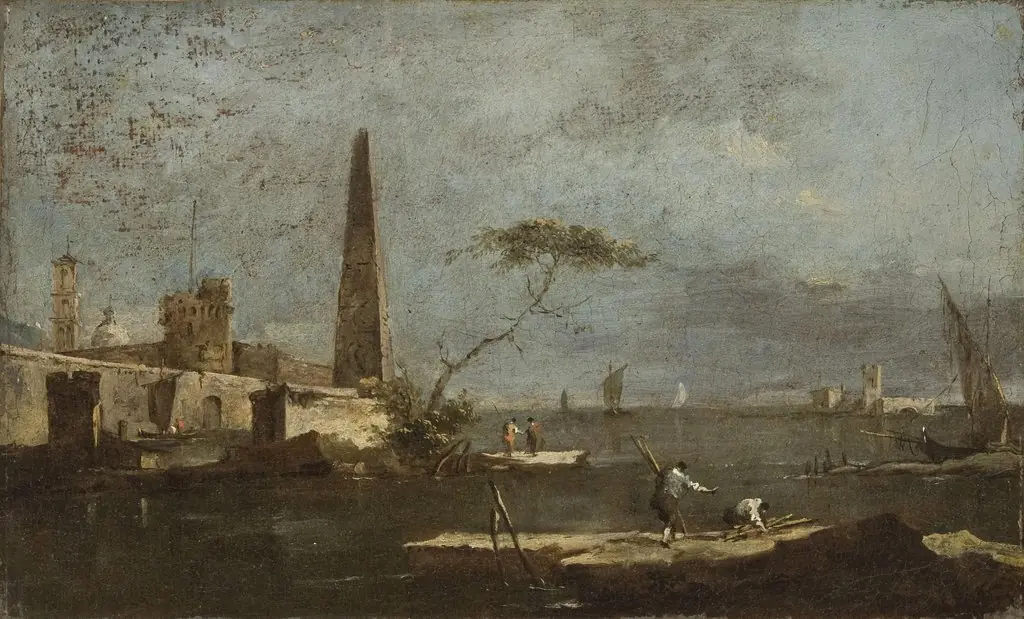 Capriccio with an Obelisk on a Lagoon
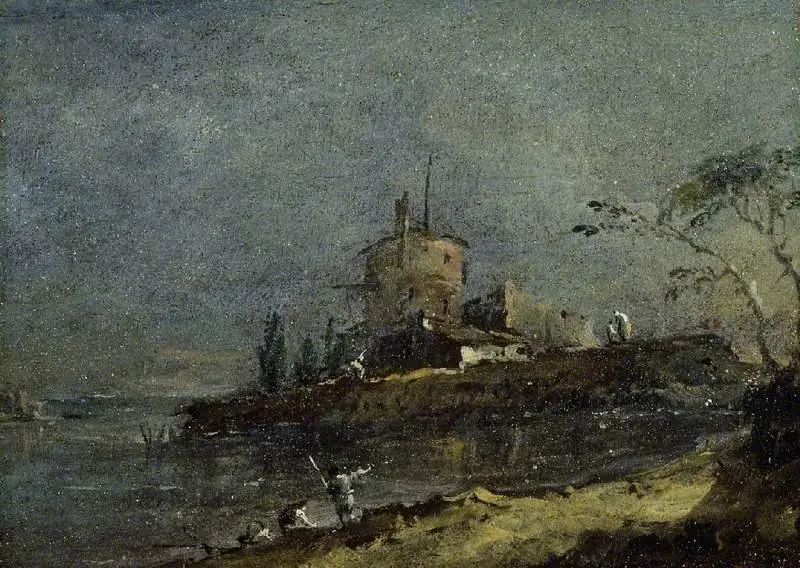 View near Venice
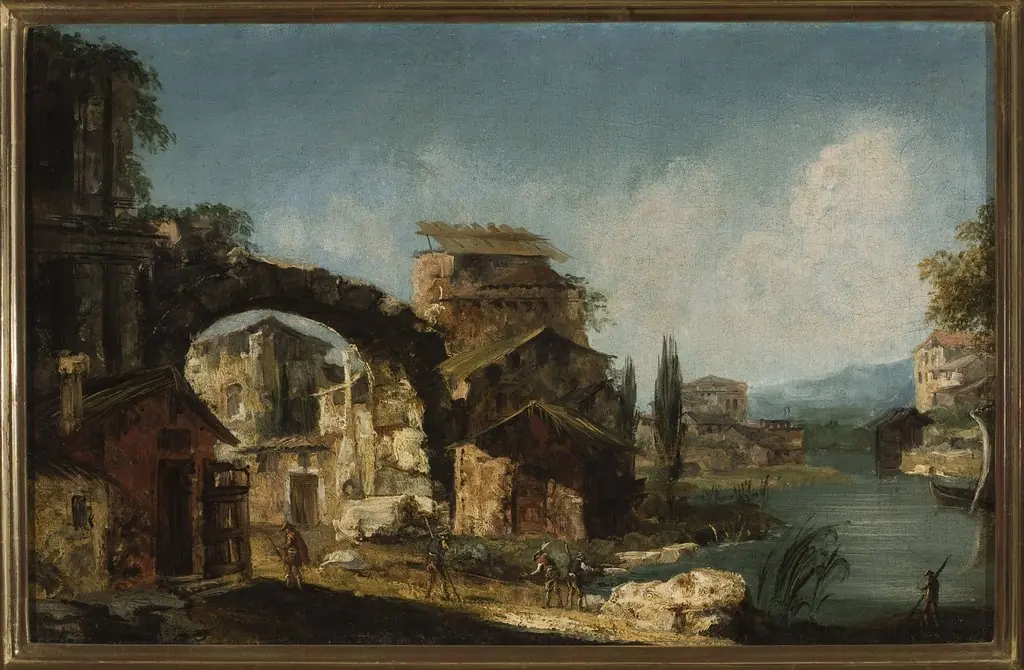 Landscape with ruins
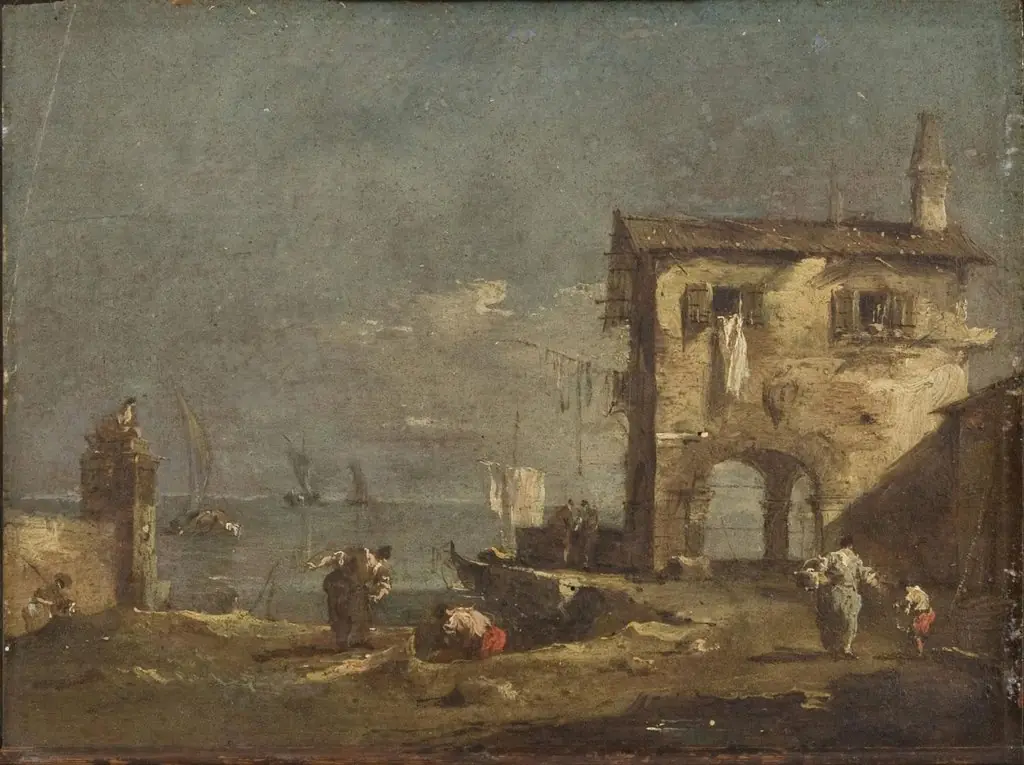 Venetian View
 Landscape with a Quay and Ships on a Lake
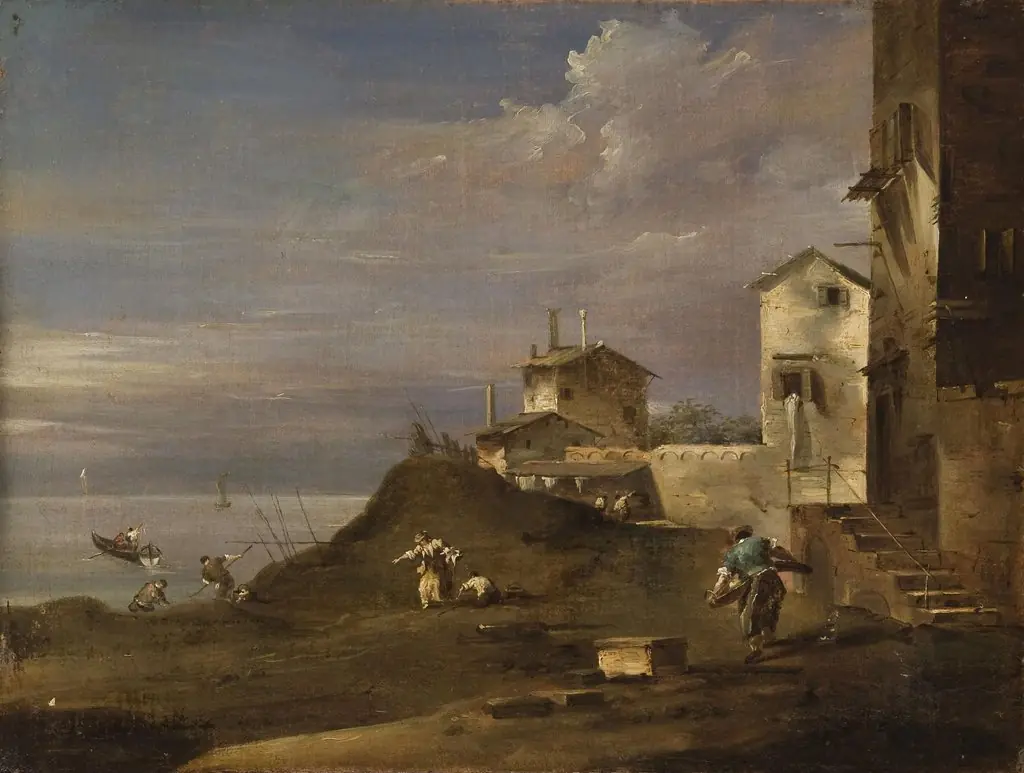 Landscape with Cottages on Dunes
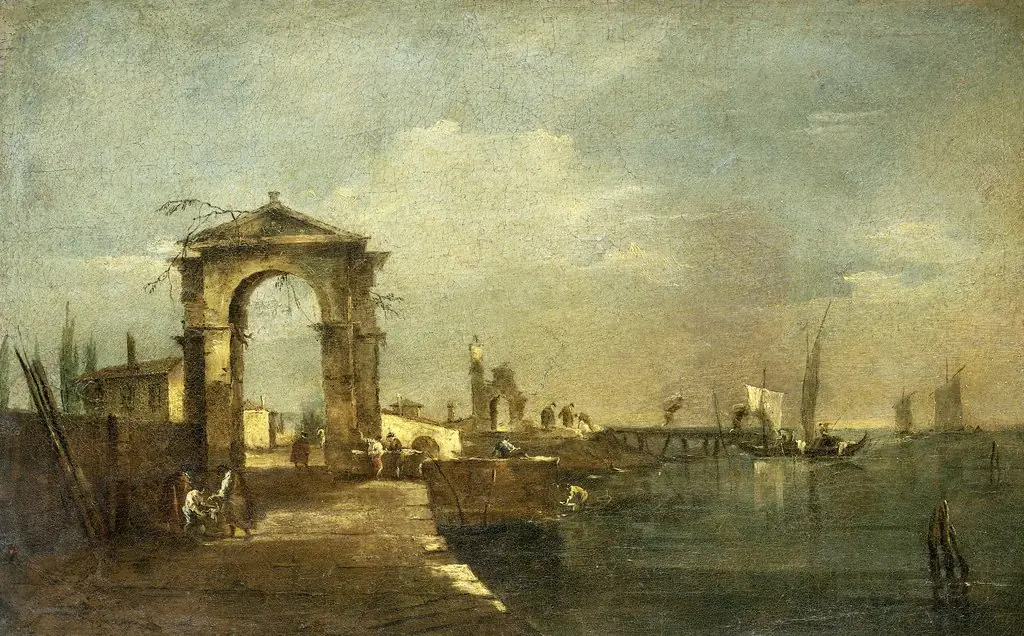 Landscape with a Quay and Ships on a Lake
 Capriccio of a Harbor
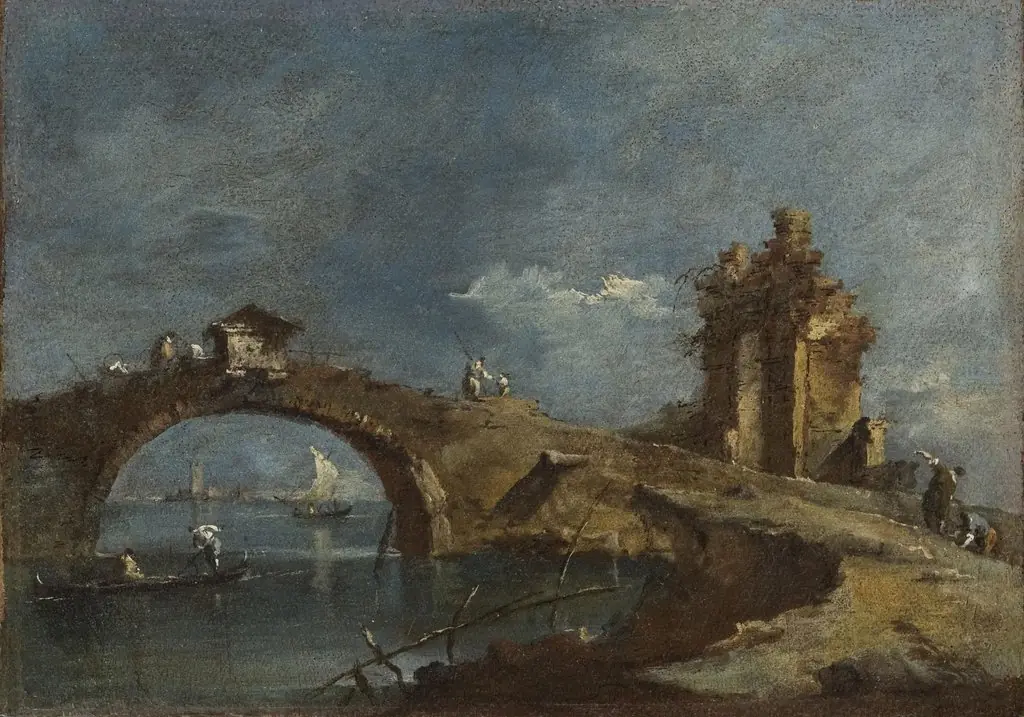 Capriccio with a Bridge
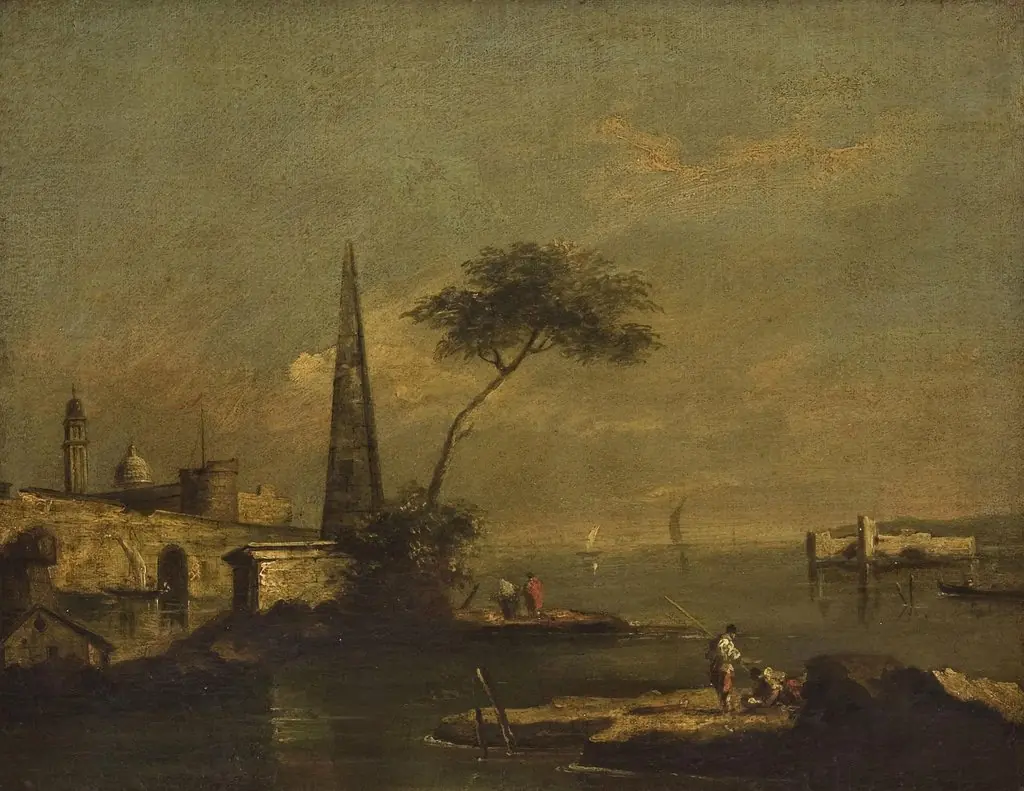 Capriccio with an Obelisk on a Lagoon
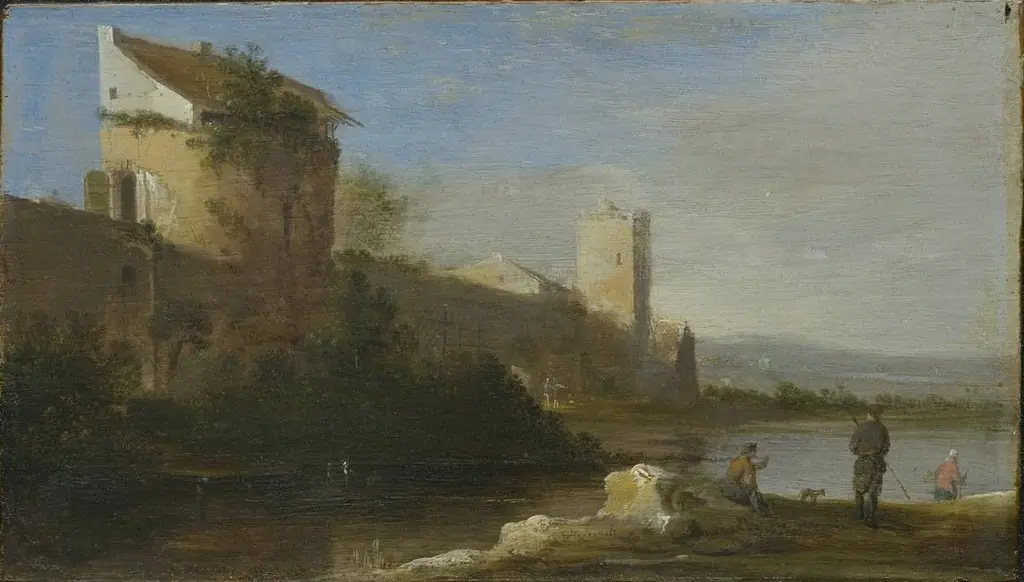 Italienische Landschaft mit Stadtbefestigung