Artwork
Doge's Palace and Libreria from the Laguna
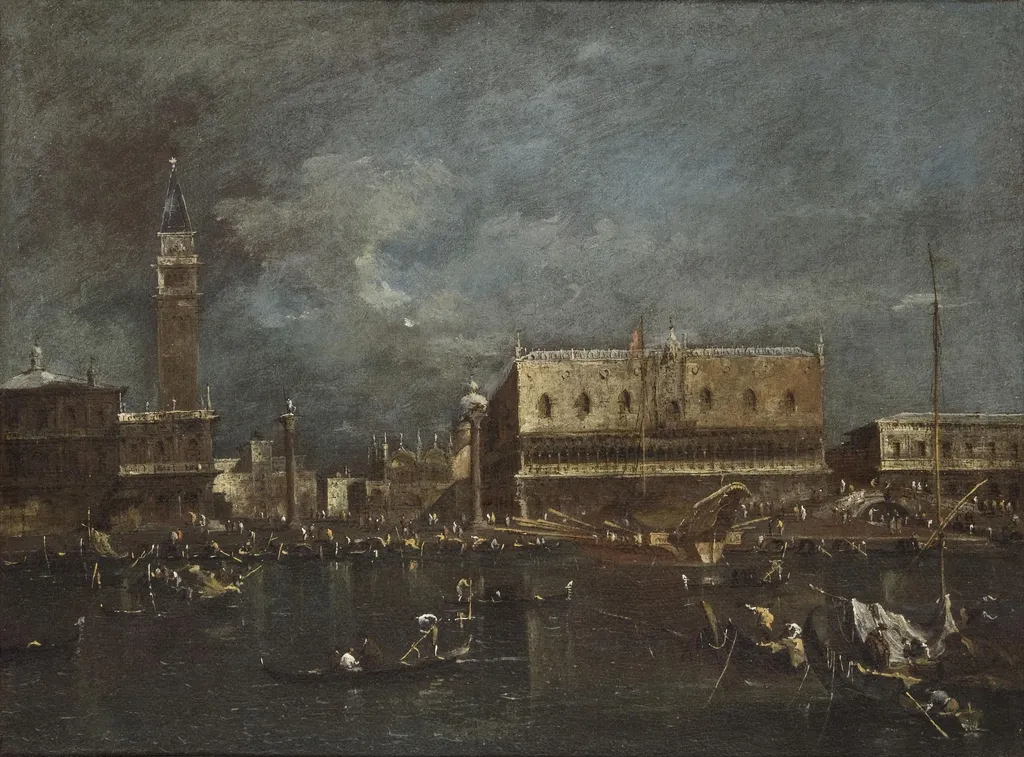
Doge's Palace and Libreria from the Laguna is an oil painting by the Rococo painting artist Francesco Guardi. It dates from 1762 and is held in the collection of the Philadelphia Museum of Art.
About this work
Overview
The painting presents the Doge’s Palace and the adjacent Libreria as seen across the lagoon, framed by the city’s fluid relationship with water and light.
Painted around 1762, this oil on canvas work by Francesco Guardi captures a view of Venice’s political heart from the water. A member of the Venetian nobility, Guardi turned from religious subjects to urban landscapes after his brother’s death, embracing the veduta tradition. The painting presents the Doge’s Palace and the adjacent Libreria as seen across the lagoon, framed by the city’s fluid relationship with water and light.
Subject & Meaning
The composition centers on two monumental civic structures: the Doge’s Palace, seat of Venetian government, and the Libreria, housing the city’s scholarly collections. Positioned on the water’s edge, they symbolize the fusion of political authority and intellectual life in the Republic. The inclusion of small boats and figures grounds the scene in daily life, suggesting the palace’s role as a living part of the city’s rhythm rather than a distant monument.
Technique & Style
Guardi employs loose, fluid brushwork to suggest texture and movement, particularly in the water and sky. Muted tones of gray, brown, and soft ochre dominate, avoiding vivid color in favor of atmospheric harmony. Chiaroscuro is used subtly to model forms and create spatial depth, while the hazy horizon and diffused light reflect the humid Venetian climate, enhancing the sense of quiet observation over grandeur.
History & Provenance
Created in the early 1760s, the painting emerged during Guardi’s mature period, following his transition from collaborative religious works to independent vedute. It likely originated as a private commission, possibly for a foreign patron drawn to Venice’s architectural splendor. The work remained within European collections, eventually entering a public institution where it continues to represent the Venetian School’s lyrical approach to urban scenery.
Context
In mid-18th century Venice, the Republic’s political power had waned, but its cultural prestige endured. Artists like Guardi responded not with heroic narratives but with intimate, contemplative views of the city’s architecture and waterways. This painting reflects a shift from the grandeur of earlier vedutisti like Canaletto toward a more poetic, impressionistic rendering of place, aligned with the Rococo’s emphasis on mood and atmosphere.
Legacy
Guardi’s approach influenced later generations of landscape painters, particularly those drawn to transient light and atmospheric effects. His loose handling and emotional tone prefigured aspects of Impressionism, though his work remained rooted in the specific topography of Venice. Today, the painting stands as a quiet testament to the city’s enduring presence in the visual imagination, valued for its sensitivity over spectacle.
Own this work as a print
Artist & collection
Artist
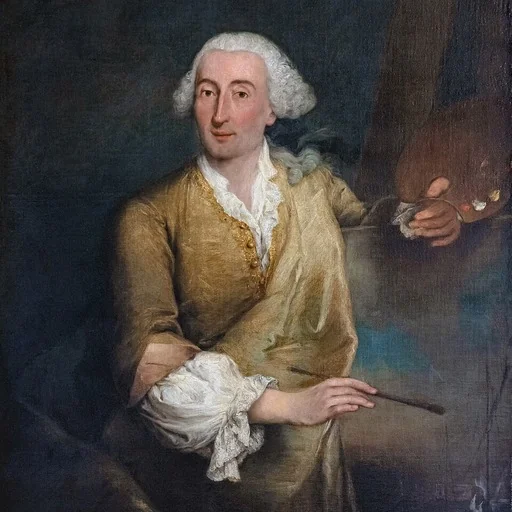
Francesco Lazzaro Guardi (Italian pronunciation: ; 5 October 1712 – 1 January 1793) was an Italian painter, nobleman, and a member of the Venetian School.

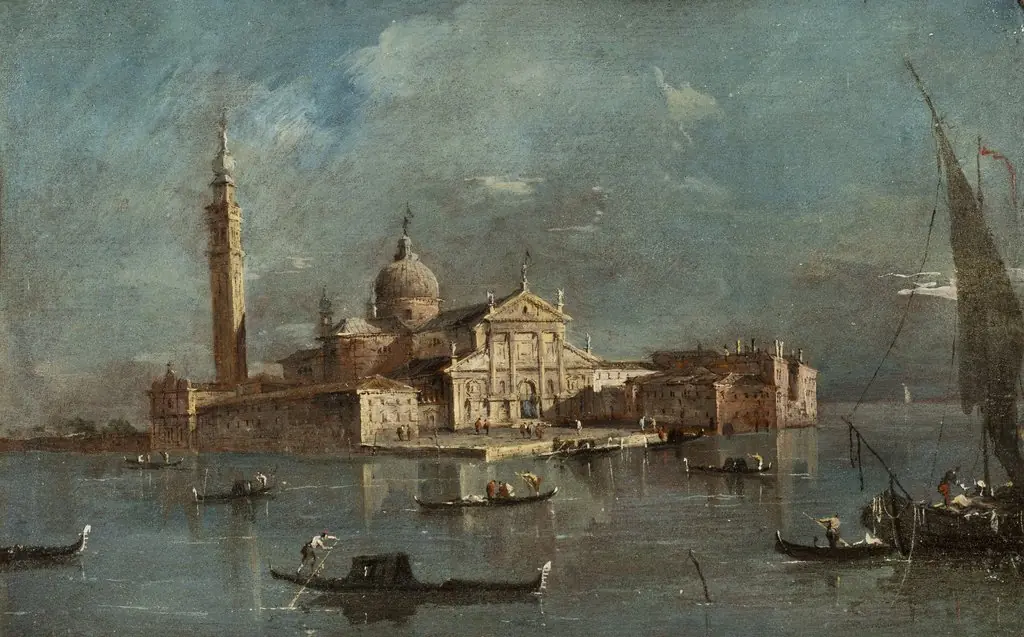 San Giorgio Maggiore
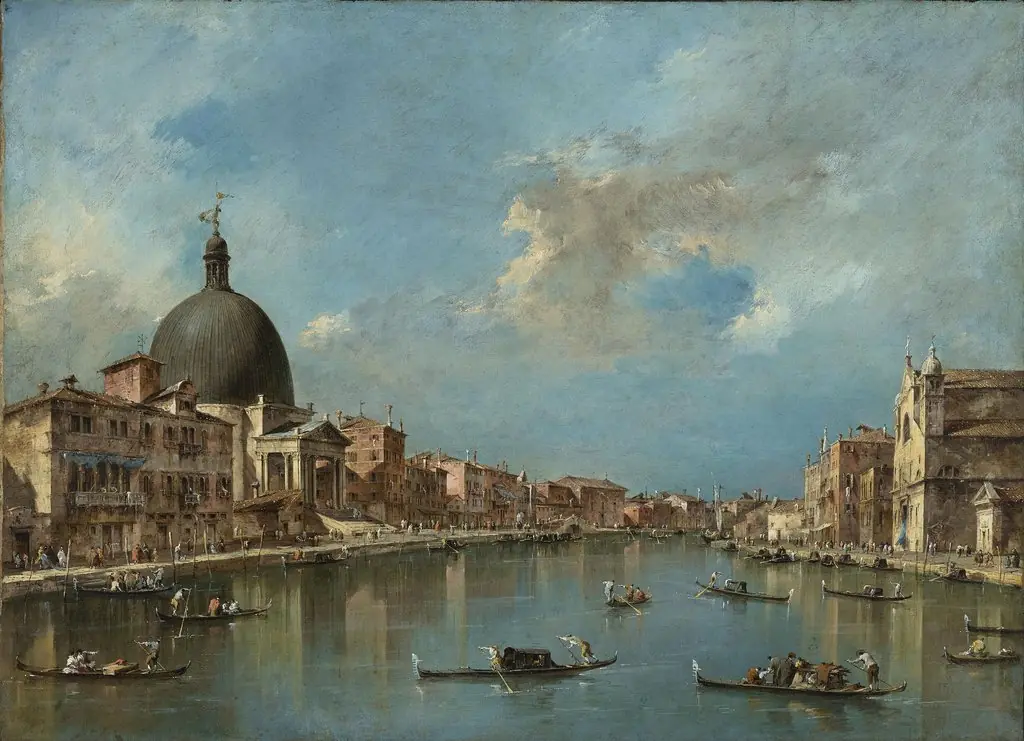 The Grand Canal with San Simeone Piccolo and Santa Lucia
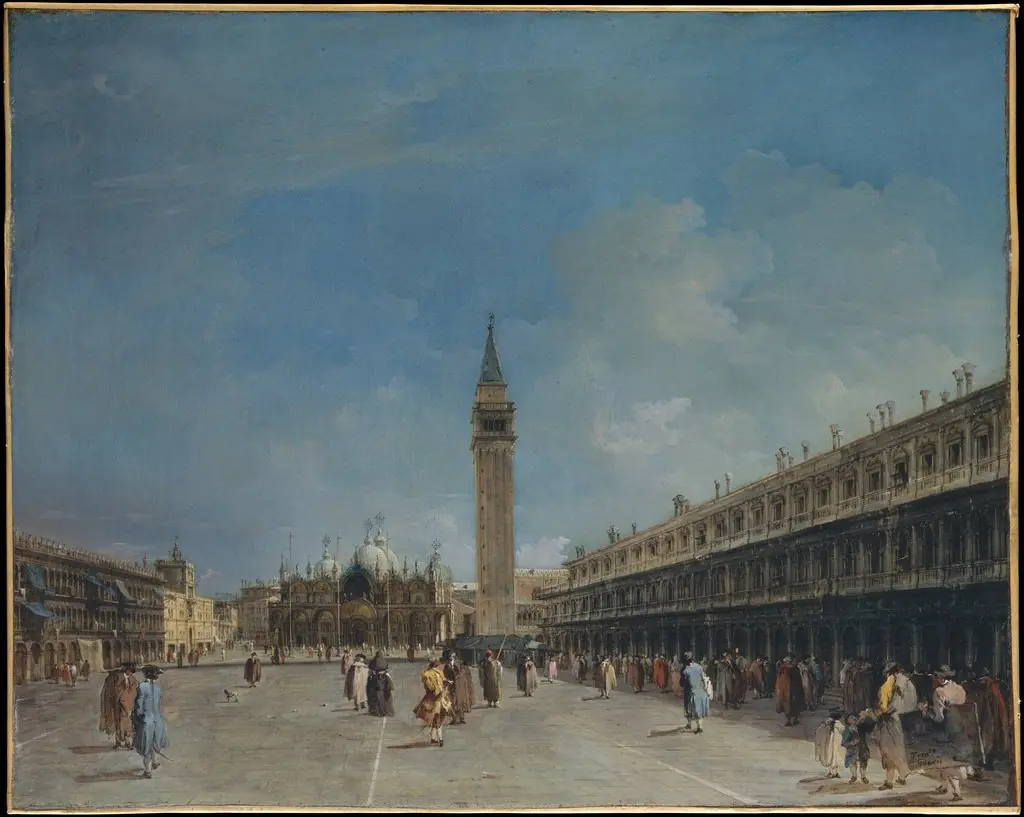
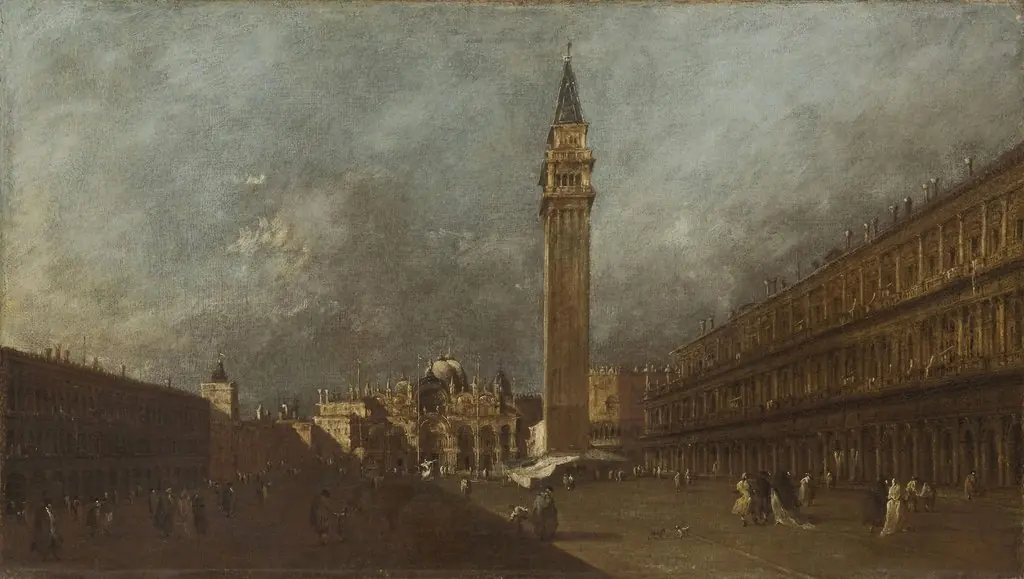 Piazza San Marco
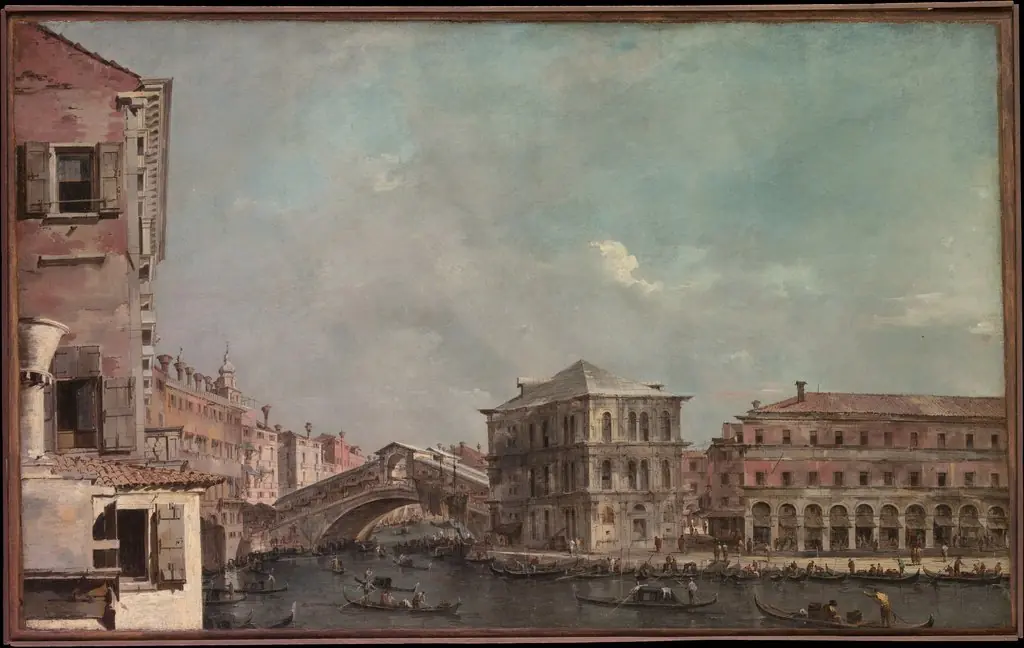
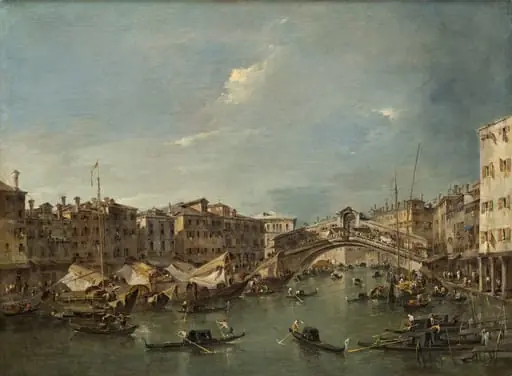 Grand Canal with the Rialto Bridge, Venice
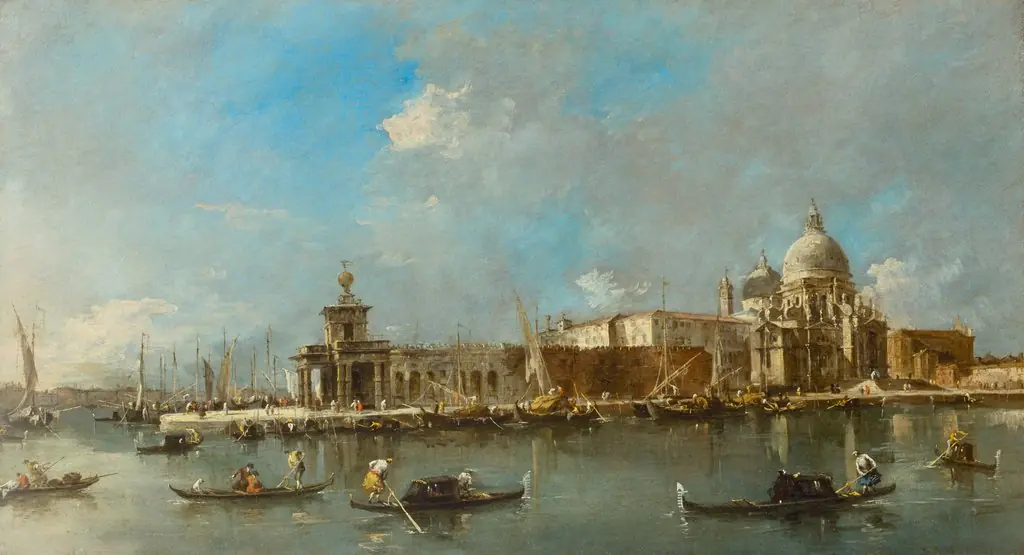 Santa Maria della Salute and the Dogana, Venice
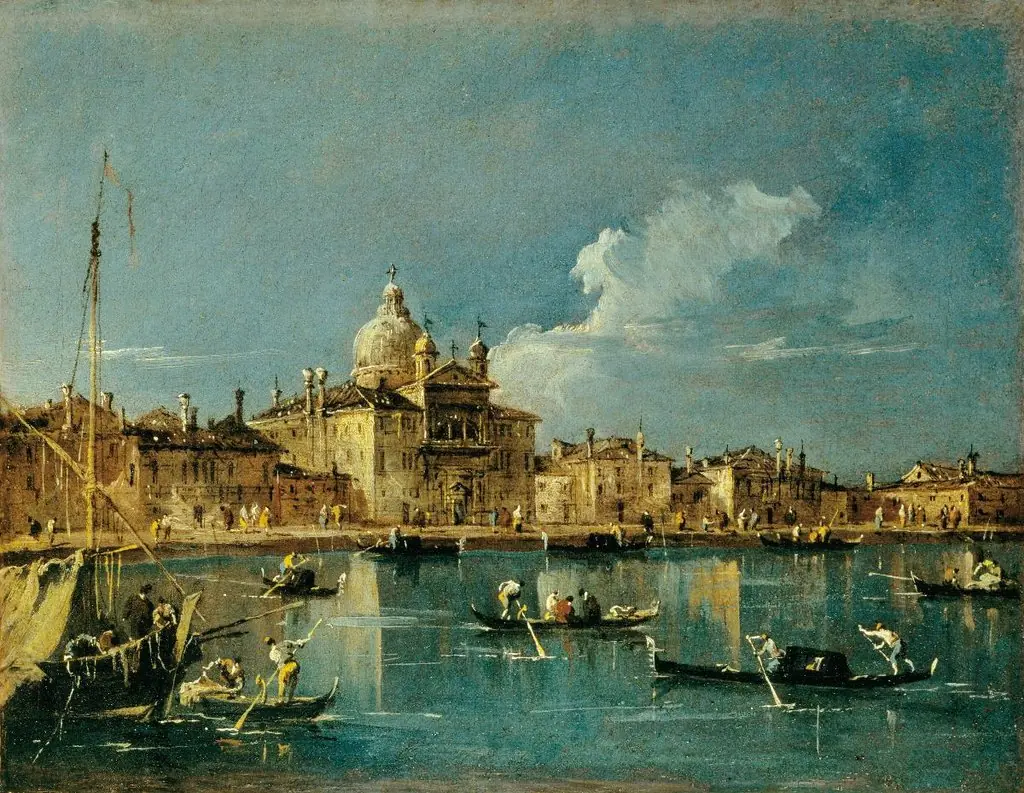 L’isola della Giudecca con le chiese delle Zitelle e del redentore
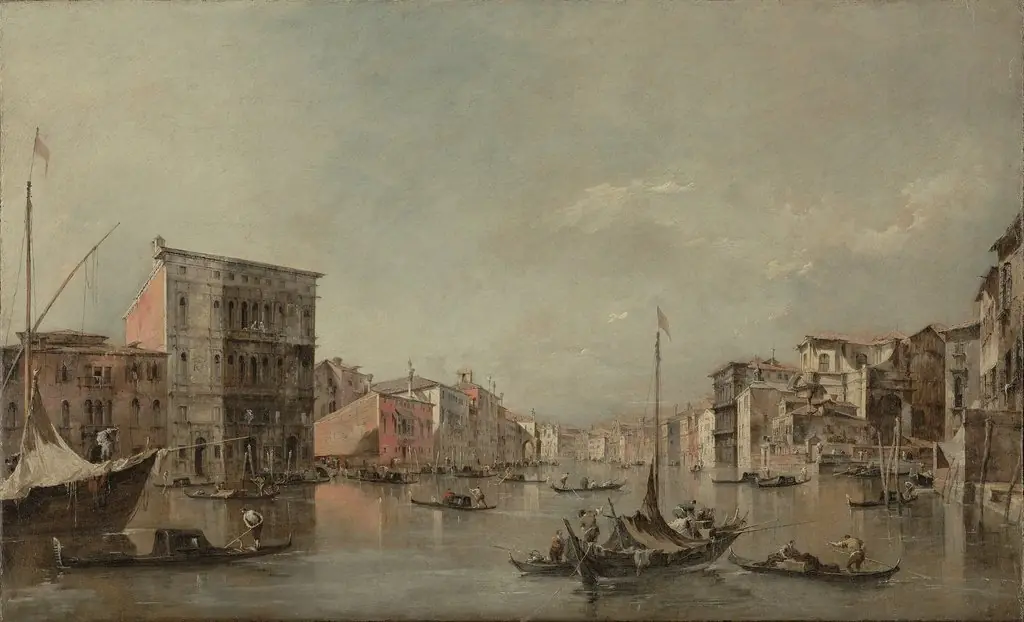 The Grand Canal in Venice with Palazzo Bembo
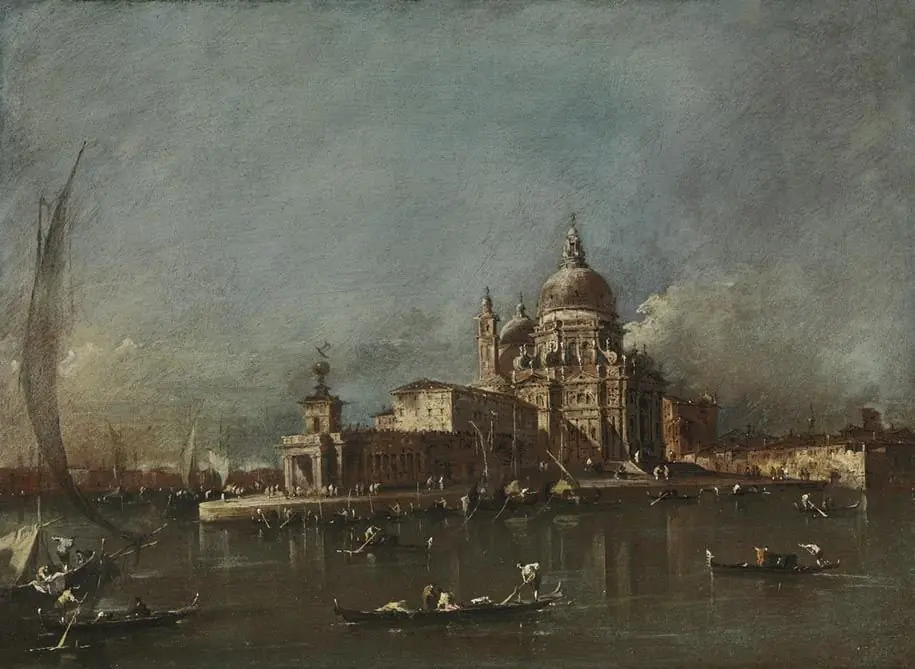 Blick auf Santa Maria della Salute und die Dogana
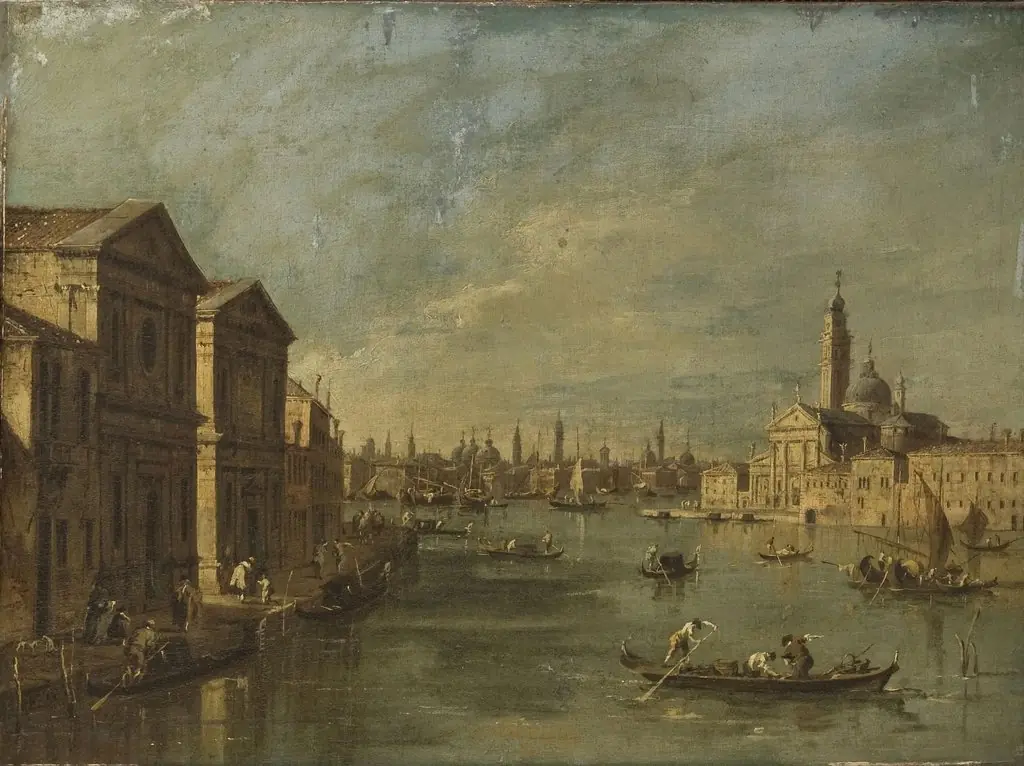 View between the Giudecca and San Giorgio Maggiore
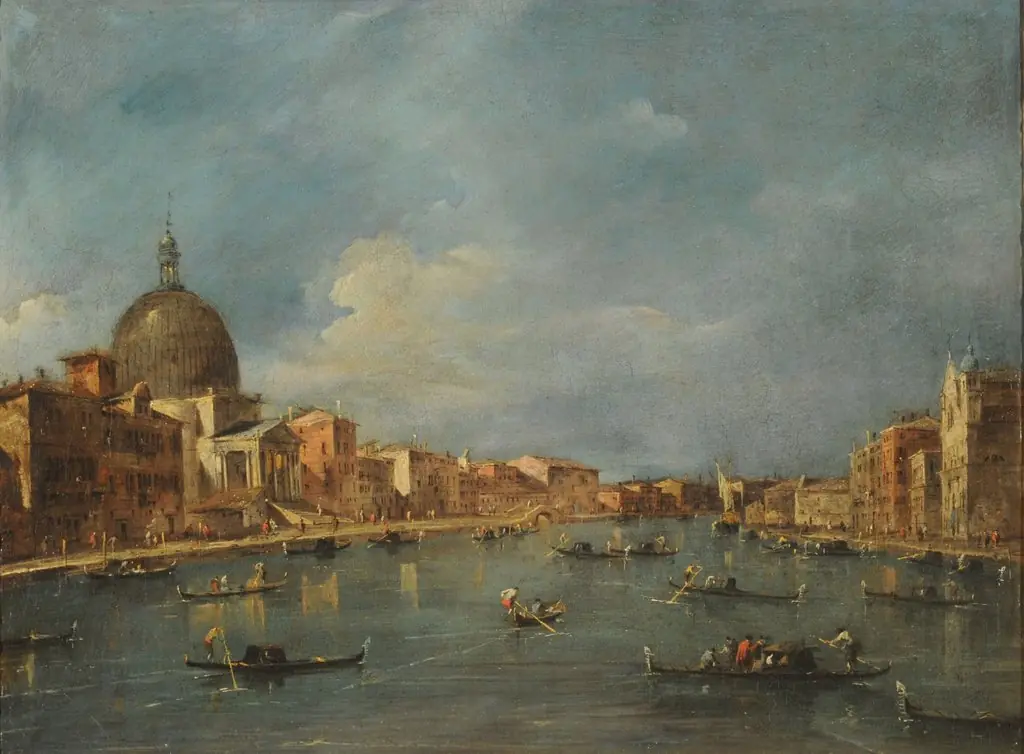 Grand Canal with Sam Simeone piccolo