Artwork
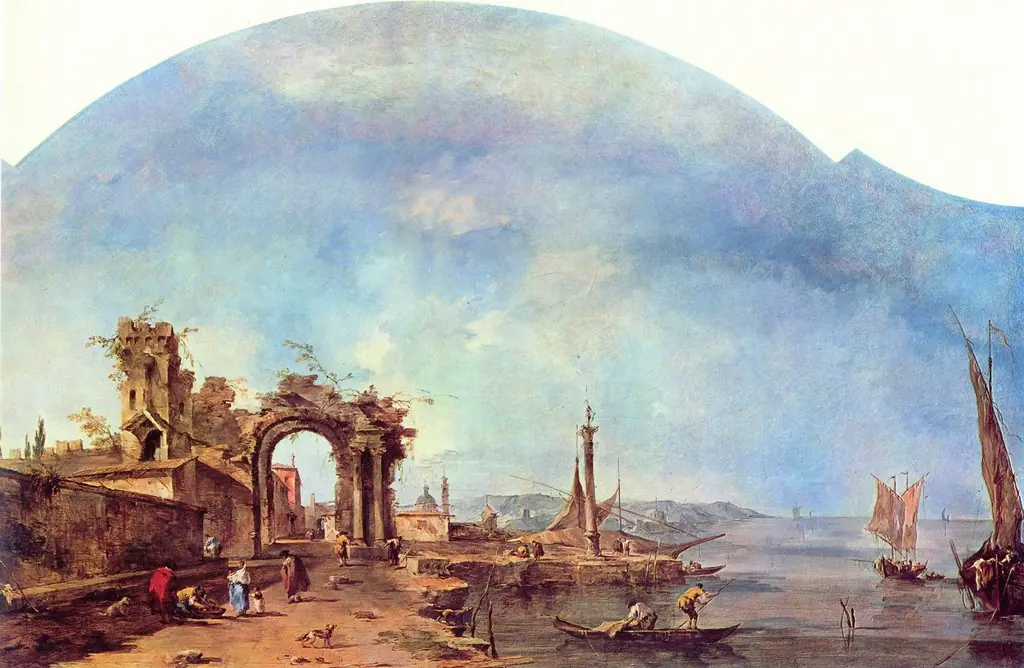
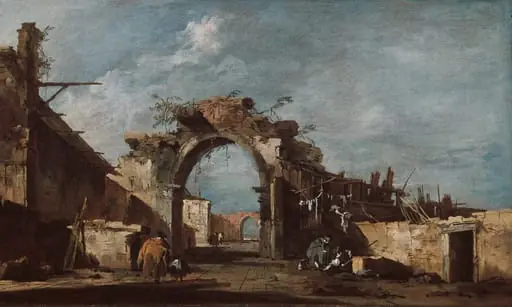
Fantasy Arch with Human Figures
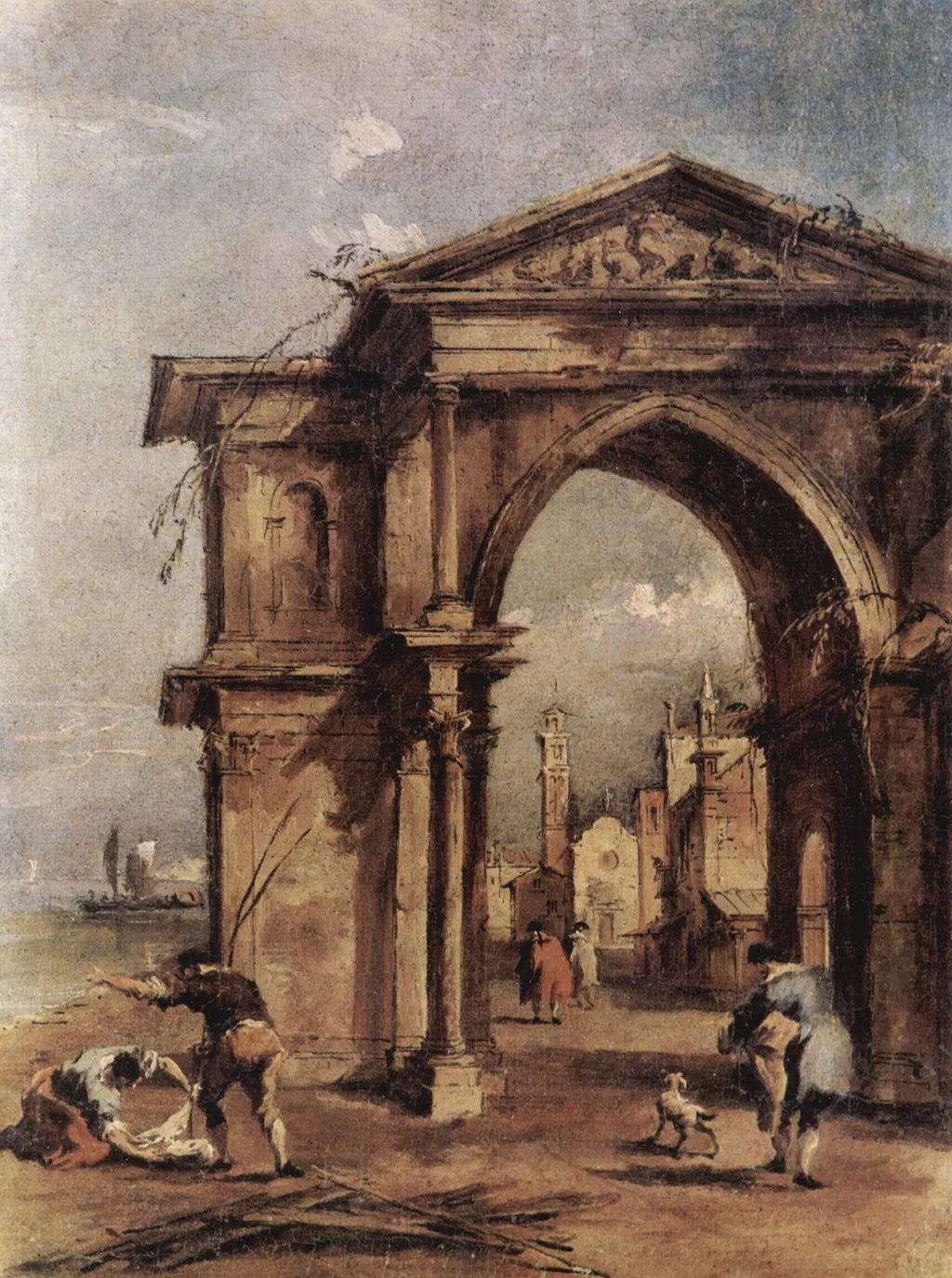
Fantasy Arch with Human Figures is an oil painting by the Rococo painting artist Francesco Guardi. It dates from 1770 and is held in the collection of the Accademia Carrara.
About this work
Overview
This piece exemplifies his later style, blending real architectural elements with invented structures to evoke mood rather than record place.
Painted in 1770, *Fantasy Arch with Human Figures* is an oil-on-canvas work by Francesco Guardi, a Venetian artist known for his atmospheric landscapes and architectural visions. Though trained in religious subjects alongside his brother, Guardi turned toward vedute after 1760, favoring imaginative compositions over topographical accuracy. This piece exemplifies his later style, blending real architectural elements with invented structures to evoke mood rather than record place.
Subject & Meaning
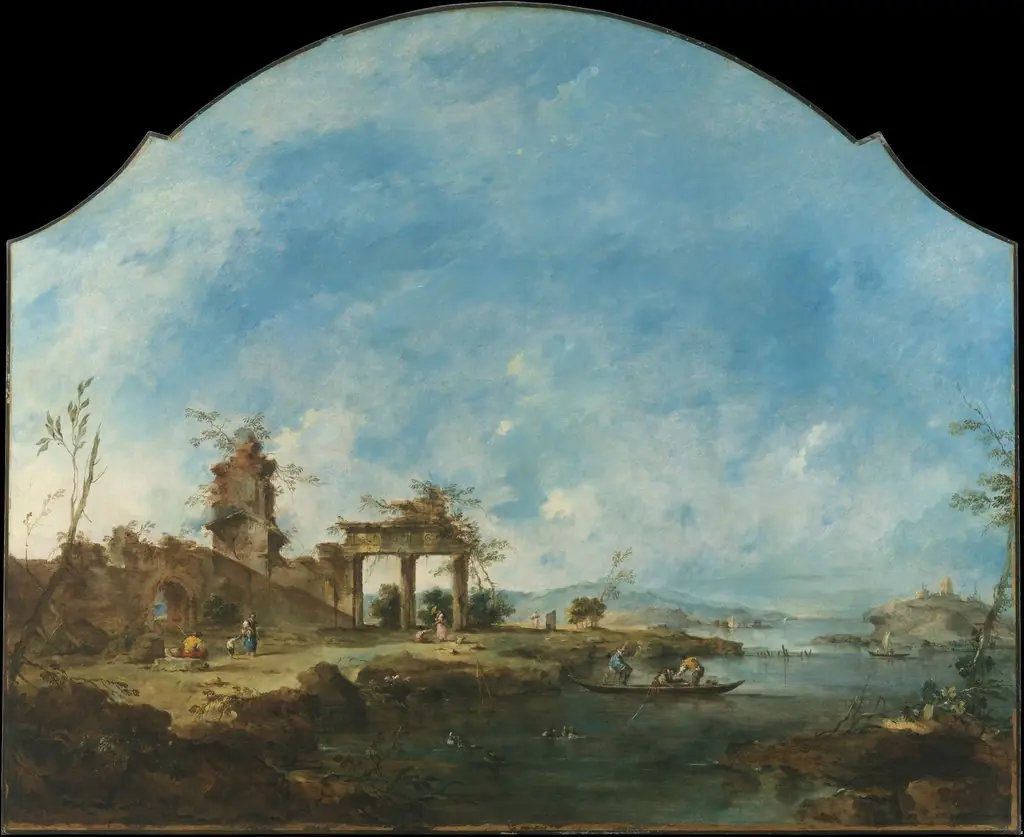
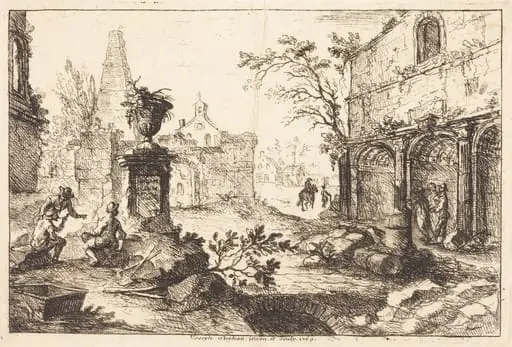
The painting centers on a monumental, ornate archway, framed by human figures in the foreground who appear small against its scale. The arch, though reminiscent of Roman or Renaissance forms, is not a documented structure but a fictional construct. Its grandeur suggests themes of memory, decay, or the passage of time, while the figures—dressed in period attire—hint at quiet, everyday life unfolding within a mythic setting.
Technique & Style
Guardi employs chiaroscuro to model the arch’s surfaces and the figures’ forms, using sharp contrasts between light and shadow to create depth and volume. His brushwork is loose yet deliberate, with soft edges and layered glazes that lend the scene a hazy, luminous quality. The architectural details are rendered with precision, but the background—featuring distant buildings and water—is treated with atmospheric perspective, dissolving into misty tones that enhance the dreamlike character of the composition.
History & Provenance
Created during the final decade of Guardi’s career, the painting entered the collection of the Accademia Carrara in Bergamo, where it remains today. It was likely acquired in the 19th century as part of a broader interest in Venetian Rococo works. Unlike many of Guardi’s vedute, this piece was never widely reproduced or exhibited publicly during his lifetime, contributing to its relative obscurity until modern scholarly attention.
Context
In 18th-century Venice, the Rococo aesthetic favored elegance, ornament, and emotional nuance over rigid classicism. Guardi’s fantasy arch reflects this sensibility, aligning with contemporaries who reimagined architecture as poetic rather than documentary. While his brother Canaletto documented Venice’s canals with precision, Guardi pursued subjective interpretations, responding to a cultural shift toward introspection and imagination in the late Baroque period.
Legacy
Though not among Guardi’s most famous works, *Fantasy Arch with Human Figures* illustrates his evolution from topographical painter to lyrical visionary. Its blend of architectural fantasy and emotional atmosphere influenced later Romantic artists who sought to evoke mood through invented landscapes. The painting stands as a quiet testament to Guardi’s ability to transform architectural forms into vessels of contemplation, bridging the ornamental and the introspective.
Own this work as a print
Artist & collection

Artist
Francesco Lazzaro Guardi (Italian pronunciation: ; 5 October 1712 – 1 January 1793) was an Italian painter, nobleman, and a member of the Venetian School.

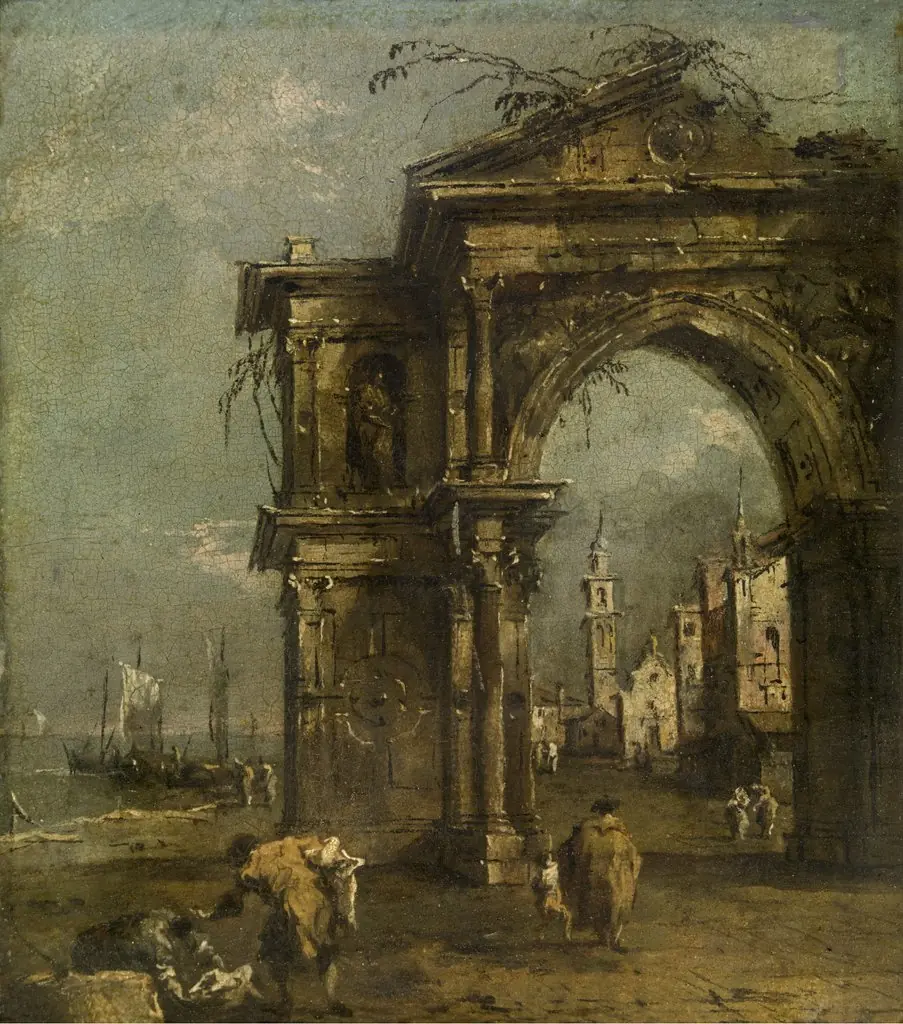 Triumphal Arch in Venice
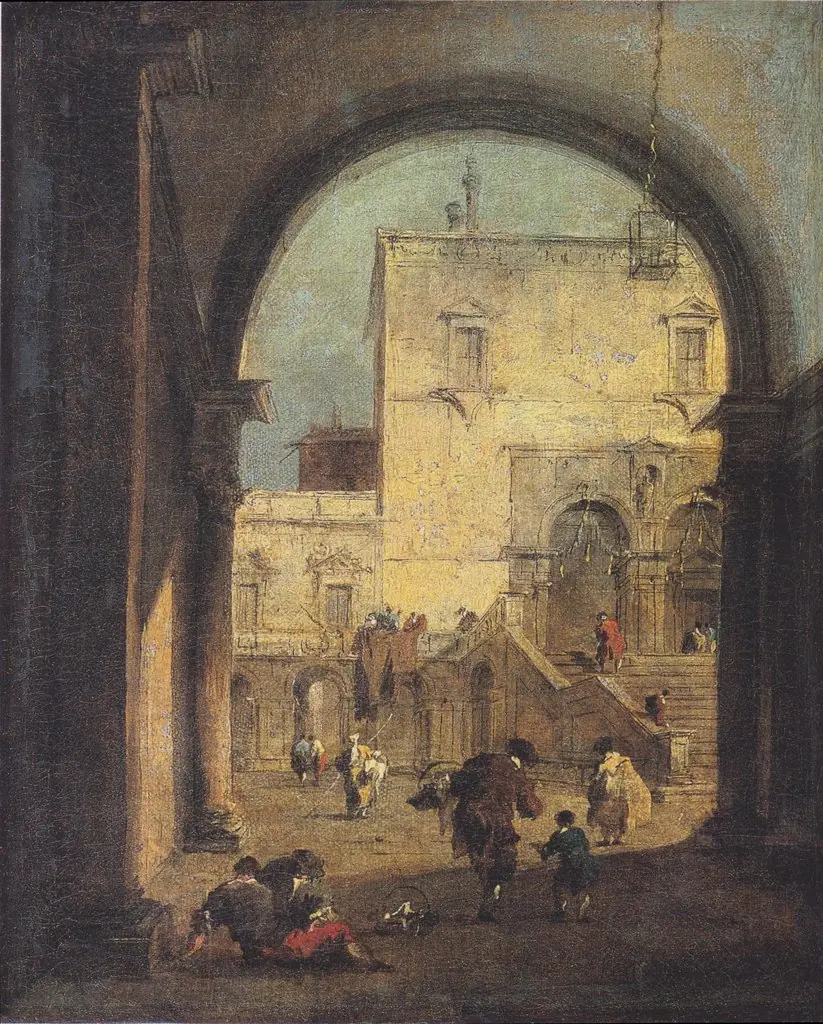 Venetian Capriccio: View of a Square and a Palace
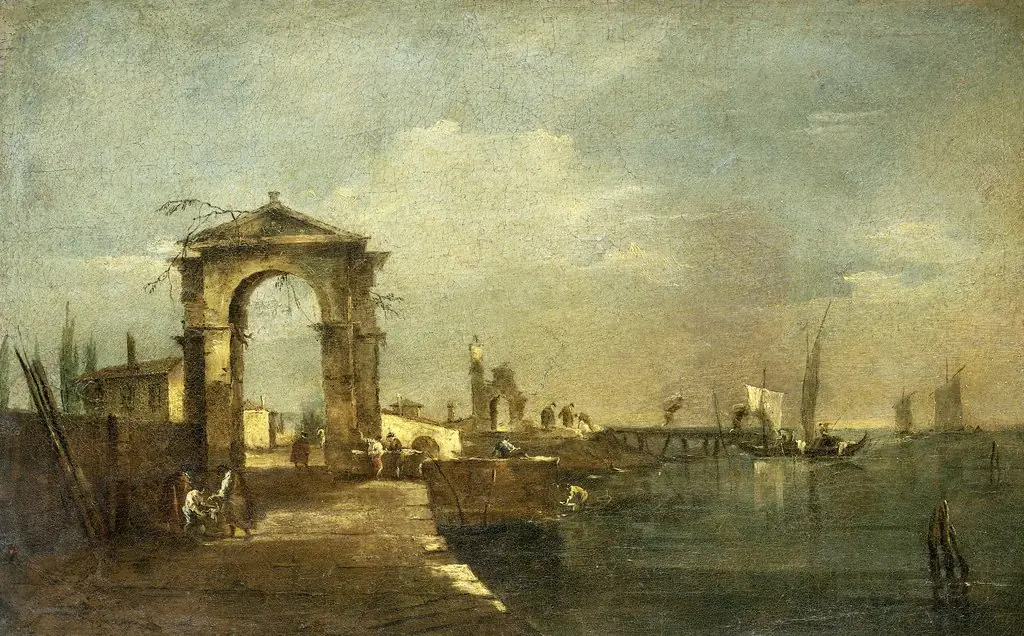 Landscape with a Quay and Ships on a Lake
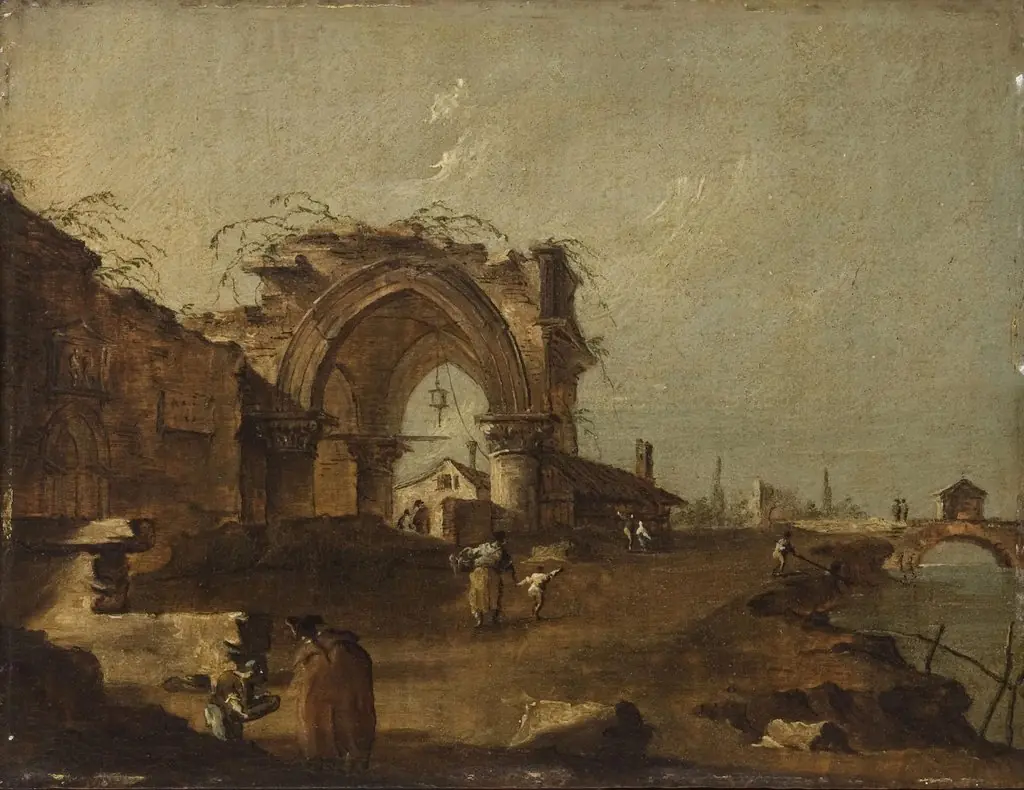 Capriccio with Ruins
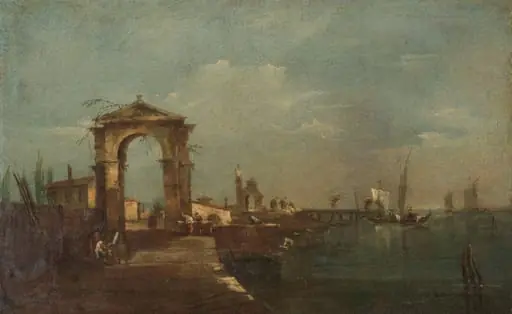 Landscape with a Quay and Ships on a Lake
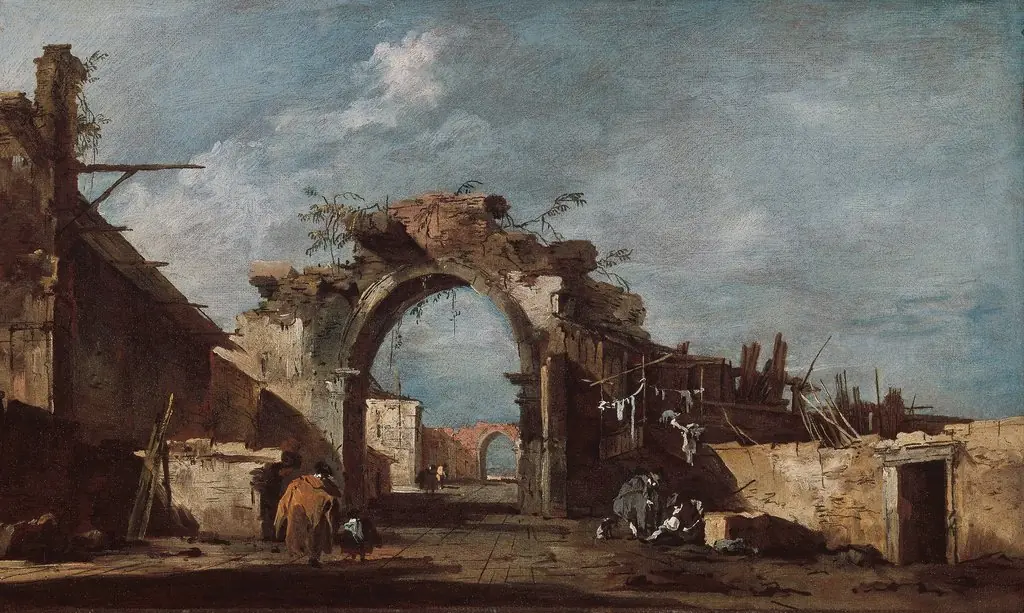 Ruined Archway
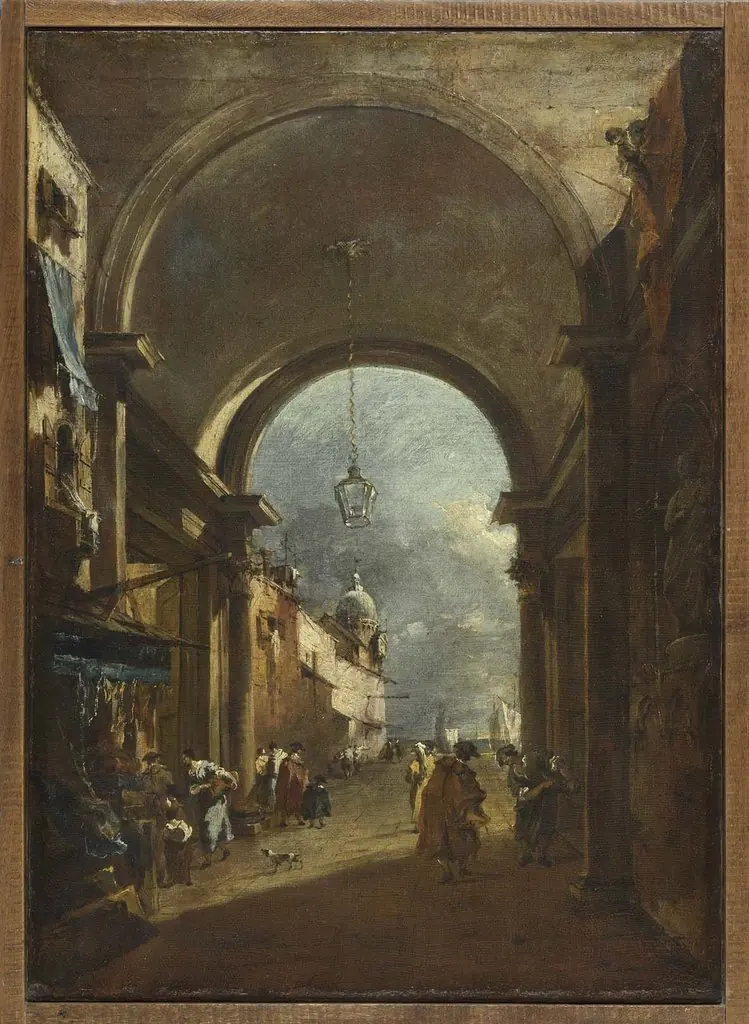 Tordurchblick
 Ruined Archway
 Venetian View
 Landscape with Cottages on Dunes
 Capriccio
 Architectural Fantasy with Roman Ruins