Artwork
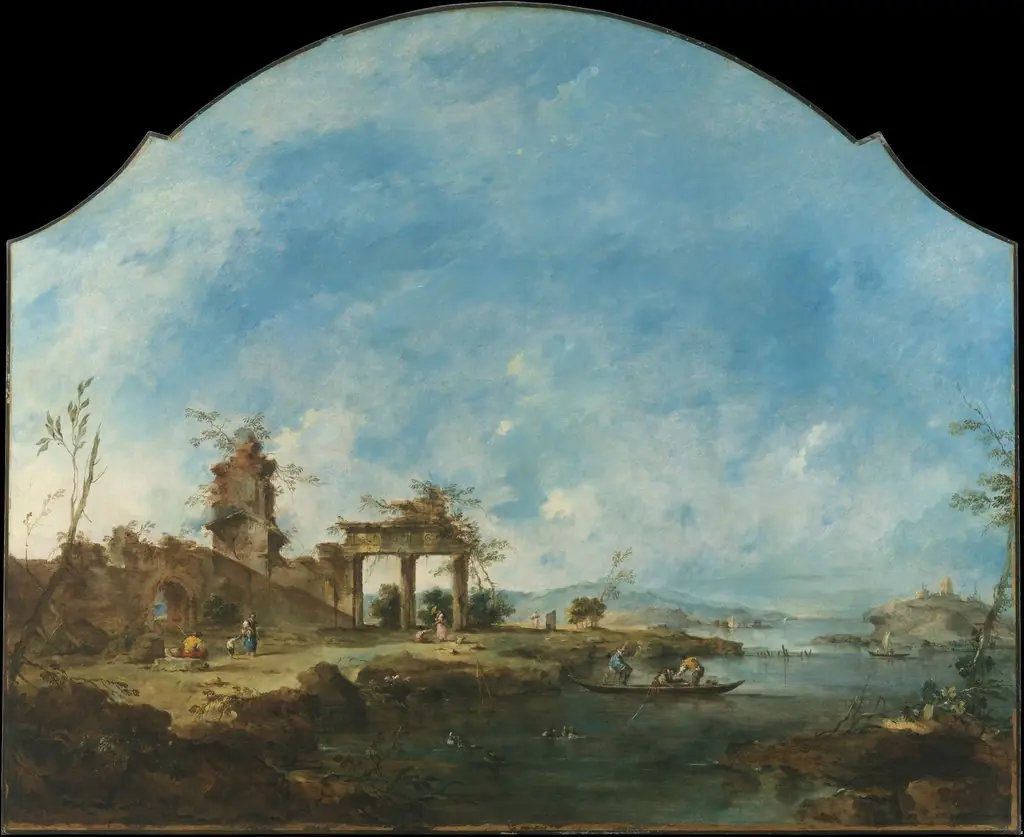
Capriccio with Ruins
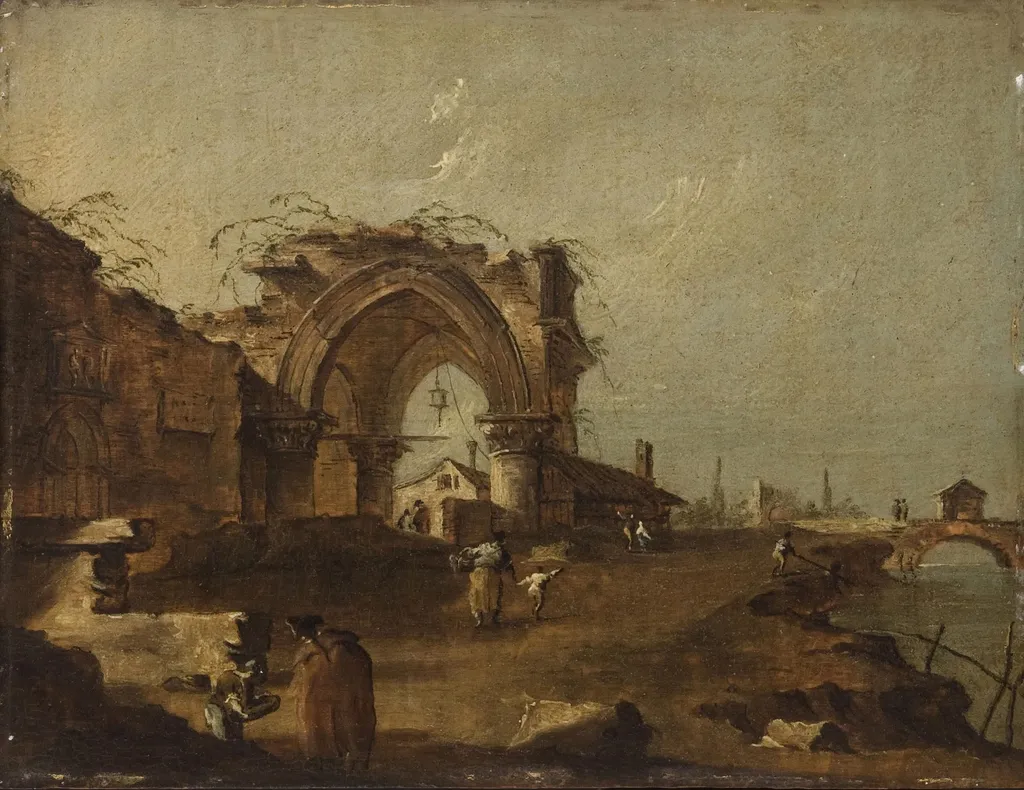
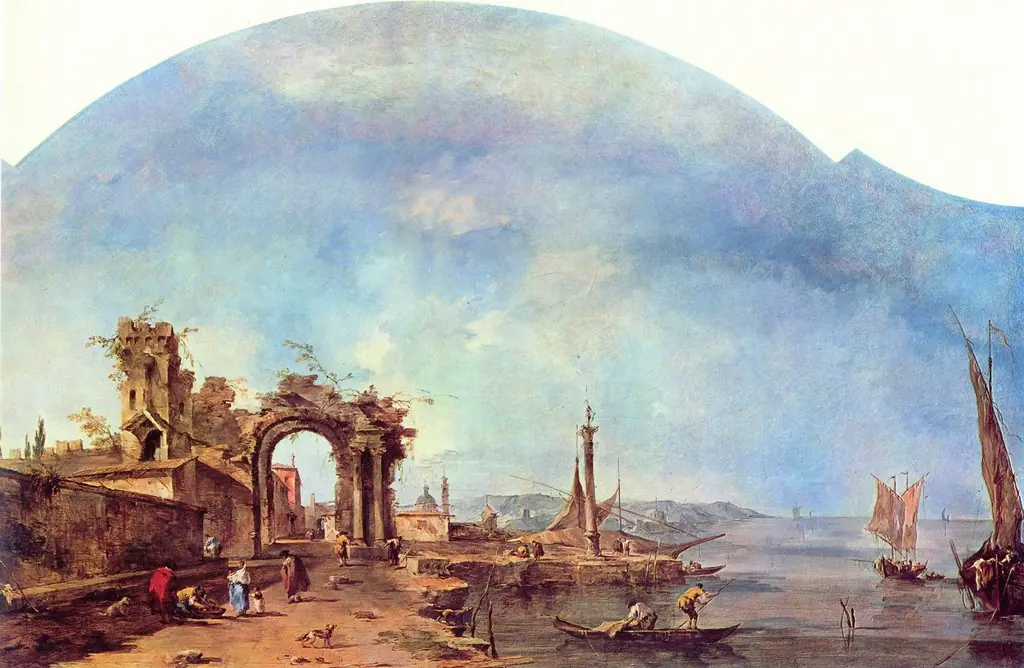
Capriccio with Ruins is an unspecified painting by the Rococo painting artist Francesco Guardi. It dates from 1762 and is held in the collection of the Philadelphia Museum of Art.
About this work
Overview
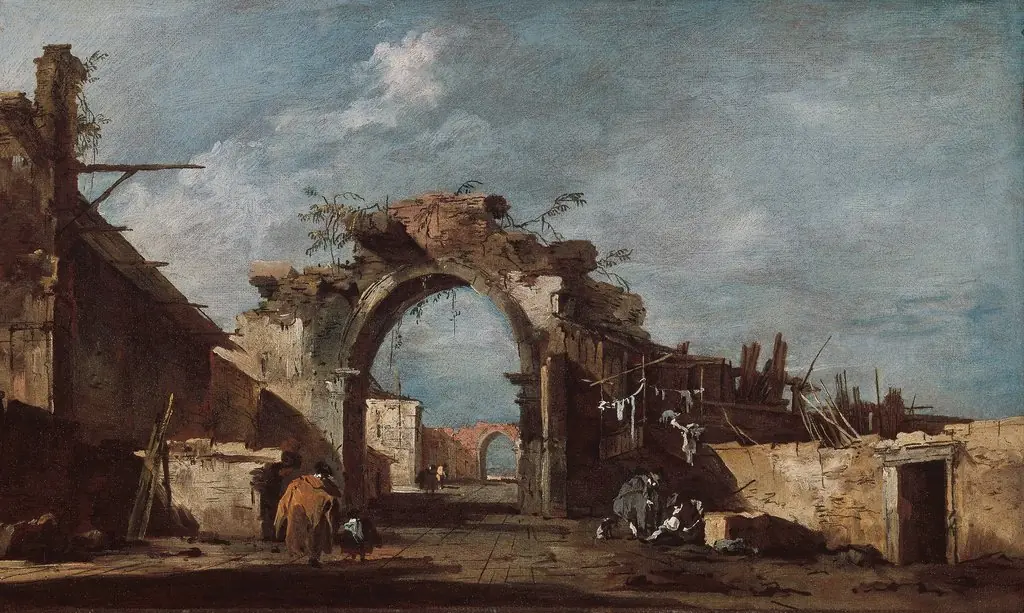
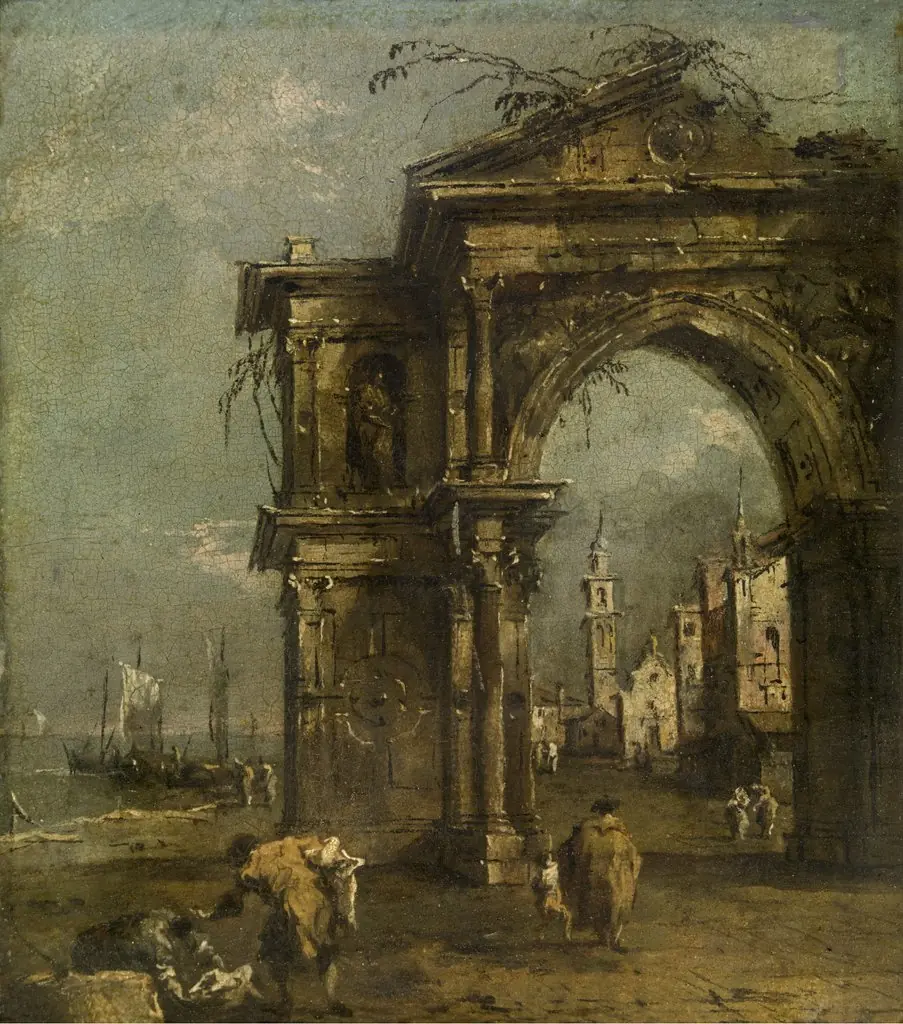
Created circa 1762, *Capriccio with Ruins* is an oil painting by Venetian artist Francesco Guardi. Executed during the late Rococo era, the work is part of the Philadelphia Museum of Art’s collection. It presents an imagined landscape where architectural fragments dominate a tranquil setting, reflecting Guardi’s turn toward imaginative vedute after the death of his brother.
Subject & Meaning
The composition centers on a massive, weathered arch flanked by additional ruins and modest structures. Figures populate the foreground, engaged in everyday tasks, while a calm body of water lies to the right. The muted tones and quiet atmosphere convey a sense of serene decay, inviting contemplation of the passage of time and the coexistence of human activity with remnants of the past.
Technique & Style
Guardi employs a restrained palette of browns and grays, allowing the architectural forms to emerge through subtle tonal shifts. Brushwork is loose and energetic, a departure from his earlier, more precise vedute. The handling of light suggests a gentle chiaroscuro, modeling the ruins and figures without dramatic contrast, thereby enhancing the painting’s placid mood.
History & Provenance
*Capriccio with Ruins* exemplifies this later period of his career.
Francesco Guardi, originally known for collaborative religious commissions with his brother Gian Antonio, shifted to secular landscapes after his brother’s death in 1760. *Capriccio with Ruins* exemplifies this later period of his career. The painting entered the Philadelphia Museum of Art’s holdings in the 20th century, where it remains on view as part of the museum’s European paintings collection.
Artist & collection

Artist
Francesco Lazzaro Guardi (Italian pronunciation: ; 5 October 1712 – 1 January 1793) was an Italian painter, nobleman, and a member of the Venetian School.