Artwork
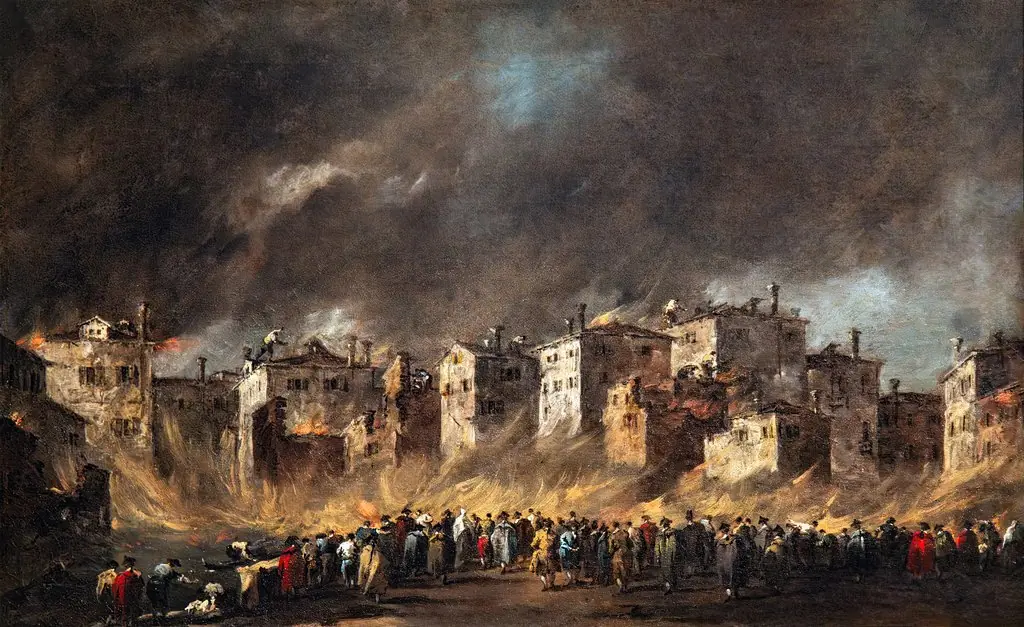
Fire in the Oil Depot at San Marcuola
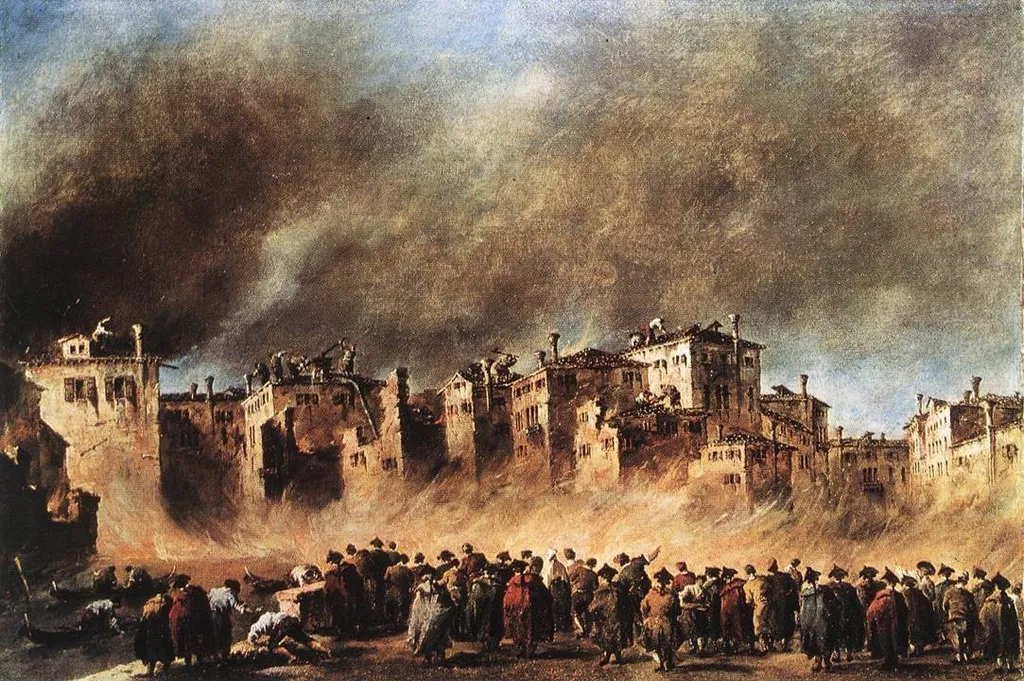
Fire in the Oil Depot at San Marcuola is an oil painting by Francesco Guardi. It is held in the collection of the Alte Pinakothek.
About this work
This painting is called Fire in the Oil Depot at San Marcuola. It's an oil paint work by Francesco Guardi.
The painting is small and was created around 1790. It was one of the last paintings by Guardi, who died in 1792.
To learn more about the style and methods used in this painting, look up the technique of glazing.
Overview
Painted around 1790, Fire in the Oil Depot at San Marcuola is a small oil-on-canvas work by Francesco Guardi, one of Venice’s final vedutisti. Created near the end of his life, it reflects his mature approach to capturing urban scenes with atmospheric immediacy. The painting resides today in the Alte Pinakothek in Munich, among a collection of European Old Master works.
Subject & Meaning
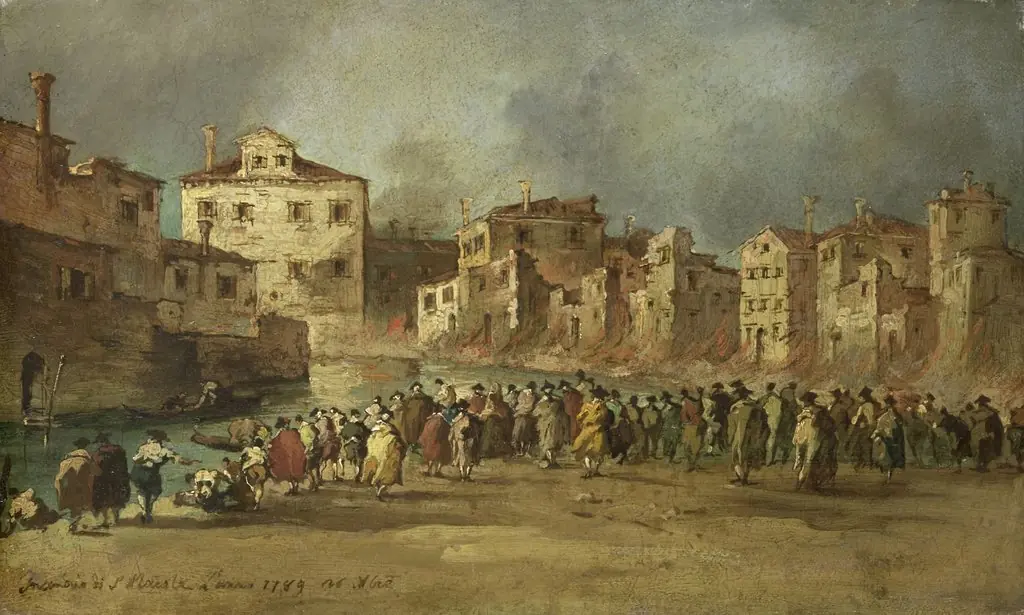
The scene depicts a fire breaking out at an oil storage facility near the San Marcuola canal in Venice. Rather than dramatizing the event, Guardi presents it with quiet observation—figures scatter, smoke rises, and reflections shimmer on water. The focus is less on chaos than on the quiet persistence of daily life amid disaster, characteristic of his late style.
Technique & Style
Guardi employed thin layers of glaze to build luminous effects, allowing light to penetrate and reflect through pigment. His brushwork is loose and suggestive, favoring movement over detail. The composition avoids rigid perspective, instead using atmospheric haze and fragmented forms to evoke the fleeting quality of the moment, a hallmark of his later vedute.
History & Provenance
Created just two years before Guardi’s death in 1792, this work belongs to his final creative phase. It entered the Alte Pinakothek’s collection in the 19th century, likely through European art markets that acquired Venetian works after the fall of the Republic. Its small scale and intimate subject suggest it was made for private rather than public display.
Context
In the late 18th century, Venice’s economic and political decline influenced artists to turn from grand ceremonial views to quieter, more personal scenes. Guardi’s focus on everyday incidents—like fires or sudden storms—reflected a shift toward emotional resonance over topographical accuracy, aligning with broader changes in European painting.
Legacy
Though not widely exhibited during his lifetime, Guardi’s late works, including this one, gained recognition in the 19th century for their expressive brushwork and emotional subtlety. They influenced later artists seeking to convey mood through loose technique, helping bridge the gap between 18th-century veduta and 19th-century Impressionism.
Artist & collection
Artist
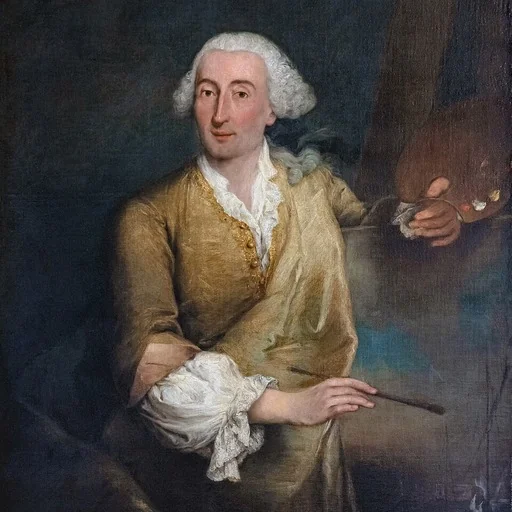
Francesco Lazzaro Guardi (Italian pronunciation: ; 5 October 1712 – 1 January 1793) was an Italian painter, nobleman, and a member of the Venetian School.